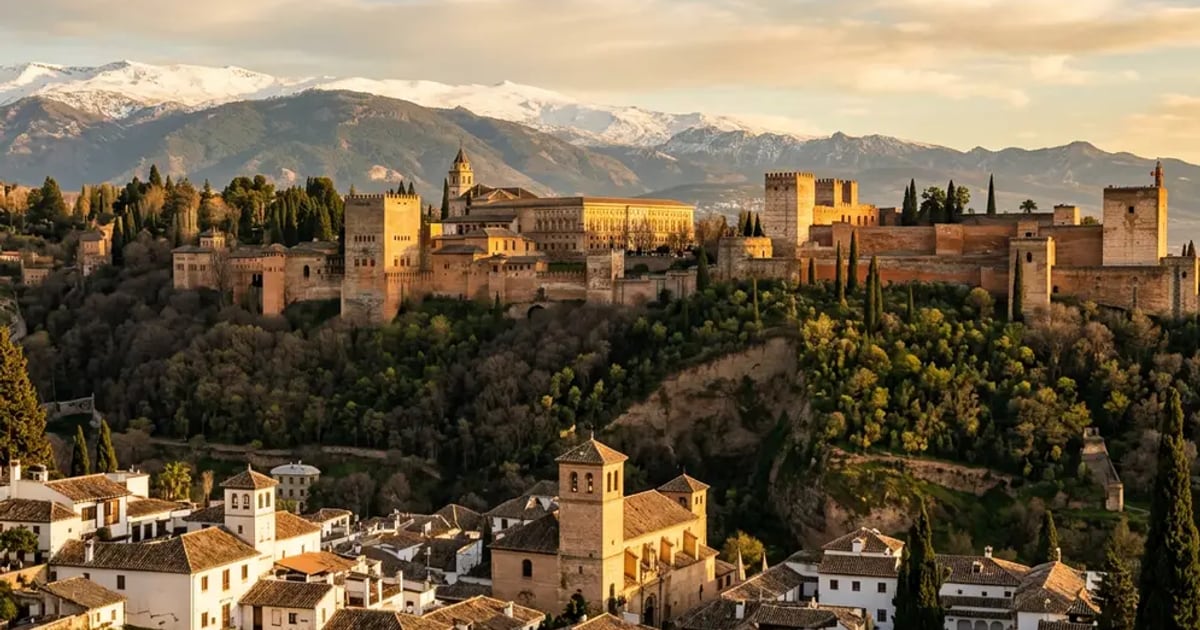
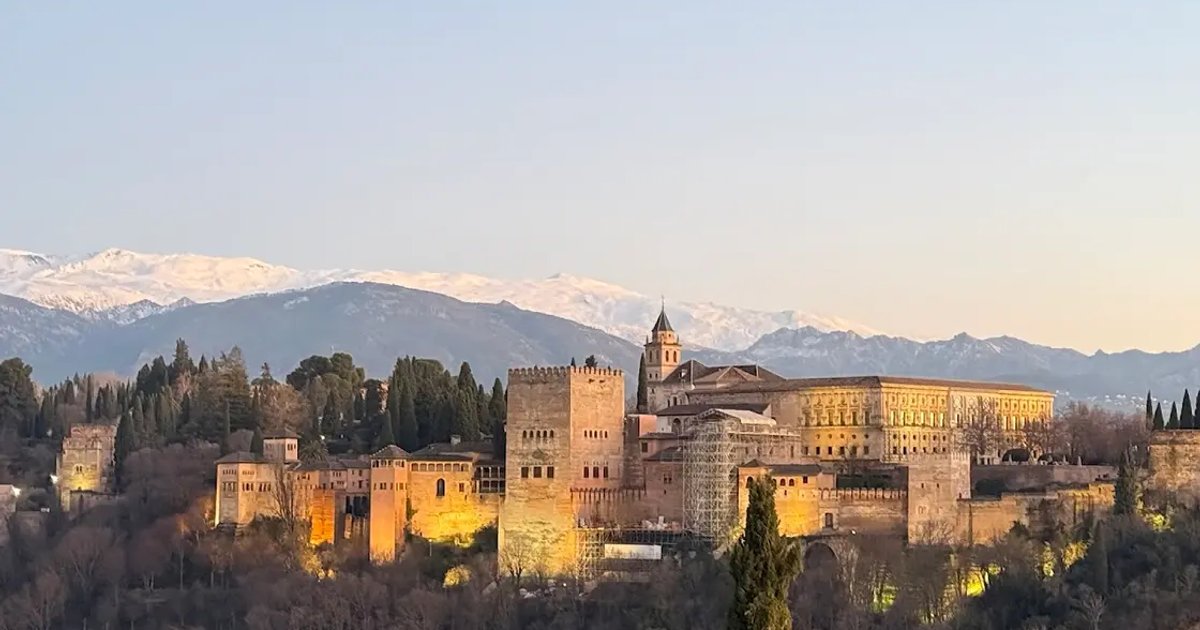
Granada was the last Islamic kingdom in Iberia. The Nasrid Sultanate held its mountain capital for 254 years (1238–1492) while Córdoba and Seville fell around it. When Muhammad XII surrendered the Alhambra keys on 2 January 1492, eight centuries of Muslim rule in Spain ended.
Ten years in food journalism specialising in Spanish and Andalusian cuisine. Four years focused on Granada's food scene.
Published
Córdoba was the caliphal capital. Seville the Almohad stronghold. But Granada outlasted them both. Arab and Berber forces arrived in 711; the last Nasrid sultan left in 1492. For 254 of those years the city existed as an independent Moorish kingdom surrounded by an expanding Christian Spain, a fact that shaped everything about it. The Alhambra was not built during some broad golden age of Islamic Spain; it was built by a dynasty that knew it was losing, buying time and building to rival what it had already lost.
That context matters for how you visit. The Nasrid Palaces are full of calligraphic inscriptions that read wa la ghaliba illa Allah (there is no victor but God), repeated across tile and plaster as a kind of political theology. The Albaicín quarter across the gorge still follows its medieval Islamic street plan, because Christian Granada never found the money or desire to tear it down. The Bañuelo bathhouse on Carrera del Darro dates from the 11th century and predates the Nasrid dynasty by two hundred years.
This guide covers the Alhambra complex, the Albaicín medina, the Dobla de Oro combined ticket, and the Moorish city centre monuments. It also addresses what the tea houses on Calderería Vieja actually are, how Sacromonte fits in, and the practical question of how to sequence a day or two across all of it.
Moorish Granada: at a glance
Period of Islamic rule
711–1492 (781 years)
Nasrid Sultanate
1238–1492 (254 years as independent kingdom)
UNESCO status
Alhambra, Generalife and Albaicín (1984, extended 1994)
2 January 1492: Boabdil surrenders the Alhambra to Ferdinand and Isabella
Why Granada is the Moorish-Spain destination
Three cities make the strongest claim on Islamic Iberia's architectural legacy: Córdoba, Seville, and Granada. Córdoba has the Mezquita-Cathedral, begun in 784 by Abd al-Rahman I, one of the largest medieval mosques ever built. Seville has the Alcázar, a Mudéjar palace built by Christian kings using craftsmen trained in the Nasrid style. Granada has the Alhambra, the only surviving Nasrid royal palace complex.
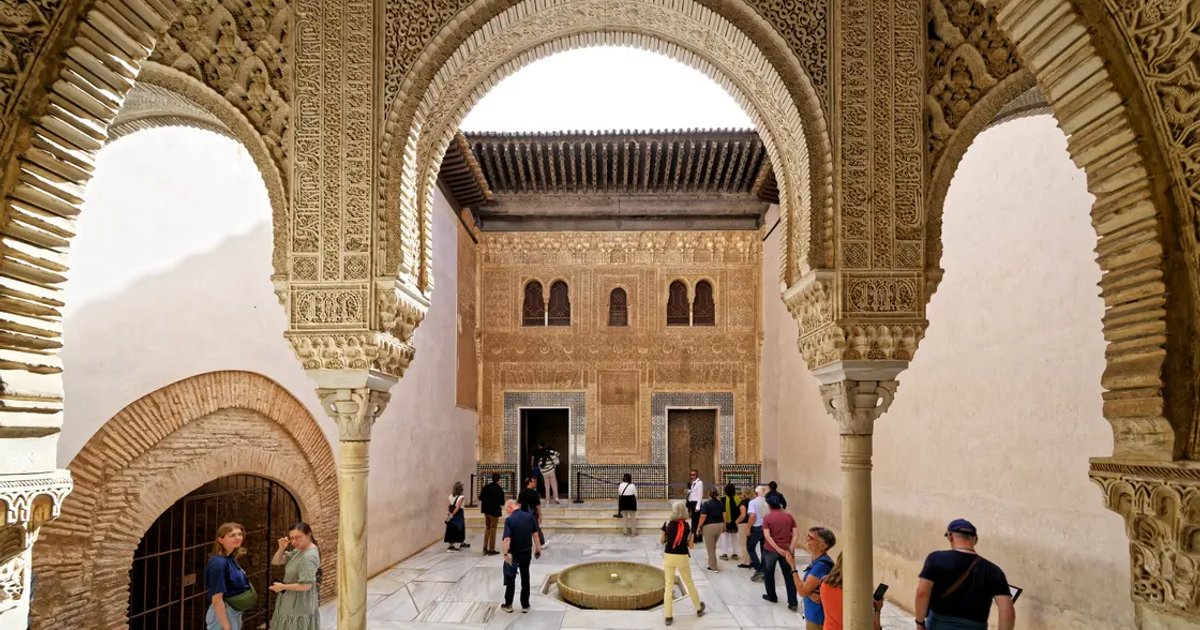
The difference is completeness. Córdoba's mosque was converted to a cathedral; a Renaissance nave now bisects it. Seville's Alcázar was continuously modified by Castilian monarchs. The Alhambra was partially repurposed after 1492 (Charles V built a Renaissance palace inside the complex walls, and the Alcazaba became an army barracks), but the Nasrid Palaces were preserved rather than rebuilt. The carved plasterwork, the cedarwood ceilings, the tile dados, the marble fountain courts: all of it is 14th and early 15th century, substantially intact.
Granada also has the Albaicín, a residential hill quarter whose street plan has not changed since the Islamic period. Córdoba has the Judería but it was substantially rebuilt in the early modern period. The Albaicín's lanes are still where they were laid in the 11th and 12th centuries. Some of the courtyard houses (cármenes) survive with their original structures. The UNESCO committee extended the World Heritage listing from the Alhambra alone (1984) to include the Albaicín in 1994 specifically because it is the most complete surviving medieval Islamic residential quarter in the Iberian Peninsula.
Key dates of Al-Andalus in Granada
711
Arab-Berber conquest. Granada (then known as Ilbira) taken as part of the rapid sweep through Iberia.
1013
Granada becomes capital of the taifa kingdom of the Zirids after the collapse of the Caliphate of Córdoba.
1238
Muhammad I ibn Nasr founds the Nasrid dynasty. Work begins on the Alhambra.
1333–1391
Height of the Nasrid period: Yusuf I and Muhammad V build the Comares Palace, the Court of the Lions, and the Generalife additions.
1492
2 January: Muhammad XII (Boabdil) surrenders the Alhambra. End of 781 years of Islamic rule in Granada.
The Alhambra complex
The Alhambra is four things at once: a military fortress, a royal palace, a residential town, and a garden. Most visitors arrive for the Nasrid Palaces and leave before seeing the rest. All four elements are covered by the general admission ticket and the Dobla de Oro.
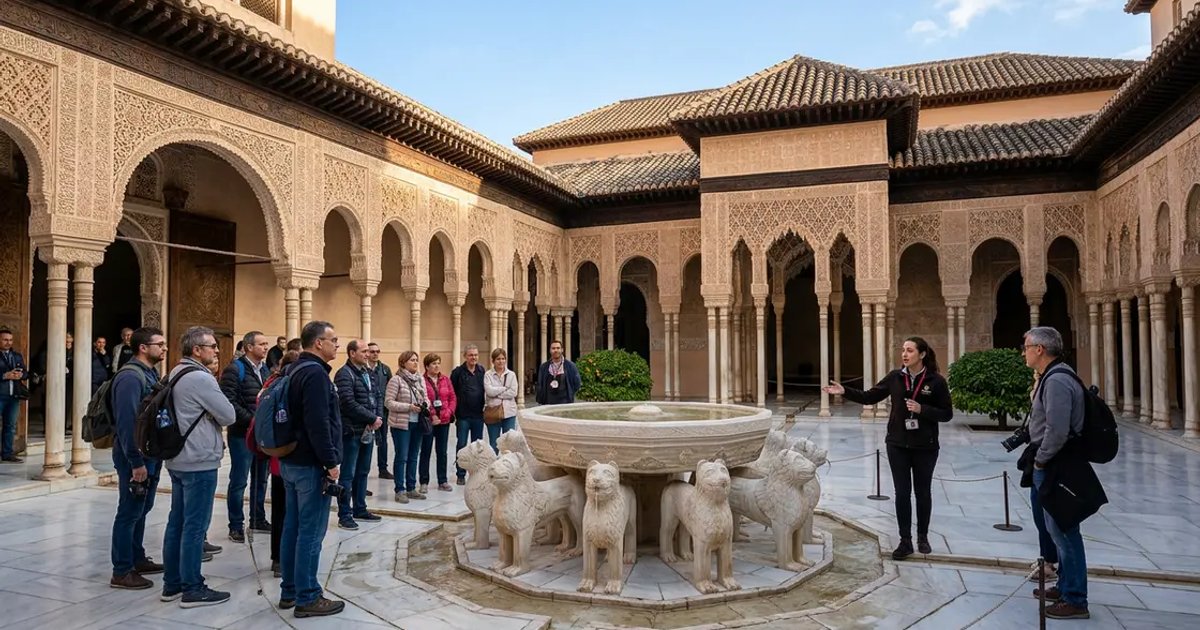
Three linked palace sections built between 1333 and 1391: the Mexuar (council chamber), the Palacio de Comares (throne room and ambassadors' court), and the Palacio de los Leones (private royal apartments). The Mexuar is the oldest surviving section; the Salón de Comares, with its cedar ceiling of 8,017 interlocking pieces, is the largest room in the complex. The Court of the Lions is the most photographed, built under Muhammad V around 1370, with 124 white marble columns supporting carved stucco arcades.
Entry is timed and one-way. Your ticket assigns a window of 30 minutes during which you must enter the Nasrid Palaces. Once inside, you can stay as long as you like. Ninety minutes is realistic for a thorough visit; 60 minutes if you move steadily. Photography is allowed; no flash in several rooms.
The military section at the western end of the Alhambra hill, older than the Nasrid Palaces: its lower walls date from the 9th century, rebuilt by the Zirids and then the Nasrids. Climb the Torre de la Vela for the best views of the Albaicín, Sacromonte, and on clear days the Sierra Nevada. Allow 30 to 40 minutes. Visit before your Nasrid Palaces slot while you wait for it to open.
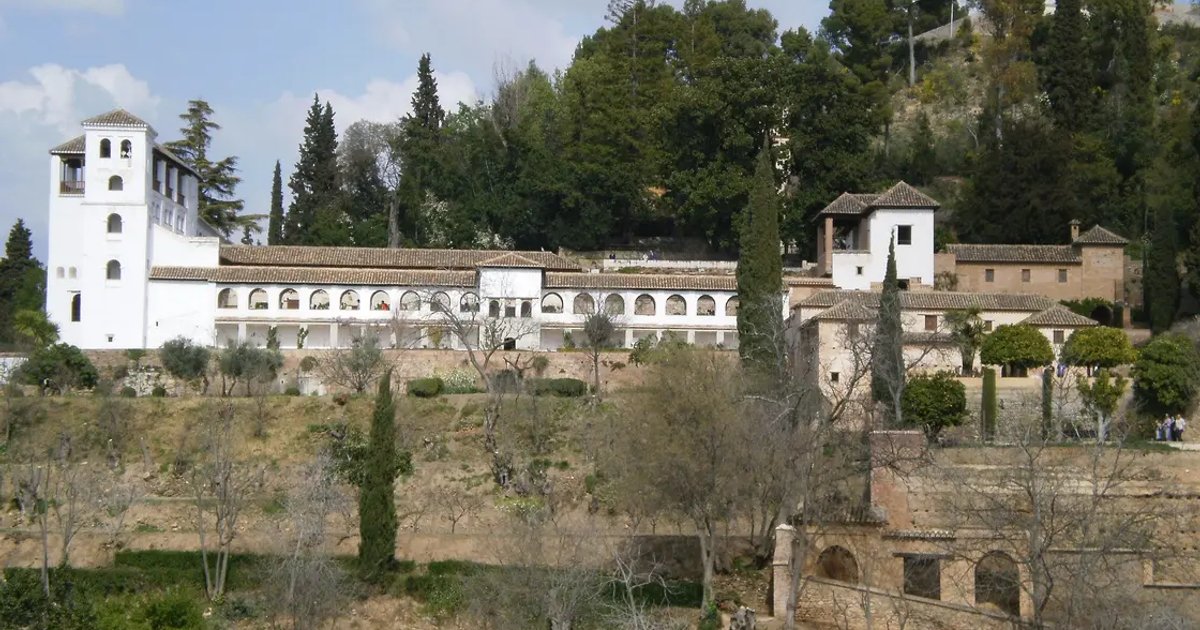
The royal summer palace and its terraced gardens on the hill above the Alhambra. The name comes from the Arabic Yannat al-'Arif (garden of the architect, or garden of the overseer). The original hydraulic system that fed the gardens from the Sierra Nevada snowmelt still functions. The Acequia Court, with its long central pool and spouting jets, was built by Ismail I around 1319; the garden terraces above are 20th-century additions but follow the original layout. Allow 45 to 60 minutes. In May the roses are in full bloom.
Partal gardens
The oldest surviving palace on the Alhambra hill, built by Muhammad III around 1302 to 1309, predating the Nasrid Palaces. Only the portico and reflecting pool survive from the original structure. The gardens around it are early 20th century. Usually uncrowded, particularly on the exit route from the Generalife. Worth 20 minutes as a quieter counterpoint to the Nasrid Palaces.
Alhambra night visit
The Patronato also sells a night visit to the Nasrid Palaces (€12.73 in 2026), separate from the general admission ticket. The route covers the same palaces after dark on a fixed guided path. See the Alhambra night visit guide for a comparison of the day and night experiences.
Albaicín: the surviving Moorish quarter
The Albaicín sits on the hill directly across the Darro gorge from the Alhambra. In the Nasrid period it was the main residential district of the city, with a population of around 40,000 crammed into a network of narrow lanes, courtyard houses, mosques, and public baths. After 1492, the mosque minarets were converted to bell towers or demolished, and most of the Muslim population was expelled in 1502 following the forced-conversion edict. The streets stayed because they were too expensive and difficult to replace.
Walking the Albaicín today means navigating the same lanes the Nasrid-era inhabitants used. The hill is steep and the cobblestones uneven; wear shoes with grip. The main sights:
Mirador de San Nicolás
The classic viewpoint for the Alhambra opposite. Crowds gather from 4pm; before 9am it is quiet. The square itself is pleasant: a small fountain, a whitewashed 16th-century church, the occasional guitarist. The view faces south-east, which means morning light falls on the Alhambra walls and afternoon light falls on you. For photography, come at sunrise.
An 11th-century bathhouse on Carrera del Darro, one of the best-preserved Islamic baths in Spain. Built under the Zirids, before the Nasrid dynasty existed. The vaulted ceilings have star-shaped oculi that drop thin columns of light onto the stone floors; photographs of this effect circulate widely but the reality is better. Open from 10:00. Part of the Dobla de Oro ticket. Allow 20 minutes; bring a camera with a wide aperture.
Carrera del Darro
The street running along the Darro river between the city centre and the base of the Albaicín hill. Medieval bridges cross to the hill on the left; the Alhambra rises on the cliff above to the right. Early morning, the sound is the river. By mid-morning it fills with tourists walking to the Bañuelo or beginning the climb to San Nicolás. The street itself has several buildings of Islamic origin, visible in the arched doorways and tower remnants along the north side.
Combined ticket
Dobla de Oro: Alhambra + 8 Albaicín monuments
The Dobla de Oro (€30.48 in 2026) is the Patronato's combined ticket covering the full Alhambra complex with a timed Nasrid Palaces entry slot, plus 8 Moorish monuments in the Albaicín. The 8 Albaicín sites can be visited on the day before, the same day, or the day after your Alhambra slot: a 3-day flexibility window.
The name comes from the gold dobla coin minted by the Nasrid sultans of Granada. The 8 Albaicín monuments include Bañuelo Arab Baths, Dar al-Horra Palace, Casa del Chapíz, Casa de Zafra, Horno de Oro, Maristán, Qubba del Cuarto Real, and Corral del Carbón. Dar al-Horra is the standout: a late-Nasrid palace with some of the finest surviving domestic architecture of the period. Allow 30 minutes there minimum.
Two Moorish-era structures survive in the city centre, a short walk from each other near the cathedral. Neither is on the Dobla de Oro ticket, but both are small and can be added to a morning without much detour.
Granada's 14th-century Islamic university, founded by Yusuf I in 1349 on the site that is now part of the city hall complex next to the Royal Chapel. The exterior is unremarkable; most visitors walk past assuming it is a municipal office. The prayer hall inside has exceptional Nasrid plasterwork with stucco mihrab decoration approaching the quality of the Alhambra. Separate admission charge. Budget 20 minutes.
A 14th-century caravanserai (merchant inn) built under Ismail I around 1336, the only surviving structure of its type in Spain. Merchants arriving in Granada with goods from North Africa would have stored their wares and slept here. The horseshoe-arch entrance gate is original Nasrid stonework. The interior courtyard now hosts cultural events. Technically free to enter: the Patronato includes it in the Dobla de Oro but it is open to everyone regardless.
The Alcaicería nearby was Granada's silk market in the Nasrid period, one of the most important trading centres in the western Mediterranean. The current structure is a 19th-century reconstruction after a fire destroyed the original in 1843; the street layout echoes the medieval souq but little original fabric survives. Worth a walk-through to reach the Corral del Carbón.
Moorish food culture
Granada's food culture carries traces of 781 years of Islamic rule in ways that are still visible in the markets and on restaurant menus. Three products are worth knowing about:
Granada's blood sausage is made with pine nuts, spices (cumin, cinnamon, clove), and minced meat rather than the rice-based version common in Castile. The spice profile reflects Moorish cooking traditions in meat preservation. It is typically served grilled as a tapa.
A small cream-soaked pastry from Santa Fe, a village 10 km west of Granada. Created in 1897 and named after Pope Pius IX (Pio Nono in Italian), but the pastry's origins in convent confectionery draw on the same sugar-and-almond techniques that Moorish bakers brought to Iberia. Sold in Granada's cafés and pastry shops throughout the day.
Cured at over 1,200 metres altitude in the Sierra Nevada village of Trevélez, this ham has Protected Geographical Indication status. The curing method predates the Reconquista; the altitude and dry mountain air produce a distinctive mellow flavour. Available throughout Granada's market and tapas bars.
The tea houses on Calle Calderería Vieja (in the lower Albaicín) are the most direct reference to the city's North African trading connections. Mint tea, almond pastries, and baklava are sold in a dozen small establishments along this street. The setting is Moroccan-referencing and some places are deliberately atmospheric; the tea itself is good and prices are low. The less adorned places with counter service rather than floor cushions tend to be the better ones.
Sacromonte: the Moorish-Romani crossover
The Sacromonte neighbourhood adjoins the Albaicín to the east. Its cave dwellings were occupied by Romani families from the 15th century onwards, many of them working in metalwork and music. The flamenco tradition associated with Sacromonte, including the specific zambra style danced in cave venues, developed out of this Romani-Andalusian-Moorish cultural overlap.
The Sacromonte caves are not Moorish. The hill was largely uninhabited during the Islamic period. But the neighbourhood's connection to Moorish Granada is cultural rather than architectural: many Romani families who settled here after 1492 were the displaced craftspeople and musicians of the old Islamic city, and the zambra style they developed drew on Moorish musical modes and rhythms. The Abadía del Sacromonte (abbey), founded in 1600 on the hill above, sits on a site associated with a claimed discovery of early Christian martyrs' remains, itself a post-1492 religious politics story worth understanding.
The live flamenco shows in the cave venues are tourist-facing, of variable quality, and priced accordingly. If you want flamenco performance, Sacromonte is the obvious place; if you want the neighbourhood itself, come in the morning and walk up past the caves to the abbey for the views back across the Albaicín and the Alhambra.
Walking Moorish Granada in a day
This sequence covers the main sites in one full day. It assumes a morning Alhambra ticket (9:30 Nasrid Palaces slot) and afternoon flexibility. Two days is more comfortable; see the Dobla de Oro guide for the two-day version using the combined ticket.
1
Alhambra morning (8:30 to 13:00)
Arrive at the Alhambra by 8:30. Walk the Alcazaba first (30 to 40 minutes, views from the Torre de la Vela). Enter the Nasrid Palaces at your 9:30 slot. Follow the one-way route through the Mexuar, Comares Palace, and Court of the Lions (90 minutes). Continue to the Generalife (45 minutes). Exit via the Partal gardens (20 minutes) on the way out.
2
Bañuelo and Carrera del Darro (14:00 to 15:30)
After lunch near the city centre, walk along Carrera del Darro to the Bañuelo. The street itself is worth a slow pace: look at the tower remnants and arched doorways on the north side. The Bañuelo needs 20 minutes. Nearby, the Casa Castril (Renaissance facade, Moorish-era foundation) houses the Archaeological Museum; its collection of Nasrid-period ceramics and bronzes is small but specific.
3
Albaicín streets (15:30 to 17:30)
Climb from Carrera del Darro up into the Albaicín. The lanes above Calle Páginas are quiet; the neighbourhood above the main tourist routes is a working residential area. Work up to Mirador de San Nicolás for late afternoon (still busy, but less so than at sunset).
4
Mirador San Nicolás at sunset, then teterías evening
Sunset at San Nicolás faces the Alhambra. After dark, descend through the lower Albaicín to Calle Calderería Vieja for tea and pastries. The Plaza Larga at the top of the Albaicín has a small Friday market and is a local gathering point in the evenings; fewer tourists than the Mirador area.
Best season for Moorish Granada
Spring (April and May) is the most comfortable month for walking the Albaicín and Alhambra. The Generalife roses bloom in May; the Sierra Nevada is still snowcapped. Temperatures in the city reach 18 to 24°C. Alhambra tickets sell out faster in May than in any other month except July and August, so book 90 days ahead.
Autumn (September and October) is the second-best period: quieter than spring, temperatures 15 to 22°C, shorter queues inside the monuments. The Generalife gardens retain their late-summer green into mid-October.
Summer (July and August): avoid the Albaicín and Alhambra from 11:00 to 17:00. The city sits at 689 metres but temperatures regularly reach 35 to 38°C in the open. The Nasrid Palaces are cool inside; the Alcazaba, Generalife walk, and Albaicín streets are not. Morning visits (before 10:00) or evening visits (Albaicín after 19:00) are workable. Alhambra tickets sell out months ahead in summer.
Winter (December to February) brings cold, occasional snow on the Sierra Nevada, and very few tourists. The Alhambra against snow is extraordinary. The Albaicín is frequently misty in the mornings. Alhambra tickets are sometimes available same-week in January and February.
The wider Moorish Andalusia context
Granada's Moorish heritage is most legible when you know what came before it. The Mezquita-Cathedral in Córdoba (begun 784 by Abd al-Rahman I) is the first great monument of Umayyad Spain; the Alhambra is the last great monument of Nasrid Spain, built 450 years later by a dynasty that had already watched the rest of Al-Andalus fall. In Seville, the Alcázar was built by the Christian king Pedro I after 1364, using craftsmen trained in Granada and the Nasrid style: it shows how thoroughly the Moorish aesthetic had penetrated the culture of its own conquerors.
If you plan to cover all three cities, the Granada-Seville-Málaga Andalusia itinerary sequences the cities in an order that makes historical sense: Granada last, as the culmination.
Book a Guided Alhambra Tour
Tours are selected for quality, not commission. We earn a small fee if you book — at no extra cost to you.
Skip the queue and explore the Nasrid Palaces with an expert guide.
Arab and Berber forces took Granada in 711 as part of the rapid conquest of Iberia. The city remained under Muslim rule for 781 years. For much of that time it was a provincial city within a larger Islamic state; it only became the capital of an independent kingdom in 1238, when Muhammad I ibn Nasr founded the Nasrid dynasty after the fall of Córdoba and Seville to Christian forces. The Nasrid Sultanate of Granada lasted from 1238 until 2 January 1492, when Muhammad XII (known to the Spanish as Boabdil) surrendered the keys of the Alhambra to Ferdinand and Isabella. No other Muslim polity in Iberia survived as long.
Is the Alhambra the most important surviving Moorish monument in Spain?
By most measures, yes. The Alhambra is the only Nasrid royal palace complex to survive substantially intact. Córdoba's Mezquita-Cathedral is older and larger, but it was converted into a church; the Alhambra remained in continuous use (as royal apartments, then an army barracks, then a national monument) without losing its essential Islamic architectural character. The Nasrid Palaces in particular are unmatched in Western Islamic architecture for the quality of their surviving plasterwork, tile work, and carved wooden ceilings.
What is the Dobla de Oro and is it worth buying?
The Dobla de Oro is a combined ticket sold by the Patronato de la Alhambra covering the full Alhambra complex plus 8 Moorish monuments in the Albaicín quarter. In 2026 it costs €30.48 for the general (daytime) version. It is worth buying if you have two days and want to visit more than three or four of the Albaicín sites. See the full Dobla de Oro guide for an honest assessment of which sites merit the visit and which do not.
What was the Albaicín before the Reconquista?
The Albaicín was the main residential quarter of Moorish Granada, built on the hill facing the Alhambra across the Darro valley. Its street plan today still follows the Islamic medina layout: a warren of narrow lanes called cármenes (from the Arabic word for vineyard), dead-end alleys, and small neighbourhood squares. After 1492, most of the Muslim population was expelled or forcibly converted; the mosques were demolished or converted into churches. The Albaicín's street plan survived largely because it was too steep and congested to redevelop. UNESCO listed it as a World Heritage Site alongside the Alhambra in 1994.
Can I visit the Alhambra without booking in advance?
In summer (June to August), and increasingly in spring and autumn, the Nasrid Palaces sell out weeks ahead. The Patronato releases tickets roughly 3 months (90 to 92 days) before each date. The most popular entry windows (9:00, 9:30, 10:00) sell within hours of release. Same-day tickets are occasionally available at ATM terminals near the Gate of Justice in quieter months, but this is unreliable. Buy through tickets.alhambra-patronato.es as early as possible. Tickets are non-refundable. See the Alhambra tickets guide for full booking instructions.
What Moorish food traditions survive in Granada?
Several are visible on the streets. The tea houses on Calle Calderería Vieja (in the lower Albaicín) serve mint tea and Moroccan-style pastries in a setting that references the city's North African trading connections. Pionono, the small cream-soaked pastry from nearby Santa Fe, has roots in Moorish confectionery. The sweet-spiced style of morcilla de Granada (blood sausage with pine nuts and spices) differs from the more common rice-based Castilian style and reflects Moorish spice-use in meat preservation. None of this is historical reconstruction; these products are sold daily in the market at Alcaicería.
What is the Mirador de San Nicolás and should I go?
The Mirador de San Nicolás is a small square in the upper Albaicín with a direct view of the Alhambra against the Sierra Nevada. It appears in every guidebook and is usually crowded from around 4pm until after sunset. The view is genuinely good. Go before 9am or after dark if you want it without a crowd. The other Albaicín miradors (San Cristóbal, Mirador de la Lona) are emptier and serve as useful alternatives if San Nicolás is too busy for a photograph.
How does Granada's Moorish heritage compare to Córdoba and Seville?
The three cities preserved different things. Córdoba has the Mezquita-Cathedral (begun in 784, the oldest and largest surviving mosque converted to church in Spain) and the excavated palatial city of Medina Azahara. Seville has the Alcázar (the palace complex rebuilt by Castilian kings using Mudéjar craftsmen trained in the Nasrid style). Granada has the Alhambra and a surviving residential medina in the Albaicín. Historically, Córdoba and Seville were the earlier Islamic capitals; Granada was the last. The Alhambra complex is the only place where you see a nearly complete Islamic royal palace, which is why it draws more international visitors than the other two cities. The Granada-Seville-Málaga Andalusia itinerary covers all three cities if you want to compare.
Reporter notebook
Insider tips
Practical observations gathered the way a local journalist would keep them: short, specific, and more useful than brochure copy.
Best time
Book the Alhambra 9:30 slot, not the 8:30
The Alhambra gates open at 8:30, but the Nasrid Palaces do not open until your timed slot. An 8:30 slot means waiting outside in a queue, often in the cold in spring or autumn. A 9:30 slot lets you walk the Alcazaba first while the day warms up, then move directly to the Nasrid Palaces with no dead time. The 9:30 and 10:00 slots are the most popular for this reason and sell out first. Book them 90 days out from the release date. Late-afternoon slots (after 14:00) are often quieter inside the Nasrid Palaces and easier to get, though you will have less time for the Generalife afterwards.
Crowd tip
The Albaicín at 8am is a different city
The Mirador de San Nicolás is photographed more than anywhere else in Granada. By 10am it has tour groups, selfie sticks, and competing amplified guides. Before 8:30am it has pensioners doing slow laps, a man with two dogs, and one photographer with a tripod. The Albaicín streets are steep enough that most visitors descend to the city centre for breakfast. Go up early and you have the neighbourhood largely to yourself. The Arab baths at the Bañuelo open at 10:00; visit the viewpoints and streets first, then work your way down to Carrera del Darro.
Local custom
Order tea on Calle Calderería Vieja, not the tourist-menu restaurants
The lower stretch of Calle Calderería Vieja (called Calle Calderería Nueva for the upper section) has a dozen tea houses selling mint tea, almond pastries, and baklava. The décor is deliberately Moroccan-referencing and some places are kitsch, but the tea is real and the almonds genuine Andalusian varieties. Avoid anywhere with a laminated menu photo outside. The small, unlabelled places that serve only tea and a few pastries at a counter are the ones worth finding. Prices are low: a pot of tea and three pastries rarely costs more than €4.