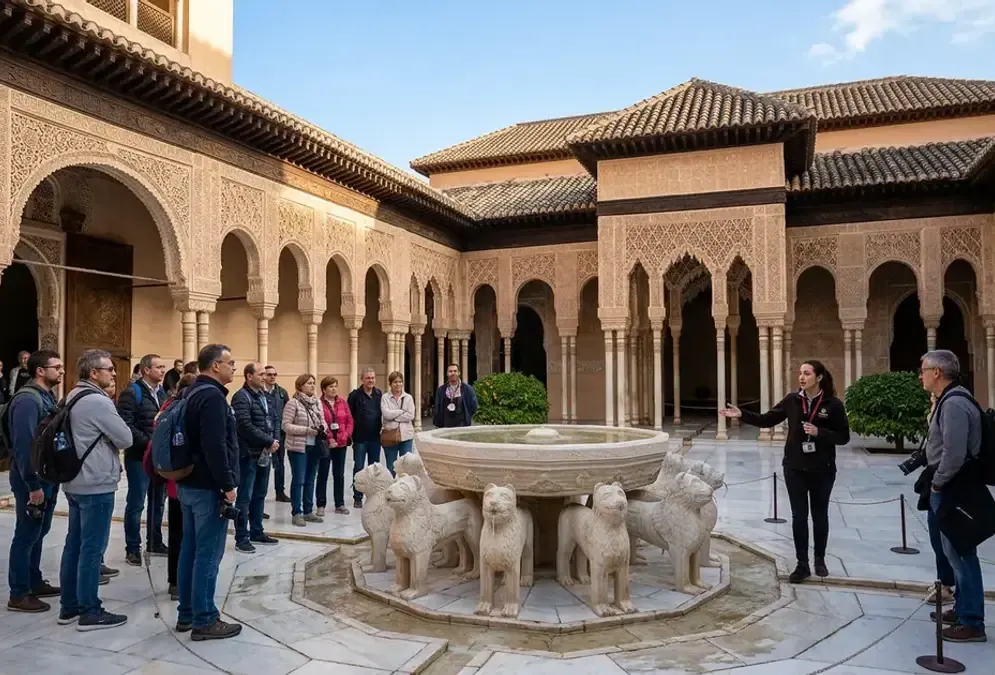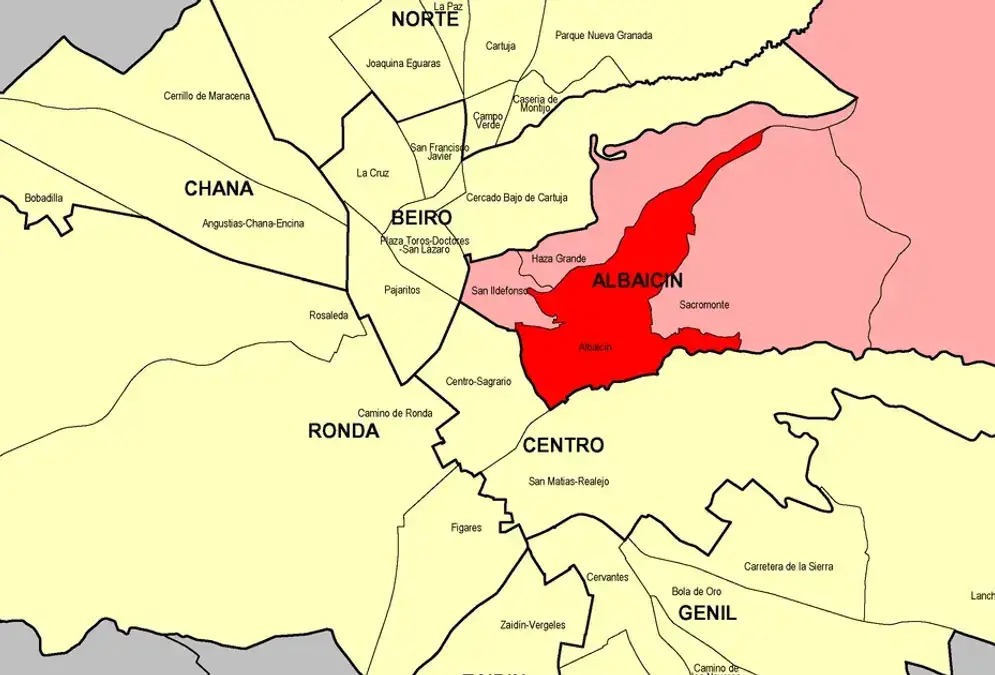
The Albaicín was established as a Moorish quarter in the 11th century, and its street layout has not changed in 900 years. The lanes are too narrow for cars, the gradient is steep, and the cobblestones are worn smooth by centuries of foot traffic. Walking here without knowing what you're looking at is perfectly enjoyable. Walking it with someone who can read the city — who knows which wall is Nasrid, which house hides a garden, what the Arabic inscriptions say above the doorways — is a different experience.
What a guided tour covers
The standard Albaicín walking tour runs 2 to 2.5 hours and covers 2-3km through the quarter's medieval core. Starting from Plaza Nueva at the foot of the hill, you climb through the Cuesta de la Elvira and into the labyrinth proper. The guide works through the historical layers: the Zirid kingdom that built the original quarter in the 11th century, the Nasrid expansion that turned Granada into a city of 100,000 people by the 14th century, and the Christian conquest of 1492 that cleared the mosques and converted the population.
The Albaicín is not a museum district. People live here. The carmenes — walled gardens behind high whitewashed walls, invisible from the street — are private homes. You hear the sound of them more than you see them: water running in a courtyard fountain, the scrape of a chair on terracotta. The guide points to what you wouldn't otherwise notice: a Nasrid arch built into a later wall, the remains of a Moorish bath beneath a 16th-century church, the logic of the street pattern as a defensive grid.
The Mirador de San Nicolás
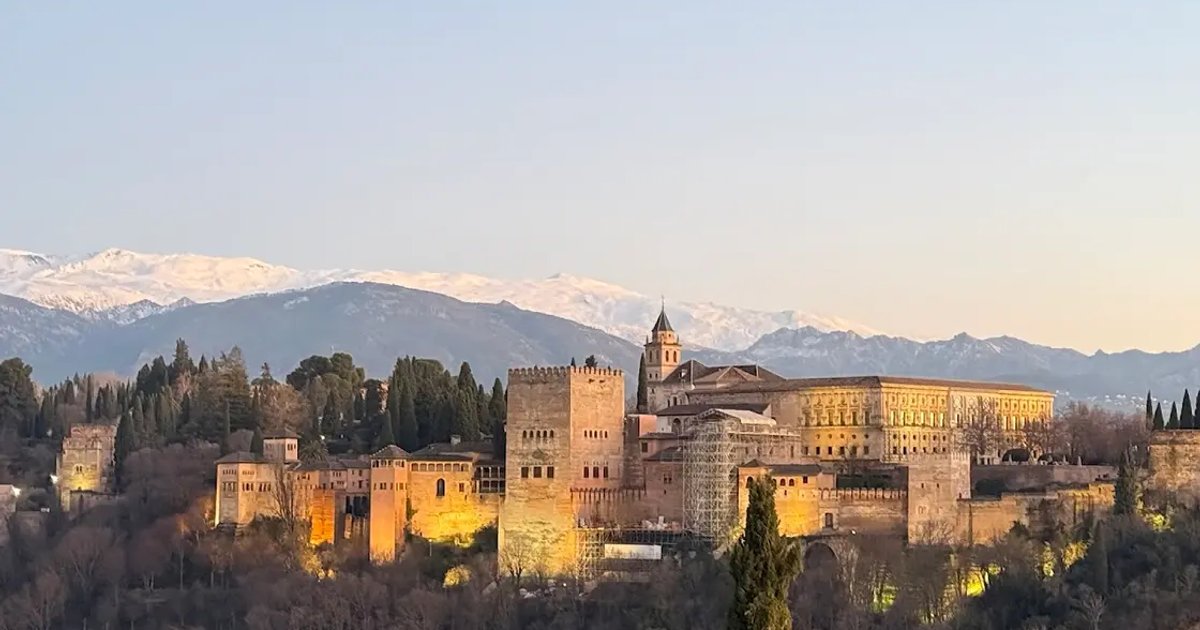
Every tour stops at the Mirador de San Nicolás, the viewpoint that looks across the Darro valley to the Alhambra. The view is well-known enough to appear in every guidebook. It is still worth going. The Nasrid Palaces and the towers of the Alhambra sit directly across the valley at eye level, with the Sierra Nevada filling the background when the sky is clear. The late-afternoon light turns the fortress walls from sand-coloured to orange-red.
The mirador fills up around sunset. Arrive with your guide before 6pm to get a spot on the terrace without the crowds. After the tour, the viewpoint is accessible at any time on your own — but the guide ensures you're positioned correctly and can identify what you're seeing.
Tour types and prices
Free walking tours run 2.5 hours on a tip-based model. The guide receives payment at the end of the tour, with €5-10 per person the typical amount. Operators include Walk in Granada, Sandeman's, and Toursgratis. These are group tours without size limits and work well for getting an orientation.
Paid tours start at €15-25 per person for the sunset and standard options through GetYourGuide and Civitatis. Official guided tours from the Alhambra organisation charge €25 per person (children under 10 free, ages 10-13 at €8) and run multiple times daily in Spanish and English.
For private tours with more flexibility on timing and route, prices start around €120 per person for a 3-hour itinerary.
Combo tours that include the Alhambra run €49-99 per person and cover 3-5 hours. These require booking the Alhambra component well in advance, as the Nasrid Palaces sell out weeks ahead.
Terrain and what to expect
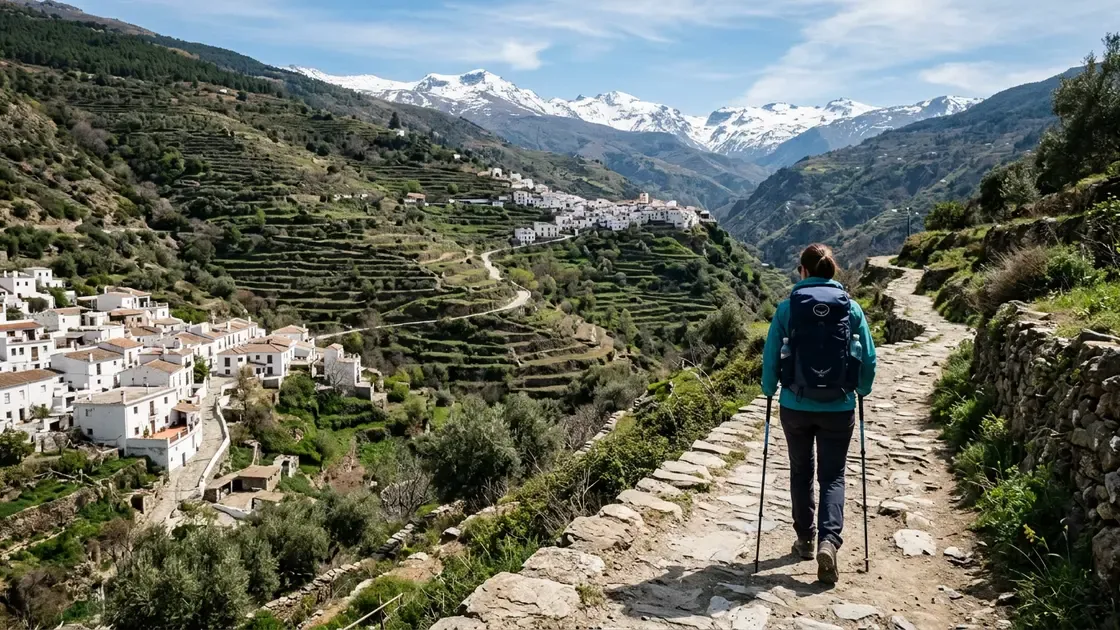
The Albaicín is steep. Multiple sections require climbing stairways cut into the hillside. The cobblestones are uneven. Worn leather soles on dress shoes will slip. This is not a hard walk by any measure — the total elevation gain is manageable — but it is not the flat city-centre stroll that some visitors expect. Wheelchairs and pushchairs can't navigate most of the quarter.
In summer, do not attempt the midday ascent. The reflected heat from the whitewashed walls is intense. The 8am or 9am morning tour gives you the quarter before the daytime crowds and in the best light for photography. Sunset tours starting at 6-7pm are the other good option, ending at San Nicolás as the light drops.
Wear shoes with rubber soles and enough grip for wet cobblestones if there's any possibility of rain. The stones get slippery immediately.
Getting to the start
All tours meet at Plaza Nueva, which is the natural entry point to the Albaicín from the city centre. It's a 15-minute walk from most central hotels and directly accessible by taxi or local bus from further neighbourhoods. After the tour, the Carrera del Darro runs east along the base of the hill, past the 11th-century El Bañuelo baths, and toward the foot of Sacromonte — a natural extension to the day.