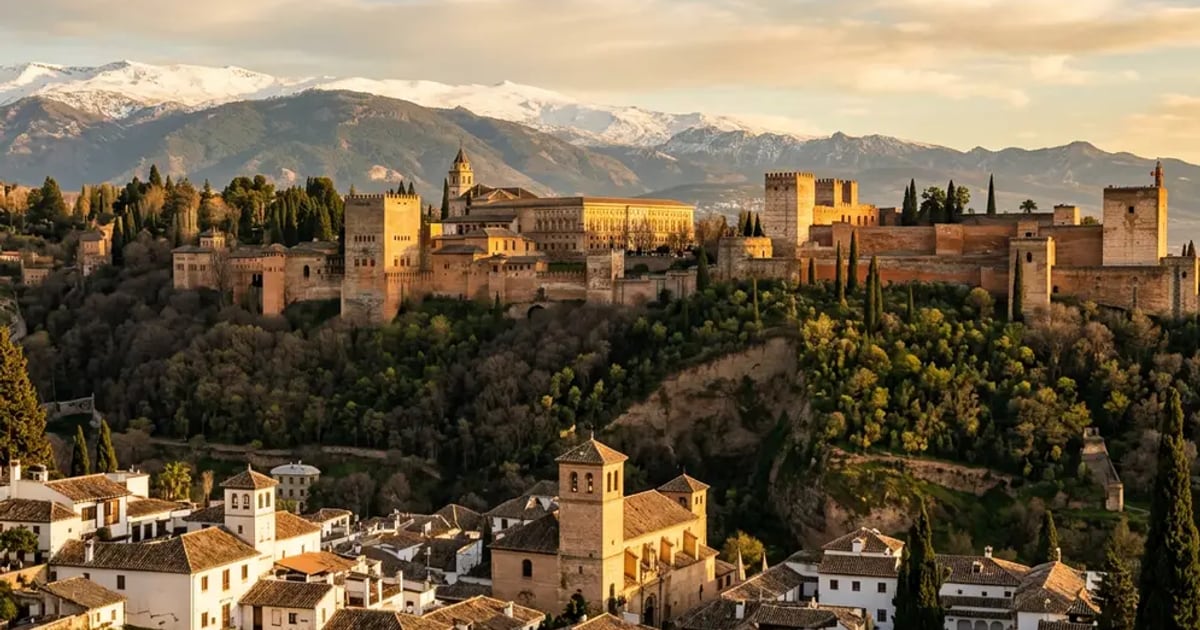
The quietest month in the city, and one of the most specific. Almond trees blooming in the Alpujarras below, Sierra Nevada in its best snow above, and Día de Andalucía opening the city's museums for free on the 28th.
Seven years resident in Granada. Specialist in Nasrid architecture, Al-Andalus history, and Andalusian walking routes.
Published
February is the month most travellers skip, and the one Granada locals quietly prefer for their own city. Hotel prices are at the floor. The Alhambra is bookable two to three weeks out. The university is in full term, which means the tapas bars in the centre operate at their liveliest, and no one in them is on a package tour. The streets of the Albaicín, usually clogged from April through October, belong to whoever is willing to be there in February cold.
Two things make February genuinely special rather than just cheap. First, the almond orchards of the Alpujarras bloom in late February — a 45-minute drive from the city, and one of the most specific natural events in the region's calendar. White and pale pink blossoms against the snow-covered Sierra Nevada is an image that exists for about two weeks a year. Second, Sierra Nevada is typically in its best snow conditions of the season: more reliable than December or early January, and less crowded than the Christmas and Easter rushes.
On 28 February, Día de Andalucía gives you several of Granada's museums for free. Carnival brings a week of street costumes and music somewhere in the month (date varies with Easter). And late February carries a tangible shift in the light — days are noticeably longer than January, and the city begins its slow turn toward spring. For a full monthly comparison, the best time to visit Granada guide has the complete picture.
Weather in February
Granada sits at 738 metres altitude. February days reach 13–16°C — warmer than January but still firmly winter. Nights drop to 3–7°C, which means morning walks through the Albaicín feel cold on your face, and the stone of the lanes holds the chill well into mid-morning. By mid-afternoon the sun has real warmth if you are out of the wind.
Early February (1–10)
13°C
The coldest end of the month. Six to seven rainy days spread across February, often concentrated in the first two weeks. Brief showers rather than sustained rain. Evenings require a proper coat.
Mid-February (11–20)
14–15°C
Carnival falls somewhere in here most years. Still winter but noticeably improving. Afternoon light is longer and noticeably warmer than January. Almond blossom starting in the lower Alpujarras by the end of this window.
Late February (21–28)
15–16°C
The sweet spot of the month. Almond blossom at its peak in the Alpujarras. Día de Andalucía on the 28th. Days are lengthening fast and the city has a discernible shift in mood toward spring.
February averages six to seven days of rain, mostly short afternoon showers. Snow falls occasionally in the city itself, perhaps once or twice a winter — it settles briefly and melts by mid-morning. If it does snow, the Albaicín under a white dusting is worth waking up early for: the neighbourhood empties even further and the silence is complete.
Daylight in February
Sunset in early February falls around 6:30 PM and reaches nearly 7:00 PM by the 28th. Not the long evenings of May, but a meaningful recovery from January. The light on the Alhambra in late afternoon February is richer than summer's flat overhead glare — the palace faces south-west and the winter sun catches the towers at a low angle that turns the stone amber from about 4:00 PM.
Día de Andalucía — 28 February
On 28 February 1980, Andalusians voted in a referendum to accelerate their path to regional autonomy. The date became Andalusia Day — a public holiday across the eight provinces, and the one day a year the regional government opens many of its state-run cultural sites free of charge.
Free museums in Granada on 28 February
The list varies year to year, but the sites that typically open free include:
Museo de Bellas Artes: Inside the Palacio de Carlos V on the Alhambra hill. Permanent collection of Andalusian painting from the 16th to 20th centuries. Usually charges €1.50. The location alone is worth the walk up — you are inside the Alhambra complex without an Alhambra ticket.
Museo Arqueológico y Etnológico: In the Casa de Castril in the Albaicín, a 16th-century palace with a Plateresque portal. Prehistory through the Moorish period. Usually charges €1.50.
Palacio de los Olvidados: Private Jewish heritage museum in the Realejo neighbourhood. Usually charges €4. On free-entry days it draws queues — arrive at opening.
Confirm the year's list on Granada's official cultural listings site or the Junta de Andalucía's cultural portal in the week before your visit. The Alhambra itself is not part of the free-entry programme and operates on its normal ticket schedule.
Planning the day
28 February is a public holiday: banks close, municipal offices shut, and many smaller shops stay dark. The atmosphere is local and festive in a low-key way — families out on the streets, the bars full at lunchtime, flags visible on the main buildings. It is not a party in the way Carnival is; it is more like a Sunday that the whole city agreed to take seriously.
A practical circuit: Museo de Bellas Artes at 10:00 AM (before the Alhambra area fills with day visitors), then walk down through the Albaicín to the Museo Arqueológico, then across the Darro river to the Palacio de los Olvidados in the Realejo. Three museums, one morning, zero euros. Lunch in the Realejo afterwards.
Carnival in February
Granada celebrates Carnival in the run-up to Ash Wednesday — usually in the second or third week of February, though the date moves with Easter every year. The city's Carnival is nothing like Cádiz or Tenerife; it is a local event with parades through the city centre, costumes on the main streets, and music in the bars. Attend if you are already here that week; the city council publishes the programme about two weeks out.
Sierra Nevada and the Alpujarras
February is the month the Sierra Nevada and the Alpujarras each reach their annual high point — one for snow, one for flowers. They are 45 minutes apart by car from each other, and about 75 minutes from Granada city in opposite directions. On a clear late-February day, doing both is not a stretch.
The ski resort at Pradollano covers 110 km of pistes from 2,100 to 3,300 metres altitude. December and early January can be unreliable — snowpack is building and some years the early-season conditions disappoint. By February the mountain is in full operation. Average February snowfall at 2,500 metres is higher than any other month, and cold overnight temperatures set the snow well. Midweek slots outside the European school holiday windows are the best value of the season: reliable conditions, shorter lift queues.
A day lift pass runs around €50–60 depending on the date (check sierranevada.es for current pricing). The Alsa bus from Granada city bus station runs to Pradollano in 45 minutes. If you are driving, the road from Granada is well maintained and gritted when conditions require it.
The valleys south of the Sierra Nevada — collectively called the Alpujarras — are terraced with almond orchards that have been here since the Moorish period. In late February the trees come into flower before a single leaf appears: white and pale pink blossoms against bare grey branches, with the snowy peaks of the Sierra Nevada rising directly behind them. It is a specific and photogenic combination that exists for about two weeks a year.
The lower Alpujarras around Órgiva and the Lecrín Valley typically bloom first, from around the 15th of the month in a normal year. The higher villages — Pampaneira, Bubión, Capileira — follow a week or two later, their orchards set against a more dramatic mountain backdrop. Órgiva is 45 minutes from Granada by car (no direct bus for this kind of wander). The road from Granada through the Lecrín Valley avocado groves is worth taking slowly.
There is no organised almond blossom tourism infrastructure here — no paid tours, no crowds, no entry fees. You park, you walk the lanes between the orchards, you take photographs. The villages have bars and small restaurants; Pampaneira in particular has several that are open year-round. It is a quiet, unhurried day out.
February is among the easiest months to book the Alhambra. Demand is low, the 90-day advance window rarely sells out, and you have genuine choice of morning time slots. Two to three weeks ahead is a safe margin; in most years one week out still leaves options. The exception is 28 February (Día de Andalucía) — the Museo de Bellas Artes inside the Alhambra complex draws more foot traffic that day, though the Nasrid Palaces themselves are not affected by the holiday.
February booking by period
1–14 February: One to two weeks ahead is usually enough. Slots at all hours available. This is the quietest window in the Alhambra's annual calendar — midweek mornings in particular are close to uncrowded.
European half-term week (varies by country, often mid-February): A modest uptick in demand. Families from the UK, France, and Germany account for most of the increase. Book two to three weeks out if your dates overlap. It is nothing like the summer pressure, but worth noting.
15–28 February: Still very bookable. Two weeks out gives you solid slot choice. The 10:00 AM entry is the most comfortable time of day — past the first-entry rush, before the afternoon groups arrive.
Winter morning light in the Nasrid Palaces
The Nasrid Palaces face south and south-west. In February, the low winter sun enters at a shallow angle that reaches deep into the colonnaded galleries and throws long shadows across the muqarnas vaulting. The Sala de los Abencerrajes, where the star-shaped honeycomb ceiling catches light from a single high window, shows its geometry more clearly in winter light than in summer's harsh overhead glare. The Patio de los Leones marble is cold to the touch, the fountains run at reduced flow, and the crowds are thin enough that you can actually stop and look.
The Generalife gardens in February are spare — the hedges trimmed back, the flowerbeds empty, the water channels low. If you are visiting for the garden experience, wait for May. If you are visiting for the architecture and the solitude, February is one of the better months.
For the complete booking process — how the 90-day release window works, which ticket types cover the Nasrid Palaces versus the Generalife, and what to do if your preferred date is sold out — see the Alhambra tickets guide.
Practical planning
February is the most straightforward month to plan in Granada. The only decision is how much you want to build the trip around skiing or the Alpujarras, both of which require a car or a bus and half a day.
Accommodation
February is low season by any measure. Mid-range hotels in the city centre are available from €55–90 per night. Albaicín guesthouses, which charge a premium in summer, run €70–110 in February. You can usually book one to two weeks out without sacrificing choice, except around European half-term dates (which vary by country but typically fall in the second or third week of February).
If you plan to ski for multiple days, staying in Pradollano at the base of the resort is worth considering. February is the only month where the mountain accommodation has genuine availability — it books up in Christmas week and Easter, but February midweek is very accessible.
What to pack
A proper winter coat for evenings — 3–7°C lows and the Albaicín stone holds the cold
Layers that work from 5°C in the morning to 15°C in the afternoon
Waterproof footwear with grip — cobbles get slick after rain, and the Albaicín lanes are uneven
A light waterproof shell — February showers are short but cold
If going to Sierra Nevada: full ski kit, or rent at the resort (shops at Pradollano have rental equipment)
Sun protection for the Alhambra terraces — winter sun at this altitude is still strong on clear days
Getting around
For the city itself, you do not need a car. The Albaicín, the Alhambra, and the city centre are all walkable. The Alhambra minibus (C3 and C4) runs frequently from Plaza Nueva. The tourist bus is not worth the cost.
For Sierra Nevada: the Alsa bus runs from Granada bus station to Pradollano. February service runs several times daily during ski season — check the current schedule on the Alsa app the evening before, as times adjust with snow conditions and demand.
For the Alpujarras: a rental car is the only practical option for almond blossom season. Public buses reach Órgiva and a few villages on a slow schedule, but the flexibility to stop at roadside orchards, walk the terraced lanes, and reach the higher villages requires your own transport. Car hire in Granada in February is cheap — book a day before you go.
University term
Granada's university — the fifth largest in Spain, with around 60,000 students — is in full term through February. This matters practically: bars and cafés in the centre fill with students in the early evening, the free tapa culture in the Albaicín and Realejo is operating at full strength, and the city has energy even on weekday nights. The contrast with the quiet streets is sharper in February than in any other month: half the pavement is empty tourists, the other half is very much locals going about their lives.
Frequently asked questions
Frequently asked questions
What is Día de Andalucía and does it affect Granada?
Día de Andalucía falls on 28 February — Andalusia's regional holiday, marking the 1980 autonomy referendum. Across Andalusia, the regional government opens many state-run museums free of charge. In Granada this typically includes the Museo Arqueológico y Etnológico, the Museo de Bellas Artes (inside the Palacio de Carlos V on the Alhambra hill), and the Palacio de los Olvidados. The list changes year to year, so check Granada's official cultural listings the week before. It is a public holiday — some smaller shops close, banks close, and municipal offices are shut. The Alhambra operates on its normal schedule. If you are in Granada on 28 February, do the free museum circuit in the morning and walk the city in the afternoon: the streets have a local, festive feel without the tourist infrastructure of a major event.
Is February a good time to visit Granada?
One of the best, depending on what you are after. February is the quietest month in the city: hotel prices are at their annual low, the Alhambra is bookable two to three weeks out, and the crowds in the Albaicín are thin enough that you can walk the main streets without shuffling in a queue. Sierra Nevada is in full ski season, often with the best snow of the winter. In late February, the almond orchards of the Alpujarras come into bloom — a day trip that most visitors have never heard of but that locals time trips around. Carnival adds a week of costumes and street music (date varies with Easter). The trade-off is cold nights: lows drop to 3–7°C, and mornings in the Albaicín feel raw. Pack accordingly. For the full monthly picture, the best time to visit Granada guide has everything.
When do the almond trees bloom in the Alpujarras?
Late February, though the exact window shifts with the year's weather. In a warm winter, flowering can start in the last days of January; in a cold year it holds until the first week of March. The most reliable target is the last two weeks of February. The orchards around Órgiva and the lower Alpujarras valleys typically bloom before the higher villages. The villages of Pampaneira, Bubión, and Capileira follow a week or two later. The distinctive image — white and pale pink blossoms against the still-snowy peaks of the Sierra Nevada — is only possible in this window. From Granada city centre, Órgiva is about 45 minutes by car. The drive up from the coast road through the Lecrín Valley adds context and orchards of its own. There is no guided tour infrastructure for almond blossom season; this is a car-trip-and-wander affair.
Is Carnival celebrated in Granada?
Yes, though on a much smaller scale than Cádiz or Tenerife. Granada's Carnival runs for several days in February (the date is tied to Easter — typically the week before Ash Wednesday). The city centre and the Albaicín see parades, street costumes, and music on the main streets. It is a genuine city event attended by locals, not a tourist festival staged for visitors. The programme is published by the city council a few weeks before; the main parade runs through the centre on the Saturday. Accommodation is not significantly affected, unlike the big Carnival cities. If you are already in Granada that week, it adds real character; it is not, by itself, a reason to schedule a trip.
Can you ski in February at Sierra Nevada?
Yes — February is often the best snow month of the season. The Sierra Nevada ski resort at Pradollano sits between 2,100 and 3,300 metres altitude, and February snowfall is typically more reliable than the early-season conditions of December and January. The main ski area covers around 110 km of pistes across all difficulty levels. A day lift pass runs roughly €50–60 (check sierranevada.es for current prices — they vary by date). The resort is 32 km from Granada: about 40 minutes by car, or 45 minutes on the Alsa bus from the city bus station. Midweek February slots are the best value in the season — fewer people than the February half-term week and better snow than March. For full logistics and trail information, the Sierra Nevada guide covers everything.
Reporter notebook
Insider tips
Practical observations gathered the way a local journalist would keep them: short, specific, and more useful than brochure copy.
Best time
Almond blossom and skiing on the same weekend
In late February — roughly the 20th to the 28th — you can drive down to the Alpujarras in the morning to walk among blooming almond orchards, then drive back up through Granada and on to Sierra Nevada for an afternoon ski. The two are 90 minutes apart by car, and both are at their seasonal best in the same narrow window. Check the almond blossom state on local social media the week before; the lower Alpujarras valleys around Órgiva bloom a week ahead of the higher villages. If you only have one day, Órgiva and the road toward Lanjarón is the more accessible circuit.
Local custom
How to run the Día de Andalucía museum circuit
On 28 February, several Granada museums open free of charge for the day. The most useful combination: start at the Museo de Bellas Artes inside the Palacio de Carlos V on the Alhambra hill (arrive by 10:00 AM before day visitors fill the area), then walk down to the city for the Museo Arqueológico near the Albaicín. The Palacio de los Olvidados, which charges €4 on normal days, is a smaller venue but worth adding if it is on the year's free list. Check the official Junta de Andalucía cultural listings the week before for the confirmed roster — the free-entry list is published annually but the content varies.
Booking tip
Book late February skiing, not early December
The Sierra Nevada season opens in late November or early December, but early-season conditions are unreliable. Snowpack builds through January and peaks in February. If you want the best ski conditions of the year, target mid-to-late February rather than gambling on the opening weeks. Midweek bookings in late February — outside the February half-term school holiday, which falls at different points across Europe — give you the best snow with the thinnest crowds. Book accommodation in Pradollano or the city two to three weeks out.
Visiting in a different month? Winter in Granada covers December, January, and February together. For what changes in March, see the March in Granada guide.