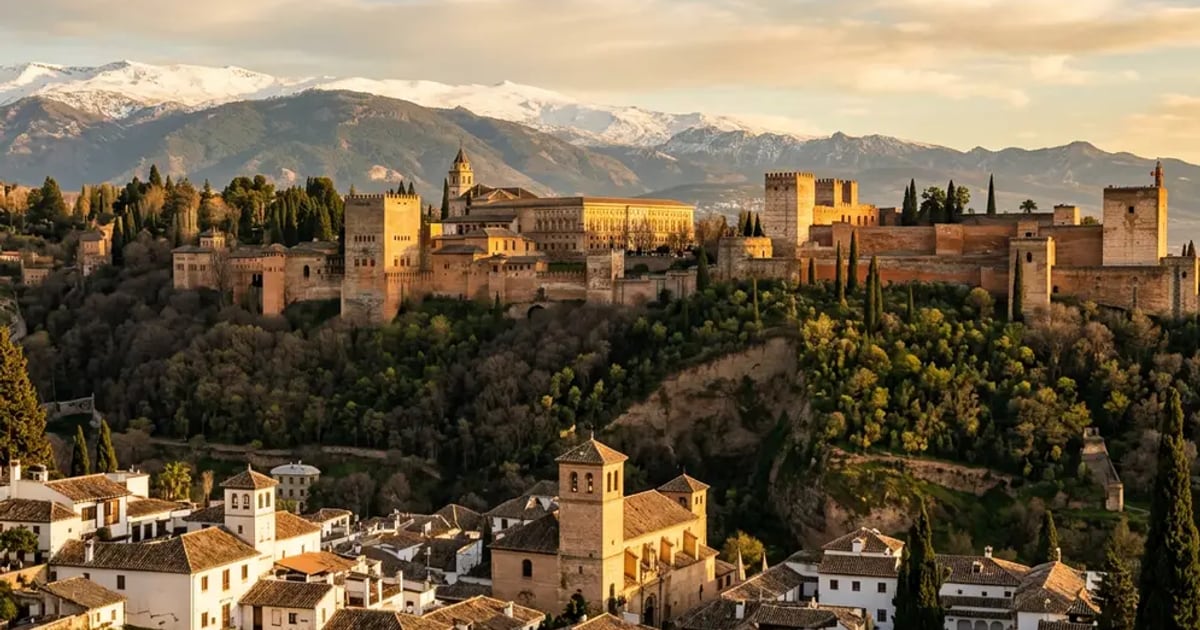
Granada cityscape with the Alhambra against the Sierra Nevada, viewed from Mirador de San Nicolás
Travel planning guide

Best time to visit Granada

May or September. Everything else is a trade-off worth knowing about.

May and September. Those two months account for most of the best visits to Granada, and the reasoning is not complicated: the Alhambra tickets are still available with reasonable advance notice, the temperature sits in the 20–28°C range that makes all-day walking comfortable, and the summer crowds that turn July into an endurance test have either not yet arrived or have already gone home.

That said, Granada has a genuine case for every month. March and April bring Semana Santa, the most visually overwhelming festival in southern Spain, worth the chaos if you plan far enough ahead. November has the Granada Jazz Festival, Europe's longest-running jazz event. December outside Christmas week is one of the quietest and cheapest windows in any European city of Granada's calibre.

The city sits at 738 metres altitude — higher than you might expect — which means dramatic day-to-night temperature swings year-round, dry hot summers, and genuine cold in winter. Whatever month you choose, pack layers. The Sierra Nevada keeps snow on its peaks until late May, visible from the Albaicín hillside throughout spring.

Season by season

Spring — March to May

Temperatures climb from 18°C in March to 25°C by May. Rain is still possible (30–35mm monthly through April) but the air is clear, the Sierra Nevada is snow-capped, and the almond blossom that covers the hillsides south of the city is gone by the time most visitors arrive. May is the warmest and driest spring month — 9 hours of sunshine daily, lows of 11°C.

The Alhambra requires 2–3 months' advance booking around Semana Santa and Corpus Christi but is still achievable. Semana Santa (late March or April depending on Easter) is Granada's most intense cultural event: over 50 religious brotherhoods carry enormous floats through narrow streets over six days, drawing tens of thousands of visitors. If you want to experience it, book accommodation and Alhambra tickets at least three months out. If you want warm spring weather without the crowd pressure, aim for late April after Easter or the first two weeks of May.

Pros

  • Best walking weather of the year
  • Semana Santa and Corpus Christi festivals
  • Sierra Nevada snow-capped for views
  • Daylight until 9pm by May

Cons

  • Semana Santa brings extreme crowds
  • Alhambra tickets need 2–3 months' notice
  • Occasional rain in March–April
  • Hotel prices high around festivals

Visiting in spring? The Granada in spring guide covers the March–May season in full: the blooms, Semana Santa logistics, the Cruces de Mayo, and what changes week by week as temperatures climb. If May specifically is your window, the Granada in May guide covers the Cruces de Mayo festival, the Corpus Christi run-up, and how to make the most of the year's best visiting month.

Summer — June to August

By July, Granada is hot in a way that requires planning around. Highs of 34°C with virtually no rainfall mean the city bakes from late morning until early evening. The Alhambra sells out 3+ months in advance. Hotel prices peak. Many families who live here take the month off somewhere cooler.

The one compelling reason to visit in summer is the Granada International Festival of Music and Dance (late June through July), which uses the Alhambra's own courtyards as concert venues — watching a flamenco performance in the Generalife gardens at dusk is unlike any arena or theatre. For that experience, the logistics are worth it. For everything else, summer is the worst window.

June is marginally more manageable than July and August: temperatures reach 30°C rather than 34°C, and the Corpus Christi fair runs in the first two weeks. After that, it becomes summer proper.

Pros

  • International Festival of Music and Dance
  • 11+ hours of daily sunshine
  • Rooftop bars and outdoor dining

Cons

  • 35°C+ heat, exhausting midday
  • Peak crowds and 90-minute Alhambra queues
  • Tickets sell out 3+ months ahead
  • Highest prices of the year

Visiting in summer? Read the full Granada in summer guide for heat-management strategies, Alhambra booking timelines, and what the festival actually involves. For June specifically — with its Corpus Christi fair and the Music and Dance Festival opening — see the Granada in June guide. If August is your only option, the Granada in August guide covers the practical strategies: early starts, Sierra Nevada day trips, and the coast escape.

Autumn — September to November

Visiting in autumn? The Granada in autumn guide covers the September–November season in detail: the pomegranate harvest, the Jazz Festival programme, and how autumn light changes the Alhambra and Albaicín.

September is the second-best month in the year. The temperature drops from 34°C to 28°C, which is still warm enough to eat outdoors every evening. Crowds begin thinning after schools return in the second week of September. Alhambra tickets become available with 4–8 weeks' notice rather than months. The quality of light changes — softer and more angled than summer — which is why October is popular with photographers visiting Mirador de San Nicolás. Late September also brings Granada's patron saint festival, the Fiesta de la Virgen de las Angustias — a free solemn procession through the historic centre that draws the whole city.

October remains comfortable at 23°C but rain begins returning (40mm, still modest). By November, temperatures drop to a high of 17°C and rain becomes a regular presence (50mm). The Granada Jazz Festival, one of Europe's longest-established (running since 1980), takes place in November across multiple city venues — a strong draw for that specific audience. November 2026 also sees the return of the Maratón de Granada — 42.195 km through the vega plain and surrounding villages — after a 20-year absence.

Pros

  • September heat drops to comfortable 28°C
  • Crowds thin after mid-September
  • Alhambra tickets available 4–8 weeks ahead
  • Autumn light ideal for photography
  • Jazz Festival in November

Cons

  • Rain increases from October (40–50mm)
  • November drops to 17°C — needs a coat
  • Fewer outdoor activities by November

Winter — December to February

Highs of 13–15°C and lows near 2–4°C make Granada genuinely cold by Andalusian standards, though not by northern European ones. Rain is consistent at 35–50mm monthly. The city is at its quietest and cheapest outside Christmas week (24 December to 2 January) — a three-star hotel that costs €120 in July often goes for €60 or less in January. For a full month-by-month temperature and rainfall breakdown, see the Granada weather guide.

The Sierra Nevada ski resort, 32 kilometres from the city, runs from December through April, with the best snow conditions typically in January and February. It is the highest-altitude ski resort in Spain. Some visitors combine two days in Granada with a morning on the slopes — the city is about 45 minutes from the resort by car or bus.

Winter light at the Alhambra has a particular quality — crisp, low-angled, no haze — and the gardens are quiet enough to hear water running in the irrigation channels. The Alhambra requires only 2–4 weeks' advance booking. Six hours of daily sunshine is enough for a full day of sightseeing. On 28 February, Día de Andalucía turns the city's state museums free and fills public squares with flag-raising ceremonies, free Andalusian breakfasts, and outdoor concerts.

Pros

  • Lowest prices and smallest crowds
  • Alhambra bookable 2–4 weeks ahead
  • Sierra Nevada skiing (Dec–Apr)
  • Clear winter light for photography

Cons

  • Cold (13–15°C) and frequently rainy
  • Only 5–6 hours of daily sunshine
  • Christmas week crowded and expensive
  • Some outdoor attractions less appealing

Planning a winter trip? The Granada in winter guide covers the Sierra Nevada ski season, what to do on rainy days, and how to book the Alhambra at the quietest time of year. For December in particular — Christmas lights, the ski resort opening weekend, and low-season Alhambra access — the Granada in December guide has the specifics.

Month-by-month quick reference

Best months at a glance

  • May — Best overall. 25°C, mostly dry, cultural events, manageable crowds
  • September — Best second choice. 28°C, thinning crowds, easier Alhambra booking
  • October — Excellent. Mild (23°C), comfortable walking, quieter than summer
  • April (with Semana Santa) — Best cultural experience if you book 2–3 months ahead
  • January–February — Best for budget. Cold but quiet and cheap
  • July–August — Avoid unless attending the Music and Dance Festival
Month High / Low Rain Crowds Verdict
January 13° / 2°C 40mm Low Budget option; cold but peaceful
February 15° / 3°C 35mm Low Good for museums and tapas culture
March 18° / 5°C 35mm Medium Transition month; variable weather
April 20° / 8°C 35mm Very high Semana Santa — book 3 months ahead
May ★ 25° / 11°C 30mm High Best month overall
June 30° / 15°C 10mm Very high Music Festival starts; heat rising
July 34° / 18°C 0mm Peak Avoid — heat oppressive, tickets gone
August 34° / 18°C 5mm Peak Avoid — same as July
September 28° / 15°C 25mm Medium-high Second-best month
October 23° / 11°C 40mm Medium Excellent — mild, manageable crowds
November 17° / 6°C 50mm Low Jazz Festival; Marathon 2026; expect rain
December 14° / 4°C 50mm Low (high 24 Dec–2 Jan) Peaceful and cheap outside holidays

Events that decide the calendar

For some visitors, one event decides the whole trip. For others, the same event is a reason to avoid certain dates. Here are the six that matter most.

Semana Santa (Holy Week)

Late March / April

Over 50 religious brotherhoods process elaborate floats (pasos) through Granada's streets over six nights. The city becomes one of the most intense spectacles in Spain. Book accommodation 3 months ahead minimum. Alhambra tickets sell out entirely. Street closures are widespread. If Semana Santa is why you're coming, build the whole trip around it. If not, shift your dates.

Cruces de Mayo (Crosses of May)

2–3 May

Local families and associations erect elaborately decorated wooden crosses in public squares and courtyards across the city. More festive than solemn, with music and food around each cross. No special tickets needed — walk in from any direction. Adds charm to the best time to visit without the crowd chaos of Semana Santa.

Corpus Christi

Late May / Early June

Granada's main annual fair. The official procession falls on the Thursday (30 May 2026), but festivities run for a full week: casetas (temporary marquees with food, drink, and dancing), theatre, zarzuela, concerts, and a bullfighting fair at the Plaza de Toros. One of the most distinctly Granadan celebrations of the year. Crowds are high but the atmosphere is local rather than tourist-driven.

International Festival of Music and Dance

Late June – July

Classical music, flamenco, ballet, and jazz performed across the city — including the Alhambra's own gardens. That is the one good reason to visit Granada in summer. Tickets for the Alhambra concerts sell out well in advance. If you want the festival, book everything months ahead and accept the heat.

Granada Jazz Festival

November

Running since 1980, this is one of Europe's longest-established jazz events. Multiple venues across the city. November is otherwise one of the quietest months, and the festival draws international artists without the mass tourism of summer. A good reason to visit a month most travellers skip.

Three Kings Day (Día de Reyes)

6 January

The traditional Spanish celebration of Epiphany, more important than Christmas Day in most Spanish families. Granada holds processions on the evening of 5 January. If you're in the city over the New Year break, it's worth staying for.

Día de Andalucía

28 February

Andalusia's regional public holiday. Granada's state museums open free — the Museo Arqueológico runs its popular El Juego de la Liebre courtyard workshop, which fills by 10:30 AM. Flag-raising ceremonies in the main plazas from 09:00, free community breakfasts (mollete with olive oil and tomato) around the centro, and afternoon outdoor concerts. Most shops and supermarkets close — stock up the day before. If your dates fall on 28 February, it's a genuinely local day worth building around rather than avoiding.

Granada's patron saint festival, running across two focal dates in September. On 15 September, thousands of devotees queue all day to place flowers on the facade of the Basílica de las Angustias on Carrera de la Virgen; by evening the entire building is covered in fresh blooms. On the last Sunday of September, the image of the Virgen de las Angustias is carried on an illuminated float through central Granada — no tickets, no barriers, entirely free. A deeply local celebration that happens to coincide with the best time to visit.

The full 42.195 km race returns in November 2026 after a 20-year absence. The course starts and finishes in the city centre, running through a circuit of seven villages across the flat vega plain south and west of Granada: Armilla, Churriana de la Vega, Cúllar Vega, Las Gabias, Ogíjares, La Zubia, Monachil, and Huétor Vega. For spectators, the city-centre start and finish means no logistics. For runners, it's a flat, fast course with Alhambra views from the start line — and a good reason to visit in November.
Alhambra ticket timing

The Alhambra caps daily visitors with timed tickets. The Nasrid Palace — the interior palace complex — has timed entry slots that sell out weeks to months before the visit date. Booking is not optional in any month from March through October; it is essential.

Do not plan a walk-up visit to the Alhambra

Walk-up tickets at the gate are extremely rare in any month above low season (March–October). Even if slots appear online, the timed entry queues add 90+ minutes on peak days. Book before you book anything else.
December–February 2–4 weeks in advance usually sufficient
March–May 2–3 months ahead; Semana Santa dates sell out entirely
June–August 3+ months ahead; tickets often sold out entirely by the visit date
September–October 4–8 weeks ahead; Alhambra is one of autumn's main attractions
November 2–4 weeks in advance; very manageable

Official booking: tickets.alhambra-patronato.es. Book the Nasrid Palace timed slot first; it sells before the gardens. Evening visits and guided tours sell out even earlier.

What to pack by season

Granada's elevation (738 metres) creates a 10–15°C gap between afternoon highs and overnight lows, particularly in spring and autumn. Pack for the night temperature, not just the day.

Spring (March–May)

  • Light jacket or mid-layer — essential after dark
  • Comfortable walking shoes — cobblestones throughout the old city
  • Compact umbrella (March–April rain)
  • Sunscreen — UV rises with altitude

Summer (June–August)

  • High-factor sunscreen, sunhat
  • Light, breathable clothing — linen or cotton
  • Water bottle — shade is scarce at the Alhambra
  • Book restaurants with air conditioning if midday dining

Autumn (September–November)

  • Light jacket for evenings from September onward
  • Mid-layer or fleece for October–November
  • Compact umbrella (from October)
  • Comfortable shoes — still plenty of walking

Winter (December–February)

  • Proper coat — highs of 13–15°C feel cold with wind
  • Waterproof footwear for rain and wet cobblestones
  • Layers that can come off in heated tapas bars
  • Ski gear if heading to the Sierra Nevada

Day trips from Granada: shoulder season is best

Spring and autumn are the optimal seasons for day trips as well as city visits. The Las Alpujarras are at their best in April (green terraces, clear mountain roads) and October (harvest season, lower visitor numbers). The Costa Tropical works from March to November. Further afield, Ronda and Antequera are best visited in spring and autumn when temperatures make walking comfortable and light is right for photography. For an overview of all options by distance, transport, and season, see the day trips from Granada guide.

Frequently asked questions

Frequently asked questions

What is the absolute best month to visit Granada?

May. Temperatures reach 25°C during the day and drop to 11°C at night — warm enough to walk from the Albaicín to the Alhambra without breaking a sweat, cool enough to sleep without air conditioning. The Cruces de Mayo decorated-cross festival runs on 2–3 May, and Corpus Christi (a week-long fair with casetas, music, and bullfighting) lands in late May or early June. Crowds are high but not the oppressive gridlock of July. September runs a close second: heat has dropped from the summer peak but outdoor dining on terraces is still perfectly comfortable at 28°C.

Should I avoid summer in Granada?

July and August are the months locals leave. Highs regularly hit 35°C with zero rain, which sounds appealing until you're queuing 90 minutes outside the Alhambra at noon. Hotels are at their most expensive and least available. The International Festival of Music and Dance (late June to July) is the one good reason to come in summer — if that's your aim, book flights, hotel, and Alhambra tickets at least three months ahead. Otherwise, visit in May or September.

What are the Alhambra ticket booking timelines by month?

The Alhambra caps daily visitors with timed tickets. Rough booking windows: December–February: 2–4 weeks in advance. March–May (especially around Semana Santa): 2–3 months ahead. June–August: 3+ months ahead — tickets often sell out entirely. September–October: 4–8 weeks ahead. November: 2–4 weeks. Walk-up tickets rarely exist in peak season. Book the Nasrid Palace time slot first; it sells out before the gardens.

When is Semana Santa and is it worth the crowds?

Semana Santa falls in late March or April depending on Easter. Over 50 religious brotherhoods (cofradías) carry elaborate floats (pasos) through Granada's streets over six days. The atmosphere is extraordinary — incense, candlelight, thousands of spectators, brass bands — and unlike anything in the rest of the country. But 50,000 extra visitors arrive. Hotels sell out months in advance. Alhambra tickets go before the cofradías even leave their churches. Visit Semana Santa only if the processions are the point. If you want good weather and fewer people, go in May instead.

Is Granada worth visiting at Christmas?

Yes, if you want a quiet city at low prices. December outside the holiday week (24 December–2 January) is one of Granada's emptiest periods — museums are unhurried, tapas bars have room at the counter, and the Alhambra is bookable with two weeks' notice. The cold (highs around 14°C, lows around 4°C) is real but manageable with a coat. Avoid 24 December to 2 January — prices jump, crowds return, and the city loses the calm that makes winter worth it.

Reporter notebook

Insider tips

Practical observations gathered the way a local journalist would keep them: short, specific, and more useful than brochure copy.

Booking tip

Book the Alhambra before you book your flight

Alhambra tickets — specifically the timed Nasrid Palace slot — sell out weeks to months before your visit depending on season. In April, May, June, July, and August, tickets disappear 2–3 months in advance. In September and October, 4–8 weeks is typical. Never assume walk-ups are available. The official booking site is tickets.alhambra-patronato.es. Third-party resellers charge premiums for the same slots.

Best time

Late September is the sweet spot most visitors miss

The summer crowds begin thinning after about 10 September when Spanish families return to school. Temperatures drop from 34°C to a more manageable 28°C. The light changes too — softer, more angled, better for photographing the Alhambra towers against the Sierra Nevada. Alhambra tickets are available with a month's notice rather than three. Hotel prices fall noticeably from the July–August peak. The only catch: rain begins to reappear (25mm in September, still modest) so pack a light jacket for evenings.

Local custom

Granada's day-night temperature gap is larger than most expect

At 738 metres elevation, Granada cools sharply after dark even when afternoons are hot. In April, the gap between a 20°C afternoon and an 8°C night is common. In October, you can have a 23°C lunch on a terrace and need a jumper by 7pm. Locals carry a layer all year. If you pack for the daily high and nothing else, you will be cold every evening from March through November.

Money tip

January and February are Granada at its cheapest

Outside Christmas week, winter (January–February) is Granada's lowest-price window. A three-star hotel that costs €120 in July often drops to €60 or below in January. The Alhambra requires only 2–4 weeks' notice. Crowds at the Albaicín and Mirador de San Nicolás are thin enough that you can photograph without strangers in the frame. The city is cold (13–15°C) and occasionally rainy but entirely functional. The free tapas culture does not disappear in winter.