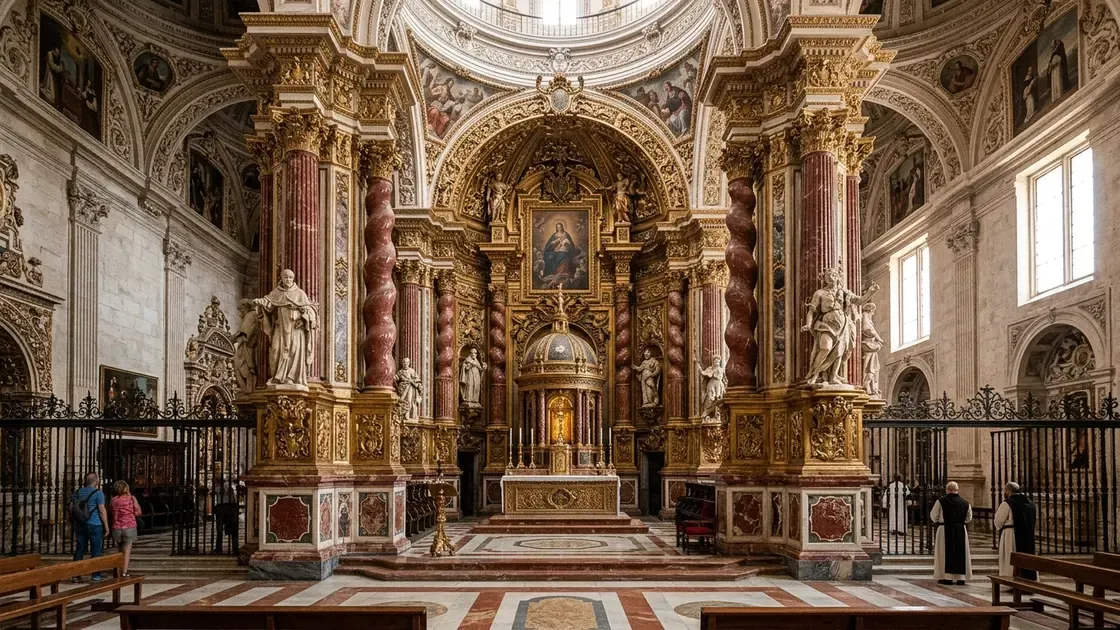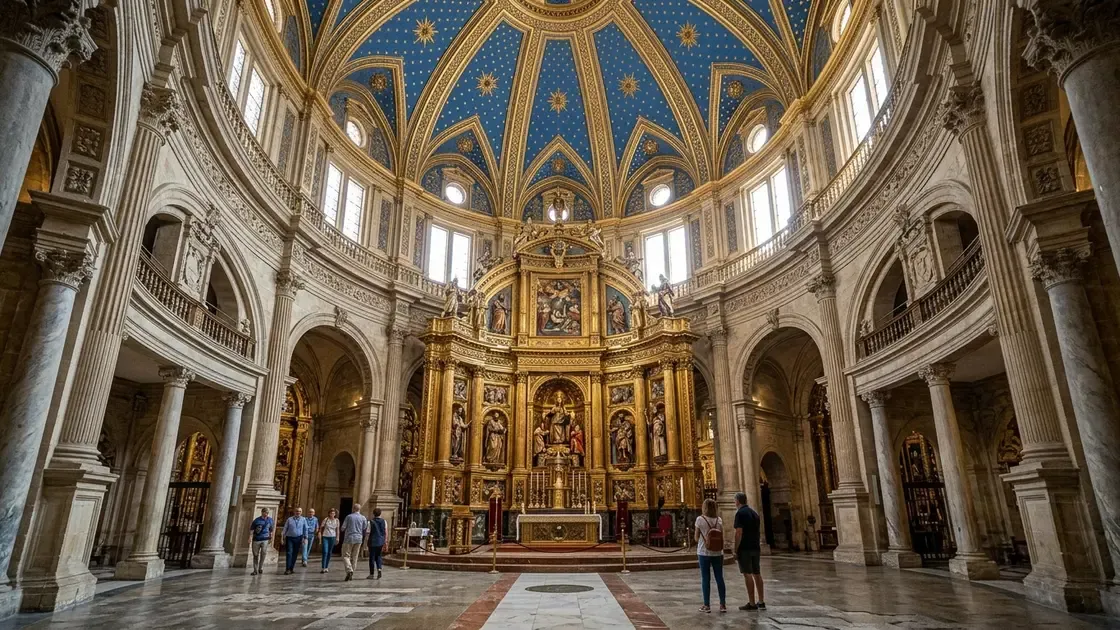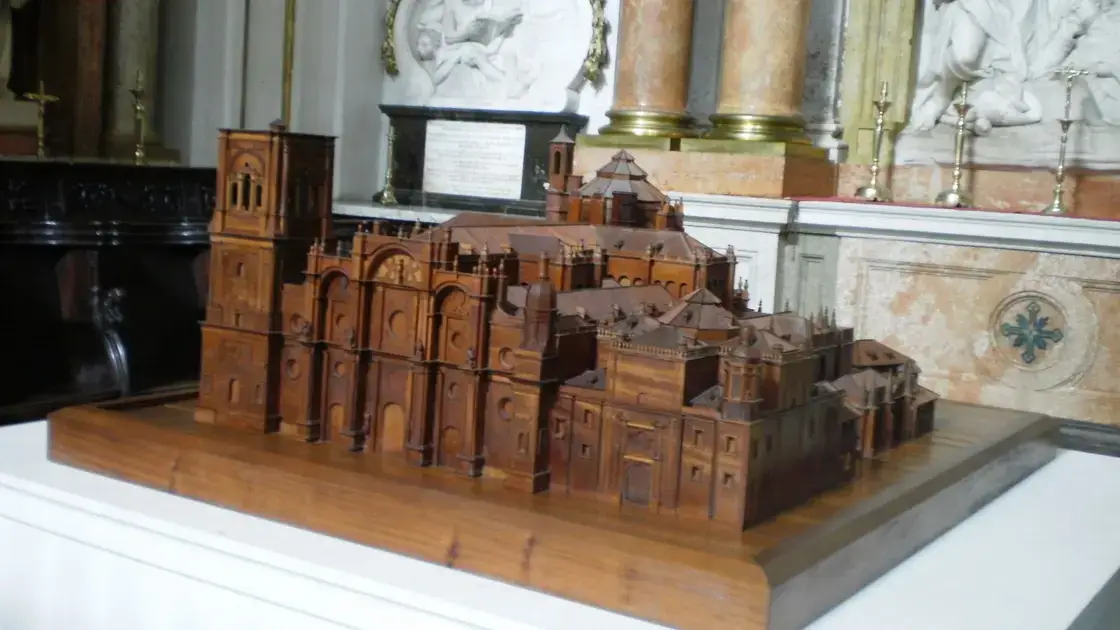
Granada Cathedral stands on the site of the city's main mosque, demolished after the Christian reconquest of 1492. Construction began on 25 March 1523 under architect Enrique Egas, who started with a Gothic design. Diego de Siloé took over in 1528 and redirected the project toward Renaissance ideals, introducing the famous circular main chapel, a floor plan with five naves, and a soaring central space that reaches 34.5 metres at its vault. The result is one of the most original cathedral interiors in Spain, where a round chancel sits at the end of a basilica plan, a solution that had never been attempted before on this scale.
The facade, finished in 1667 by Alonso Cano, a Granada-born painter and sculptor, is a Baroque composition of three arched portals framed by pilasters, considered Cano's masterpiece and one of the finest Baroque facades in Andalusia. Inside, the circular main chapel is ringed with gilded altarpieces, painted busts of Ferdinand and Isabella by Cano, and a dome covered with gold stars on a blue ground. Light filters through the large windows in a way that makes the space feel open and luminous compared to the enclosed gloom typical of Gothic cathedrals.
The Royal Chapel, though technically a separate building adjoining the cathedral to the south, is accessed through the same complex and houses the tombs of Ferdinand and Isabella, the Catholic Monarchs. The Cathedral itself took 181 years to complete, finally finished in 1704. That long timeline is visible in its fabric: Gothic arches carry Renaissance vaulting; Baroque ornament sits above Classical columns. Rather than incoherence, the combination gives the building a layered quality that rewards careful looking.
Practical notes for visitors: the main entrance is on Gran Vía de Colón. Lines form quickly after 11:00, so an early morning visit is worth the effort. The museum inside holds paintings by Alonso Cano, vestments, and a 16th-century organ. Audio guides are available in English and cover both the cathedral and the Royal Chapel.