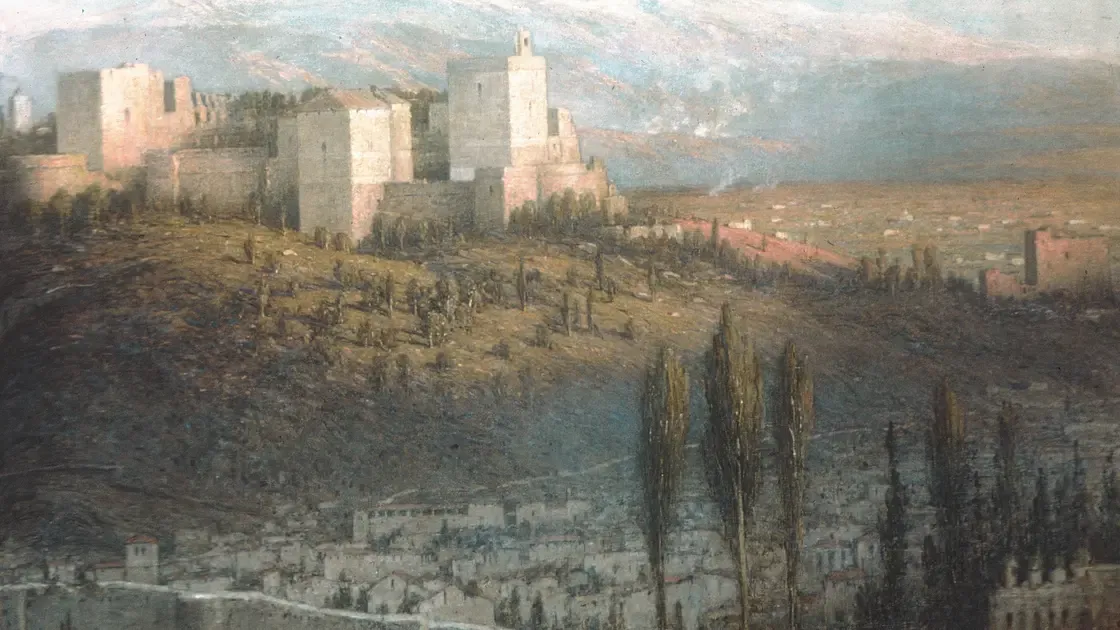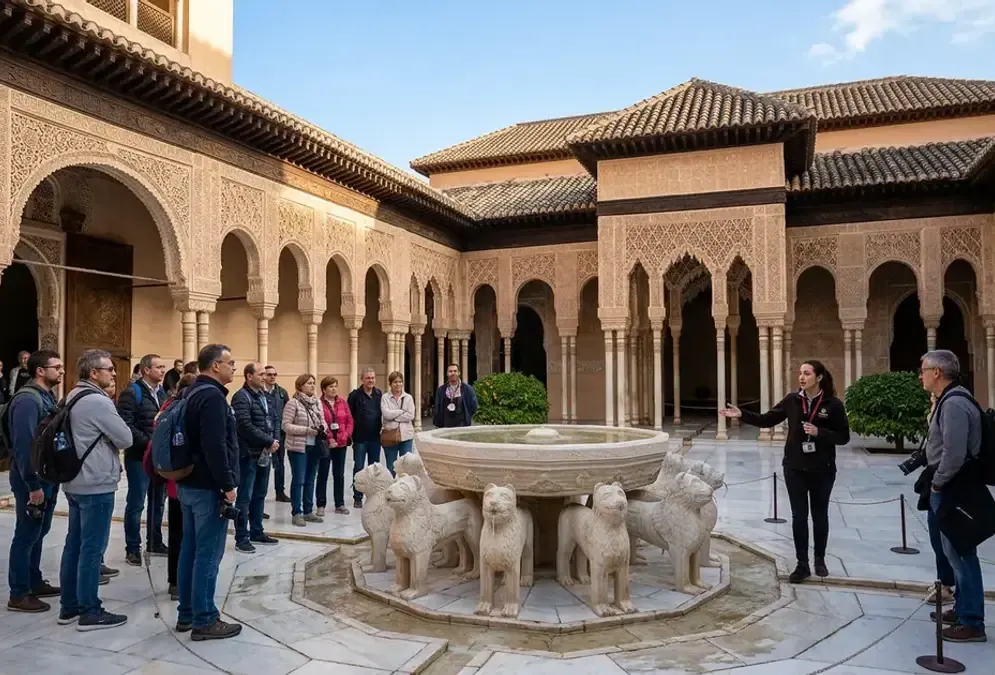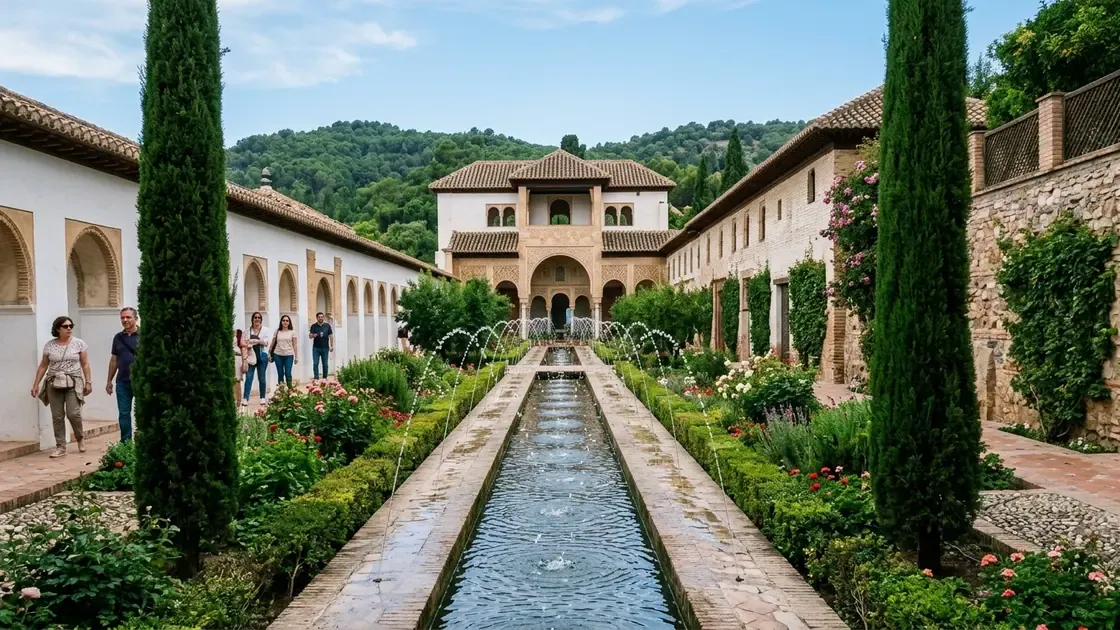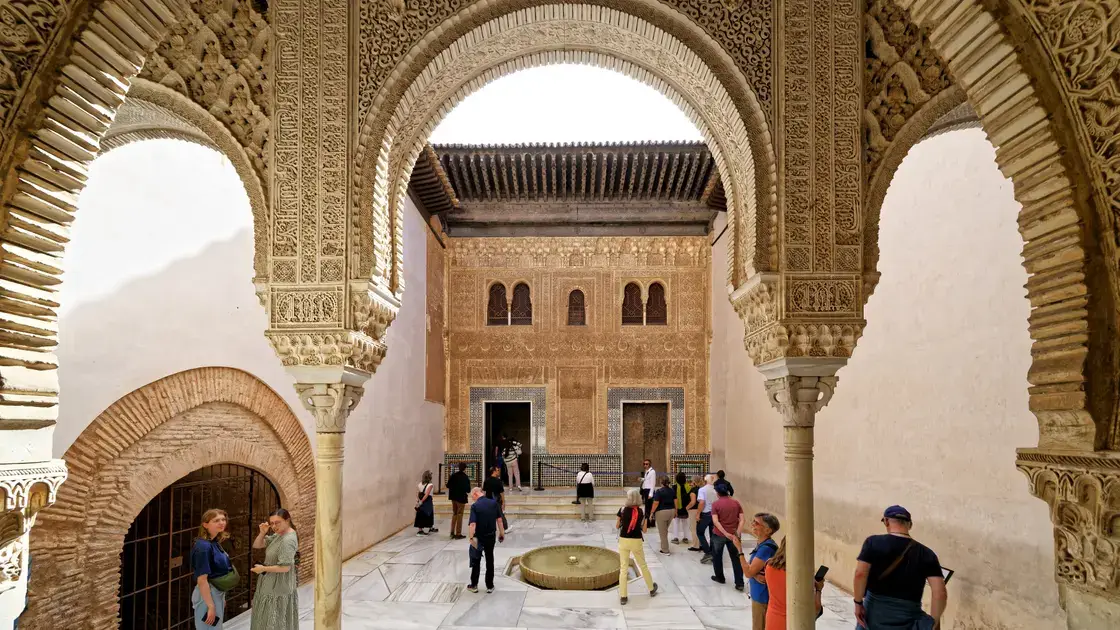
The Alhambra is the best-preserved medieval Islamic palatial complex in the world, a fortified city on the Sabika hill above Granada that combines military architecture, royal palaces, and formal gardens into a single UNESCO World Heritage Site. Construction began under the Nasrid emir Muhammad I in the mid-13th century and continued under his successors over two hundred years, with each ruler adding, expanding, or refining until the Catholic Monarchs took the city in 1492. What survives is extraordinary in its completeness: towers, walls, the Nasrid Palaces, the Generalife summer retreat, and the Renaissance Palace of Charles V, all within a single fortified perimeter.
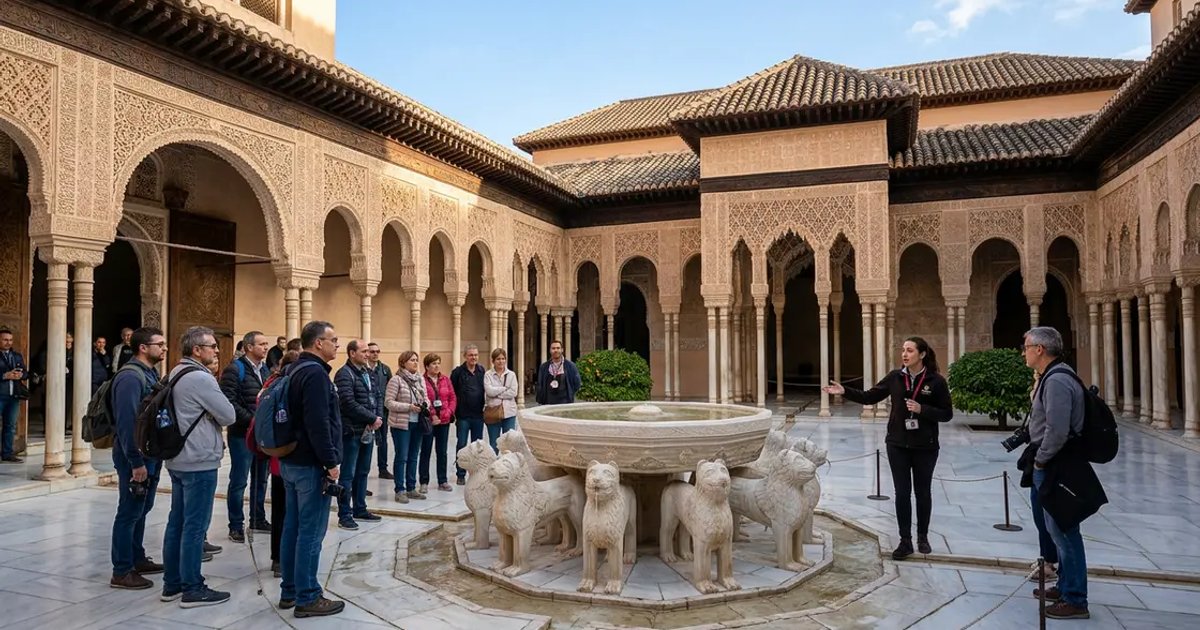
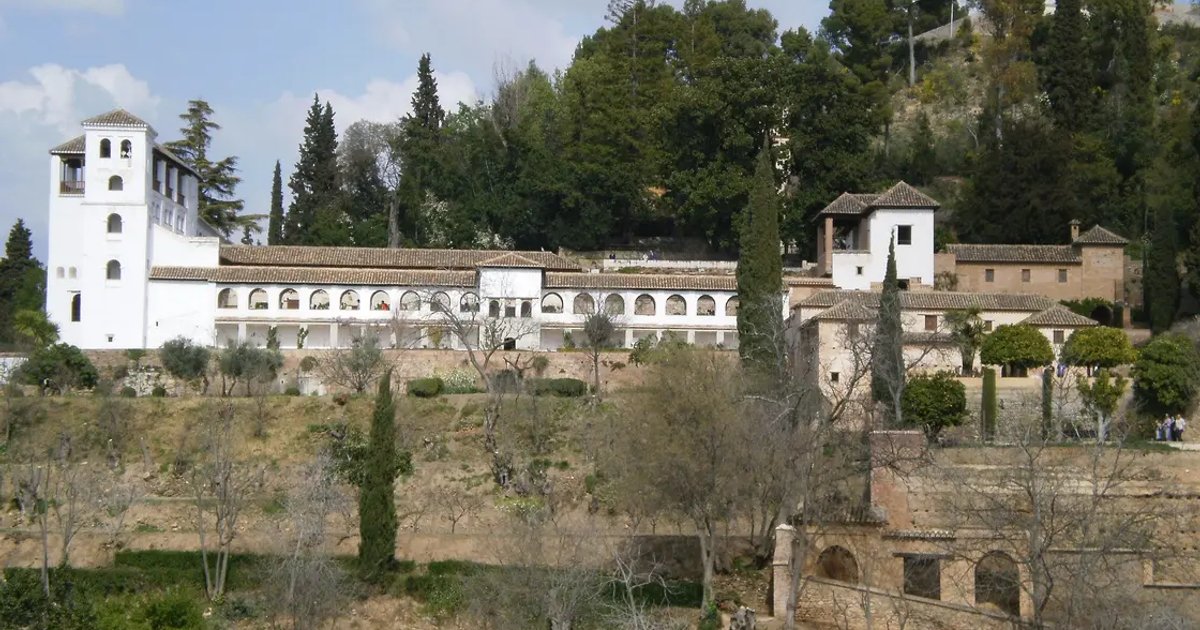
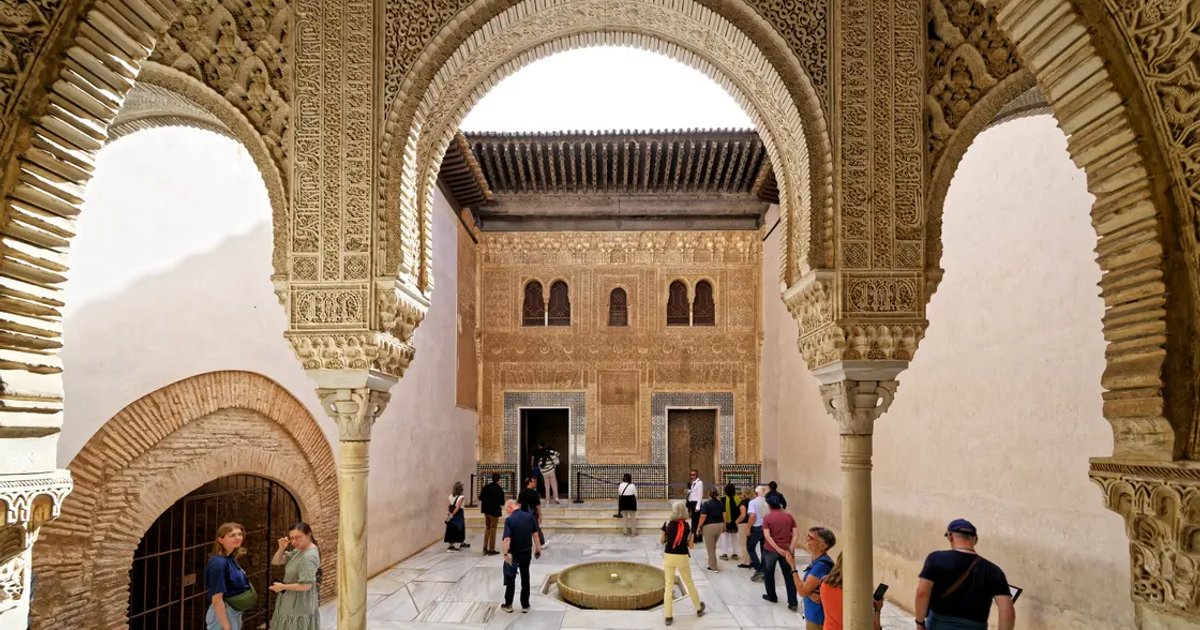
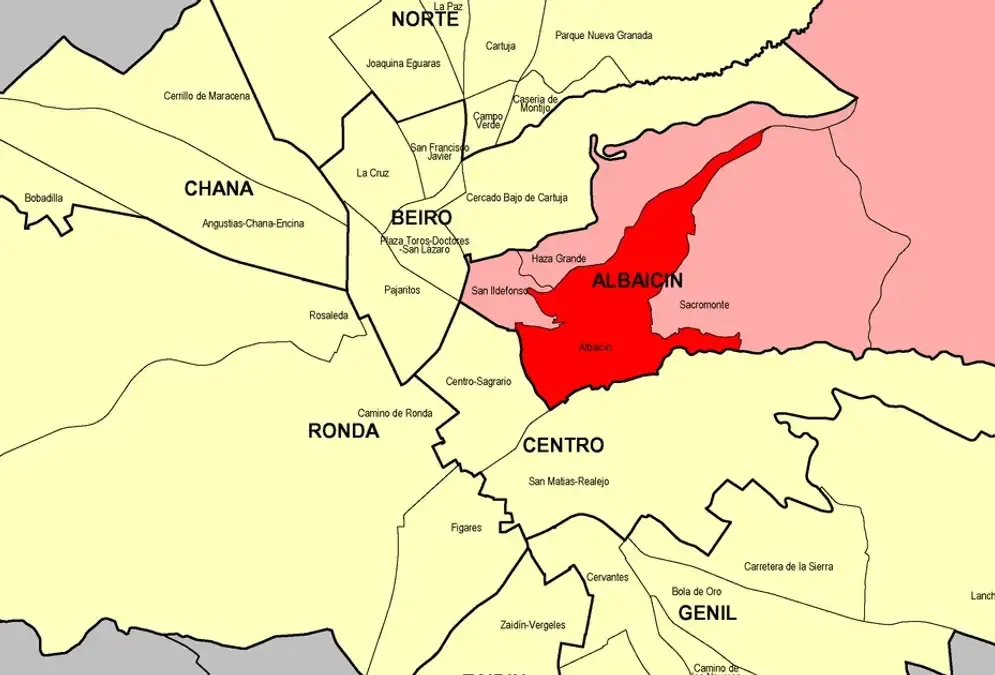
The complex divides into four main areas. The Alcazaba, the oldest part, is the military fortress at the western end whose watchtower offers the clearest view of the Albaicin hillside opposite. The Nasrid Palaces are the palatial core, three interconnected royal houses whose plasterwork and tile are among the most elaborate surviving examples of Andalusian Islamic art. The Palace of Charles V, begun in 1527, is a circular Renaissance building that sits somewhat incongruously within the Moorish complex but holds an excellent Alhambra museum. The Generalife, reached by a short path through the upper gardens, was the Nasrid sultans' country estate with its famous water garden.
Practical planning matters here more than at almost any other monument in Spain. Daily entry to the Nasrid Palaces is capped at 6,600 visitors divided across timed half-hour slots. Tickets sell out weeks or months ahead in spring and summer. The official booking channel is tickets.alhambra-patronato.es; third-party sellers charge a premium for the same allocation. Night visits, limited to the Nasrid Palaces and offered Tuesday to Saturday from 22:00 to 23:30 (April to October), provide an entirely different atmosphere and are easier to book at short notice.
Allow a full half-day, ideally three to four hours. Walking the complete circuit from the Alcazaba through the Nasrid Palaces and up to the Generalife covers around three kilometres on uneven historic paving. Comfortable shoes and water are essential. The Alhambra sits roughly 100 metres above the city centre and is reached on foot via the steep Cuesta de Gomérez, by the dedicated Alhambra bus from Plaza Isabel Católica, or by road if arriving by taxi or car.