Seven years resident in Granada. Specialist in Nasrid architecture, Al-Andalus history, and Andalusian walking routes.
Published
Granada works on a Spanish rhythm that surprises visitors from northern Europe and North America: dinner at 9pm, siesta from 2pm to 5pm, tipping optional rather than expected, and a tapas culture where the food comes with the drink rather than the other way round. None of this is complicated once you know it.
This guide covers the practical information that makes the difference between a smooth trip and a frustrating one: tipping norms, siesta hours, how taxis work, connectivity options, dining timing, language basics, and how to navigate the notoriously steep Albaicín hills without destroying your knees.
Spain is not a tipping culture. Service staff are paid a salary that is not structured around gratuities, and nobody will be offended if you don't leave extra. That said, tipping for genuinely good service is appreciated and common among locals.
Restaurants
5–10% for good service is standard. Many people simply round up the bill or leave loose change. On a group meal, 5% is generous and appreciated. There is no social pressure to calculate 15–20% as in the US.
Tapas bars and cafés
Leave small coins on the saucer or bar counter. No set calculation needed. Locals often leave 50 cents to €1 after several drinks. If you've been sitting for a long time or the tapas were exceptional, more is fine.
Taxis
Round up to the nearest euro. Say "quédese con el cambio" (keep the change) or "guárdelo". On a longer journey (Alhambra to city centre, €6–8), rounding up €1–2 is perfectly appropriate. Tipping isn't expected; rounding up is standard.
Hotels
Housekeeping: €1–2 per night, left daily on the pillow or in an envelope. Porters: €1–2 per bag. Concierge who arranges something difficult: €5–10 depending on the hotel category.
Siesta and opening hours
The siesta is real in Granada, especially in summer. Many independent shops, pharmacies, and some restaurants close from roughly 2pm to 5pm. The tourist-facing businesses (Alhambra, major museums, main restaurants) tend to stay open. But if you need a pharmacy, a supermarket, or a local shop outside those zones, the mid-afternoon gap will catch you.
Typical opening pattern
Shops: 9:30am–2pm, then 5pm–8:30pm (closed Saturday afternoon, Sunday)
Pharmacies: 9:30am–2pm, then 4:30pm–8pm weekdays
Restaurants (lunch): 1:30pm–4pm
Restaurants (dinner): 8pm–11:30pm
Tapas bars: Often open from mid-morning; busiest 7:30pm–11pm
Major supermarkets: Usually open 9am–9pm without siesta break
Rather than fighting the siesta, use it. In July and August, the 2pm–6pm window is also when temperatures peak. A long lunch followed by a rest in your room, then the city comes alive again from 6pm. The evening extends much later than in northern Europe — tapas bars are still busy at midnight on summer weekends.
Taxis and transport
Official Granada taxis are white with a diagonal stripe and a green roof light. All are metered; the rate is set by the city council. Avoid anyone at the airport or bus station offering a flat-rate private ride to the city — use official taxis or the bus.
Hailing and ordering
Available throughout the city. Hail from any main plaza or taxi rank. FreeNow (formerly Cabify) and local taxi apps work in Granada. The app is more reliable for the Albaicín at night when street taxis are scarce.
Useful journeys and rough fares
City centre to Alhambra (lower entrance): €5–7. City centre to Puerta de la Justicia (upper Alhambra gate): €7–9. City centre to bus station: €6–8. Airport to city: €25–30 (fixed airport supplement). A 15% night supplement applies after 10pm and on Sundays and public holidays.
For the Albaicín and Alhambra hills
Taxis are the most practical way to reach the upper Albaicín and the Puerta de la Justicia entrance. The alternative is the C3 minibus, which runs from Plaza Nueva up through the Albaicín and is cheaper (around €1.40). Buy a rechargeable bus card rather than paying cash on board.
Uber
Uber does not currently operate in Granada. FreeNow is the main app-based option alongside traditional taxi dispatch numbers. Bolt sometimes operates in Granada; check the app to see if it shows available drivers during your visit.
For a full breakdown of buses, walking routes, and how to get between the main sights, see getting around Granada.
Phone, water, and connectivity
SIM cards and data
EU travellers: domestic roaming rates apply. Non-EU visitors: compare your home plan's roaming costs before travel. Spanish SIM cards from Movistar, Orange, or Vodafone cost €10–15 for 10–15GB data and work throughout Spain. Buy in city-centre phone shops rather than the airport, where prices are higher. Yoigo and Lebara offer good-value tourist SIMs for shorter stays.
Tap water
Fully safe throughout Granada. The water comes from Sierra Nevada snowmelt and is treated to EU standards. Bring a refillable bottle — drinking fountains are in most parks and public spaces. Ask for "agua del grifo" in restaurants if you want tap water rather than bottled.
Wi-Fi
Hotels and most cafés have reasonably reliable Wi-Fi. Mobile signal can drop in the upper Albaicín lanes and inside the Alhambra complex walls. Download offline maps (Google Maps or maps.me) before heading up the hill. The Alhambra's official app works partially offline for interior navigation.
Power adapters
Spain uses the Type C/F plug (two round pins) at 220V/50Hz. UK visitors need a UK-to-EU adapter. US and Canadian visitors need both an adapter and a voltage converter for non-dual-voltage devices. Most modern laptops, phone chargers, and cameras handle dual voltage — check the label on the charger.
Dining culture
Granada's dining culture has some specifics worth knowing, particularly around the free tapas system, which operates differently from most of Spain.
The free tapas system
Order any drink — beer, wine, a soft drink — and a small plate of food arrives with it at no charge. This is not typical of most of Spain; it is specific to Granada and a handful of surrounding towns. The bar chooses what you get, not you. Quality varies: in local bars the tapas are proper — tortilla, fried fish, a small bowl of stew. In tourist-facing bars they can be token portions of crisps. The free tapas Granada guide covers the best streets and bars.
Menu del día
The set lunch menu, typically €10–14, includes three courses, bread, a drink, and sometimes coffee. Available at most sit-down restaurants between 1:30pm and 3:30pm on weekdays. This is how locals eat a proper midday meal affordably. It is almost always better value than ordering à la carte at lunch.
Dinner timing
Kitchens open at 8pm; most locals eat at 9pm or 9:30pm. Trying to eat dinner at 6pm or 7pm usually means either a tourist restaurant or an empty local one with a sleepy kitchen. By 9pm, neighbourhood tapas bars are lively, the kitchen is properly warmed up, and the tapas are bigger.
Smoking
Indoor smoking is banned in all bars, restaurants, and enclosed public spaces. Outdoor terraces are a grey area — many allow smoking and there is little enforcement. If smoke bothers you, sit inside or choose a spot upwind.
Language basics
Andalusian Spanish is distinct enough from textbook Castilian that even fluent Spanish speakers find it tricky at first. Consonants at the end of syllables are often dropped or softened — "pescado" (fish) sounds closer to "peh-CAO", "más" sounds like "MÁ". Don't be discouraged if rapid local conversation is hard to follow.
English is spoken in the main tourist contexts. In neighbourhood bars, taxis, and markets, basic Spanish makes a real difference — both practically and in how warmly you are received. Locals genuinely appreciate the attempt, even if imperfect.
Useful phrases for tapas bars and taxis
Una caña, por favorA small draught beer, please
La cuenta, por favorThe bill, please
Quédese con el cambioKeep the change (in a taxi)
Agua del grifoTap water
¿Está libre?Is this table/seat free?
¿Tiene menú del día?Do you have the set lunch menu?
Sin glutenGluten-free
Navigating the Albaicín hills
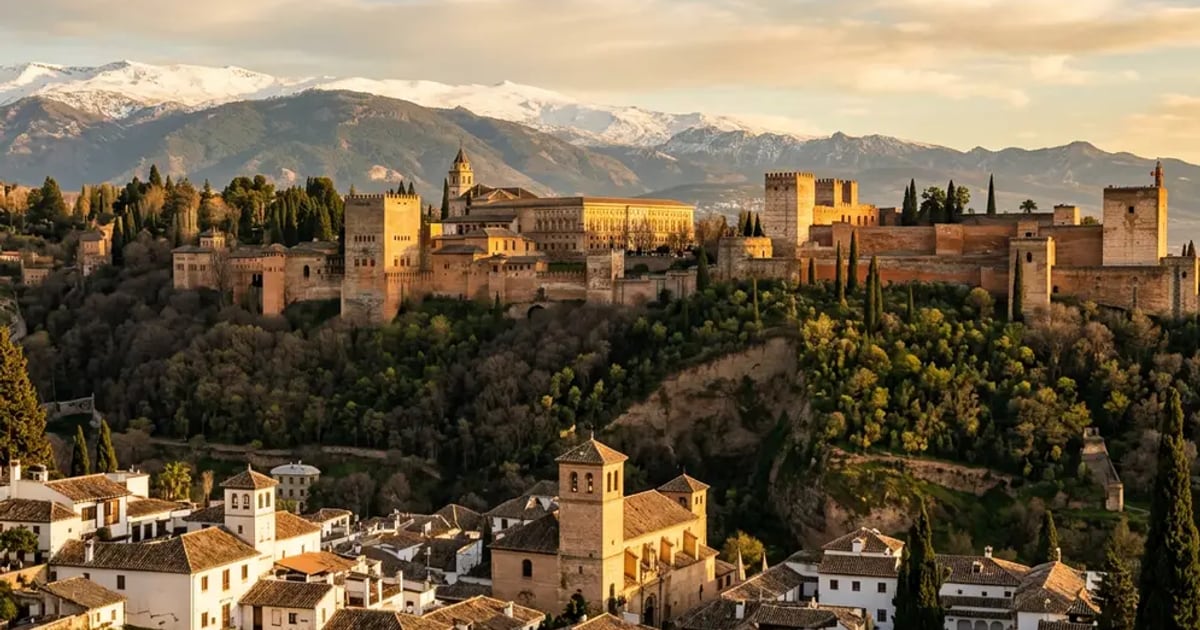
The Albaicín is Granada's medieval Moorish quarter, spread across a hill facing the Alhambra. It is beautiful and steep. The cobbled lanes are uneven, some of them slippery when wet, and they connect at angles that do not follow a logical grid. First-time visitors consistently underestimate how much climbing is involved.
Getting up there
The main walking route up from Plaza Nueva is Cuesta de San Gregorio — steep but direct, around 20 minutes to Mirador de San Nicolás. The C3 minibus runs from Plaza Nueva through the neighbourhood, stopping near the main viewpoints, and costs around €1.40. A taxi to the upper Albaicín is €5–7 from the city centre.
Getting down
Carrera del Darro is the prettiest descent: a level riverside path that follows the Darro river from the foot of the Albaicín back toward Plaza Nueva. It passes the Bañuelo Arab Baths and has views up to the Alhambra towers. About 20 minutes walking. The C3 bus runs downhill to Plaza Nueva as well.
Navigation inside the neighbourhood
Download offline maps before entering — mobile signal drops on the narrower lanes. The neighbourhood is easy to get slightly lost in, which is mostly enjoyable, but know that most downhill paths eventually lead to Carrera del Darro and Plaza Nueva. Don't rely on GPS turn-by-turn; it struggles with the alleyways.
Timing
Arrive at Mirador de San Nicolás 45 minutes before sunset and claim a spot on the low wall. The view of the Alhambra turning amber then pink against the Sierra Nevada is one of the better things you can see from any city in Europe. Get there early — by 30 minutes before sunset it is already crowded.
Frequently asked questions
Frequently asked questions
Do I need to tip in Granada?
Tipping in Granada is appreciated but not expected. In restaurants, 5–10% for good service is the norm, or simply rounding up the bill. In bars and cafés, leaving small change (a few coins) is a common local habit rather than a calculated percentage. For taxis, round up the fare and say "quédese con el cambio" (keep the change). Hotels: €1–2 per night for housekeeping is generous by local standards. Nobody will be offended if you don't tip; nobody will be surprised if you do.
What time do restaurants open for dinner?
Kitchens typically open at 8pm, though most Granadinos don't sit down until 9pm or later. The tapas bars are busy from around 7:30pm onwards. Trying to have dinner before 8pm in a local restaurant usually means either a tourist-facing place or a very early service. This feels strange for the first two days; by day three it feels normal. For lunch, the kitchen hours are typically 1:30pm to 4pm, with the menu del día (3-course set meal) available until 3:30pm.
Is tap water safe to drink in Granada?
Yes, fully safe throughout the city. Granada's water comes from the Sierra Nevada snowmelt, filtered through natural aquifers. It is treated and monitored. Bring a refillable water bottle — drinking fountains are common in parks and public spaces. Restaurants will bring you tap water if you ask for "agua del grifo", which costs nothing. Bottled water is widely available but unnecessary.
Should I get a Spanish SIM card or use roaming?
If you're visiting from an EU country, EU roaming applies and your home plan covers calls and data at domestic rates. Visitors from the UK, US, or Australia should compare roaming charges carefully before arrival. Spanish SIM cards (Movistar, Orange, Vodafone, Yoigo) are available at phone shops and airports from around €10–15 for 10GB data. For a week or more, a local SIM is usually cheaper. Airport SIMs tend to be overpriced — buy in the city centre instead.
Are taxis metered in Granada?
Yes. Official Granada taxis are metered and regulated — the rate is set by the city council and displayed inside the cab. All legal taxis are white with a diagonal stripe and a taxi sign on the roof. There is a minimum fare (around €3–4) and supplements apply for luggage, night travel (after 10pm), and Sundays. For the Albaicín and the Alhambra, taxis are the most practical option given the terrain. Order via the official app (FreeNow works in Granada) or hail from any main plaza.
How much Spanish do I need in Granada?
Less than you might think in tourist areas; more than you might expect in local bars and markets. Alhambra staff, hotel reception, and most central restaurants have English speakers. Taxi drivers, neighbourhood tapas bars, and older shopkeepers often don't. Learning the basics before you arrive makes a significant difference — not just practically, but in how locals respond to you. Andalusian Spanish drops final consonants and runs syllables together, which can make it harder to understand than textbook Castilian. Don't be discouraged if you can't follow rapid conversation.
What's the best way to navigate the Albaicín?
Use a mapping app with offline maps downloaded before you go — mobile signal can drop on the narrower lanes. The main route up is Cuesta de San Gregorio from Plaza Nueva, which is steep but direct. The main route down is Carrera del Darro, which runs along the river and is level and picturesque. For the upper viewpoints (Mirador de San Nicolás, Mirador de San Cristóbal), the C3 minibus runs from Plaza Nueva up through the neighbourhood and saves 20 minutes of climbing. Check the Albaicín guide for the best walking circuits.
Reporter notebook
Insider tips
Practical observations gathered the way a local journalist would keep them: short, specific, and more useful than brochure copy.
Local custom
Order at the bar, not from a table
In Granada's tapas bars, the counter is where the action is. Orders from the bar get served faster, the tapas tend to be more generous (bar staff see you and want you happy), and it's how locals eat. Standing at the bar also makes it natural to talk to whoever is next to you — important if you're travelling solo or want to ask what people are eating. Sitting at a table in a busy tapas bar can feel isolating; standing at the zinc is the way in.
Best time
Siesta is your best friend in summer
From 2pm to 6pm in July and August, much of the city slows down and temperatures peak. Many shops and some restaurants close. Rather than fighting it, use the break: a long lunch, a rest in your accommodation, a café con leche in air conditioning. The evening then opens up properly from 6pm, with sunset at the Alhambra viewpoints around 9:30pm and tapas bars filling from 7:30pm. Trying to maintain a northern European schedule in Granadan summer is the fastest way to exhaust yourself.
What to order
Ask for a "caña" not a "cerveza"
A "caña" (pronounced CAN-ya) is a small draught beer — typically 20–25cl, around €1.80–2.50 with the tapa included. Ordering "una cerveza" often gets you a larger bottle, which costs more and does not come with the free tapa in every bar. The caña is the standard local order for the tapas circuit: it's the right size to have three or four at different bars without getting full before you've covered the neighbourhood. Ordering in Spanish, however imperfectly, also tends to get you better tapas.