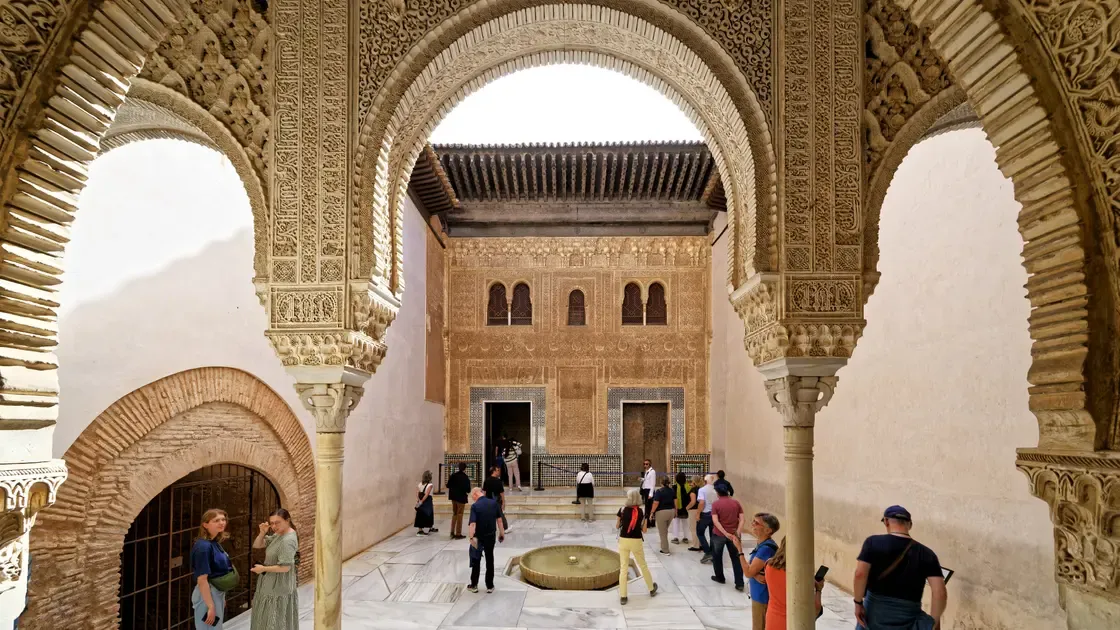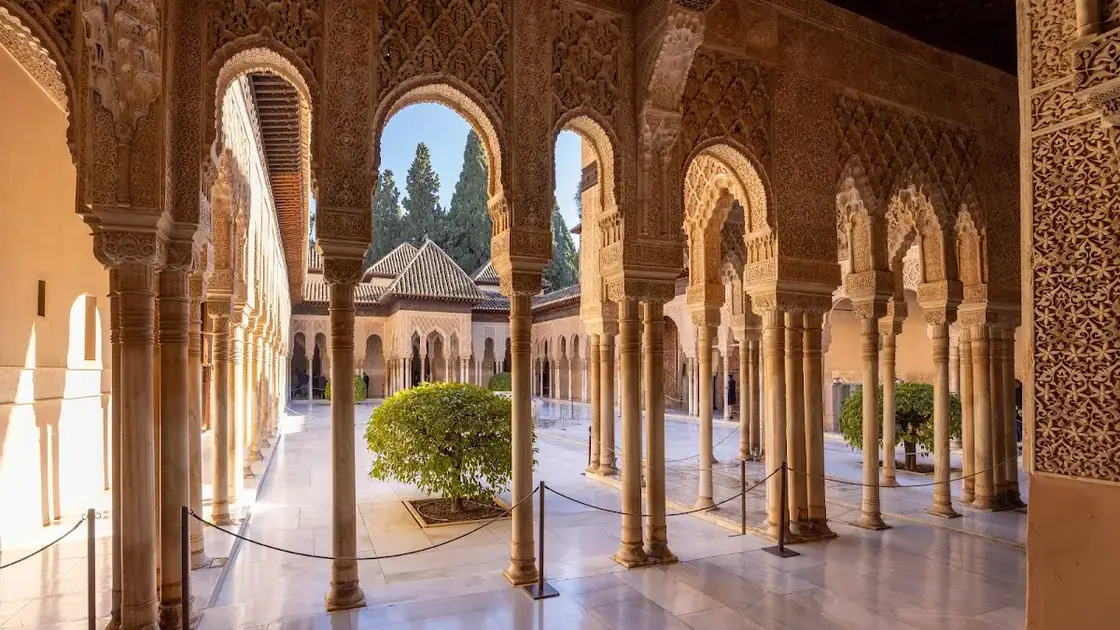
The Nasrid Palaces are the centrepiece of the Alhambra — three linked royal houses built between the mid-13th and late 14th centuries, each commissioned by a different sultan and each reflecting the particular preoccupations of his reign. They are among the most elaborately decorated interiors in the medieval world: walls covered floor to ceiling in carved stucco arabesques and epigraphic bands, muqarnas vaulting in the domes, and geometric tile dados that achieve visual complexity through simple geometric repetition. The overall effect is one of contained richness rather than ostentation, a quality that makes each room feel intimate despite the grandeur of the programme.
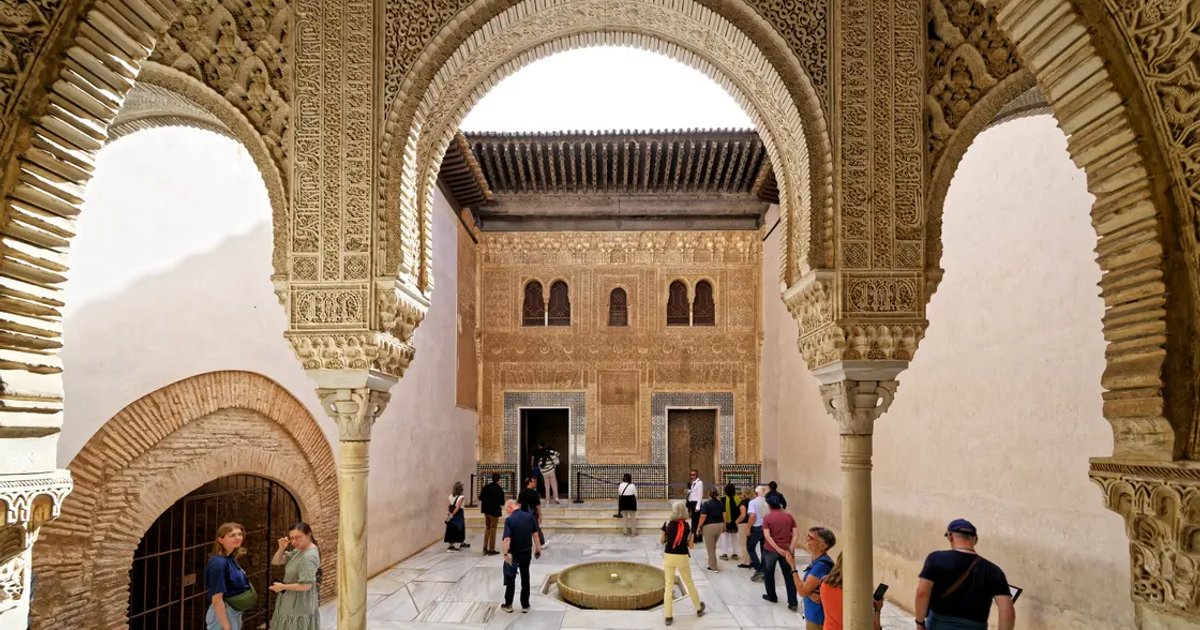
The circuit runs through three palaces in sequence. The Mexuar, the oldest surviving section, served as the council chamber where the sultan received petitions; the tile dado and carved frieze are from the 14th century, though the room was substantially altered after the Reconquest. The Comares Palace, built under Yusuf I (1333–1354), is centred on the Patio de los Arrayanes, a long reflecting pool of green water flanked by myrtle hedges. At one end rises the Torre de Comares, whose Hall of the Ambassadors served as the throne room: its cedar ceiling inlaid with a cosmological star pattern, its three walls each pierced by arched windows looking out over the city. At 11.3 metres square and 18 metres high, it is the largest room in the Alhambra.
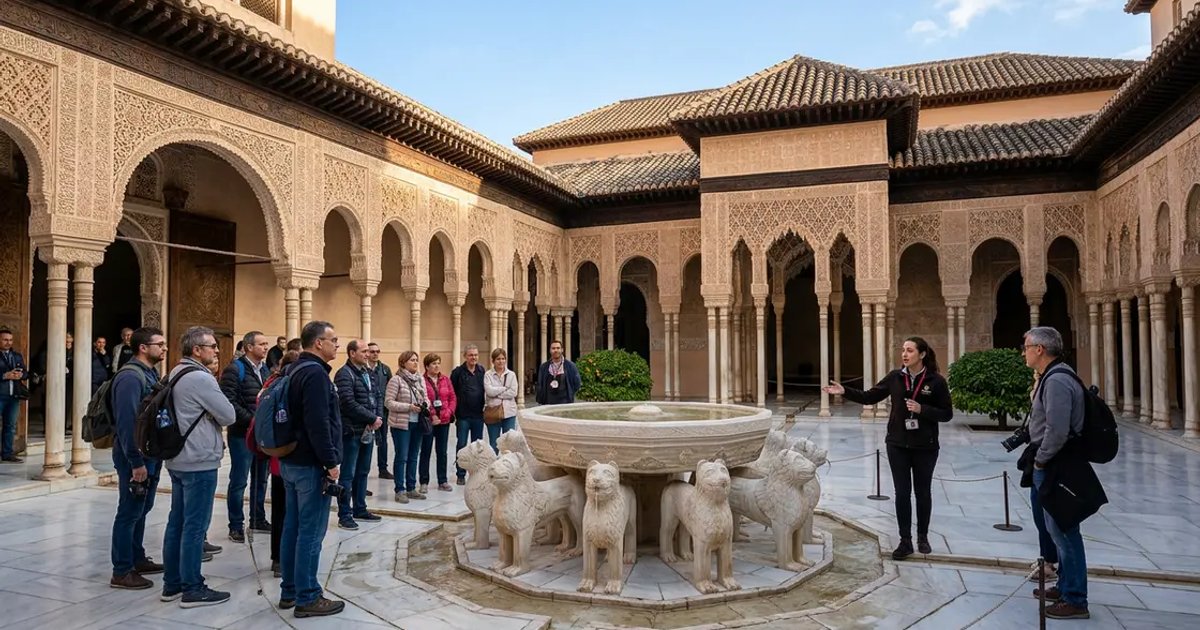
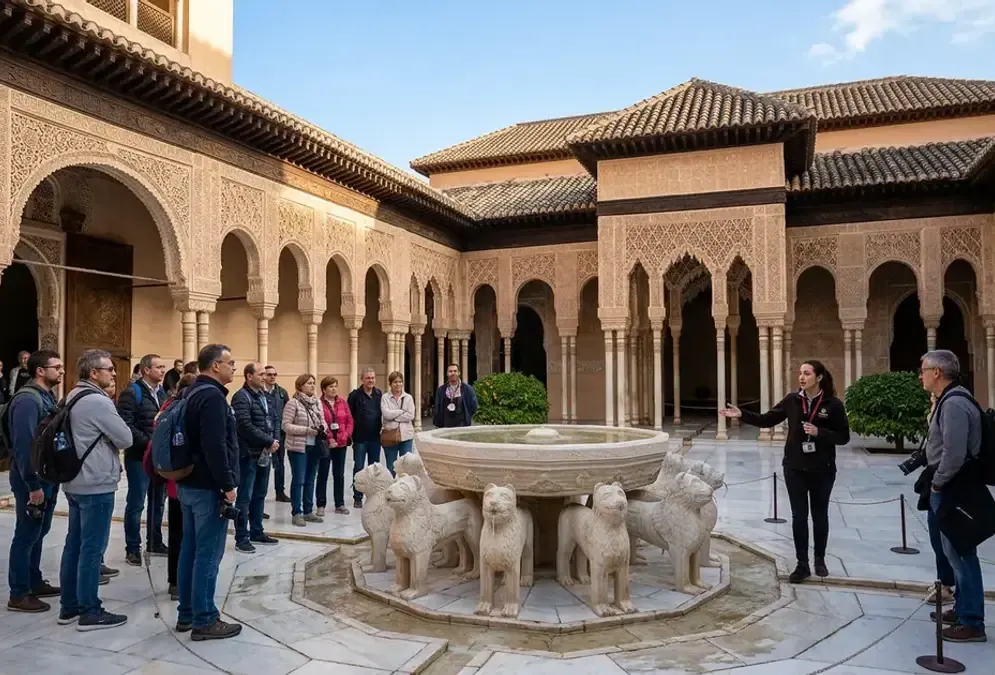
The Palace of the Lions, built under Muhammad V (1362–1391), is the most celebrated section. The Patio de los Leones centres on a 12th-century alabaster fountain supported by twelve lions, whose arrangement is thought to represent the months of the year or the hours of the day. Four channels radiate from the fountain into the surrounding halls: the Hall of the Abencerrajes, whose muqarnas dome generates a honeycomb of light, and the Hall of the Two Sisters, whose dome contains over 5,000 individual muqarnas cells. Both halls demonstrate techniques that remain poorly understood even today, combining structural ingenuity with decorative effect at a scale that later Islamic architecture rarely attempted.
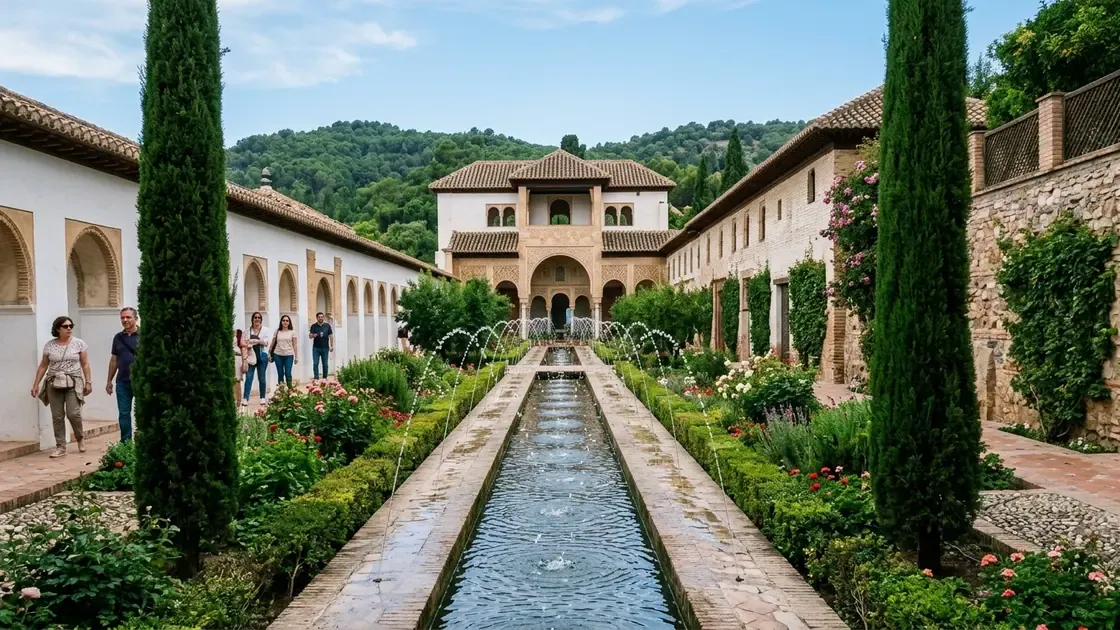
Entry to the Nasrid Palaces is governed by a strict timed-slot system: visitors must arrive within their designated 30-minute window or forfeit entry. Slots are the first to sell out in the general day tour ticket. The visit itself takes around 45 to 75 minutes depending on pace. Photography is permitted throughout but tripods and flash are not allowed. The palaces connect directly to the Generalife path, making a combined visit straightforward.