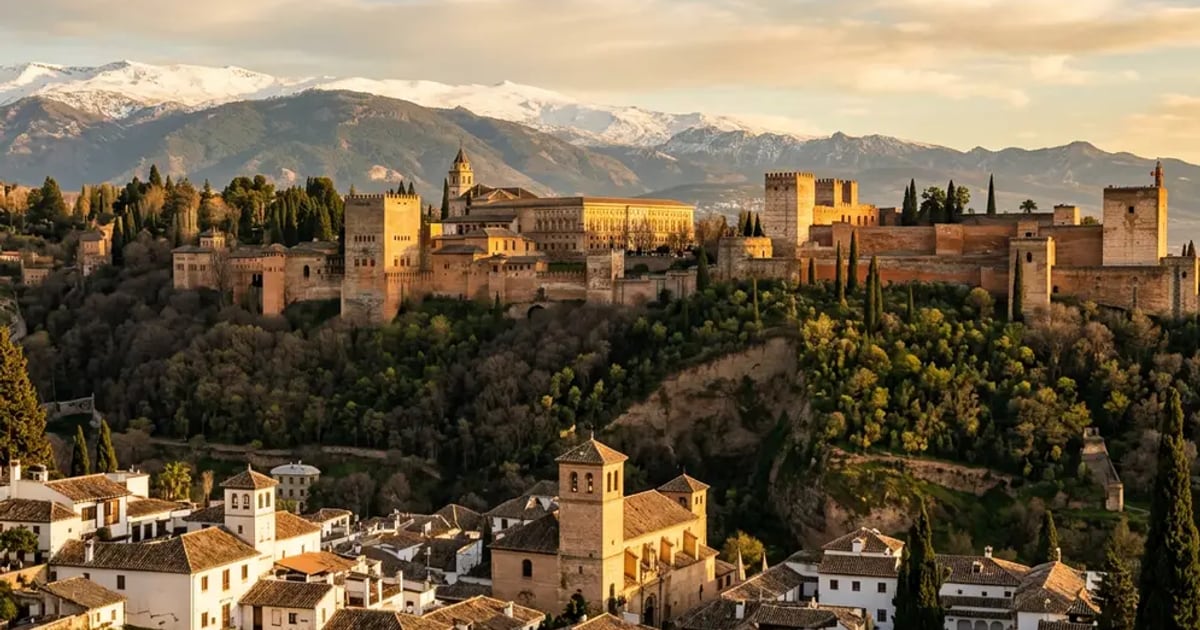
The Carlos V Palace courtyard inside the Alhambra at dusk during the Festival Internacional de Música y Danza, with rows of chairs and stage lighting against Renaissance stone
July guide

Granada in July

The hottest month on the calendar, and the one with concerts inside the Alhambra. Manageable if you plan around the heat. A disaster if you don't.

July is Granada's hardest month to get right. The Alhambra sells out three to four months ahead, not two weeks. The midday heat on the terraces reaches 35°C with no shade. The streets above the Albaicín feel like a kiln between noon and five. And yet: this is also the month when the Festival Internacional de Música y Danza puts world-class orchestras and dance companies inside the Carlos V Palace and the Generalife amphitheatre. The city stays out until three in the morning. The Sierra Nevada summit road is open. The Costa Tropical is 45 minutes away and 24°C in the sea.

Granada at 690 metres is a different proposition from Seville, where July means 38–42°C with no respite. Here the evenings cool to 18–20°C and the stone in the Albaicín lanes holds the night air past midnight. That gap matters for a city where most of the interesting things happen outdoors. It does not make July easy; it makes it viable.

This guide covers the heat honestly, explains the Festival in detail, gives you the real Alhambra booking picture for July, and tells you where to go when the city is too hot to move. For a month-by-month comparison, the best time to visit Granada guide covers the full year. For broader seasonal context, see the summer in Granada guide.

Weather in July

July is Granada's hottest month. Highs run 33–36°C on typical days and push to 38°C during heatwaves, which arrive two or three times through the month. Lows drop to 18–20°C, making evenings genuinely cooler. The city averages less than one rainy day in July — essentially no rain.

Early July (1–10)

33°C

Temperature builds from June levels. Evenings still bearable by 20:00. This is the window when the Festival de Música y Danza is in full swing — cooler nights and a full programme.

Mid-July (11–20)

35–36°C

Peak heat. Heatwaves most likely in this window. Midday (12:00–17:00) is genuinely uncomfortable outdoors. The festival closes around the 15th. Adjust your schedule accordingly.

Late July (21–31)

36–38°C

The hottest stretch of the year. August follows without significant relief. If you are sensitive to heat, late July is the toughest window. Dawn sightseeing is essential, not optional.

Granada vs Seville in July

The altitude difference is real. Seville averages 38–42°C in July and retains heat overnight. Granada's 690 metres keeps highs at 33–36°C on most days and drops evenings to 18–20°C. If you are comparing Andalusian cities for a July trip, this gap is worth factoring in. Málaga on the coast runs 32–35°C but humid; Granada is drier, which at least makes the heat feel cleaner.

Festival Internacional de Música y Danza

The Festival Internacional de Música y Danza Granada runs annually from late June into mid-July. It is one of the longest-running classical music and dance festivals in Spain, and the venues are the reason to attend: concerts take place inside the Carlos V Palace courtyard within the Alhambra, the open-air Generalife amphitheatre, and the Isabel La Católica Theatre in the city centre. The programme covers orchestral, chamber, flamenco, and contemporary dance.

The venues

The Carlos V Palace is a circular Renaissance courtyard inside the Alhambra walls, built in 1527. Evening concerts start at 22:00 when the heat has dropped and the stone cools. The acoustic is peculiar — the colonnade reflects sound inward — and the setting is one the programme organisers know is their main selling point. The Generalife amphitheatre holds around 4,000 and runs the larger-scale productions: ballet companies, full orchestras, and the flamenco nights that typically sell fastest. Both venues require a separate Alhambra concert ticket; your standard Alhambra day admission does not cover festival events.

The Carmen de los Mártires gardens and the Corral del Carbón host smaller chamber and recital events, often announced later in the season and with better walk-up availability.

Booking the festival

The programme is announced a few months before the festival opens and tickets go on sale through the official festival site. The headline Generalife events — usually a major ballet company and one or two headline flamenco nights — sell out within hours. Mid-week concerts in the Carlos V Palace and the city-centre venues have better availability and go on sale later in the season.

If you arrive without tickets, check for returns on the official site the day before each concert. The box office at the Alhambra sometimes releases a small standing allocation on the day. Worth asking.

The Alhambra in July

July is the hardest month to book and the most demanding to visit. The 90-day booking window opens in late March for July dates; popular morning Nasrid Palace slots (08:00, 09:00, 10:00) are gone within days of release. Plan accordingly.

Booking in July

  • How far ahead: Three to four months for a real choice of slots. For the 08:00 entry on a specific date, book the day the 90-day window opens.
  • Which slot: 08:00 Nasrid Palace entry is the one to target. Done by 09:30, before the terraces become exposed. The 10:00 slot is manageable but you will be finishing the Generalife in full midday heat.
  • What sells first: Any Nasrid Palace slot before 11:00. Alcazaba-only tickets have slightly better availability — but the Alcazaba terraces are fully exposed and genuinely punishing at midday.
  • Night visits: July has extended Alhambra night visit slots, typically 22:00–23:30. These are a separate ticket and sell out independently — book alongside your day ticket, not after.

What to expect in the heat

The Nasrid Palaces are built around courtyards with fountains and deep shade — the medieval designers understood summer heat. Inside the Sala de los Abencerrajes and the Patio de los Leones, temperature is noticeably lower than outside. The trick is sequencing: start in the Nasrid Palaces at 08:00, move to the Alcazaba before 10:00, then the Generalife gardens by 09:30 at the latest. Do it in the wrong order and you spend 45 minutes on an exposed fortress terrace at 11:00 in July with no shade.

Bring 1.5 litres minimum. The fountains on site are decorative, not drinking water. There is a café near the Carlos V Palace and a small shop near the Generalife entrance, both with water. A hat and loose light clothing are not optional in July — the walk between the Alcazaba and the Generalife is exposed.

For the complete booking process — the 90-day release, ticket types, and what to do when July dates are sold out — see the Alhambra tickets guide.

Beating the heat

The middle of July days — roughly 13:00 to 18:00 — are not for sightseeing. The city knows this and arranges itself accordingly. Here is where to go and what to do during the hours when Granada turns itself over to shade and air conditioning.

Sierra Nevada in July

The ski resort lifts close in April, but the Pradollano access road stays open through summer and the trails are clear above 2,000 metres. Temperature at altitude runs 18–22°C — fifteen degrees below the city on a peak July day. The summit access road reaches the Veleta car park at 3,100 metres; from there, hiking to the 3,396-metre Veleta summit takes around 90 minutes on a clear trail. The views south to the coast and north across the meseta are worth the effort.

July is the best month for the high-altitude trails — snow is mostly gone above 2,800 metres, the path is dry, and the days are long enough for a full summit attempt. Leave the city before 08:00 to reach the trailhead while it is still cool. The Sierra Nevada guide covers routes, difficulty, and what to bring.

Midday options in the city

When going outside is not the answer, the Casa de Tiros museum on Calle Pavaneras has air conditioning and a good permanent collection on Granada's history — free entry, rarely crowded in the middle of the day. The Catedral interior stays cool and takes 45 minutes to an hour to walk properly. The Albaicín's narrow lanes retain shade until mid-morning but become furnaces by early afternoon — avoid the Mirador de San Nicolás climb between 12:00 and 18:00 in July.

The free tapas tradition carries on regardless of season: a drink at most bars in the centre comes with a tapa, no charge. In July the ritual moves later — most people eat from 21:00 onward, when the outdoor tables are finally back in shade and the temperature drops past 28°C.

Costa Tropical as a day trip

Almuñécar and Salobreña on the Costa Tropical are 45 minutes by car. The sea runs 23–24°C in July — warm enough to stay in for hours. These are not resort towns: the beaches are narrow, backed by cliffs, and the towns have their own character apart from tourism. July is peak season and the beaches fill by 11:00. Leave Granada before 08:30 to get there while parking is still available and the beach has room.

The drive through the Lecrín Valley and the switchbacks down to the coast takes around 50 minutes depending on your route. For beach options, parking strategy, and the best spots for non-swimmers, the Costa Tropical day trip guide has the details.

Practical planning

July is high season in every respect — prices, crowds, and booking lead times are all at their peak. Here is what to organise before you arrive.

When to book

  • Alhambra (Nasrid Palace): Three to four months ahead. The 90-day window opens in late March for July. Set a reminder; popular morning slots go within 24–48 hours of release.
  • Alhambra night visit: Book at the same time as your day ticket — it sells on the same timeline and the July slots (22:00–23:30) are limited.
  • Festival Internacional de Música y Danza: When the programme is announced, usually March or April. The Generalife amphitheatre events sell out first.
  • Accommodation: Six to eight weeks ahead for mid-range options in the centre. The Albaicín books out fastest — if you want to stay there, eight weeks minimum.
  • Sierra Nevada day trip: No booking needed for the access road or most trails. Check road conditions at the Parque Nacional Sierra Nevada website before going above 2,500 m.

What to pack

  • Light, loose clothing in pale colours — dark fabric holds heat on the Alhambra terraces
  • A wide-brimmed hat that fits securely (there is wind on the Alcazaba battlements)
  • Two 750ml water bottles minimum for Alhambra visits
  • High-SPF sunscreen — the UV index at 690 metres in July runs 8–10 most days
  • A light layer for festival evenings — the Carlos V Palace and Generalife drop quickly after sunset
  • If Sierra Nevada: mid-layer and windproof shell; trail shoes with ankle support for the rocky high routes

What you will pay

July is peak season pricing. Compared to May and October:

  • Hotels: 30–50% above spring and autumn rates. Budget options in the centre are scarce and prices high. Mid-range doubles in the centre: €100–160. Albaicín guesthouses: €120–180.
  • Alhambra: Fixed price year-round (verify the current rate on the official ticketing site before booking). Festival concert tickets run €15–80 depending on event and seat tier.
  • Restaurants and bars: Do not price seasonally in Granada. The free tapa tradition holds.

Night visits in July

The Alhambra runs extended night visit hours in July and August — typically 22:00 to 23:30. This is a separate ticket (Nasrid Palaces only, no Alcazaba or Generalife access) and sells separately from the day admission. Visiting the Sala de los Abencerrajes by artificial light, with no crowds and the temperature dropped to 22°C, is worth the extra ticket price. Check the official Patronato de la Alhambra site for exact July hours and availability, as schedules vary by season.

Frequently asked questions

Frequently asked questions

Is July a good time to visit Granada?

Hot, but manageable if you plan around the heat. Granada sits at 690 metres, which keeps it significantly cooler than Seville (38–42°C in July) and Málaga (32–35°C). Expect 33–36°C highs in the city, 18–20°C at night. The heat is real but evenings are genuinely pleasant. The summer in Granada guide covers how July compares to June and August. The big draw this month is the Festival Internacional de Música y Danza, with concerts inside the Alhambra's Carlos V Palace and the Generalife amphitheatre — that alone makes the month worth considering. Book everything earlier than you think you need to.

How far in advance do I need to book the Alhambra in July?

Three to four months ahead for July — this is the tightest month on the calendar. The Alhambra releases tickets 90 days in advance; for July dates, that window opens in late March and the popular slots (08:00, 09:00, 10:00 Nasrid Palace entry) are gone within days of release. If your July dates are fixed, set a reminder for the 90-day opening and book the morning that window opens. The full process — ticket types, what happens when it sells out, and how to find last-minute returns — is in the Alhambra tickets guide.

What is the Festival Internacional de Música y Danza Granada?

One of the older classical music and dance festivals in Spain, running annually from late June into mid-July. Concerts happen inside the Alhambra's Carlos V Palace and the Generalife amphitheatre, as well as the Isabel La Católica Theatre. The programme covers orchestral, chamber, flamenco, and contemporary dance. High-profile concerts sell out months ahead — check the festival programme at the official site and book when it goes on sale. Some mid-week and late-programme concerts have better availability than the headline weekend events.

Can you visit the Alhambra in July without suffering in the heat?

Yes, but you need the right slot. The 08:00 Nasrid Palace entry is the one to book — you are inside before 09:00, in corridors and courtyards built for shade, while the temperature is still below 25°C. Finish the palaces by 10:00 and move to the Alcazaba terraces before 11:00. The Generalife gardens are best between 08:30 and 10:30. From noon to 16:00, the terraces and garden paths are fully exposed with no shade and 35°C+. Bring at least 1.5 litres of water, wear a hat, and wear light colours. The Alhambra night visit (22:00–23:30 slots in July) is a separate ticket type and worth booking if you want to see the Nasrid Palaces in a different light entirely.

Is there a beach near Granada in July?

The Costa Tropical — particularly Almuñécar and Salobreña — is 45 minutes by car from the city centre. The sea runs 23–24°C in July, warm enough to swim without hesitation. These are working towns rather than resort strips, with narrow pebble-and-sand beaches backed by cliffs. The drive through the Sierra Nevada foothills and the Lecrín Valley is decent — leave early (before 09:00) to beat the road traffic and arrive while the beach is still half-empty. Full details on the drive, parking, and which beach suits which purpose are in the Costa Tropical day trip guide.

Reporter notebook

Insider tips

Practical observations gathered the way a local journalist would keep them: short, specific, and more useful than brochure copy.

Best time

Book the 08:00 Nasrid Palace slot, not the 10:00

The 10:00 slot is the most popular because it feels civilised. In July it is a mistake. By 10:00 the sun is already high, the Alcazaba terraces are exposed, and the Generalife gardens are starting to bake. The 08:00 entry gets you through the Nasrid Palaces by 09:30, while the carved stucco is still in shadow and the temperature inside the Hall of the Ambassadors is genuinely cool. You can do the Generalife before 10:30 and be back in the city for breakfast before the heat peaks. The 08:00 slot is also the easiest to book — it sounds antisocial and most people skip it.

Local custom

How to get into the festival without the sold-out problem

The headline concerts in the Carlos V Palace and Generalife sell out within hours of going on sale, sometimes months ahead. The festival runs for three weeks, which means mid-week concerts in the Isabel La Católica Theatre or the Carmen de los Mártires garden often have availability much later. These are the same musicians, the same programme quality, different venue. Check the full festival calendar when tickets release — not just the first weekend. For the outdoor Generalife events, there is a standing section at the back that sells separately from seated tickets and goes on sale later. Worth watching.

The July rhythm: dawn, siesta, late night

Granadinos have adapted to July heat over generations. The rhythm is: do everything outdoors before 11:00, eat a long lunch somewhere with air conditioning between 14:00 and 17:00, then come back out at 19:00 when the stone starts to cool. Tapas bars and plazas run until 02:00 or 03:00; the Calle de Elvira and Campo del Príncipe areas stay lively until 03:00–04:00 on weekends. This is not a month for packed morning-to-night itineraries — build in the siesta and you will enjoy July considerably more than the visitors who try to push through the midday heat.