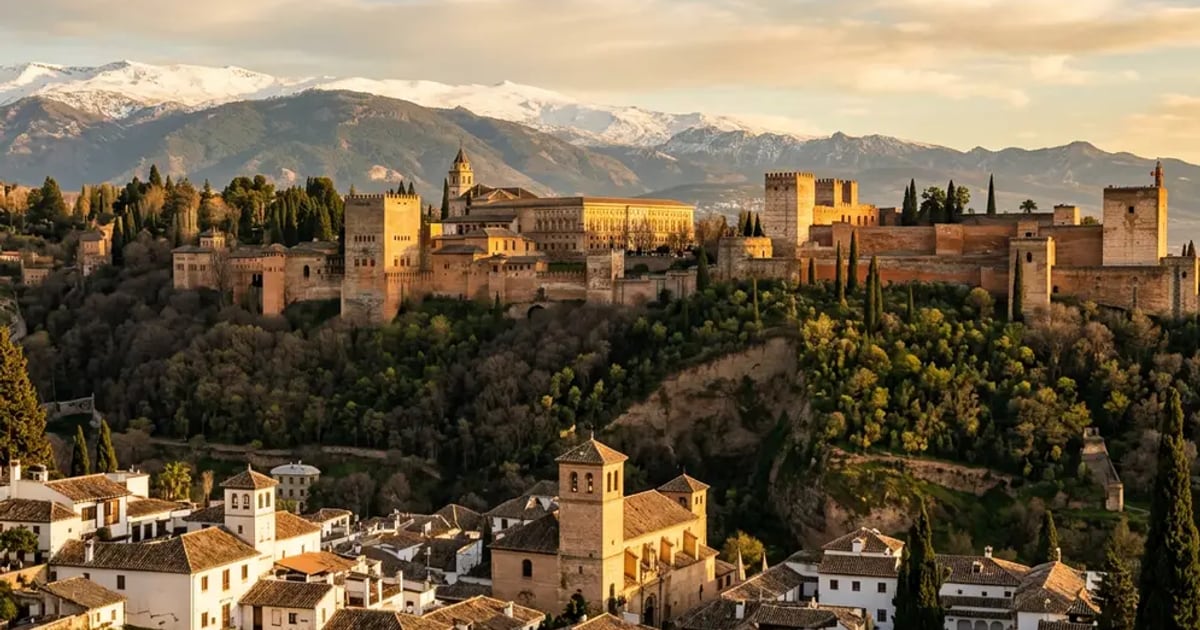
The quietest month in the city's calendar. The Alhambra is close to bookable on short notice. Sierra Nevada is at peak ski season. On 5 January, the whole city comes out for the Three Kings parade. January rewards visitors who do not need warmth to pay attention.
Seven years resident in Granada. Specialist in Nasrid architecture, Al-Andalus history, and Andalusian walking routes.
Published
January is the month Granada gives back to itself. The Christmas crowds have gone, the Reyes Magos parade closes out the holiday season on 5 January, and then the city settles into three weeks of calm that it does not get at any other point in the year. The Alhambra — the one site in Andalusia that is genuinely difficult to book across most of the year — becomes accessible. Tickets available a week or even a few days ahead. No queues at the gates. The Nasrid Palaces in low winter light.
Meanwhile, 35 minutes up the road, Sierra Nevada is in full swing. January is the resort's peak season: 100+ km of pistes open, ski and snowboard schools running, equipment hire on site. The practical case for combining a city trip with a ski day is better in January than in any other month — the city is cheap, the mountain is full, and the logistics are simple.
This guide covers the weather honestly (cool days, cold nights, occasional frost), the Three Kings tradition that most visitors have never heard of, what the Alhambra booking picture actually looks like in January, and the practical ski day logistics. For context alongside other quiet months, the winter in Granada guide covers December through February, and the best time to visit Granada compares all twelve months.
Weather in January
Granada sits at 738 metres altitude. In January that means cool, often sunny days and genuinely cold nights. The city averages around 300 sunny days a year — January is not grey the way a northern European January is. But when the sun goes down, the cold establishes itself fast, and mornings before 9 AM can feel raw in the open plazas.
Daytime highs
11–14°C
Often sunny. At this altitude, January sun has real warmth in a sheltered spot — the Alhambra terraces catch it well. Clear sky rather than cloud is the more common condition.
Night lows
2–5°C
Frost possible. Car windows ice overnight. The Albaicín lanes hold cold air after dark — the stone takes all night to give it back. A proper mid-layer is not optional.
Snow in the city
Rare
Light snowfall in the city itself happens some years — not reliably, but memorably when it does. The Sierra Nevada above Pradollano (2,100 m) has deep snow through the month.
Rain in January is moderate. The city sees around five to six rainy days across the month, less than November or December. When it rains, it tends to be short and heavy rather than all-day grey. The Alhambra's exterior walkways may close during downpours, but the Nasrid Palaces stay open regardless.
The altitude effect on temperature
Visitors arriving from the coast (Málaga, Motril) or from lower Andalusian cities often underestimate Granada's winter cold. Seville in January is noticeably warmer. Dress a full layer heavier than you would for Seville or Madrid at the same forecast temperature: the altitude means the cold carries differently, especially in the shaded Albaicín lanes and on the Alhambra hill.
Sierra Nevada peak ski season
January is the best month for skiing at Sierra Nevada. The resort at Pradollano sits at around 2,100 metres above the city, and the full mountain — over 100 km of marked pistes across beginner, intermediate, and advanced terrain — is open. The season runs through April, but January combines the best snow conditions with the fewest holiday crowds: Christmas and New Year have passed, February half-term has not yet arrived.
Two bus options run from Granada to Pradollano. The Alsa bus departs from the main bus station (Estación de Autobuses) — journey time 35–40 minutes, multiple departures daily in season. The Alhambra Bus Turístico runs a dedicated ski service in winter, picking up from central stops. Check both for January timetables, as departure times shift between peak and shoulder season weeks.
By car it is around 30–32 km via the A-395, taking 40–50 minutes depending on traffic and road conditions. The road is maintained and gritted through ski season, but carry snow chains if you are driving in January — road conditions above 1,500 metres can change fast.
Full ski and snowboard equipment hire is available at Pradollano base. No need to transport kit from the city. Ski and snowboard schools operate throughout January, with lessons for beginners through to advanced technique — book ahead for peak weekends. Snow conditions in a normal January year are reliable; check sierranevada.es for current piste status and depth before your visit.
The resort accommodation at Pradollano and nearby Monachil prices up significantly when the mountain is open and conditions are good. The city as a base works well: accommodation is far cheaper, the tapas bars are better, and the bus means you are not driving in the dark after a long day on the mountain.
For the full picture on Sierra Nevada across all seasons — summer hiking, spring wildflowers, the access road situation, and the resort layout — the Sierra Nevada guide has it. For lift pass prices and hire rates, see skiing at Sierra Nevada.
The Alhambra in January
January is the one month in Granada where last-minute Alhambra visits are sometimes possible. The 90-day advance booking window is still open, but unlike June through September, you are not competing against visitors who planned months ahead. In most years, tickets for January slots are available one to two weeks out. Sometimes less.
Availability in January
1–6 January (holiday period): The New Year window and Reyes Magos bring a small spike in visitors. Book at least two weeks ahead if your dates fall here. January 6 itself is a public holiday; the Alhambra follows its own calendar on holidays — check before booking.
7–28 January: The quietest window of the year. One to two weeks ahead is usually sufficient. In some years, slots open within days. Morning entries (9:00 AM and 10:00 AM) are still the most pleasant — the low-angle January light inside the Nasrid Palaces comes through the arched windows at a sharper angle than summer allows.
Late January: Conditions remain quiet. Book ahead as normal but without summer urgency. The last few days of January may see a slight uptick as February half-term approaches in some European markets.
What the Alhambra looks like in January
The gardens are bare but structured. The trees in the Bosque Alhambra are stripped back to branches; the Generalife terraces show their geometry without the flower cover. What remains is stone, water, and winter sky. The Patio de la Acequia still runs water through the channels. The cypress hedges keep their form. Some visitors find this version more interesting than the flowering spring edition — the underlying architecture of the garden is clearer.
Inside the Nasrid Palaces, the carved stucco and muqarnas are unchanged year-round. But the January morning light — low-angle, coming in at the angle the architects presumably intended for winter — catches the geometric detail differently from the flat overhead glare of August. A 9:30 AM slot in January is close to the best light the Palaces ever offer.
The complete booking process — how the 90-day slot release works, which ticket types cover which parts of the complex, what to do if your preferred date shows as sold out — is in the Alhambra tickets guide.
New Year and what's open
The holiday period in Granada runs from Christmas through 6 January. The calendar closes with the Cabalgata de Reyes — the Three Kings parade — on the evening of 5 January, and the public holiday of Reyes Magos on 6 January. After that, the city resets and runs at its most local.
Cabalgata de Reyes — 5 January evening
The Three Kings parade is a major Granada tradition. On the evening of 5 January, floats carrying the three kings (Melchior, Caspar, and Balthazar) move through the city centre, with attendants throwing sweets to the crowd. The streets fill with families — children in good coats, grandparents with bags open to catch sweets, the whole city apparently out at once. It is free to attend.
The route runs through the main city streets; check granadainfo.com or the Ayuntamiento de Granada website in late December for the confirmed year's route. The parade typically begins in the early evening (around 5:30–6 PM) and runs for two to three hours. Dress warmly — standing still in January for two hours requires proper layers.
This is not a tourist event. The audience is almost entirely granadino families who grew up watching it. If you are in Granada on 5 January, it is worth seeing without reservation.
Reyes Magos (6 January) — public holiday
Three Kings Day is a full public holiday. Shops, banks, and most businesses close. Many restaurants also close on the 6th (some close the 5th and 6th together). Plan accordingly: stock up on supplies the day before, and expect the city to be quiet on the day itself.
The Alhambra and major monuments follow their own holiday schedules, which are published on their official sites. Check before booking any specific January 6 visit.
Tapas bars and the free tapas system
Granada's free tapas culture — a small plate arrives with every drink ordered, at no extra charge — operates year-round. In January, the bars are running for local regulars, not tourist volume. Some places take a week or two off in early January, but by the second week the neighbourhood bars are open and the system is working at its most genuine. Quieter bars mean the bartender has time to recommend the plate; you might get something from the day's delivery rather than a standard option.
The Centro Federico García Lorca, opened in 2023 near the Cathedral, is an excellent wet-weather option. Entry is free. It holds a significant archive of the poet's manuscripts, letters, and drawings, with exhibition spaces that are unhurried in January. The Museo de la Alhambra, the Museo de Bellas Artes (both inside the Alhambra complex), and the Museo Arqueológico near the Albaicín all operate on normal January hours.
Practical planning
January's booking profile is simpler than almost any other month. The main variable is the holiday window (1–6 January) versus the quiet stretch (7–28 January). If you can choose your dates, the second and third weeks of January are consistently the cheapest and least crowded Granada gets.
When to book
1–6 January (holiday window): Book accommodation two to three weeks ahead. Alhambra two weeks ahead. Some properties raise rates slightly for New Year and Reyes.
7–28 January: Accommodation one week ahead is usually sufficient, often less. Alhambra one to two weeks ahead; in slow years, a few days may work. This is the most flexible booking window in Granada's entire calendar.
Ski accommodation at Pradollano: Prices are set by snow conditions, not by city demand. When the mountain is in good shape, Pradollano books fast for weekends. City-side accommodation stays cheap regardless.
What to pack
A mid-layer and warm outer jacket — this is Andalusia, but at altitude. Evenings at 2–5°C are cold.
Waterproof walking shoes with grip for wet or frost-covered Albaicín cobbles
Gloves and a hat for evenings and early mornings
If skiing: base layers are lighter to pack than to rent. Everything else — skis, boots, poles, helmet — is available at Pradollano.
Sunscreen for the Alhambra terraces — January sun at altitude is stronger than it feels
What you will pay
Outside the holiday week, January has the lowest hotel prices of the year. Compared to August rates:
1–6 January: Slight premium on the New Year and Reyes dates. Still well below summer — 25–30% below August peak.
7–28 January: Annual floor. Mid-range city centre hotels available for €50–75. Albaicín properties around €65–90. These are the cheapest rates you will find for quality accommodation in Granada.
Restaurants and bars do not price seasonally. The Alhambra ticket price is fixed year-round — check the official booking site for the current rate before your visit, as it has increased periodically.
February follows quickly
February half-term in northern Europe (typically the third week of February) brings a small but noticeable uptick in visitors and a slight rise in accommodation prices. January through to mid-February is a clean window. If your travel dates extend into late February, check the February in Granada guide for what shifts.
Frequently asked questions
Frequently asked questions
Is January cold in Granada?
Cool rather than harsh. Daytime highs reach 11–14°C and the city is often sunny — Granada averages around 300 sunny days per year, which holds even in winter. Nights are the honest part: temperatures drop to 2–5°C, frost appears on cars and cobbles, and the altitude (738 metres) means the cold settles fast after dark. Dress in proper layers, not just a light jacket. The Alhambra on a clear January morning, frost on the stone and the Sierra Nevada white behind it, is genuinely worth the temperature.
Can you ski and visit the Alhambra on the same trip in January?
Yes, and the combination is practical across two days. Day one: take the Alsa bus or Alhambra Bus Turístico ski service to Pradollano (35–40 minutes), ski or snowboard on 100+ km of pistes, hire equipment on site if needed, return to the city by late afternoon. Day two: book the Alhambra for a morning slot, then spend the afternoon in the Albaicín. In January, Alhambra tickets can be available a week or less ahead — check the official site and book as soon as you have a date. The two activities complement each other: one needs sun and a mountain; the other benefits from the low winter light inside the Nasrid Palaces.
What is the Three Kings parade in Granada?
The Cabalgata de Reyes runs on the evening of 5 January — the night before Three Kings Day (Reyes Magos, 6 January). Floats carrying the three kings move through the city centre throwing sweets to children; the streets fill with families and the atmosphere is genuinely festive. It is free to attend. On 6 January itself, everything closes for the public holiday: shops, banks, most restaurants. This is a major local tradition, not a tourist event — the crowd on the 5th is almost entirely granadino families. Check local listings for the route in your year, as it adjusts slightly.
Are most things open in Granada in January?
Yes, after 6 January. Reyes Magos (6 January) is a full public holiday and most businesses close. Some restaurants and bars take a short break in the first two weeks of January — an annual reset after the Christmas period — but the tapas bar circuit is open and operating normally within days. The Alhambra is open year-round (check its own calendar for the one or two maintenance closures per year). Museums, including the Centro Federico García Lorca, run normal hours from the second week of January onward. By mid-January, the city is fully open and operating at its most local-facing pace.
Is January the cheapest time to visit Granada?
January — specifically the window from 7 to 28 January — is the cheapest period in the city's calendar. Hotel prices drop to their annual floor. Alhambra tickets are available on short notice, sometimes within a week. No events push accommodation prices up. The ski resort at Pradollano does run at its own pricing (set by snow, not by the city calendar), but city-side accommodation stays cheap regardless of conditions on the mountain. For the full month-by-month picture, see the best time to visit Granada guide.
Reporter notebook
Insider tips
Practical observations gathered the way a local journalist would keep them: short, specific, and more useful than brochure copy.
Best time
The window: January 7 to 28
Christmas is over, Reyes has passed, the ski season is running at full tilt, and the Alhambra is as close to last-minute bookable as it ever gets. Hotels are at their annual cheapest. The tapas bars are running on local rhythm, not tourist volume. This three-week window — between the holiday closures and the pre-February ski weekend spike — is the quietest, cheapest, and in some ways most honest version of Granada. The Mirador de San Nicolás on a clear weekday morning in this window, with frost still on the stone and the Sierra Nevada white behind the Alhambra, is hard to replicate in any other month.
Local custom
Where to stand for the Cabalgata de Reyes
The Three Kings parade on 5 January draws the whole city. The floats start from the official assembly point and move through the centre — check granadainfo.com in late December for the confirmed route for your year. For sweets-catching with children, the wider stretches on Gran Vía de Colón give space to move. If you want atmosphere over sweets, the stretch through Puerta Real in the last hour of the parade is when the crowd is thickest and the floats most illuminated. Arrive 30–45 minutes early: the pavements fill fast and the good spots go to local families who know the route.
What to bring
Ski day from Granada: what to know
The Alsa bus from Granada bus station runs to Pradollano (the resort base at around 2,100 m) in 35–40 minutes. The Alhambra Bus Turístico also runs a ski service in season — check their website for January timetables. Full ski equipment hire is available on site at Pradollano; no need to carry anything from the city. Dress in layers you can ski in: the mountain temperature is typically 8–12°C colder than the city, and it can be genuinely cold on the upper lifts. Rent skis and boots at the resort base, not in the city. The day trip runs cleanly: bus up at 9 AM, ski until 3–4 PM, bus down, tapas by 7 PM.