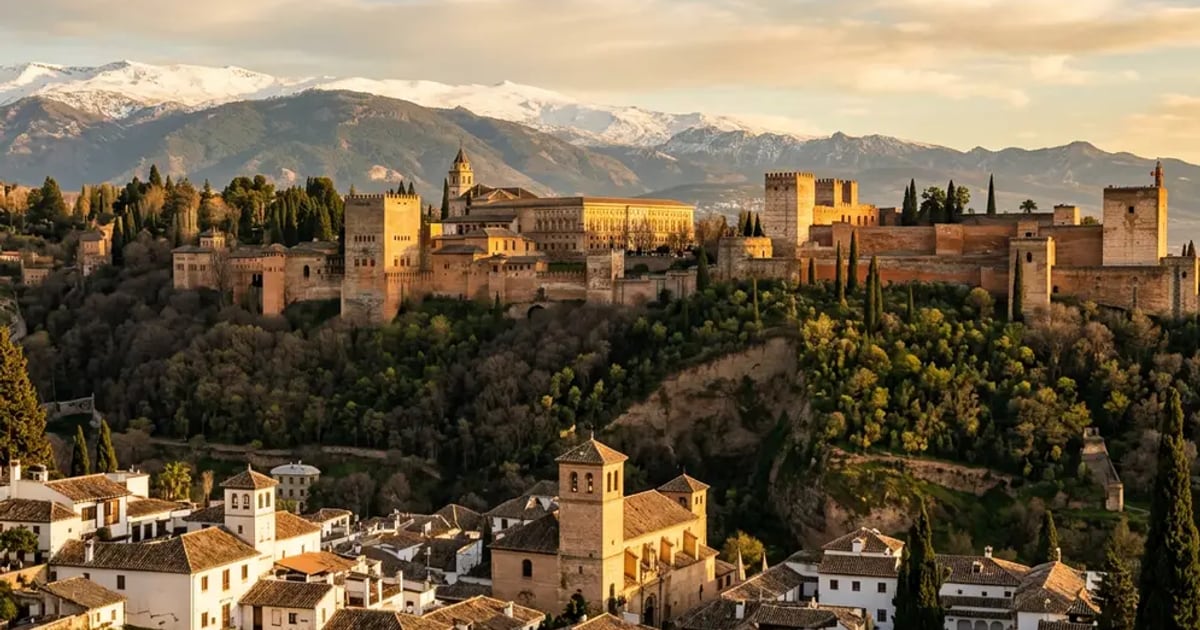
Summer heat retreats, the Alhambra breathes again, and on 27 September the whole city turns out for the Virgen de las Angustias procession. September is when Granada stops performing for tourists and gets back to being itself.
Seven years resident in Granada. Specialist in Nasrid architecture, Al-Andalus history, and Andalusian walking routes.
Published
September is where Granada stops making concessions to the summer crowd. August is brutal: 36–38°C, the Alhambra sold out weeks in advance, accommodation at its annual peak, half the city's residents at the coast. September resets everything. Temperatures fall back to the high 20s by the first week and to the low-to-mid 20s by month end. Prices drop 20–30% from August levels as soon as school term begins. The bars and restaurants that shut through the worst of summer reopen when the university starts. And on the last Sunday of the month (27 September in 2026), the city stages one of its most deeply local events: the procession of the Virgen de las Angustias, patron saint of Granada.
The honest caveat: the first week of September is still August in everything but name. The 1st through the 8th carries summer prices, summer crowds, and summer heat. The break comes around the 9th, when tour groups thin and the city shifts gear. If your trip spans only that first week, book and budget accordingly.
This guide covers September's weather week by week, explains the Virgen de las Angustias festival and how to see it properly, gives you the Alhambra booking picture for the month, and tells you what the Sierra Nevada and the Alpujarras look like in late September. For how September compares across the full year, the best time to visit Granada guide has the complete picture.
Weather in September
Granada sits at 738 metres, which softens the Andalusian heat, but not until September gives it permission to do so. Early September still holds summer temperatures in the high 20s to low 30s. By late September the city feels like a different place: warm afternoons, genuinely cool evenings, and the first bite of autumn in the mornings.
Early September (1–10)
30–32°C
Effectively late August. Hot afternoons, minimal rain, busy with the tail end of the summer tourist wave. Alhambra availability mirrors August scarcity. Book everything further in advance than the rest of the month warrants.
Mid-September (11–20)
26–28°C
The transition week. Temperatures ease, crowds thin noticeably, and accommodation prices drop. The university term begins around the 15th, bringing 55,000 students back to the city and reopening bars and cafés that sat quiet through August. Evening atmosphere improves sharply.
Late September (21–30)
22–25°C
The best window of the month. Pleasant afternoons, cool evenings around 14–16°C, the Virgen de las Angustias procession on the 27th, and the Alhambra bookable 3–4 weeks out. This is when the city feels most authentically itself.
Rain in September is minimal. The city averages two to three rainy days in the month, usually brief showers rather than sustained downpours. Afternoon thunderstorms can build over the Sierra Nevada from mid-September, clearing quickly. The Alhambra closes external walkways during heavy rain; the Nasrid Palaces stay open.
Sunset times in September
Sunset falls around 8:30 PM at the start of September and 7:45 PM by month end. The light on the Alhambra from the Mirador de San Nicolás around 7 PM in late September is warm, low, and amber. The summer haze that flattens the view in July is gone.
Virgen de las Angustias festival
The Virgen de las Angustias is Granada's patron saint, and her festival in late September is one of the few major local events the city has not packaged for outsiders. Two dates matter: the liturgical feast day on 15 September, and the civic procession on the last Sunday of the month.
15 September: the feast day
The official feast day is a Mass and floral offering at the Basílica de Nuestra Señora de las Angustias, on Calle Angustias just off Carrera del Genil. The church is small (17th century, gilded baroque interior) and fills quickly. The floral offering in front of the image involves local associations bringing their flowers in the morning, building up a display around the base of the sculpture. Worth attending if you happen to be in the neighbourhood, but the 15th is not the main event.
27 September: the procession
The main event is the large civic-religious procession on the last Sunday of September; in 2026, that is 27 September. The image of the Virgen is carried through the city streets on a silver float, attended by religious brotherhoods, civic dignitaries, and the city council. The procession leaves the Basílica in the early evening and winds through the centre, typically passing Carrera del Genil around 9 PM.
This is a local event first. The pavements fill with Granada families (grandparents, children, neighbours), not tour groups. There are no VIP stands, no paid viewing areas. You stand on the pavement and watch, same as everyone else. Arrive by 7:30 PM for a position on Carrera del Genil, which has the widest viewing area along the route. The evening is warm enough to stand outside comfortably, but temperatures drop after 10 PM.
The Basílica itself stays open late on the feast day and the Sunday before the procession. The baroque interior, usually quiet, is worth a visit. The gilded retablo behind the altar is one of the more elaborate in Andalusia.
University reopening and the city's energy
The University of Granada starts its academic year around 15 September, bringing roughly 55,000 students back to the city. This matters for the visitor: tapas bars that were half-closed in August reopen, the terrazas on Calle Navas and around Campo del Príncipe fill with a genuinely local crowd, and the evening atmosphere picks up markedly. The city that felt muted in August sounds like itself again from mid-September.
The Alhambra in September
September improves the Alhambra experience in two ways: the temperature inside the Nasrid Palaces drops to a bearable range, and the booking picture opens up considerably from mid-month. You are not walking carved stucco corridors in 36°C heat. The Generalife gardens shift from their spring peak to a different beauty: the cypresses deepen, the central pool reflects amber afternoon light, and the fountains in the Patio de la Acequia still run full.
Availability by period
1–8 September: Book 6–8 weeks ahead. Same scarcity as late August. Morning slots (9 AM and 10 AM) go first; if those are gone when you check, look for 11 AM or 12 PM entries, which are still manageable before the worst of the early-September heat.
9–20 September: Four to six weeks is the safe window. You can afford to choose your preferred morning slot rather than taking what remains. The 10 AM entry catches the best of the September morning light in the Nasrid Palaces.
21–30 September: Three to four weeks is normally enough. Late September sees the greatest improvement over summer: availability is meaningfully better, and you can occasionally find slots two weeks out. Avoid late-afternoon entries: the gardens are better in the morning and you want time before sunset.
What the Generalife looks like in September
Spring is the Generalife's most photogenic month, but September has its own quality. The roses and wisteria of May are long gone; what remains is a more austere, warm-toned palette: clipped myrtles, deep-green cypress, and the orange-yellow of turning leaves in the upper terraces. The water channels run lower than in spring but the long fountain in the central courtyard still operates. The Sierra Nevada visible from the upper garden carries the first dust of early-season snow on Mulhacén by late September. See the full gardens context in the Generalife gardens guide.
Inside the Nasrid Palaces, the September morning light enters at a lower angle than July, casting the muqarnas in the Sala de los Abencerrajes and the star-vault ceiling of the Sala de los Reyes more dramatically. The carved stucco reads better in the slanted light of autumn than in summer's overhead glare.
The full booking process (how the 90-day slot release works, which ticket types cover the Nasrid Palaces versus the Alcazaba and Generalife, and what to do when your preferred date is sold out) is in the Alhambra tickets guide.
Sierra Nevada and outdoor activities
September is the prime hiking month on the Sierra Nevada. The ski resort at Pradollano is closed (it reopens in late November or December depending on snow). The trails above 2,000 metres are fully clear and dry. Temperature at altitude runs 14–20°C — cool enough for sustained climbing, warm enough for a T-shirt at midday. The high mountain access road to the Veleta car park at 3,100 metres is open to vehicles, making the summit area accessible even to non-hikers.
Los Cahorros gorge hike
The Los Cahorros de Monachil gorge, 12 kilometres from central Granada, is the most accessible and spectacular half-day hike from the city. The trail follows the Río Monachil through narrow limestone canyon walls, crossing hanging bridges above the water and passing river pools that are swimmable through September. The round trip runs about 9 kilometres and takes three to four hours at a relaxed pace.
September conditions: the river is lower than in spring (no snowmelt) but the canyon is drier and more walkable. Bring trail shoes rather than trainers; the path is rocky and uneven. The gorge gets shade from the limestone walls for most of the morning, which keeps it cool even when temperatures elsewhere are still warm. Bus service from Granada runs to Monachil village; the trailhead is a 20-minute walk from there.
Alpujarras wine harvest
Late September is harvest season in the Alpujarras, the villages spread across the south-facing slopes of the Sierra Nevada. The DO Granada designation covers red and white wines grown at altitudes between 700 and 1,400 metres; the high altitude and day-night temperature swings produce grapes with marked acidity and aromatic intensity. The main harvest runs from the last week of September through mid-October.
Several Alpujarras producers welcome visitors during harvest: Bodega Señorío de Nevada near Villamena and the cooperative at Murtas are the most accessible from Granada (90-minute drive). The Alpujarras day trip guide covers the logistics. For the broader Granada wine guide, September harvest context sits within the full DO Granada overview.
The Sierra Nevada in September: what to expect
The high peaks (Mulhacén at 3,479 m and Veleta at 3,396 m) are snow-free through most of September, but the first light dustings can appear on north-facing flanks from mid-month. The summit road to the Veleta car park typically remains driveable. Check the Parque Nacional website for road conditions before going above 2,500 m.
For the Sierra Nevada guide, trail conditions by difficulty level, transport options from Granada, and recommended day routes for different fitness levels are covered in full. The bus to Pradollano from Granada's bus station runs on reduced frequency outside ski season; check the Alsa schedule the night before.
Practical planning
September splits neatly into two booking profiles. The first week follows summer rules; from the second week onward, it is a different calculation.
When to book
1–8 September: Book accommodation 4–6 weeks ahead, Alhambra 6–8 weeks ahead. Treat as peak summer — same scarcity, similar pricing to August.
9–20 September: Accommodation 2–3 weeks ahead is usually enough. Alhambra 4–6 weeks. This is the transition window: you gain flexibility without sacrificing weather.
21–30 September: Accommodation 1–2 weeks ahead works for most options. Alhambra 3–4 weeks. The week of the Virgen procession (27 September) sees some demand from granadinos visiting from other cities; book that specific weekend 2–3 weeks out to be safe.
What you will pay
Compared to August rates:
1–8 September: Effectively August pricing, at or close to peak rates. The 20–30% discount has not arrived yet.
9–20 September: 15–20% below August. Mid-range hotels in the centre available from €75–115. Albaicín properties from €95–140. A meaningful saving over summer without the full shoulder-season drop.
21–30 September: 20–30% below August. The best value-for-weather ratio in the city's year. Budget accommodation opens up in the €45–65 range; mid-range from €65–100.
Alhambra admission is fixed year-round. Verify the current price on the official booking site before purchase; it has risen periodically in recent years.
What to pack
Light clothing for daytime (early September highs reach 30°C, late September 22–25°C)
A mid-layer for evenings from mid-September (14–16°C lows)
Sun protection for the Alhambra terraces and Generalife gardens (September sun at 738 m is still strong)
Comfortable, grippy shoes for the Albaicín cobbles and any Sierra Nevada trails
If hiking: a windproof layer, as temperatures at 2,000 m run 10–12°C colder than the city
The autumn in Granada guide
For October and November, when the Alhambra ticket situation eases further, the Alpujarras villages turn amber, and the city's cultural calendar picks up, see autumn in Granada.
Frequently asked questions
Frequently asked questions
Is September a good time to visit Granada?
Yes — September is one of the most comfortable months to visit, and arguably the best for combining good weather with manageable crowds. Early September still feels like late summer: hot, busy, and expensive. From around the 8th or 9th things shift: accommodation prices drop 20–30% from August levels, the Alhambra becomes noticeably less hectic, and the evenings turn genuinely pleasant. By late September, with the university back in session and the Virgen de las Angustias procession on the 27th, the city is at its most authentic. See the full year comparison in the best time to visit Granada guide.
What is the Virgen de las Angustias festival?
The Virgen de las Angustias is Granada's patron saint. Her feast day falls on 15 September — a Mass and floral offering at the Basílica de Nuestra Señora de las Angustias, just off Carrera del Genil, marks the day liturgically. The main civic event is the large procession on the last Sunday of September, which in 2026 is 27 September. The image of the Virgen is carried through the streets in a procession attended by the whole city — local families, civic associations, and the city council. This is not a tourist festival. If you stand on Carrera del Genil from around 8 PM the crowd builds steadily; arrive by 7:30 PM for a decent position along the route.
How does September compare to August in Granada?
Significantly better on nearly every measure. August is Granada's peak month: 35–38°C highs, the Alhambra sold out weeks ahead, accommodation at its most expensive, and the city half-emptied of locals who have fled for the coast. September cuts temperatures by 8–10°C. Alhambra availability improves dramatically from mid-September. Prices drop 20–30% on accommodation. The bars and restaurants that closed through August reopen as the university term approaches. The atmosphere shifts from tourist-heavy to a more mixed city feel.
Is the Alhambra less crowded in September?
From mid-September, yes. Early September (first week) still feels like August — book 6–8 weeks ahead for those dates. After the 8th or 9th, availability opens up and 4–6 weeks in advance is usually enough for good slot choice. By late September you can often book 3 weeks out and still find morning entries. The Generalife gardens in September have a different character from spring — the cypress hedges and the central pool remain, but the flowers have given way to a more golden, late-summer palette. The light at 10 AM in September is warmer and lower than July's harsh overhead glare. Full booking process in the Alhambra tickets guide.
Can you ski in Sierra Nevada in September?
No. The ski resort at Pradollano typically opens in late November or December depending on snowfall. In September the mountain is in its best hiking condition: trails above 2,000 metres are fully clear, temperatures at altitude run 14–20°C, and the access roads are open. The Los Cahorros gorge near Monachil is an excellent half-day option from the city — river pools, hanging bridges, and limestone walls. For a full overview of September hiking conditions and trailheads, see the Sierra Nevada guide.
Reporter notebook
Insider tips
Practical observations gathered the way a local journalist would keep them: short, specific, and more useful than brochure copy.
Best time
The last week of September hits all three notes at once
The Virgen de las Angustias procession on 27 September, temperatures dropping to 22–25°C, and 55,000 university students back in the city: the last week of September is when Granada feels most like itself. The tapas bars on Calle Navas and around Campo del Príncipe fill with a local evening crowd rather than a tourist one. The Mirador de San Nicolás at sunset is still warm but not uncomfortable. This is the window to aim for if your dates have any flexibility.
Crowd tip
The first week of September is still August
Do not let the calendar date fool you. The 1st through roughly the 8th of September sees the same prices, the same Alhambra scarcity, and the same heat as late August. The shift happens around the 8th or 9th, when tour groups thin out and families with school-age children have gone home. If you arrive on 1 September and leave on the 7th, budget and book accordingly. It is a peak summer week in all but name.
Local custom
The Virgen de las Angustias procession: where to stand
The procession on 27 September leaves from the Basílica on Carrera del Genil and follows a route through the city centre. Carrera del Genil has the widest pavements and the best sightlines, but it fills quickly. Arrive by 7:30 PM for a comfortable position. The procession typically passes around 9 PM. Locals watch from their own neighbourhood stretch of the route, so the atmosphere varies: calmer near the start, livelier as it enters the city centre. The evening is warm enough to stand outside without a jacket, but bring one; it cools noticeably after 10 PM.