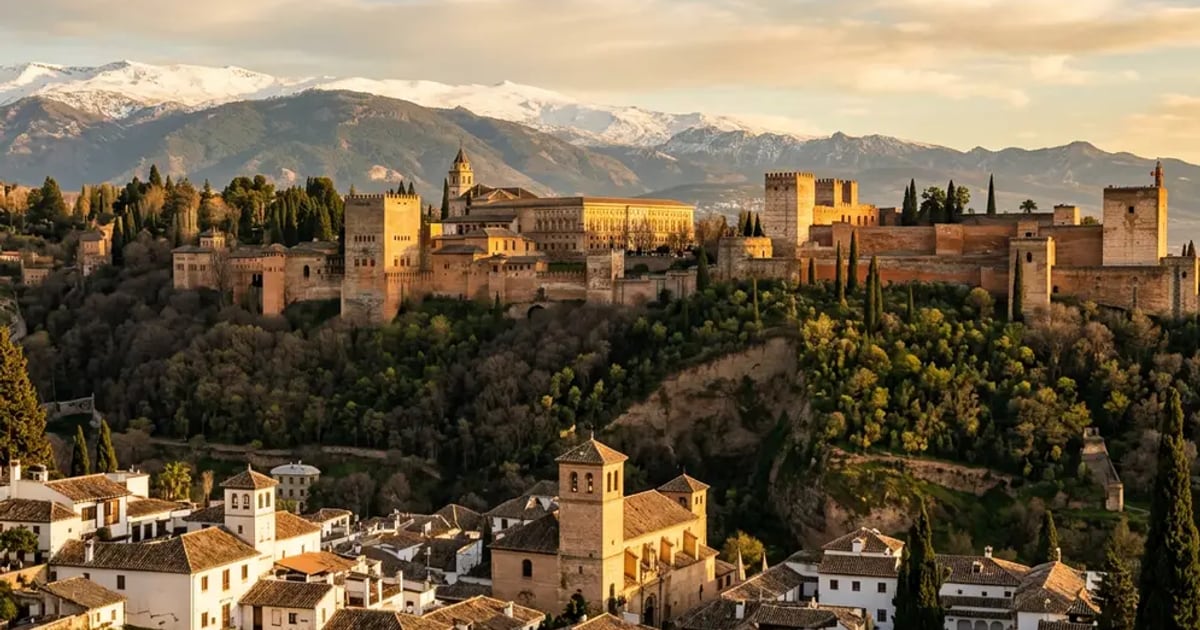
Alhambra palace surrounded by amber autumn foliage with Sierra Nevada in the background
Autumn guide

Granada in autumn

October is when locals actually tell their friends to come. Comfortable temperatures, open Alhambra slots, and pomegranates in season. This is what the summer crowds missed.

October is the month locals actually recommend. The summer crowds are gone. The Alhambra has slots available without booking months out. The temperature sits at 20–22°C — warm enough to eat outdoors, cool enough to walk the hill to the Albaicín without arriving drenched. The Generalife gardens go amber and gold. Pomegranates — the city's own symbol — ripen on the Vega plain.

September is the transition month: still running at summer prices and summer temperatures into mid-month, then cooling fast. November is the quietest month in Granada's year — hotel rates 30–40% below August, occasional rain, and the chestnut harvest starting in Las Alpujarras. Neither September nor November is a bad time to visit. October is when the city is simply at its best.

This guide breaks down each autumn month honestly, covers the Alhambra booking situation in autumn, explains where to go in the Sierra Nevada before the snow closes the high trails, and tells you what to eat and drink when the season turns. For a full comparison with other times of year, the best time to visit Granada guide covers the complete picture.

Month by month: September, October, November

Autumn in Granada covers three genuinely different experiences. September feels like a continuation of summer. October is the transition done right. November is for travellers who want the city almost to themselves.

September

21–28°C

Shoulder season in name only until mid-month. Still hot, still busy, still summer prices. The back half of September cools noticeably — 22°C highs by the 20th — and the crowds thin. Late September brings the Fiesta de la Virgen de las Angustias — Granada's patron saint festival, with a free floral offering on 15 September and a solemn city-centre procession on the last Sunday of the month.

October

14–22°C

The best month. Walking weather. University term starts, the city feels lived-in again. Generalife foliage at its peak in the third week. Lows around 10°C — bring a layer for evenings.

November

8–15°C

Quiet and cheap. Rain comes in bursts — typically 8 rainy days but rarely all-day. Chestnut harvest in Las Alpujarras. First snow possible on Sierra Nevada peaks from mid-month. The Maratón de Granada returns in November 2026 after a 20-year absence — 42.195 km through seven surrounding villages, starting and finishing in the city centre.

The university calendar matters here. The Universidad de Granada — founded in 1531, one of the oldest in Spain with 70,000 students — starts its new term in early October. When students return, the bars around Plaza de la Trinidad and Calle Pedro Antonio de Alarcón fill up again after the summer exodus. This is the Granada that locals live in, not the summer-tourist version.

The grape harvest (vendimia) runs through September in the Motril area on the Costa Tropical, about 70 km south. It is reachable as a day trip and worth combining with a coast visit if your dates align — the wineries around Motril and Almuñécar run open harvest days in late September and early October.

The Granada Autumn Festival

The Festival de Otoño de Granada runs through October and into November, programming theatre, classical music, and contemporary dance at venues across the city including the Teatro Isabel la Católica and the Palacio de los Condes de Gabia. Dates and programmes vary by year — check the Patronato Municipal de Cultura website once you have confirmed travel dates.

The Alhambra in autumn

In summer, the Alhambra booking system behaves like concert tickets for a sold-out stadium: the 90-day window opens, popular slots go within hours, and anyone who did not set a reminder finds themselves choosing between 3 PM in August heat or a night visit with limited access. Autumn changes the calculation.

Availability by month

  • September: treat like summer. Book four to six weeks ahead. The first half of September is still peak demand — tour groups are still running and school holidays in several European countries extend into mid-September.
  • October: two to three weeks gives you solid choice. You can afford to pick a specific slot rather than taking whatever is left. Morning entries (8:30 AM, 10 AM) are the ones to aim for — the light in the Nasrid Palaces in October is notably better than the flat overhead glare of summer.
  • November: sometimes five to seven days out, depending on the week. Midweek dates in November can be booked almost last-minute by Alhambra standards.

The autumn experience inside

The Generalife's upper terraces — the cypress-lined Calle de los Cipreses and the plane tree walk above — are at their best in October. The trees planted along the water channels turn amber-yellow by the third week of the month. The fountains still run. The gardens smell of damp earth and late flowers rather than the dry dust of August.

Inside the Nasrid Palaces, the lower sun angle in autumn makes a real difference to the carved stucco. The honeycomb vaulting in the Sala de los Abencerrajes catches the light at a different angle than it does in summer, and the shadows in the muqarnas read more clearly. This is not marketing — it is basic optics. Autumn morning light in the Alhambra is better than summer morning light.

For the full booking process — how the 90-day release works, which ticket types cover which parts of the site, and what to do when your preferred slot is sold out — the Alhambra tickets guide has every step. The Alhambra monument page covers the history and what to prioritise inside.

Sierra Nevada and Las Alpujarras

Autumn extends the mountain season by two months compared to summer logic. In July and August, the high Sierra Nevada trails are busy with hikers trying to reach Mulhacén (3,479 m, the highest peak in mainland Spain) before the heat of the day. In October, you have the trails largely to yourself.

Sierra Nevada day trip in autumn

October is the last reliable month for the high-altitude trails. The summit road to the Veleta car park at 3,100 metres usually stays open until late October or early November, when the first serious snowfall closes it for the ski season. Below 2,500 metres, the trails through the Parque Nacional stay walkable through November. The bus from Granada's city centre runs in autumn on a reduced schedule — check the Alsa timetable before you go, as summer frequencies drop after September. Temperature at 2,000 metres in October: around 12°C with no wind, closer to 5°C with any breeze. Pack layers.

Sierra Nevada day trip guide →

Las Alpujarras: chestnut country in November

The white villages on the southern slopes of the Sierra Nevada — Pampaneira, Bubión, Capileira — sit between 1,000 and 1,500 metres. The chestnut harvest happens through November, and several villages hold local castañadas (chestnut festivals) in the first two weeks of the month. Capileira is the highest of the three Poqueira gorge villages and the most dramatic in autumn colour. The drive or bus from Granada takes about 80 minutes to Pampaneira. The road beyond Capileira, which continues up to the Veleta in summer, closes for the season sometime in November.

Las Alpujarras day trip guide →

Autumn flavours: what to eat and drink in season

Granada's tapas culture runs year-round, but the specific ingredients on the pass change with the season. October and November bring in produce that does not appear the rest of the year.

Pomegranates

October and November are the only months when local pomegranates are in season. The Vega de Granada — the agricultural plain west and north of the city — grows them in quantity. The fruit at this time of year is sharper and more complex than anything you would get from a Spanish supermarket in August, which has been in cold storage for weeks. Fresh pomegranate juice (zumo de granada) appears in bars and juice stalls from early October. If you want the context behind the city's relationship with this fruit — it is on the coat of arms, it named the city, and the Moors planted the first orchards here — the pomegranate history guide is worth a read.

What else is in season

  • Wild mushrooms: the hills above Granada produce boletus, níscalos (saffron milk caps), and setas de cardo through October. Restaurants add them to the menu in risottos and rice dishes. The quality of fungi at a Granada restaurant in late October is the best version of Spanish mushroom cookery.
  • New olive oil: the olive harvest starts in November across Andalucía. Shops and market stalls in Granada carry early-harvest oil (aceite de cosecha temprana) from October, intensely green and peppery compared to the oils that have been sitting in tanks since last winter.
  • Chestnuts: roasted on street corners in November. The vendors set up near the Cathedral and in the Bib-Rambla square from the first cold days.
  • Game: partridge (perdiz) and rabbit (conejo) feature on autumn menus at traditional Granadan restaurants. Perdiz a la granadina — slow-cooked with vinegar, bay, and cloves — is a dish that does not appear in summer.

New wine with the vendimia

The Motril and Contraviesa areas south of Granada produce their own wines under the DO Vinos de la Tierra de Granada denomination. The grape harvest finishes by October and some producers release their young wine (vino joven) by November. Granada wine is not widely known outside Andalucía, which means prices at source are reasonable. Ask at wine bars in the centre about local producers.

Practical planning

Autumn in Granada requires less logistical planning than summer but more clothing layers. Here is what actually matters.

What to pack

  • September: summer kit plus a light jacket for evenings. Temperatures drop to 15–17°C after dark. The same light trainers that work in summer are fine.
  • October: layers. A mid-weight jacket for evenings (10°C lows by month end). If you are going to the Sierra Nevada, bring a proper shell layer and gloves — the temperature at 2,000 metres can be 10°C colder than the city.
  • November: proper autumn kit. Waterproofing for rain days. Warm-soled shoes for the cobbled streets in the Albaicín, which get slippery when wet. Evenings drop to 5–8°C.

What you will pay

Hotel prices follow demand closely. Compared to August peak rates:

  • September (first half): broadly the same as summer, possibly 10–15% lower midweek.
  • September (second half) and October: 20–25% below August peak. Decent mid-range options in the centre available for €80–120.
  • November: 35–45% below August peak. Properties in the Albaicín that were €180–200 in August drop to €100–120. This is the cheapest month to stay in Granada.

Alhambra tickets are the same price year-round (€19 general admission — verify the current price on the official site before booking). Restaurants and bars do not price seasonally.

What is open, what closes

  • Alhambra: open year-round. October and November hours shift slightly (closes 18:00 instead of 20:00 in high summer). Night visits run on Thursday, Friday, and Saturday throughout autumn.
  • Sierra Nevada ski station: typically opens late November or December, depending on snowfall. In November you may arrive to find the station preparing for opening season, not yet running lifts.
  • Beach bars on the Costa Tropical: most close by mid-October. The beach restaurants (chiringuitos) at Almuñécar and Salobreña operate year-round but with reduced menus from November.
  • Hammam Al Ándalus: open year-round, and genuinely pleasant in autumn — a warm bath circuit when the evening temperature has dropped below 12°C is the right idea.

Rain days in November

Granada averages 8 rainy days in November, but the rain tends to come in short bursts rather than all-day grey. A morning shower followed by clear afternoon is common. If your trip falls on a wet day, the Cathedral and Royal Chapel, the Museo de la Alhambra, and the Parque de las Ciencias (Granada's science museum) all work well as indoor alternatives. The Albaicín lanes look good in rain — the stone gets dark and the lanes quiet.

Explore each autumn month in detail

  • Granada in September — the transition month: still warm, crowds beginning to thin, patron saint festival in late September.
  • Granada in October — the best autumn month: 14–22°C, Generalife in peak colour, university term restoring local atmosphere.
  • Granada in November — quiet and cheap: Jazz Festival, chestnut harvest in Las Alpujarras, lowest hotel prices of the year.

Frequently asked questions

Frequently asked questions

Is autumn a good time to visit Granada?

October is the month locals actually recommend to friends visiting from abroad. Highs around 20°C, the Alhambra with proper availability, and the Generalife gardens turning amber and gold. September still runs hot — 25–28°C — and busy. November gets occasional rain and drops to 8–15°C, but it is also the quietest month of the year, with room rates at their lowest and the Alhambra booking system showing available slots weeks out instead of days.

What is the weather like in Granada in October?

October averages highs of 20–22°C and lows around 10°C. The city sits in an inland bowl at 680 metres, so it cools faster than coastal Andalucía in autumn. Mornings can be crisp early in the month; by mid-October you will want a layer after sunset. Rain is light — typically 5–6 days in October, often brief afternoon showers. The temperature is ideal for walking up to the Alhambra or through the lanes of the Albaicín without sweating through a shirt.

When do pomegranates ripen in Granada?

October and November. The pomegranate (granada in Spanish, which gives the city its name) ripens through October, and by November the fruit markets have loose pomegranates alongside the first of the season's oranges. The orchards in the Vega — the fertile plain west of the city — are where most are grown. Local bars and juice stalls serve fresh-pressed pomegranate juice from October; the flavour is noticeably sharper and more complex than bottled versions. If you want to see the connection between the city and its symbol, the pomegranate history guide has the full context.

Can you hike in the Sierra Nevada in autumn?

Yes, and October is one of the best months to do it. The summer crowds on the high trails are gone, the colours on the lower slopes are at their best, and the temperature at 2,000 metres is around 12–15°C on a clear day. The main summit road to Veleta stays open until the first proper snowfall, which typically arrives in late October or November depending on the year. Below 2,000 metres, the trails remain accessible through November. The Sierra Nevada day trip guide covers trailheads, bus access from Granada, and what to pack for each altitude band.

How far in advance do I need to book the Alhambra in autumn?

In October, two to three weeks gives you good choice of slots. November you can sometimes book five to seven days out and still find morning entries — that is as close to spontaneous as the Alhambra gets. September is still summer-adjacent in booking terms: treat it like June and book four to six weeks out. The ticket system opens slots 90 days ahead; in October you do not need to count days, but checking in early October for late October dates makes sense. Full booking instructions, timing of slot releases, and how to handle sold-out dates are in the Alhambra tickets guide.

Reporter notebook

Insider tips

Practical observations gathered the way a local journalist would keep them: short, specific, and more useful than brochure copy.

Best time

The third week of October is the sweet spot

Summer tour groups have cleared out by mid-October but the weather has not yet turned. The Generalife gardens in the third week of October — when the plane trees along the upper terraces are amber and the fountains are running — are about as good as this place gets. The light is lower and softer than summer, which suits the carved plasterwork of the Nasrid Palaces far better than August's harsh overhead sun. Book for the 10 AM or 11 AM slot in October; you no longer need the 8:30 AM heat-avoidance entry.

Money tip

November hotel rates drop by 30–40% compared to August

The difference between an August room in the Albaicín and the same room in November is substantial — typically 30 to 40 per cent. The city's two main demand peaks are Semana Santa (March/April) and summer (July/August). By early November, properties that were fully booked at €180/night in August are available at €100–110. The trade-off is occasional rain and shorter daylight, but if your trip is primarily about the Alhambra, the old city, and eating well, November gives you more of all three for less.

Local custom

University term starts in October — use it

Granada has 70,000 students at the Universidad de Granada, one of the oldest universities in Spain (founded 1531). When term starts in early October, the bars around Plaza de la Trinidad and Calle Pedro Antonio de Alarcón fill with locals again after the summer exodus. Tapas culture is at its best during university term — bars competing for student regulars run generous rounds. The contrast with August, when the city's own residents largely leave for the coast, is stark. October Granada is the inhabited version of the city.

Photo spot

Mirador de San Nicolás in October afternoon light

The Mirador de San Nicolás view across to the Alhambra is well documented. What is less often mentioned is that autumn afternoon light — from about 4 PM onwards in October — hits the Nasrid towers at a low angle that turns the stone from pale gold to deep amber. The Sierra Nevada behind, if there is early snow on the high peaks, provides a backdrop that does not exist in summer. Arrive by 3:30 PM, find a wall to sit on (the terrace fills fast), and wait for the light to drop. A tripod is unnecessary; the light is strong enough for handheld at 4 PM.