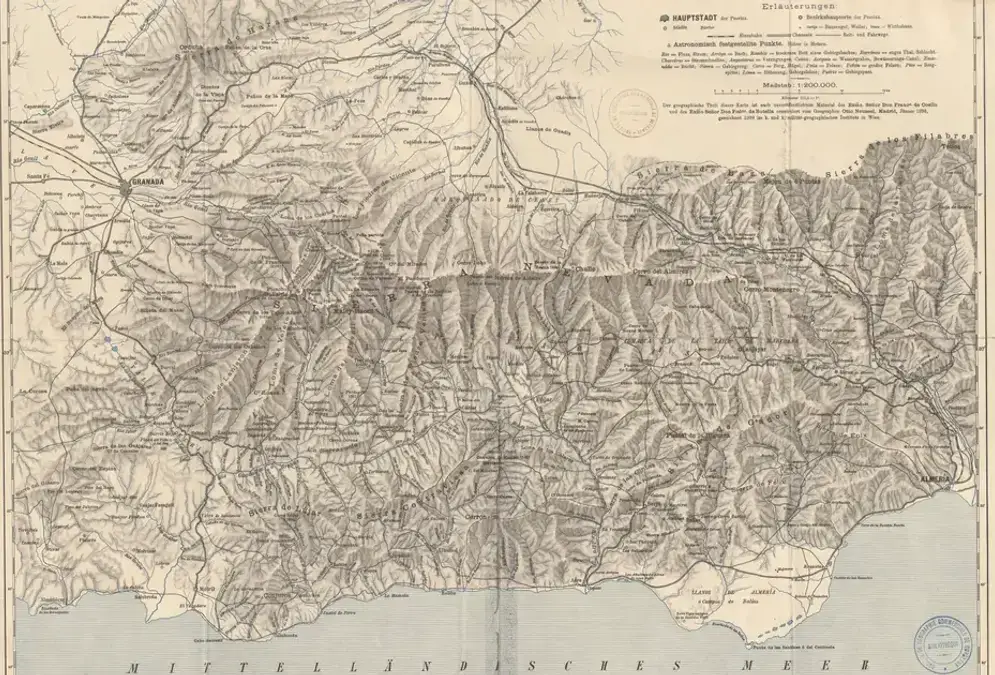
Spain's highest mountain range sits 40km from Granada city centre, reachable by bus in 45 minutes. The range matters for a specific reason: it operates differently across the year, and most visitors get only one version of it. Understanding both seasons before you go changes what you decide to do there.
Winter: Europe's southernmost ski resort
From December through April, the Pradollano base area runs as Europe's most southerly ski resort. The infrastructure is larger than many visitors expect: 124 pistes covering over 100km of groomed snow, catering to beginners and experienced skiers alike. Getting there is straightforward. The A-395 motorway runs directly from Granada to Pradollano in about 45 minutes by car. The public bus from Granada bus station costs around €6 one way and covers the same route.
One critical variable: snowfall. Early December and late April are marginal. January and February are the dependable months. If you're planning a winter day trip around the skiing, check the resort's snow report at sierranevada.es the week before. The resort has had poor-snow winters, and arriving to find three open pistes and muddy lower slopes is a waste of a day.
If you're not skiing, the Pradollano area still works as a winter excursion. The panoramic views at altitude, the contrast with Granada's mild valley climate, and lunch at one of the base restaurants are all worth the 45-minute drive. It's genuinely cold up there when Granada is sitting at 12°C.
Spring and autumn: the underrated windows
May and June, and then September and October, give you Sierra Nevada at its most accessible for walkers. Snow has cleared from the lower trails, temperatures sit in the low-to-mid twenties, and the crowds are thinner than in summer. The wildflowers in May are worth the trip on their own: the lower slopes turn yellow and violet as the snow retreats upward.
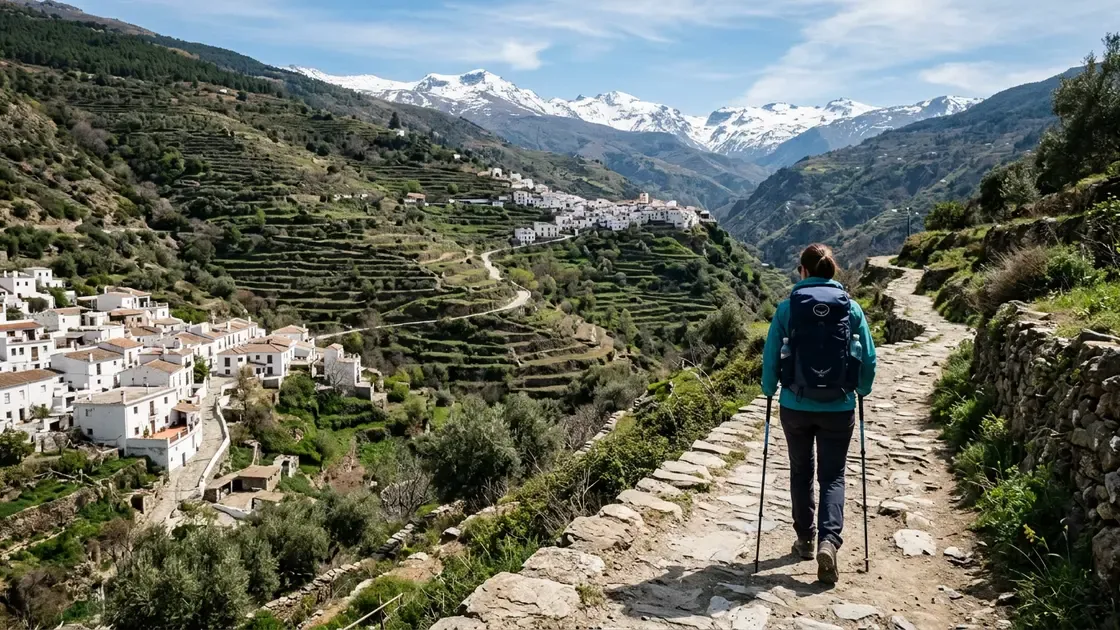
The Poqueira gorge trails around Capileira start from 1,436m and give you views down a gorge the Alpujarran villages cling to on both sides. The Las Cebadillas route (8.7km, around 3 hours) is an honest moderate walk with good views and no technical difficulty. The bus doesn't go this far, so you'll need a car or an organised tour.
Summer: high-altitude hiking
July through September is when serious hikers target the high peaks. Mulhacén tops out at 3,479m, the highest point on mainland Spain. The standard ascent from Hoya de la Mora takes around 5 hours return and requires a reasonable level of fitness. The elevation gain is not trivial and altitude affects people differently. If you haven't hiked above 3,000m before, go with a local guide rather than solo.
Veleta (3,394m) is typically the easier summit and accessible from the Hoya de la Mora car park, which sits at 2,500m already. On clear mornings, the view from the ridge extends across the Strait of Gibraltar to the Atlas Mountains in Morocco. This is not hyperbole. The distance is 170km and conditions have to cooperate, but it happens several times a week in July and August.
Start any high-altitude hike by 7am. By 1pm the afternoon thermals build and cloud cover can roll in quickly. The temperature at 3,000m is roughly 18°C cooler than Granada. At 7am in August, the valley is already warm; the ridge is cold.
Getting there and practical decisions
For the ski resort: bus or car both work, and the bus is the cheaper and lower-stress option. For trails beyond Pradollano or for the Alpujarras villages: you need a car or an organised guided tour.
Guided day trips from Granada run from €60 per person for group tours up to €120 for more structured itineraries. Private tours start around €100 per person. These make most sense if you want the high peaks, the Alpujarras villages, or combination routes, where local knowledge about trail conditions and driving mountain roads saves significant time.
Taxis from Plaza Mariana Pineda to Pradollano cost around €40-50 each way. The public bus is the practical choice for winter ski days; the guided tour is the practical choice for summer trekking if you don't have a rental car.
What the Parque Nacional contains
Sierra Nevada is Spain's largest national park at 86,000 hectares. The protected area starts at 1,000m elevation. Iberian ibex are common above the treeline, particularly around Veleta in summer mornings. Golden eagles and short-toed eagles patrol the thermals above the gorges. Below the treeline, red deer and foxes move through the pine and oak forest. The biodiversity is real: the park protects around 2,100 plant species, many endemic to this range.
For a full day including travel, the minimum you need is 8-10 hours from Granada.