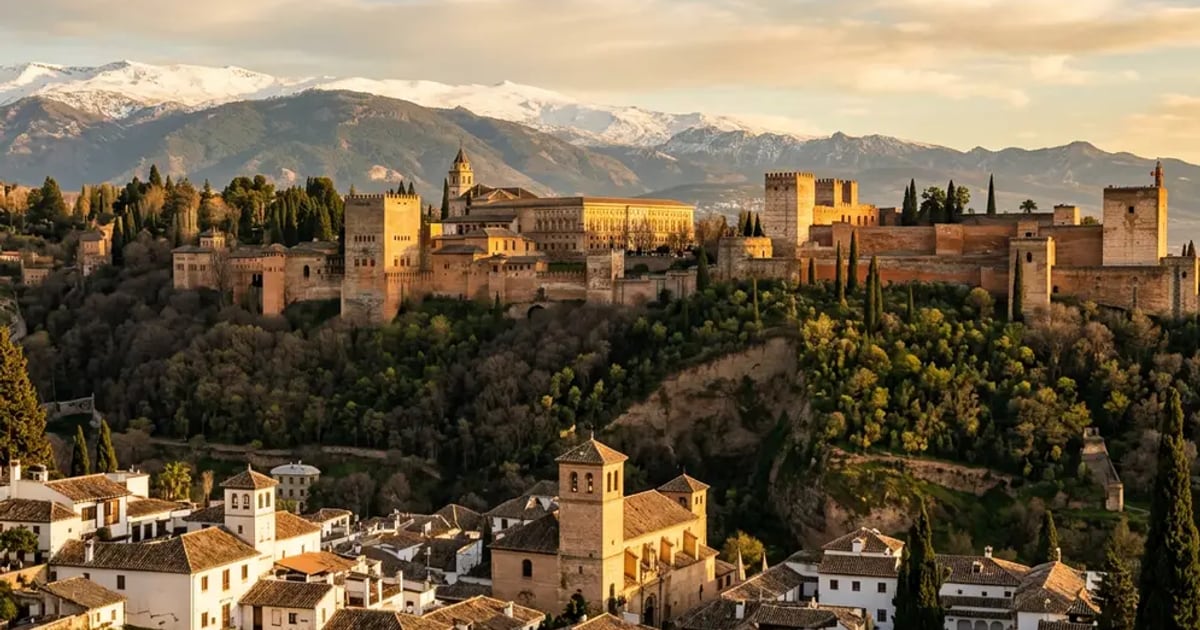
Two festivals, sunset at 9:45PM, and the coast 45 minutes away. June is Granada's cultural month — if you book the Alhambra and the festival tickets early enough.
Seven years resident in Granada. Specialist in Nasrid architecture, Al-Andalus history, and Andalusian walking routes.
Published
June gives Granada two things no other month does: the Corpus Christi feria in early June, and the Festival Internacional de Música y Danza from the 12th onward. Evenings stretch to nearly 10PM. You can be on a Mediterranean beach by lunchtime and back in the Albaicín by dinner.
The costs are real. Highs hit 33°C by late June. Hotels charge summer rates from the first of the month. The Alhambra fills four to six weeks out for any weekend slot, and festival nights sell out weeks before the date. Come prepared or you will spend the first morning on a waiting page.
This guide covers both events in enough detail to book sensibly, explains the only two Alhambra time slots worth considering in June heat, and gives the practical details on beach day trips and late-night dining. For how June compares to the rest of the year, see the best time to visit Granada.
Weather and what to expect
June starts warm and finishes hot. Early in the month — the first two weeks — highs sit around 27–29°C, which is comfortable enough for extended walking if you time it right. By the last week of June, expect 32–34°C. The saving grace is the city's altitude: at 680 metres, Granada cools faster than the coast after sunset, and the lows drop to 17–19°C overnight. Rain is rare — perhaps two or three brief showers across the whole month.
Temperature
27–33°C
Lows around 18°C. Early June is manageable; by the 20th the midday streets are harsh. Shade and stone buildings are your allies — the old city's narrow lanes stay noticeably cooler than open plazas.
Light
~9:45PM
Sunset in late June is at 9:44PM. You get the full city in long golden light for most of the evening. The Mirador de San Nicolás view across to the Alhambra in this light, with the Sierra Nevada still snowcapped in early June, is genuinely different from the hard midday version.
Crowds
Mid-to-high season. Tour groups are running at full schedule. The Alhambra queues at the entrance gate from 9AM if you do not have a ticket. The old city — Albaicín, Sacromonte — stays manageable outside midday. Corpus week and festival nights push accommodation to its tightest.
The heat changes how you use the city. The most experienced way to approach June in Granada: mornings (8–11AM) for the Alhambra or uphill walks; a long afternoon rest or beach trip from noon to 6PM; evenings for the festival, the feria, or a slow dinner. This is not a concession to weakness — it is how the locals live here in summer.
Sierra Nevada in June
The high routes above 3,000 metres are fully accessible in June, but exposed. The Veleta summit road opens sometime in May depending on snowmelt; in early June the peaks above 3,000m may still have patches of snow. Start any serious hike by 7AM and turn around before noon. Below 2,500 metres, the trails are fine throughout the day.
Corpus Christi: Granada's June feria
The Corpus Christi week is the closest thing Granada has to Seville's April Feria — a full week of celebration built around a religious feast but thoroughly secular by night. In 2026 it runs 30 May to 6 June, with Corpus Thursday falling on 4 June.
What happens and when
Tarasca parade (3 June): A giant effigy — the Tarasca, a dragon-like creature — parades through the centre flanked by costumed giants and traditional music. The Tarasca's dress is replaced each year by a local designer; people place bets on the colour. The parade runs along Gran Vía de Colón and through the old streets in the afternoon.
Cathedral procession (4 June): The main religious event. The consecrated host moves under a canopy through streets lined with rosemary, flowers, and canopies. The Cathedral façade and the surrounding streets fill well before the procession; arrive early or watch from the balconies of the tourist offices on Gran Vía.
Feria at Almanjáyar (all week): The public feria ground in the Almanjáyar neighbourhood has casetas open to everyone — no invitation needed, no dress code enforced, though flamenco dresses are everywhere. Live music, rebujito (manzanilla mixed with lemon soda), and dancing from around 6PM to well past midnight. The feria is free to enter.
If your visit lands in Corpus week, the Albaicín and Cathedral areas are at their most decorated. The streets around the Cathedral — particularly Calle Mesones and Calle Reyes Católicos — are draped with awnings and lined with stalls. The noise and density of Corpus Thursday afternoon in the city centre is not for the faint-hearted, but it is genuinely unlike anything else in Granada's calendar.
The practical catch: accommodation in the centre for Corpus week books out well in advance, and prices jump. If you are planning around this event, confirm your hotel first.
Festival Internacional de Música y Danza
Running since 1952, the Festival Internacional de Música y Danza de Granada is one of the oldest and most serious summer music festivals in Spain. It runs from 12 June to 12 July, which means the back half of June is essentially one long festival programme.
Venues and what they offer
Generalife Gardens: Outdoor evening concerts in the Alhambra's garden terraces. The backdrop is the Alhambra walls; the air carries orange blossom and cypress. Tickets €40–€108. These are the most sought-after performances and sell out earliest.
Alhambra Palace Hotel: Concerts in the gardens of the historic hotel below the fortress. Smaller capacity than the Generalife stage; the intimacy is the point. Tickets €35–€75.
Corral del Carbón: A 14th-century Nasrid caravanserai in the city centre, now used as a performance space. Flamenco, chamber music, and dance. Tickets €25–€55. Less likely to sell out weeks ahead — worth checking if the Generalife dates are gone.
Programme and booking
The programme covers opera, classical orchestral concerts, flamenco, jazz, and contemporary dance. The mix changes each year. Book at granadafestival.org — tickets go on sale when the programme publishes, typically in April or May. For June dates specifically, the most popular evenings are the outdoor Generalife and Alhambra concerts; book these first. Some nights in the programme run concurrently at different venues, which means a sold-out Generalife night may have seats available at the Corral del Carbón on the same evening.
Dress code is smart-casual in practice. The Generalife Gardens cool quickly after 9PM — bring a light jacket even if the daytime temperature was 33°C.
Festival week accommodation
Festival nights with well-known performers — Berlin Philharmonic, major opera productions — push hotel prices in the centre higher than Corpus week. If you are booking a trip specifically around a high-profile night, sort the concert ticket and the hotel room in the same session. Both sell out, and the hotel matters because you are walking home at midnight.
Alhambra strategy in June
June is one of the most competitive months for Alhambra tickets. The 90-day booking window means June dates open in late March; popular slots on weekend mornings go within days of release. For any June visit, four to six weeks ahead is the minimum — six to eight if you want the 8:30AM entry on a Saturday.
The two slots that work in June heat
8:30AM: The first entry of the day. You reach the Nasrid Palaces before 9AM, when the stone corridors are still cool from the night. The Patio de los Arrayanes and Patio de los Leones have direct sun from around 10:30AM — you want to be through them by then. Plan two to two-and-a-half hours for the full complex (Nasrid Palaces, Alcazaba, Generalife), finishing by 11AM before the midday heat settles.
8PM evening session: Runs from late May through October, Nasrid Palaces only. The visit lasts 90 minutes. The temperature by 8PM is around 26–27°C, dropping through the visit. The light through the carved lattice windows at dusk is different from daytime — lower, more directional, the shadows in the muqarnas deeper. Evening tickets release on the same 90-day cycle and sell out separately from daytime tickets.
What to avoid
The 2PM and 3PM entry slots in June are the worst time to be in the Alhambra. The Generalife's terraced gardens face south-west and absorb heat through the afternoon; the Patio de los Leones has no reliable shade by early afternoon. If you can only get a 2PM ticket, carry at least a litre of water, move through the Generalife last (not first), and spend the maximum time in the shaded interior rooms of the Palaces.
For the booking process — how the 90-day window actually works, which ticket types cover which zones, and what to do when your preferred slot shows sold out — the Alhambra tickets guide covers every step.
Practical planning
June in Granada rewards planning. The city's main draws — the Alhambra, the festival, Corpus week — all require booking well ahead. Here is what you actually need to sort before you arrive.
Beach day trips: Costa Tropical
The Costa Tropical — specifically Almuñécar and Salobreña — is 45 minutes by car from Granada centre, about 90 minutes by direct bus from the Palacio de Congresos terminal. By late June the sea temperature reaches 21°C, warm enough to swim. Both resorts have dark-sand beaches backed by low cliffs; the water gets deep quickly, which locals prefer. The bus runs roughly hourly; check the Alsa timetable before you go, as frequency and first/last times vary.
A practical June combination: book the 8PM Alhambra evening session and use the day for a coast trip. You leave Granada at 9AM, swim, eat at a beach restaurant, return by 6PM, walk to the Alhambra at 7:30PM. Both the monument and the Mediterranean in a single day.
What you will pay
Hotels: June rates run 40–60% above October prices. Mid-range rooms in the centre start around €110–140; Corpus week and high-profile festival nights push this higher. The Albaicín's boutique options are fully priced from 1 June.
Alhambra: General admission €19 (verify current price at patronato.alhambra-patronato.es before booking). Evening session is the same price. No senior or youth discount on peak-season online bookings.
Festival tickets: €25–€108. The outdoor Generalife and Alhambra concerts sit in the €40–€80 range for good seats. The Corral del Carbón programme runs €25–€55.
Restaurants: Prices do not vary seasonally — the free tapa with every drink applies year-round. A three-course dinner with wine at a good mid-range restaurant runs €30–€45 per person. Dining after 10PM, when the outdoor terraces cool, is worth the wait.
Recommended booking order
Festival tickets (book as soon as programme publishes, April–May)
Hotel (book with the festival night confirmed; Corpus week → book same day)
Alhambra tickets (book six weeks out; check the 90-day window for your exact dates)
Restaurant reservations for popular spots (one to two weeks out for 9PM slots; same-day usually fine for 10:30PM)
Corpus week and festival weeks: double check before booking
Hotel prices and availability differ sharply between standard June weeks and Corpus/festival weeks. If your trip overlaps with Corpus (in 2026: 30 May–6 June) or a major festival night, search accommodation first, then book everything else. The base assumption that rooms will be available after you sort the event tickets is wrong in June.
Frequently asked questions
Frequently asked questions
Is June a good month to visit Granada?
June has two things no other month can match: Corpus Christi in early June and the Festival Internacional de Música y Danza from mid-June onward. Evenings stay light until nearly 10PM. The trade-offs are real — highs hit 33°C by late June, hotels are expensive, and the Alhambra needs booking four to six weeks out. If you are coming for the cultural calendar, June earns its place. If you just want pleasant weather and lower prices, October is a better fit. The full comparison is in the best time to visit Granada guide.
What is Corpus Christi like in Granada?
Granada's Corpus Christi is the city's biggest secular celebration. The week (in 2026: 30 May to 6 June) runs a free public feria at Almanjáyar with casetas open to everyone — think flamenco dresses, live music, and rebujito until the small hours. The Tarasca parade on the Thursday before the main feast day brings a giant effigy through the centre, flanked by costumed giants. The Cathedral procession on Corpus Thursday (4 June in 2026) moves through streets carpeted in rosemary and flowers. Hotels in the centre fill weeks ahead for this period; if you want a room near the Cathedral, book early.
How do I get tickets for the Festival Internacional de Música y Danza?
Book at granadafestival.org. Tickets cost €25–€108 depending on the performance and seating. The most popular nights — opera in the Generalife Gardens, outdoor concerts at the Alhambra Palace — sell out three to four weeks ahead. Check the programme when it publishes (usually April–May) and book as soon as your dates are confirmed. Less-known performances at the Corral del Carbón, a 14th-century Nasrid building in the city centre, often have availability closer to the date and offer a more intimate setting.
When should I visit the Alhambra in June?
The 8:30AM and 8PM slots are the two to aim for. Morning entry gets you through the Nasrid Palaces before the day heats up; the carved stucco corridors stay cool until around 10:30AM. The evening session (from 8PM) runs from late May through October and covers the Palaces only — not the Generalife — but the temperature is genuinely pleasant and the light through the lattice windows is unlike the daytime version. Avoid the 2–4PM window in June; the open courtyards can reach 38°C. Full details on booking slots, the 90-day release window, and what each ticket type covers are in the Alhambra tickets guide.
Can I do a beach day trip from Granada in June?
Yes. The Costa Tropical is 45 minutes south by car or about 90 minutes by bus from the city centre. By late June the Mediterranean here is warm enough to swim — water temperature around 21°C. Almuñécar and Salobreña are the closest resorts; both have proper beaches rather than the pebble shores further east. A combined day — Alhambra in the morning, coast in the afternoon — is feasible from mid-June onward when evening visits to the Alhambra free up your morning for the monument. Take the bus from Granada's Palacio de Congresos terminal; the timetable runs roughly hourly.
Reporter notebook
Insider tips
Practical observations gathered the way a local journalist would keep them: short, specific, and more useful than brochure copy.
Booking tip
Festival de Música y Danza: book the Generalife nights first
The most sought-after performances are the outdoor concerts in the Generalife Gardens and Alhambra Palace — these sell out in two to three weeks from programme release, which usually happens in April or May. Go to granadafestival.org as soon as your June dates are fixed, pull up the programme, and book the open-air nights immediately. Indoor performances at the Corral del Carbón and Teatro Isabel la Católica tend to have more availability up to ten days before the concert. The €35–€55 mid-range seating in the Generalife is the sweet spot; the back rows still have good acoustics, and the backdrop is the same regardless of seat.
Best time
Enter the Alhambra at 8:30AM or 8PM — nothing in between
In June the Alhambra courtyards hit their peak temperature between 1PM and 4PM. The Patio de los Leones and the Patio de los Arrayanes are open-air; there is no shade, and the stone radiates heat. The 8:30AM slot gets you through the Nasrid Palaces in roughly two hours before the worst of the midday heat; the Generalife gardens cool down naturally earlier in the morning. The 8PM evening session covers the Palaces only and lasts 90 minutes — enough time to see the main rooms without the crowds of the day visits. Evening tickets are released on the same 90-day cycle as daytime slots.
Local custom
Dinner after 10PM: cooler air, local crowd, better value
Granada residents eat late by European standards — 9:30PM is normal, and many locals do not sit down until 10 or 10:30PM in June. The outdoor terraces on Calle Navas and around Plaza Nueva cool noticeably after sundown; by 10PM the air temperature drops to around 23–24°C, which is genuinely comfortable for eating outside. Tapas bars that are tourist-heavy at 8PM often shift to a local clientele by 10:30PM. Popular restaurants book out for the 9PM slot a week or two ahead in June; for 10:30PM or 11PM, you can usually call the same day. The free tapa with every drink is a Granada custom that applies regardless of what time you arrive.