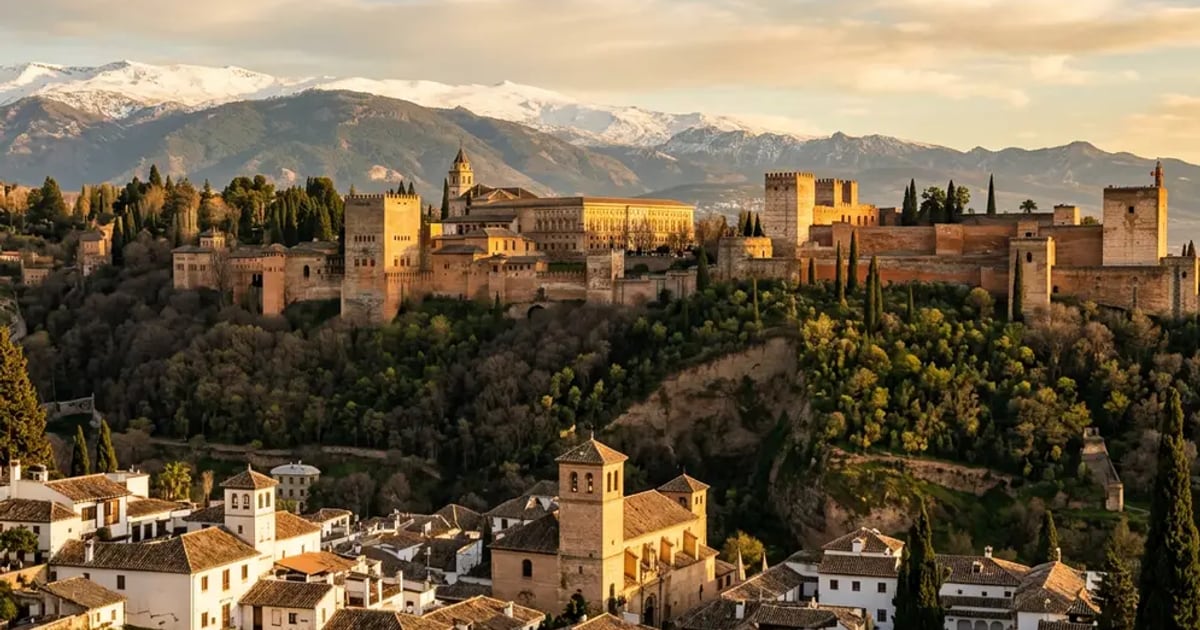
Alhambra palace viewed from Mirador de San Nicolás at dawn in August, Sierra Nevada mountains behind, empty streets below
August guide

Granada in August

The hottest month in one of Spain's hottest cities. Streets empty by noon, Alhambra booked out months ahead, temperatures touching 40°C. Here is how to get it right.

August is the hardest month to visit Granada, and the most popular. Highs of 35–40°C, the Alhambra sold out months before you arrive, hotels at their peak rates, and Spanish families on holiday at the same time as every foreign tourist in Andalucía. The streets in the Albaicín empty between noon and 6 PM — not because there is nothing to see, but because nothing is liveable outdoors in that window.

August also has things no other month offers. The Sierra Nevada high routes above 2,500 metres are fully accessible and 20°C cooler than the city below. The Costa Tropical sea temperature peaks at 25–27°C, the warmest of the year. The Perseid meteor shower lights up the high peaks in mid-August. And the Alhambra at 8:30 AM in August morning light — before the heat arrives, before the tour groups — is one of the better things you can do in Spain.

This guide is for trips already fixed in August. It does not tell you to go in October instead. It covers the heat strategy that actually works, the exact Alhambra booking window you cannot miss, the Sierra Nevada day trips that make August worthwhile, and the beach options within an hour of the city. For a full seasonal comparison, the best time to visit Granada guide covers every month side by side.

How to manage the heat

Granada sits in a bowl at 680 metres, surrounded by mountains that trap heat and block sea air. In August the city routinely exceeds 38°C, and the stone streets and white walls radiate warmth from both sides. The only strategy that works is the one locals use: restructure the day around temperature.

Before 11 AM

22–26°C

The only viable outdoor window. Alhambra first slot, Albaicín walk to San Nicolás, Realejo before the heat builds. Air is dry, light is low, streets are quiet.

Noon to 6 PM

35–40°C

Outdoor sightseeing stops. Museums, hammam, cathedral, air-conditioned restaurants. The city's own residents go inside or leave for the coast.

After 8 PM

24–27°C

The city restarts. Terraces fill. Tapas bars open properly. Dinner before 10 PM is rare. The streets stay active until past midnight.

The afternoon hours: what actually works

  • Hammam Al Ándalus (Albaicín): a two-hour Arab bathhouse circuit with alternating hot and cold pools, steam room, and air-conditioned relaxation areas. Book in advance for afternoon sessions in August — the hammam fills up on hot days. This is the single most useful afternoon activity in August.
  • Cathedral and Royal Chapel: thick stone walls keep both interiors significantly cooler than outside. The Royal Chapel holds the tombs of Ferdinand and Isabella — genuinely worth the visit, not just a heat refuge.
  • Museo de la Alhambra: inside the Alhambra complex, included with the general Alhambra ticket. Air-conditioned, and the Islamic art collection — Nasrid ceramics, carved wood, bronze astronomical instruments — justifies a slower afternoon look.
  • Café with terrace and shade: the bars around Plaza Bib-Rambla have deep awnings and the square holds shade from mid-afternoon. Order something cold, stay until 6 PM, then walk again.

Carry more water than you think you need

August heat in Granada is dry, not humid. You sweat, it evaporates immediately, and you do not notice how much you are losing until you get a headache. Three litres for a full day of outdoor sightseeing is the minimum. The cobbled climbs to the Alhambra and the Mirador de San Nicolás are steep — they take more out of you in 36°C than they look. Municipal drinking fountains exist throughout the Albaicín but are not always visible; ask at any bar.

The Alhambra in August

August is the most demanding month to visit the Alhambra — both logistically and physically. The ticket situation is tighter than any other month of the year, and the physical conditions make anything other than the earliest slot a genuinely uncomfortable experience.

Book two to three months ahead — not weeks

The Alhambra booking system opens slots 90 days ahead. For August, that means May and early June. The 8:30 AM first entry on a peak August weekend can sell out within hours of the window opening — not within days, within hours. Treat this like buying concert tickets for a sold-out show: you need to be online at 8 AM on the exact day the 90-day window opens for your visit date.

The Nasrid Palaces night visit (Thursday, Friday, Saturday at 22:00–23:30) is the backup option if daytime entries are gone. Around 400 tickets per session, same 90-day release schedule. The night visit covers only the Palaces — not the Alcazaba, Generalife, or museums — but in August heat it is arguable that 22:00 in 24°C air is the better experience anyway. Full booking instructions at the Alhambra tickets guide.

The 8:30 AM entry: what you get

At 8:30 AM in August, the air temperature is around 22°C. By 10:30 AM it has climbed past 28°C. By the time the second morning slot (usually 10 or 11 AM) reaches the exposed Generalife terraces, the sun is overhead and there is almost no shade. The 8:30 AM entry means you complete the Nasrid Palaces, the Alcazaba battlements, and the Generalife gardens before the worst heat arrives — typically finishing by 11:30 AM.

The light inside the Nasrid Palaces at 8:30 AM in August is low and directional, coming through the pierced stucco screens at an angle that emphasises the geometric carving. The overlit conditions of midday — which flatten shadows and bleach colour — do not apply. If you only have one visit and one shot at the Alhambra, the 8:30 AM August slot gives you the best physical experience the site offers in this month.

Sierra Nevada: the real escape

Forty-five minutes from the city, the temperature drops by 20°C. August is the best month of the year for high-altitude routes on the Sierra Nevada — the snowpack is minimal, the summit road is fully open, and the sky above 3,000 metres is as clear as it gets.

Mulhacén and Veleta summit routes

Mulhacén (3,479 m, the highest peak in mainland Spain) and Veleta (3,398 m) are both accessible in August via the summit road to the Hoya de la Mora car park at 2,500 m. From there, the Veleta summit trail is a two-hour return walk with modest elevation gain. Mulhacén from the south-west approach takes 5–7 hours return and requires better fitness — guided hike services depart from the car park in summer (around €60–80 per person, book two to four weeks ahead for August weekends). Temperature at 2,500 m: 15–20°C. Pack a wind layer; the mountain gets cold once the sun moves.

Sierra Nevada day trip guide →

Perseid meteor shower: 10–15 August from high altitude

The Perseids — known in Spain as the Lágrimas de San Lorenzo (Tears of Saint Lawrence) — peak each year between 10 and 15 August. The Sierra Nevada above 2,000 m sits above the worst of the light pollution from Granada and the coast, giving genuinely dark skies. The best view requires pre-dawn watching: arrive at the Hoya de la Mora car park by midnight, wrap up (8–10°C at this altitude before dawn even in August), and watch from 4 to 6 AM. At the Perseid peak you can see 50–100 meteors per hour in a dark-sky location. The access road is open through the night in summer; no special permit required.

Las Alpujarras: a slower alternative

The white villages on the southern slopes of the Sierra Nevada — Pampaneira (1,058 m), Bubión (1,295 m), Capileira (1,436 m) — sit at altitudes that make August afternoons bearable. Temperatures at Capileira run 8–10°C cooler than Granada. The Poqueira gorge between the three villages has a two-hour walking circuit with pine shade. Some visitors use an Alpujarras village as a base in August, accepting the 80-minute bus to Granada in exchange for cool nights and lower accommodation rates.

Las Alpujarras day trip guide →

Costa Tropical beaches

August is the month the Costa Tropical makes the most sense. The sea temperature reaches 25–27°C — warm enough that getting in is an immediate pleasure rather than a test of willpower. The drive south on the A-44 takes 45 to 60 minutes depending on traffic.

Which town to choose

  • Almuñécar — the largest town on this coast, with the longest beach (Playa de San Cristóbal) and the most infrastructure. Crowded in August but with more options for lunch, late afternoon drinks, and evening restaurants. The old town above the beach has a Phoenician-era necropolis and a Moorish castle that most beach visitors miss.
  • Salobreña — a volcanic rock rising 90 metres above the beach, topped by a 10th-century Moorish castle. The beach below is narrower and less busy than Almuñécar. Worth the 20-minute climb to the old town for lunch and views. The sugar cane fields on the approach are a reminder of just how different this microclimate is from inland Granada.
  • La Herradura — a sheltered cove 5 km west of Almuñécar, popular with divers (the bay has protected marine habitat) and more tranquil than the town beaches. The water is calmer and the beach less packed in August.

By bus from Granada, Alsa runs regular services to Almuñécar (about 90 minutes) and Salobreña. The earliest morning bus from Granada arrives around 9 AM, which is the right time — August beach crowds build fast by 11 AM. If driving, leave Granada before 8 AM to beat the traffic on the coastal approach. The Costa Tropical day trip guide covers transport options, the ski-and-swim combination (possible in some years into early July), and the best towns in detail.

Beach logistics in August

The Costa Tropical beaches fill by 10 AM in August. If you are driving, the car parks at Salobreña beach fill by 9:30 AM on peak weekends — arrive earlier or park in the town above and walk down. The chiringuitos (beach bars) run full lunch service; the best ones book out by early afternoon for lunch, so either eat early (12:30 PM) or late (3:30 PM) to avoid the rush.

Practical planning

August in Granada requires more advance planning than any other month. Here is the booking sequence that avoids the most common mistakes.

When to book what

  • Accommodation (book 2–3 months ahead): August hotel rates in Granada are the highest of the year. Properties in the Albaicín that cost €80–100 in November run €150–200 in August. Consider Monachil (12 km, 750 m altitude) or an Alpujarras village as a base — rates 25–35% lower, temperatures noticeably cooler at night, and the Sierra Nevada access is actually closer.
  • Alhambra (book on the 90-day opening date): Set a reminder for exactly 90 days before your visit date. Log in at 8 AM. Book the 8:30 AM first slot. If that is gone, try the Nasrid Palaces night visit (same 90-day schedule, Thursday/Friday/Saturday). Do not leave this to two weeks before arrival — the August slots that remain at two weeks out are the worst ones.
  • Sierra Nevada guided hike (book 2–4 weeks ahead): The Mulhacén guided summit in August fills on weekends. Weekday departures have more availability. Contact the Sierra Nevada guides association via the park visitor centre for the official service.
  • Popular restaurants (book 2–3 weeks ahead): Plan dinner at 10 PM. Restaurants that require booking in August are busy precisely because of the late summer sitting pattern — earlier slots often have availability, but eating at 8 PM in August means eating alone.

What to pack

  • City days: breathable linen or cotton, sun cap with neck coverage (the back of the neck burns fastest on uphill walks), SPF 50. Light sandals for evenings; proper shoes for the cobblestones in the Albaicín.
  • Sierra Nevada: warm mid-layer and windproof shell — the high routes drop to 8–12°C with any cloud, regardless of August heat in the city. Hiking boots for anything above 2,500 m. Bring extra water; the summit area has no facilities.
  • Beach day: beach shoes for the pebble stretches at La Herradura. The coves on this coast have mixed sand and gravel. Snorkelling mask if you have one — La Herradura has a marine reserve with decent visibility in August.

August events: a quiet calendar

August is the quietest month for scheduled cultural events in Granada. The Festival Internacional de Música y Danza runs late June into mid-July and is done before August starts. The main cultural event specific to August is the Perseid meteor shower viewing from the Sierra Nevada (10–15 August) — informal rather than organised, but predictable and free.

Many locals leave Granada in August for the coast or their home villages — the city has a quieter, slightly emptier feel during weekdays, which has its own appeal. The universities are closed and the student population largely gone. What remains is a city running at peak tourist capacity but with fewer of its own inhabitants. Bars and restaurants stay open but some smaller local places close for two weeks in August; check before heading to a specific spot.

Frequently asked questions

Frequently asked questions

Is Granada worth visiting in August?

Yes, if you go in knowing what August actually is. The heat is real — highs of 35–40°C, streets that are essentially uninhabitable between noon and 6 PM, and the Alhambra sold out for the best slots weeks before you think to book. What August has that no other month offers: the Sierra Nevada high routes above 2,500 metres at 15–20°C while the city bakes below; the Costa Tropical at its warmest (25–27°C sea temperature); and the Perseid meteor shower over the high peaks in mid-August. The visitors who struggle in August are the ones who try to sightsee at noon. The ones who book early, follow the local schedule, and get out of the city for a day do fine. For a comparison with other months, see the best time to visit Granada guide.

How far in advance do I need to book the Alhambra for August?

Two to three months. If your trip is in August, you need to be checking availability in May or early June at the latest. The Alhambra's booking system opens 90 days ahead, and the first-slot morning entries (8:30 AM) go within hours on popular dates. Do not treat this like booking a restaurant — the 8:30 AM slot on a peak August Saturday can vanish before noon on the day it opens. Night visits to the Nasrid Palaces (Thursday, Friday, Saturday at 22:00) are another option, but those tickets are even more limited (around 400 per session) and sell out just as fast. Full booking instructions, including what to do when your preferred date is sold out, are in the Alhambra tickets guide.

What beaches are close to Granada in August?

The Costa Tropical — specifically Almuñécar, Salobreña, and La Herradura — is 45 to 60 minutes south of Granada by car. In August the sea temperature reaches 25–27°C, the warmest it gets all year. The beaches here are narrower than the Costa del Sol, the water is clear, and the coves around La Herradura shelter the bay from any swell. By car, the fastest route is the A-44 motorway south; by bus, Alsa runs regular services from Granada bus station (about 90 minutes). The town of Salobreña sits on a volcanic rock above the beach and is worth the climb for lunch — the view of the coast from the old Moorish quarter is one of the better ones on this stretch. See the Costa Tropical day trip guide for which beaches to pick and how to combine the visit.

Can you hike in the Sierra Nevada in August?

August is the best month for high-altitude hiking on the Mulhacén (3,479 m) and Veleta (3,398 m) routes. The snowpack is minimal, the summit road is fully open, and temperatures at altitude run 15–20°C against 38°C in the city. The guided Mulhacén summit starts from the Hoya de la Mora car park (2,500 m) and takes 5–7 hours return — book the guided service (around €60–80) two to four weeks ahead, as August weekends fill quickly. Independent hikers can drive or take the summer bus to the Veleta area without a guide. Take warm layers and waterproofing: afternoon cloud builds fast above 3,000 metres even in August. The mid-August Perseid meteor shower (10–15 August, best viewed 4–6 AM) is particularly striking from the high Sierra Nevada, which sits above most light pollution.

What time do restaurants open for dinner in August?

Dinner in Granada runs late year-round, but August pushes it further. Most locals do not eat dinner before 10 PM — the afternoon heat makes earlier eating unappealing, and the cooler evening air from 9 PM onwards is the window people actually want to sit outside. Tapas bars start filling around 9 PM; a sit-down dinner reservation before 9:30 PM will have you eating largely alone. Popular restaurants book up two to three weeks ahead for August weekends. If you want the free tapas experience (Granada's bars bring a free plate with every drink), the streets around Calle Navas and the Realejo neighbourhood are the best starting points — no reservation needed, just follow the crowds after 9 PM.

Reporter notebook

Insider tips

Practical observations gathered the way a local journalist would keep them: short, specific, and more useful than brochure copy.

Booking tip

Alhambra August slots vanish in May — set a calendar reminder now

The 90-day booking window for August opens in May. Specifically, 1 August slots become available on 2 May; 31 August slots open on 2 June. The 8:30 AM first entry on a peak August weekend can sell out within a few hours of that window opening. Set a phone reminder for the exact date you want minus 90 days, log in to the Alhambra booking system (alhambra.org) at 8 AM, and have your card ready. If you miss the morning entry, the Nasrid Palaces night visit (Thursday, Friday, Saturday at 22:00) is the backup — also limited, also sells fast, but releases on the same 90-day schedule.

Money tip

Stay in Monachil or an Alpujarras village — cooler nights, 30% lower rates

Monachil sits at 750 metres in the Sierra Nevada foothills, 12 km from Granada centre. Hotel rates run 25–35% below comparable city-centre properties in August, and the nighttime temperature drops below 20°C reliably — something central Granada cannot promise. The Alpujarras villages (Pampaneira at 1,058 m, Capileira at 1,436 m) are an hour away from Granada but give you mountain-cool mornings and genuinely quiet August nights. Both options require a rental car or careful bus planning. For the Alpujarras, the Alpujarras day trip guide covers bus schedules and which villages are worth a night stop.

Photo spot

Perseids from the Sierra Nevada: 4 AM, 10–15 August, above the cloud line

The Perseid meteor shower peaks between 10 and 15 August each year. At sea level in Granada, light pollution and summer haze wash most of it out. Drive to the Hoya de la Mora car park (2,500 m) or the Albergue Universitario refuge the night before. By 4 AM, the Milky Way is overhead and shooting stars are visible every few minutes during the peak. Bring a sleeping bag — the temperature at 2,500 m drops to 8–10°C before dawn even in August. A wide-angle lens and 20-second exposure at f/2.8, ISO 3200 is enough to capture the trails without specialist kit. The access road stays open through the night in summer.