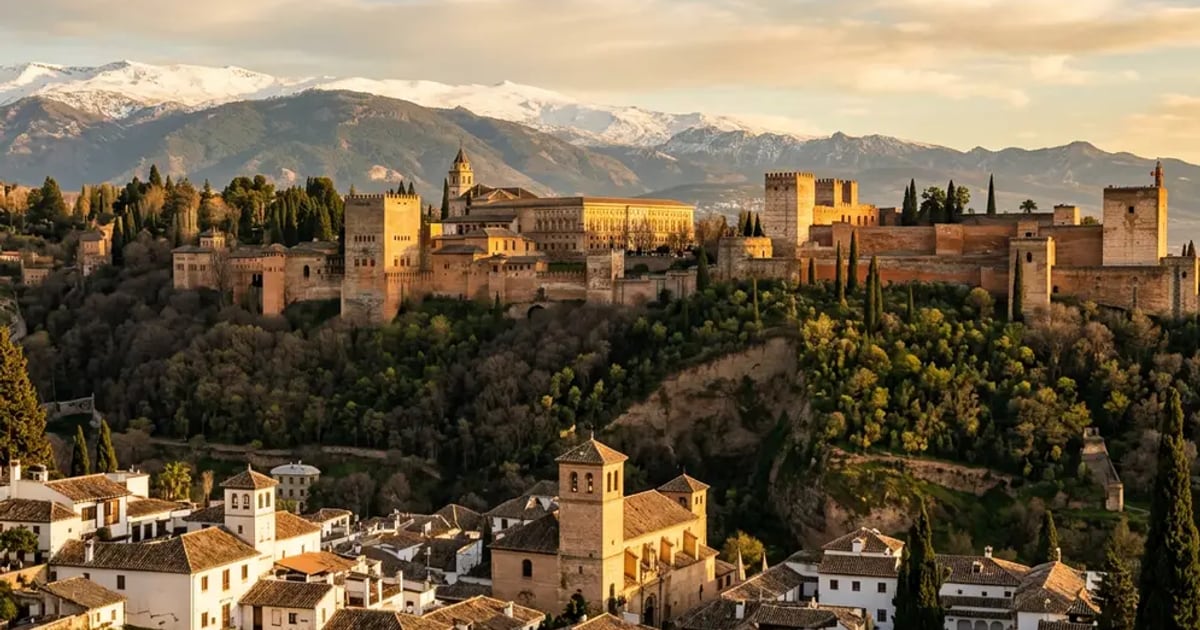
The province got its Denominación de Origen in 2018. The vineyards have been here for 2,000 years. A guide to what grows at altitude, where to taste it, and which bar to head to first.
Seven years resident in Granada. Specialist in Nasrid architecture, Al-Andalus history, and Andalusian walking routes.
Published
Updated
Granada wine does not get the attention it deserves. Rioja and Ribera del Duero take all the column inches; Sherry absorbs whatever is left over for Andalusia. Meanwhile, winemakers in the Alpujarras mountains have been farming slate slopes at over 1,000 metres for two millennia, and since 2018 they have had a Denominación de Origen to show for it. The wine is worth knowing.
The Granada DO covers 168 municipalities across the province. The serious work happens in the Contraviesa-Alpujarras sub-zone: 13 municipalities in the Alpujarras range, vineyards at around 1,200 metres, and a handful of producers pushing further up the mountain than almost anywhere else in Spain. At 1,386 metres, Barranco Oscuro's Pinot Noir is the highest-altitude wine on mainland Spain. These are not easy conditions. The altitude, the slate, the temperature swings between day and night, the Atlantic moisture arriving from the south: all of it shows in the glass. The wines are leaner and more aromatic than you would expect from Andalusia.
In Granada city, the free tapas culture means every glass of wine arrives with food. That changes how you drink. This guide covers the DO, the key producers, the best wine bars, and how to plan a bodega day trip from the city. For context on the wider food scene, see the Granada food guide.
The Granada DO: what changed in 2018
Granada wine had been officially recognised as Vino de Calidad since 2009, a stepping-stone classification below DO. Full DO status arrived in 2018 and brought with it a formal framework: permitted grape varieties, maximum yields, minimum ageing periods, and a tasting panel that approves labels before they reach market.
The practical effect was to give small producers a shared identity. Before 2018, a bottle of Alpujarra Pinot Noir had no shorthand for international buyers. After 2018, "Granada DO" could appear on the label alongside the sub-zone name, giving buyers a reference point. It also created pressure to define quality standards, which includes excluding wines that do not meet them.
Permitted varieties
Reds
Tempranillo, Garnacha Tinta, Cabernet Sauvignon, Syrah, Pinot Noir. The Alpujarra has become particularly noted for Pinot Noir at altitude, where the cold nights slow ripening and preserve acidity.
Whites
Vijariego (the signature local variety), Sauvignon Blanc, Chardonnay, Moscatel de Alejandría, Verdejo. Vijariego is the grape most associated with the region.
Grapes have been cultivated in the Alpujarra and Contraviesa for over 2,000 years. The Moors maintained vineyards here (wine production continued under Islamic rule in this region, which was not universally the case in al-Andalus). After the Reconquista, Alpujarran wines were traded through the ports of Almuñécar and Motril, on the Costa Tropical. That coastal connection still matters: the Atlantic moisture that climbs the sierra contributes to the soils' character and to the freshness of the wines.
Contraviesa-Alpujarras: the mountain vineyards
The Contraviesa is the mountain range running parallel to the coast between the Sierra Nevada and the sea. Its vineyards face south and southeast, catching sun while cool air from the sierra regulates temperature. The slate soils drain fast, stress the vines, and concentrate flavour. Low rainfall means most producers work without irrigation. The result is small yields and wines with character.
The sub-zone spans 13 municipalities. Most of the notable producers are clustered around Murtas, Turón, and the villages above the valley floor. The landscape is terraced, the terraces built by hand; Moorish agricultural engineering repurposed for vines when the population shifted from grain to wine in the 19th century.
Alqueria de Morayma
38 hectares of organically farmed vines at 1,000 metres, using methods that trace back to Arab agricultural practices on this same land. The estate includes a rural hotel and restaurant, making it accessible for visitors who want to stay rather than drive back to Granada city. Their Vijariego white is one of the more reliable introductions to the variety.
Bodegas Nestares Rincón
The Juan de Reyes estate sits at 1,352 metres in the heart of the Contraviesa range. Nestares Rincón produces both red and white wines, with their mountain Garnacha a particular strength. The altitude here is among the highest for a commercial operation in the sub-zone. Spanish critic José Peñín has written positively about the Alpujarra's potential, and Nestares Rincón is one of the producers he has cited.
Finca Cuatro Vientos
Based in Murtas, Finca Cuatro Vientos produces three labels: Mallafolla, 4V, and Marquis de la Contraviesa. The Mallafolla red is the one most often found in Granada wine bars; it is approachable, consistently made, and priced reasonably for what it is. A good starting point for someone new to the region.
A full day in the Alpujarras gives you enough time to visit one or two bodegas and walk through the terraced villages above the valley. The drive from Granada takes around 75–90 minutes on roads that require attention.
“At 1,386 metres, the air is cold enough in October that harvest runs three weeks later than in the coastal vineyards 45 kilometres south.”
The natural wine producers
The Alpujarras attracted natural winemakers before "natural wine" became a marketing category. The isolation, the altitude, and the small scale of operations made organic and minimal-intervention farming practical rather than ideological. Several producers have been working without sulphites or added yeasts for decades.
Barranco Oscuro
Manuel Valenzuela has farmed 1,386 metres of slope in the Contraviesa since the 1980s. His vineyards produce what is likely the highest-altitude wine on mainland Spain: a Pinot Noir grown at conditions that would be unusual in Burgundy, let alone Andalusia. Barranco Oscuro wines are natural: no chemical additions, no sulphites, hand-harvested, wild-yeast fermented. Production is small. They sell quickly. Finding a bottle in Granada takes some searching; the most reliable source is Taberna La Tana in Realejo.
The natural wine movement here predates the fashionable version by decades. Valenzuela was farming land at altitude with limited infrastructure and making pragmatic decisions about what was possible. The wines come from the place.
Other producers in the sub-zone operate on similar principles without labelling themselves natural. Alqueria de Morayma farms organically. Several small estates in Turón work without irrigation or chemical herbicides simply because the terrain makes mechanised farming impractical.
Finding natural Granada wines in the city
Taberna La Tana on Calle Rosario (Realejo) keeps the most consistent stock of Alpujarras natural wines. The list rotates with availability. If you are looking for a specific producer, call ahead rather than showing up and hoping.
Wine bars in Granada city
Granada's wine bar culture is built around the tapas tradition. Every drink order brings food. That means you can spend an evening moving between three or four bars, drinking a glass at each, and eat reasonably well for under €15. The bars below are the ones worth knowing specifically for wine.
Open since 1927 on Calle Almireceros, near the cathedral. The wine comes from large wooden barrels behind the bar; you point at which tap you want and a glass appears. The house red is a basic table wine that costs under €2. What you are paying for is the ritual and the room: dark wood, hanging legs of jamón, locals and tourists standing together at the counter without anyone caring about the distinction. The bar also makes its own vermouth, served with a slice of orange. Go in the late afternoon when it fills up before dinner.
On Calle Rosario in Realejo, La Tana maintains the most serious local wine list in Granada city. The focus is Andalusian wines: Contraviesa-Alpujarras producers alongside Jerez. The staff know the list. Ask for a Vijariego white if they have one; ask for the Barranco Oscuro if you are lucky. The tapas that accompany orders are better than average for the neighbourhood.
Another barrel-dispense bar in the centre, with a wider selection of Spanish wines by the glass than Castañeda and slightly more space. Good for trying different regions side by side without committing to a bottle. The free tapa here tends toward preserved fish and cheese, which works well with the local whites.
A smaller, quieter bar that draws a local crowd. The wine list leans toward Rioja and Ribera, but they carry a rotating selection from Granada province. The tapas are generous. Less atmospheric than Castañeda but easier to have a conversation and more likely to result in a knowledgeable recommendation from whoever is behind the bar.
Tinto de verano (red wine with lemon soda, served over ice) is the summer alternative to a straight glass. It sounds diluted; in 35-degree Granada July heat it makes complete sense. The local version uses inexpensive wine, which is fine; the point is hydration and sociability rather than tasting.
Bodega day trips from Granada
The drive from Granada to the Contraviesa-Alpujarras takes around 75–90 minutes, depending on which village you are heading for. The road climbs through Lanjarón and then into the high valleys. It requires concentration: the roads are narrow and the corners are genuine. Hire a car or join a tour; the bus connections from Granada to the bodega villages are infrequent.
Book before you drive
Small Alpujarras bodegas rarely have walk-in visitor facilities. Finca Cuatro Vientos, Alqueria de Morayma, and Nestares Rincón all welcome visitors but require advance reservation. Email is more reliable than phone. Some producers require a minimum group of four for a tasting. Barranco Oscuro is particularly strict about prior arrangement.
What a bodega visit typically includes
Most Alpujarras producers offer a walk through the vineyard or cellar followed by a tasting of four to six wines. Some include a small lunch or a plate of local products: jamón, cheese, olive oil from the estate. Tasting fees range from €10–25 per person depending on what is included; many producers waive the fee if you buy a minimum number of bottles.
Combining with the villages
The Alpujarras villages (Capileira, Bubión, Pampaneira, Trevélez) are worth an afternoon without any wine agenda. Trevélez, at 1,476 metres, produces the jamón that turns up on every tapa counter in Granada. The curing sheds are open to visitors in some cases. A full day trip might start at Alqueria de Morayma for a morning tasting, continue to one of the villages for lunch, and finish with a walk through the terraces before driving back down before dark. The Alpujarras day trip guide covers the logistics in detail.
Wine tours from Granada
Several operators in Granada run half-day and full-day wine tours to the Contraviesa-Alpujarras, combining two or three bodega visits with transport from the city. This is the most practical option if you do not want to drive mountain roads after tasting. Prices run from €65–120 per person including transport, tastings, and usually a lunch. Book through Granada-based tour operators rather than international platforms; the local operators have direct relationships with the small producers and access to bodegas that are not publicly listed.
Wine and tapas: how it works
In most Granada bars, ordering any drink brings a free small plate. That applies to wine as much as to beer. The tapa is chosen by the kitchen, not by you. Over a couple of hours across several bars, you end up eating a full meal without ordering from a menu. It is the most affordable way to try local food alongside local wine.
The pairings that tend to work best with Contraviesa-Alpujarras wines:
With Vijariego white
Preserved anchovies, fresh goat cheese, boquerones en vinagre, remojón (orange and salt cod salad). The mineral freshness of a good Vijariego cuts the salt and amplifies the citrus notes in remojón in a way that a Chardonnay would not. The acidity is high enough that the wine works with dishes dressed in vinegar.
With mountain reds
Jamón ibérico, cured sausage, older manchego, stewed lentils. The altitude-grown Garnacha and Tempranillo reds are lighter than their Rioja equivalents and have enough acidity to work with fatty cured meats without overwhelming them. Avoid pairing them with seafood or delicate fish; the tannins fight the texture.
For more on the free tapas culture in Granada, including which bars are genuinely free versus tourist-adjusted, the food guide covers it in detail.
One practical note: local bars in Granada rarely stock Contraviesa-Alpujarras wines on tap or by the glass. What you get at most tapas bars is a basic table wine, often from Rioja or La Mancha, at €1.50–2 per glass. For DO Granada wines, you need a specialist bar like La Tana, or you buy a bottle at a wine shop and take it somewhere appropriate. The tapas experience and the wine tourism are two different itineraries; the city makes both available, but they do not automatically overlap.
Frequently asked questions
Frequently asked questions
Does Granada have its own wine designation?
Yes. Granada achieved Denominación de Origen (DO) status in 2018, covering 168 municipalities across the province. It had held Vino de Calidad status since 2009. The DO formalised regulations on permitted grape varieties, yields, and labelling for wines from the province.
What is the Contraviesa-Alpujarras sub-zone?
It is the premium sub-zone within the Granada DO, spanning 13 municipalities in the Alpujarras mountains. Vineyards here are planted at around 1,200 metres altitude, with some producers reaching above 1,350 metres. The combination of slate soils, low rainfall, and day-to-night temperature swings produces grapes with higher acidity and more complexity than lower-altitude Andalusian wines.
What is Vijariego?
Vijariego is Granada's signature white grape variety, historically cultivated across the Alpujarras. It nearly disappeared in the late 20th century; a handful of producers in the Contraviesa-Alpujarras revived it from the 1990s onward. The DO now requires a minimum of 70% Vijariego in Granada sparkling wines. Dry Vijariego whites are fresh, mineral, and low in alcohol relative to Andalusian norms.
Where is Barranco Oscuro and can I visit?
Barranco Oscuro is a natural wine producer run by Manuel Valenzuela in the Alpujarras, at 1,386 metres. It holds the distinction of producing what is reportedly the highest-altitude wine on mainland Spain. The winery operates with limited production and irregular visitor hours. Contact directly before planning a visit; it is not set up for casual drop-ins the way larger bodegas are.
Which wine bar in Granada has the best local wine list?
Taberna La Tana in the Realejo neighbourhood specialises in Andalusian wines and keeps a rotating selection from Contraviesa-Alpujarras producers. Bodegas Castañeda, on Calle Almireceros since 1927, dispenses wine from wooden barrels and is good for a glass of local red alongside a board of jamón. For a more curated modern list by the glass, try the bars around Campo del Príncipe.
Is it worth doing a bodega day trip from Granada?
If you are interested in wine, yes. Finca Cuatro Vientos in Murtas and Alqueria de Morayma both welcome visitors with advance notice. The drive through the Alpujarras takes around 75–90 minutes from Granada city and passes through the villages made famous by Gerald Brenan's writing. Some wine tour operators run combined trips to two or three bodegas with lunch included. Budget a full day; half-day trips leave too little time.
Reporter notebook
Insider tips
Practical observations gathered the way a local journalist would keep them: short, specific, and more useful than brochure copy.
What to order
At Bodegas Castañeda, order from the barrel
The house red at Castañeda comes from large wooden barrels behind the bar, sold by the glass at under €2. It is an unassuming table wine, not a DO label, but drinking it standing at the tile counter with a plate of mountain cheese is the point. Skip the bottled list unless you are looking for something specific.
Booking tip
Reserve bodega visits at least a week ahead
Producers like Barranco Oscuro and Nestares Rincón are small family operations. They do not maintain visitor infrastructure, and many tastings happen in working spaces. Email rather than phone; include the number of people and preferred date. Some require a minimum group of four.
Money tip
Buy a bottle at the source, not at the airport
A bottle of Finca Cuatro Vientos Mallafolla costs around €9–12 at the bodega. The same wine, if you can find it, costs €16–22 in Granada wine shops and considerably more online. Carrying two or three bottles back in checked luggage is legal within EU limits and the most cost-effective way to take the Alpujarras home with you.