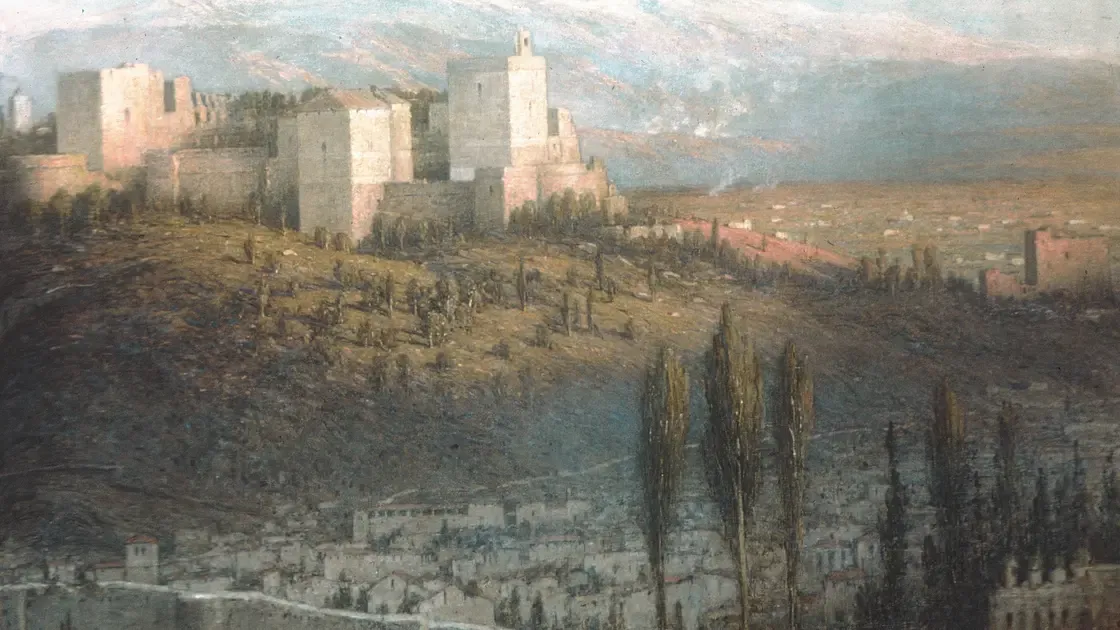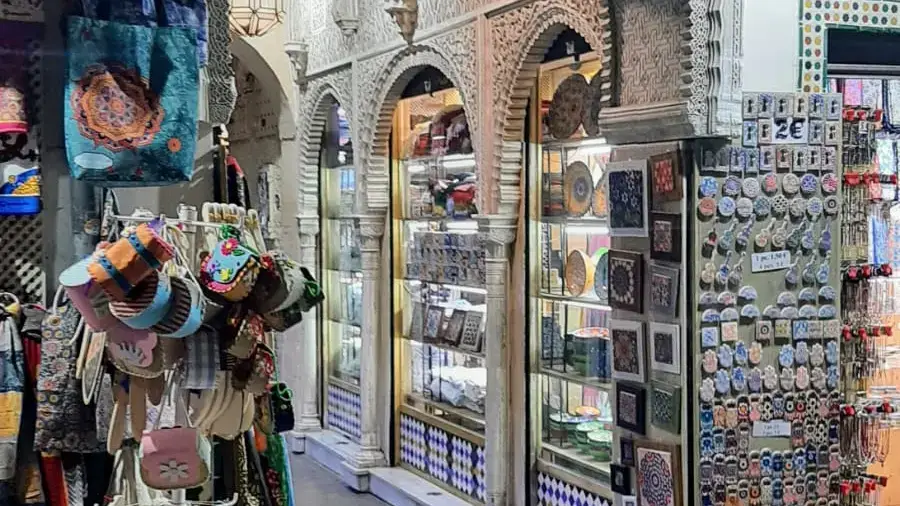
The Alcaicería occupies a small network of alleys in Granada's historic centre, immediately beside the Cathedral and adjacent to Plaza de Bib-Rambla. Its origins go back to the Nasrid period, when Yusuf I formalized the existing bazaar in the 14th century as a protected royal market for luxury goods: silk thread, gold cloth, fine leather, and silver. The market was entered through nine gated doors that closed at night, and its operations were managed as a royal monopoly, with taxes levied on every transaction. At its peak in the 15th century it housed around 200 small shops along perpendicular covered lanes covering nearly 4,600 square metres.
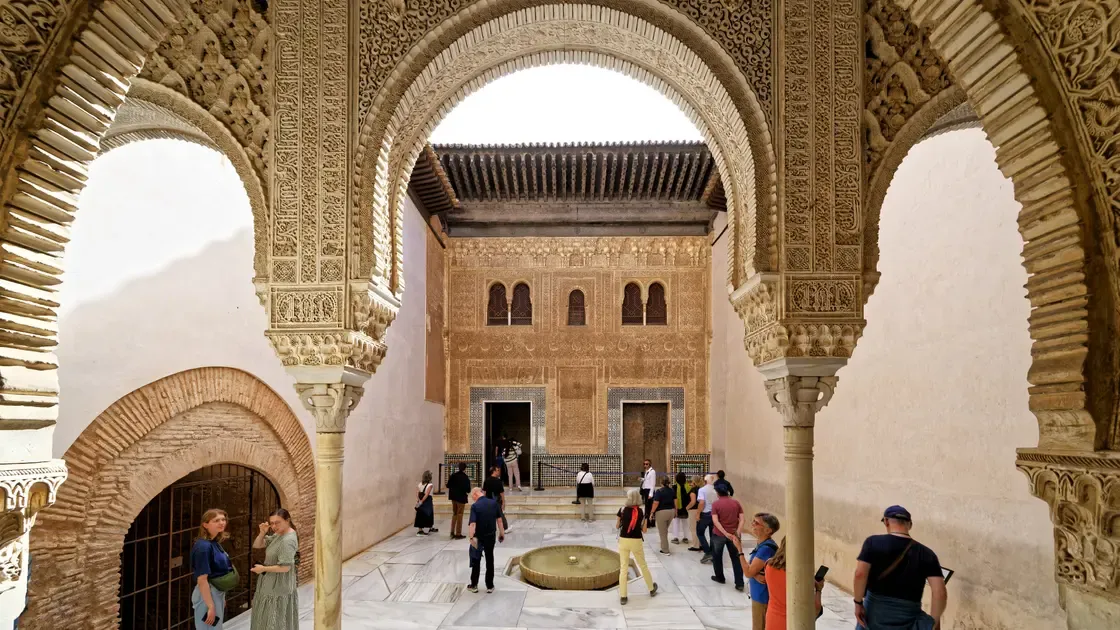
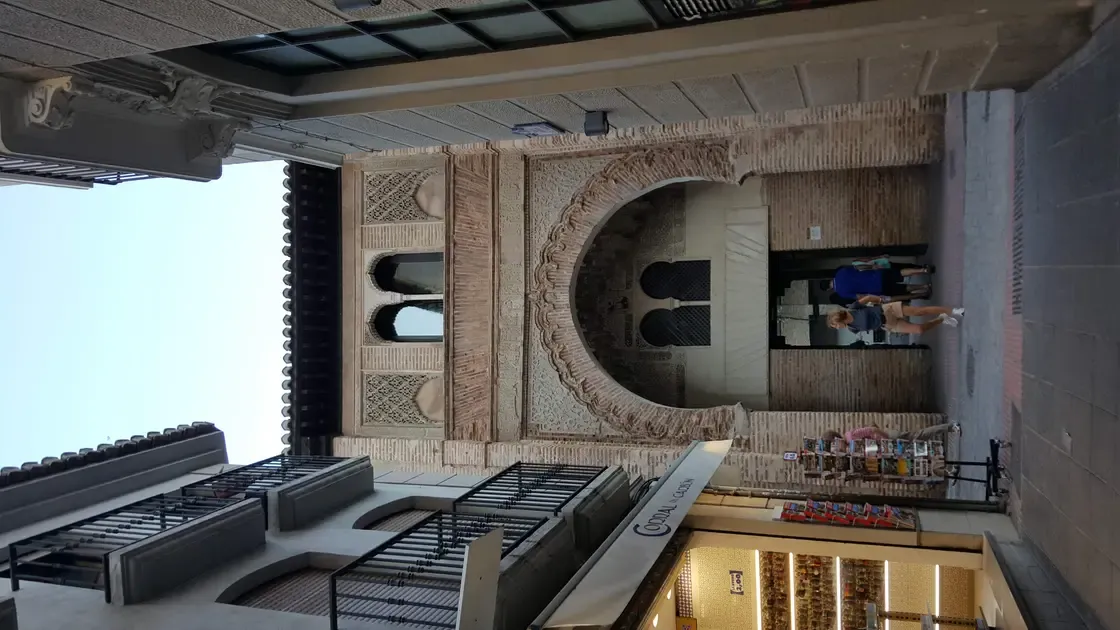
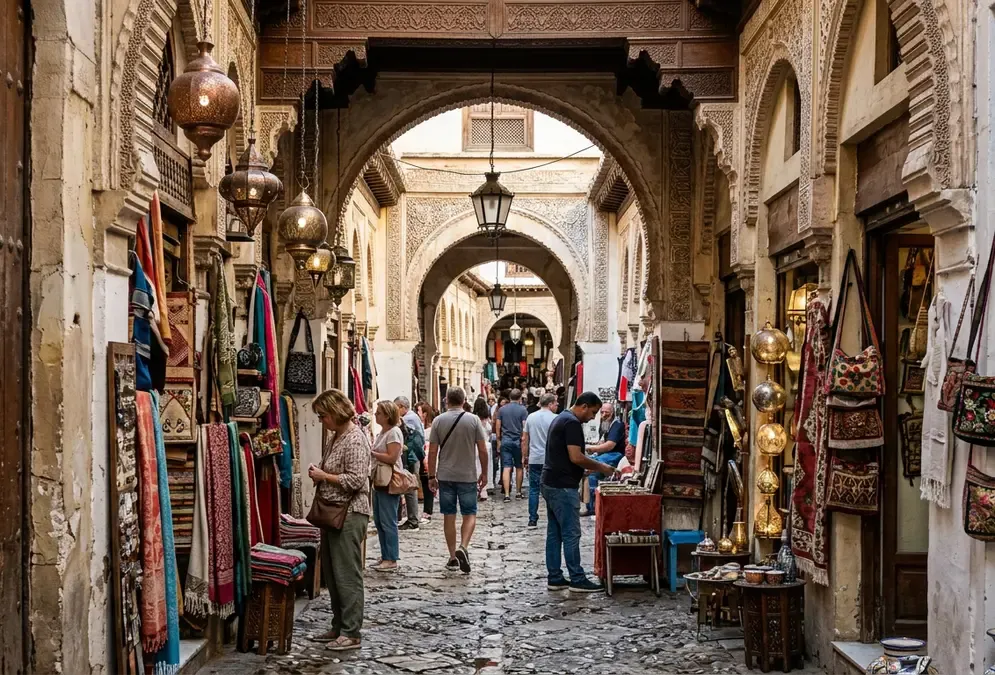
The present Alcaicería is a reconstruction. A fire in 1843 destroyed the original bazaar almost entirely, and the rebuilt version is smaller in scale and employs a 19th-century Neo-Moorish vocabulary rather than authentic Nasrid architecture. The pointed horseshoe arches, the painted tilework, and the hanging lanterns are pastiches that nonetheless create an atmosphere quite different from the surrounding Christian-era streets. The reconstruction reduced the number of lanes and removed the internal street pattern, but the three main alleys that survive (Calle Alcaicería, Calle Ermita, and the stretch near Calle Oficios) are still recognisable as a covered market district.
What is sold today reflects centuries of craft tradition even if the buildings are modern imitations. The shops stock taracea, the geometric marquetry inlaid in small wooden boxes, chessboards, and furniture that Granada has produced since the Moorish period, using bone, mother of pearl, and contrasting wood veneers. Fajalauza ceramics, the blue-and-white tin-glazed pottery named after the Albaicin kiln district, are made in workshops that trace their lineage to the Nasrid era. Aromatic spices in open sacks, leather goods, and the stained-glass hanging lamps known as granadinas are also staples. Bargaining is customary and expected, particularly on craft items.
Entry to the Alcaicería is free and the lanes are open throughout the day, though individual shops set their own hours and some close for several hours in the afternoon. The market is most lively in the mornings and early evening. From Plaza de Bib-Rambla, the main entrance arch is immediately visible; from the Cathedral, walk along Calle Oficios and the first Alcaicería entrance appears on the left.