The Corral del Carbón, originally named al-Funduq al-Jadida (the New Inn), was built before 1336 during the reign of the Nasrid sultan Yusuf I. It served as a funduq, a type of building that combined a merchant warehouse, a grain market, and lodging for traders arriving in the city. Merchants could rent ground-floor bays to store and sell goods and sleep in the rooms on the upper floors. The funduq was an urban institution at the heart of medieval Islamic commercial life, and this is the last surviving example in Spain and one of the best-preserved in the western Mediterranean.
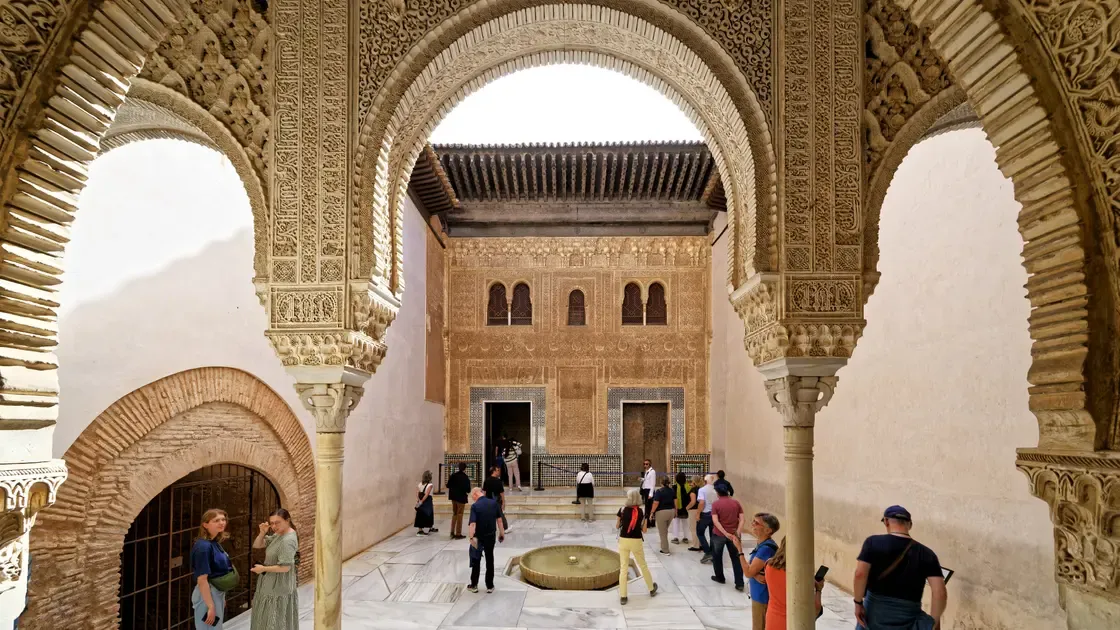
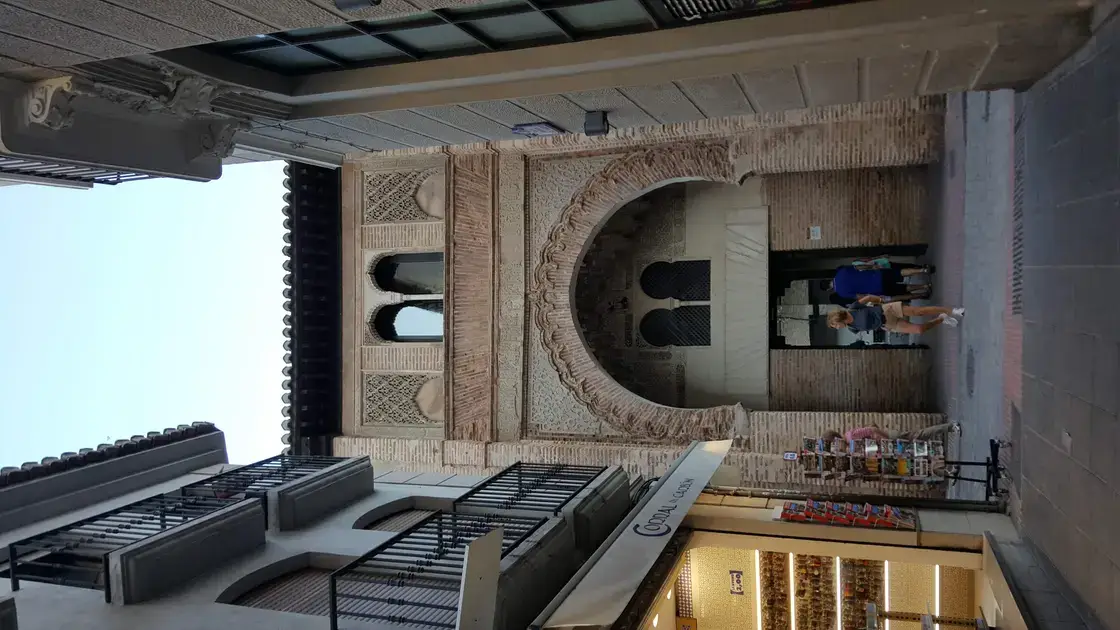
The entrance portal is the visual highlight of the exterior. A horseshoe arch of fine ashlar stone frames the doorway, topped by a band of ceramic tile decoration and an alfiz frame of carved stucco with Arabic inscriptions. Above the arch, a panel of blind arcading in Nasrid style runs across the full width of the facade. Once through the portal, visitors enter a rectangular courtyard three stories high, with arcaded galleries on the upper two levels. The proportions of the courtyard, with its central cistern and the rhythm of the arched bays, give a clear sense of how orderly and functional Nasrid commercial architecture could be.
After the Christian reconquest in 1492, the Catholic Monarchs granted the building to a private party. In the 16th century it was converted into a theater, one of the corrales de comedias where Spanish Golden Age drama was performed before permanent playhouses existed. Later it became a residential compound and, in the 17th century, a coal store, which gave it its current name. The building was declared a National Monument in 1918 and restored by Leopoldo Torres Balbás between 1929 and 1931. Today it houses offices for the city's International Festival of Music and Dance.
Entry is free and the courtyard is open to walk through during business hours. The Corral del Carbón is located on a street that runs parallel to the main pedestrian shopping thoroughfare, making it easy to include in a walk around the city center. The building rewards slower attention: spend a few minutes looking at the upper gallery levels and the way the light changes across the carved portal depending on the time of day.