The Generalife is not an afterthought to the Alhambra. It was the Nasrid sultans' summer estate, built by Muhammad III between 1302 and 1309 on the Cerro del Sol, the hill immediately east of the main complex. The Nasrid Palaces are about political display: formal reception rooms, carved stucco, the theatre of power. The Generalife is the place the sultans came when court was over. The gardens are quieter, more personal, and in some ways more interesting architecturally than anything inside the walls.
The entry question comes up first. The Generalife is included in the general Alhambra day ticket (€22.27), which also covers the Nasrid Palaces and Alcazaba. A standalone gardens-and-palace ticket covers the Generalife and upper gardens without the Nasrid Palaces, at €12.73. If you've already done the main palace complex, or if you want to focus on the hydraulic engineering and landscape design without a timed-entry slot, the standalone ticket works well. Allow at least 90 minutes for a thorough visit.
What you'll actually see
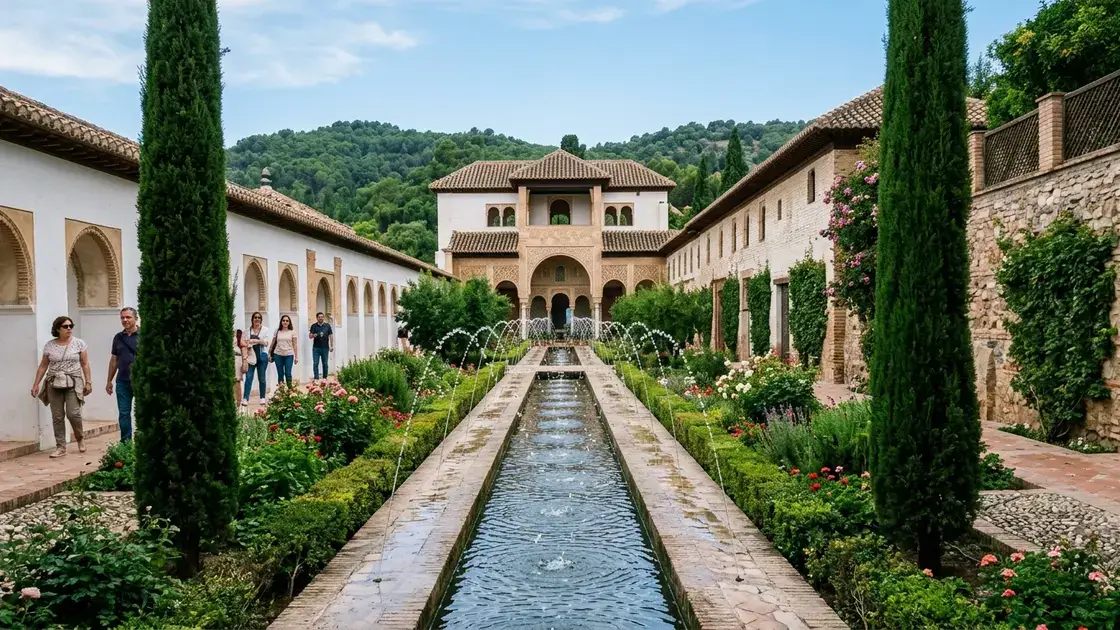
The Generalife's centre is the Patio de la Acequia, a rectangular courtyard 49 metres long and 13 metres wide with the Acequia Real running along its axis. The Acequia Real is the royal water channel that fed Sierra Nevada snowmelt down through the Alhambra complex. The symmetrical arching jets you see in every photograph are a 19th-century addition; the Nasrid original was a straight channel with lower spouts. What has survived is the Mirador de la Acequia at the north end: a porticoed loggia with original carved plasterwork columns, the one intact Nasrid opening in the building. Stand here in the morning and the geometry of the garden below makes sense immediately, the channel as spine, everything else arranged around it.
Above the main courtyard, terraced gardens climb the hillside through a series of stairways, planted areas, and smaller fountains. The Escalera del Agua is the one feature that stops most visitors: a stairway whose stone handrails are hollow channels carrying a constant flow of water. Cold water running through carved stone, in July, is worth a moment's pause. At the top, the views across the Alhambra rooftops to the Albaicín and the city are among the best on the hill.
The 14th-century water engineering
The Generalife's hydraulic system is the part most visitors walk past without understanding. The Acequia Real was diverted from the Río Darro at a point several kilometres upstream, channelled along the hill at a precisely maintained gradient to arrive at the Generalife with enough pressure to feed the courtyard fountains and the garden irrigation simultaneously. The Nasrid engineers calculated the slope to ensure consistent flow regardless of seasonal variation in the river.
Water in Nasrid garden design was both functional and symbolic. The cypress, myrtle, rose, and orange planted around the Patio de la Acequia follow a geometric logic that mirrors the patterns in the palace tilework inside the Alhambra walls. The garden is a version of the same composition, built outdoors, at a larger scale. A guide who understands this connection can make the Generalife feel like a different place from the one you've just been reading about in your guidebook.
Why a guide changes the experience
Most visitors to the Alhambra see the Generalife last, after two or three hours in the palace rooms and the Alcazaba. By that point, foot fatigue has usually reduced it to a walk-through. A dedicated garden tour gives the site its proper weight.
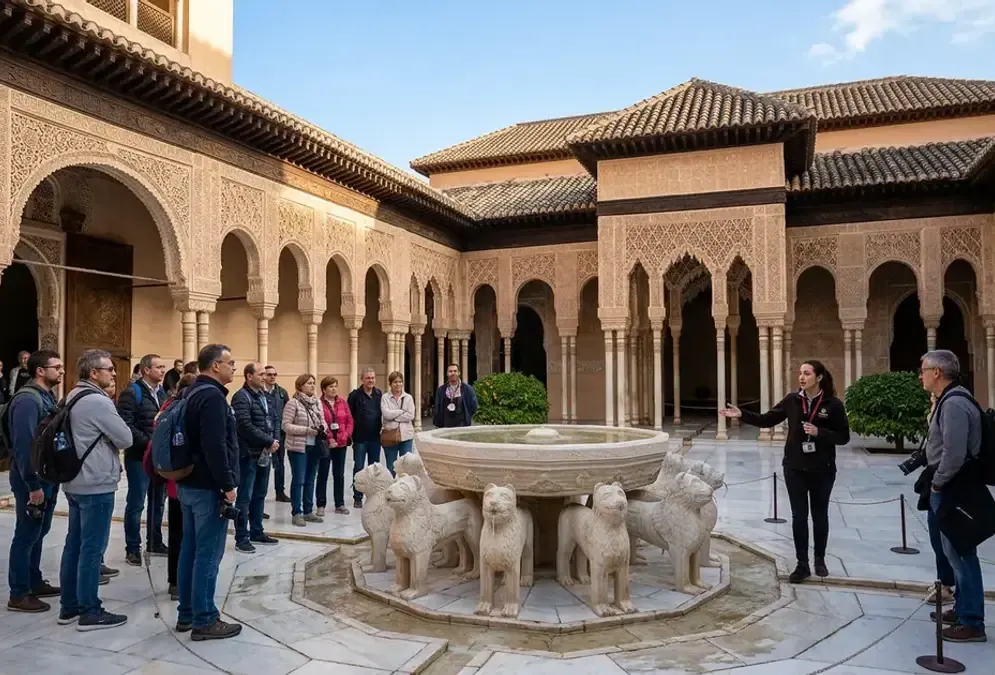
Some operators on GetYourGuide and Viator offer Generalife-focused options (distinct from a full Alhambra circuit) where the guide spends 90 minutes on the hydraulic engineering and landscape design rather than the 20 minutes a full-circuit tour typically allows. The standalone entry ticket (€12.73) covers your own access; guide fees are charged on top of that. Alternatively, the Alhambra guided tour can be arranged with a private guide and a customised focus on the Generalife if you're booking a private experience.
Booking and practical logistics
Tickets: Book the general Alhambra ticket or the standalone Generalife ticket at alhambra-patronato.es, not at the gate. Same-day tickets are rarely available. For April–May and September–October, book 2–3 weeks ahead. For June–August, 4–6 weeks is safer.
Guided tours: Look for operators that describe the Patio de la Acequia and hydraulic engineering specifically in their tour descriptions. Generic Alhambra tours often spend less than 20 minutes in the Generalife.
Timing: The Generalife has no timed entry slot; you can enter at any point during your visit. Going early, before the Nasrid Palace timed entry begins at 8:30, is possible and avoids the mid-morning crush. Late afternoon after 4 PM also works; coach groups have usually left by then.
Getting there: From the city centre, the C30 minibus runs to the Alhambra entrance. The Generalife is a further 10-minute walk through the main complex or via the Camino del Rey through the upper gardens. Wear shoes that grip wet stone; the Escalera del Agua and the Patio de la Acequia courtyards can be slippery.