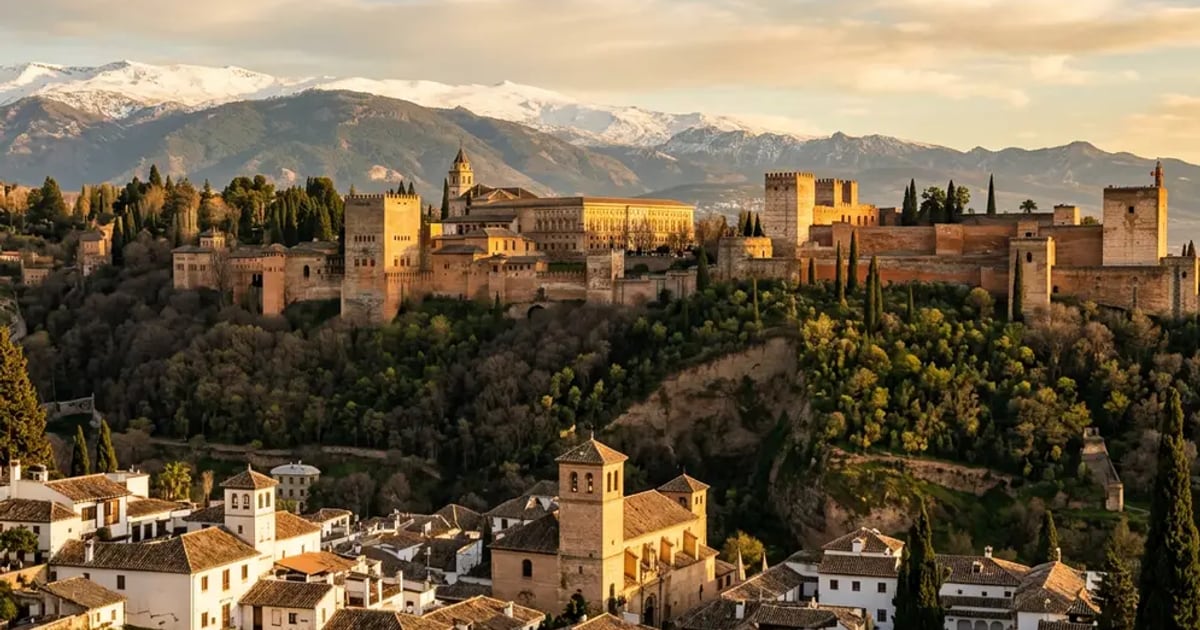
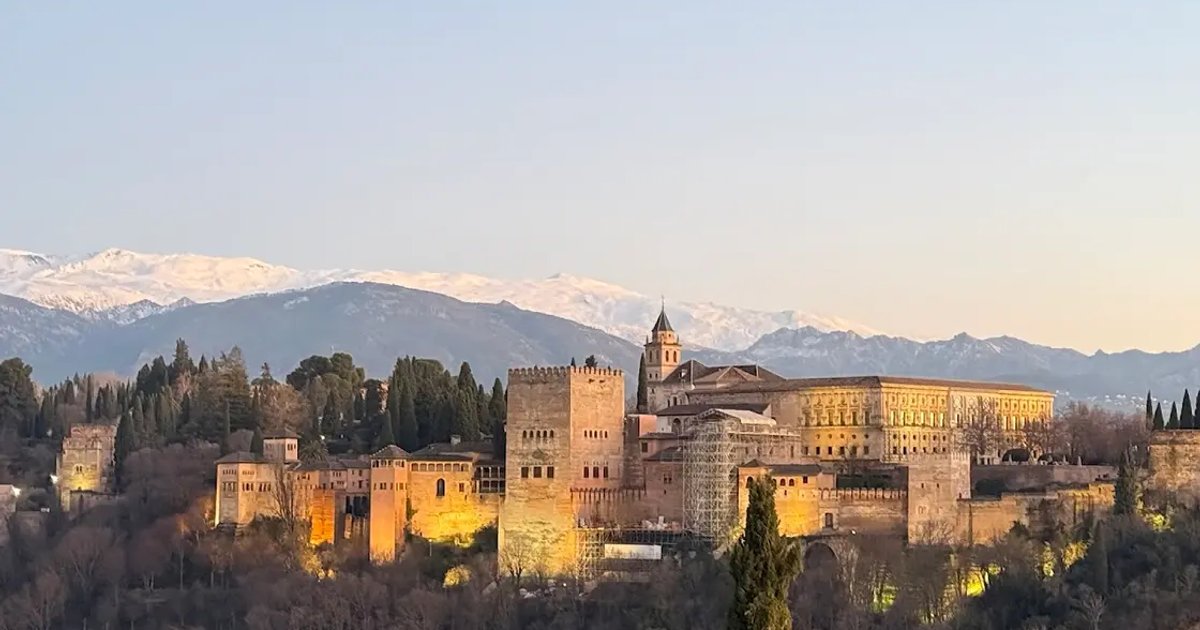
The Albaicín has kept its Moorish street plan since the 11th century. The lanes are the same. The steep stairways are the same. The view of the Alhambra from the top has not changed. Here is how to visit without wasting the experience.
Seven years resident in Granada. Specialist in Nasrid architecture, Al-Andalus history, and Andalusian walking routes.
Published
Most visitors to Granada spend their time on the Alhambra hill and leave without crossing the gorge. The Albaicín sits directly opposite, on its own steep hill, and it is a different kind of place entirely. Where the Alhambra is a palace complex frozen at its moment of greatest power, the Albaicín is a residential quarter that has been lived in continuously since the 11th century. The streets have not moved. UNESCO listed it as a World Heritage Site in 1994 specifically because it is the most complete surviving medieval Islamic residential quarter in the Iberian Peninsula.
This guide covers the main sights, the best timing for each, the practical logistics of getting around, and where most visitors lose their time. For the walking route itself, the Albaicín self-guided walk gives a step-by-step route. For a guided experience with historical context, the Albaicín walking tour runs from €15.
Albaicín at a glance
Location
Hillside quarter opposite the Alhambra, across the Darro gorge
UNESCO listing
1994 (extended from Alhambra's 1984 listing)
Time needed
2–3 hours self-guided; 3–4 hours with El Bañuelo
El Bañuelo entry
~€2.50 (or included in the Dobla de Oro, €30.48)
Main viewpoint
Mirador de San Nicolás: best before 9am or 45 min before sunset
Key monument
El Bañuelo Arab Baths, Carrera del Darro (open from 10:00)
Why the Albaicín is worth a half-day
The Albaicín is not a reconstruction. Córdoba's Judería was rebuilt heavily in the early modern period. Toledo's Jewish quarter was altered across successive centuries. The Albaicín's lanes are still where they were laid in the 11th and 12th centuries, because after 1492 Christian Granada never had the money or the motivation to tear the hill apart and build something new. The slopes were steep, the streets too narrow for wheeled transport, and the population that replaced the expelled Muslim inhabitants was poor enough to live with what it found.
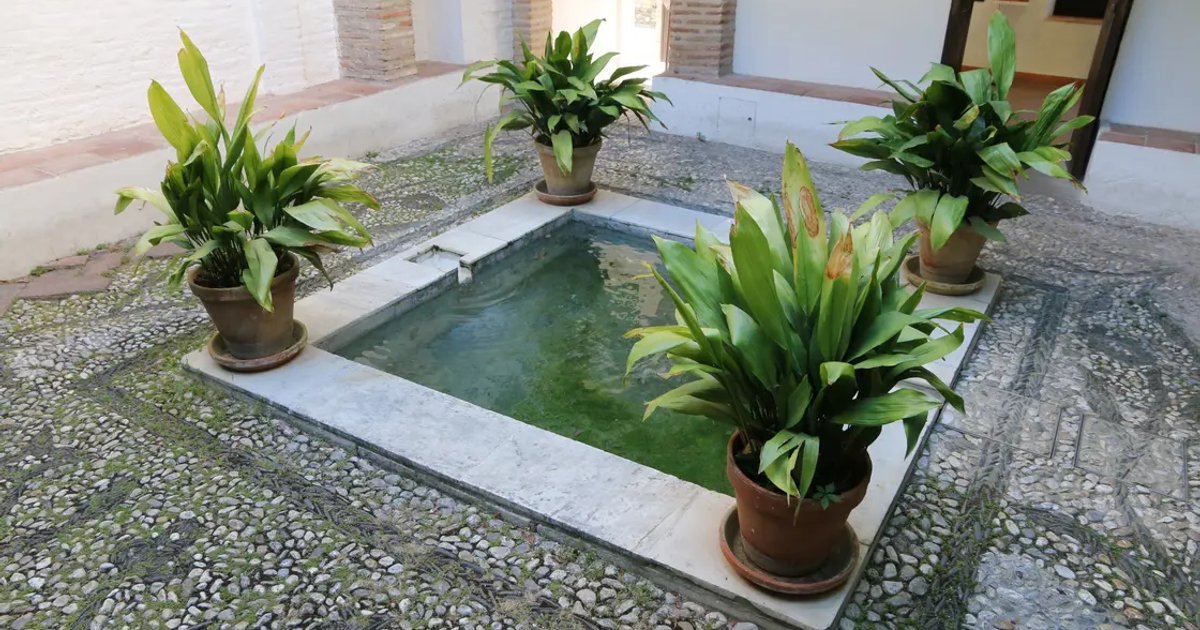
The result is a hill quarter that reads, in its bones, as an Islamic medina. Dead-end alleys branch off the main lanes. Small plazas open unexpectedly. The courtyard houses, carmenes, are built with high whitewashed walls that give nothing away from the street: the life is all inside, around the garden. The word carmen comes from the Arabic karm, meaning vineyard. The garden culture it describes is older than the Nasrid dynasty.
None of this is immediately obvious to a visitor who arrives at the mirador, looks at the Alhambra, takes photographs, and descends. The quarter rewards slower walking: up into the lanes above Plaza Larga, through the residential streets where the tourist traffic thins out, past the church of San Nicolás (built on the site of a demolished mosque), and eventually back down through the lower quarter to Carrera del Darro.
Mirador de San Nicolás: the view and the timing
The Mirador de San Nicolás is the terrace square in the upper Albaicín that looks directly across the Darro valley to the Alhambra. The view works at all hours, but what you experience around it changes sharply depending on when you go.
Before 9am
The terrace is quiet. A few retired locals do slow laps. The occasional photographer with a tripod. The Alhambra is lit from the east, which means the walls and towers catch the morning light directly. This is the best hour for photographs and the most peaceful version of the place. The cobblestones are cool and damp. By 10am, tour groups begin arriving.
Mid-morning to mid-afternoon
Peak visitor volume. Tour groups, buskers, incense sellers, and competing amplified guides. The view is the same but the experience is not. In summer this period extends from about 10am to 7pm. If this is your only option, go, but set expectations accordingly.
45 minutes before sunset
The crowd builds toward sunset, not before it. Arriving 45 minutes early means you get the Alhambra walls already warming to orange, a terrace that is not yet packed, and space to move around. At the moment of actual sunset the terrace is at its fullest. If you want sunset light on the Alhambra without fighting for position, be there early.
After dark
The Alhambra is lit at night and the view from the mirador is worth coming back for. The crowd drops sharply after the sun goes down. Walk up after dinner if you're staying in the city centre. The quarter is safe and the streets are cooler in the evening.
Mirador de San Miguel Alto
Walk 10 minutes past San Nicolás, uphill and northeast, to reach Mirador de San Miguel Alto. It sits higher on the hill, gives a wider view that includes both the Alhambra and the Sierra Nevada, and receives a fraction of the foot traffic. Most visitors turn around at San Nicolás.
Carrera del Darro riverside walk
The Carrera del Darro runs along the Darro river between Plaza Nueva and the point where the gorge narrows and the road becomes a footpath. On the left, the Albaicín hill climbs steeply. On the right, the Alhambra cliff rises almost vertically above the river. Medieval bridges cross the water at intervals. The sound of the Darro is audible before the traffic noise starts mid-morning.
This is one of the most visually distinctive urban walks in Andalusia, and not because it is scenic in a generic way. The relationship between the two hills is legible from the road. You can see, from the riverbed, exactly why the Nasrid sultans chose that cliff for their palace and why the residential quarter sat on the facing hill at the same level.
What to look for as you walk
Medieval bridges: Several original bridges cross the Darro, including the Puente del Aljibillo and the Puente Nuevo. The stone is worn smooth but the arch forms are intact.
Tower remnants on the north bank: The Albaicín side of the road has arched doorways and tower bases from the Islamic period, visible in the lower sections of house walls. Walk slowly on the left side to spot them.
Casa Castril: A Renaissance-facade building near the Bañuelo that houses the Granada Archaeological Museum. Small but specific: its collection includes Nasrid-period ceramics, bronze lamps, and glassware found in the river gorge. Worth 30 minutes.
The Bañuelo entrance: Easy to miss. It is a low doorway behind an iron gate on the left side of the road, about 500 metres from Plaza Nueva. Look for the small sign.
Walk time from Plaza Nueva to the Bañuelo: approximately 8 minutes at a slow pace. The full road ends about 200 metres past the Bañuelo where the gorge closes and the path continues only on foot.
El Bañuelo Arab Baths
El Bañuelo on Carrera del Darro is an 11th-century bathhouse built under the Zirid dynasty, which ruled Granada before the Nasrids. It predates the Alhambra by roughly 200 years. The Catholics who took Granada in 1492 closed the public bathhouses as part of a broader programme of cultural erasure, and this building was subsequently used as a tannery, a prison, and a storage space before archaeologists identified it in the 19th century.
What survives is the vaulted bathing hall. The ceilings are pierced with star-shaped and hexagonal oculi that drop columns of light onto the stone floors below. The architectural principle is the same one the Alhambra builders used three centuries later in the Nasrid Palaces — muqarnas vaulting, arabesque carving, and geometric water systems that appear throughout the palace complex. For a deeper look at how these techniques evolved, the Alhambra architecture guide explains the visual language of muqarnas, arabesque patterning, and the water engineering that connected the Sierra Nevada snowmelt to every fountain in the complex. Photographs of the star-light effect circulate online; the real thing, in a room that holds perhaps 15 people and smells faintly of old stone, is considerably better.
Practical details
Entry: ~€2.50 (included in the Dobla de Oro combined ticket at €30.48)
Opening hours: Tuesday to Saturday 10:00–14:00 and 16:00–20:00; Sunday 10:00–14:00. Closed Monday. Hours vary seasonally, so check the Patronato website before visiting.
Time needed: 20 minutes. It is a single room; there is no additional space beyond the main bathing hall.
Photography: Allowed. The light columns are strongest in the morning, roughly 10:30 to 12:00.
Visit El Bañuelo before the Hammam
If you plan to visit Hammam Al Ándalus (the modern Arab baths on Calle Santa Ana), go to El Bañuelo first. Seeing the 11th-century original (worn stone floors, minimal ornament, functional star skylights) makes the modern recreation more legible. The sequence takes 30 minutes and significantly improves both visits.
Key streets and plazas
The Albaicín is navigated by feel as much as by map. The lanes are narrow and often unlabelled. A few reference points make it easier to orient.
Calle Calderería Nueva
The lower stretch of the Albaicín, climbing steeply from Plaza Nueva. A dense run of teterías (tea houses) selling mint tea, almond pastries, and baklava in a setting that references the city's North African trading connections. This is Granada's most tourist-facing street, but the tea is real and cheap. A pot with pastries costs €3 to €4. The unmarked places with counter service and no English signage are generally better than the ones with laminated photo menus outside.
Calderería Vieja continues the street higher up the hill. The distinction matters to locals; on maps the two sections can appear as one continuous road.
Plaza Larga
The main square of the upper Albaicín, a few minutes' walk from Mirador de San Nicolás. A small Friday morning market sets up here: mostly produce, some ceramics. In the evenings, locals gather at the bar tables on the edge of the square. The tourist density drops sharply once you reach Plaza Larga; the streets above it are a working residential neighbourhood.
Placeta de Carvajal
A small square one level below Mirador de San Nicolás, connected by a staircase. Quieter than the main mirador terrace and gives a slightly different angle on the Alhambra, through the gap between the houses. Worth pausing here before climbing the final steps to the viewpoint, particularly if San Nicolás is packed.
Cuesta del Chapiz
The road that climbs from Carrera del Darro into the Albaicín along its eastern edge, passing the Casa del Chapiz (a 16th-century Mudéjar house, now a school of Arabic studies) on the way up. Less steep than the Calle Calderería route and with more residential character. Used by locals driving down in the morning; quieter on foot in the afternoon.
Carmen gardens: the walled garden culture
A carmen is the Albaicín's particular house type: a whitewashed property with a walled garden, the walls high enough to make the interior completely invisible from the street. The word comes from the Arabic karm (vineyard), and the garden tradition it refers to pre-dates the Nasrid dynasty. The original Islamic houses built on this hill kept their private green space interior and their blank facades exterior. The Reconquista changed the ownership but not the building type.
Walking the Albaicín, you see these walls constantly but rarely what is behind them. Through an open gate or over a low wall you might catch a glimpse: fruit trees, jasmine, a fountain, vegetables. In April and May the orange blossom smell crosses over the walls into the lane without any warning — one of several reasons why spring is arguably the best season to visit. The Granada in spring guide covers what March through May brings to the city: the blooms, the festivals, and the lighter crowds before the summer heat arrives.
Can you visit them? Almost none are open to the public. The vast majority are private homes. A small number of historic carmenes open occasionally for cultural events or through the city's heritage programme, but there is no regular public access. The Albaicín neighbourhood page notes any scheduled open days. If you want a formal Andalusian garden you can walk through freely, the Generalife on the Alhambra hill is the correct destination.
Carmen de los Mártires
The one significant exception is the Carmen de los Mártires, a public garden on the Alhambra hill (not in the Albaicín itself) that gives the fullest example of the carmen garden style. It is free to enter and usually uncrowded. The garden includes a lake, rose beds, and a section of original Islamic hydraulic channels. From the upper terrace you get a different angle on the Alhambra towers without paying admission.
Getting around: the practical reality
The Albaicín is steep and the cobblestones are uneven. Both of these are significant if you are not prepared for them.
Footwear
Flat-soled shoes with grip. The cobblestones are worn smooth and become slippery when damp. In summer sandals are a common mistake: the lanes are long, the gradient is real, and the stone is hard. Trainers or walking shoes with any grip at all are fine. Heels are impractical on every street in the quarter.
Entry and exit points
The two natural entry points from the city centre are Carrera del Darro (flat, along the river, leads to the Bañuelo and then up into the quarter via Cuesta del Chapiz or Cuesta de la Victoria) and Calle Calderería Nueva (steeper, direct, climbs from Plaza Nueva through the teterías district). A practical loop: walk in via Carrera del Darro (flat), climb to the upper quarter via Cuesta del Chapiz, visit San Nicolás and Plaza Larga, then descend via Calderería back to Plaza Nueva.
Bus options
The C31 and C32 minibuses run from Plaza Nueva into the Albaicín every 10 to 15 minutes. Fare: €1.40. The C31 goes up through the Albaicín to near Mirador de San Nicolás; the C32 takes a different route through the lower quarter. Both can be caught at Plaza Nueva. The buses navigate lanes that seem too narrow for a vehicle. Watching the driver thread the turns is an experience on its own. Taking the bus up saves the climb; walking down via Carrera del Darro is faster and more scenic.
Accessibility
The Albaicín has limited accessibility. Carrera del Darro (the flat riverside road) is paved and manageable for most mobility levels. The quarter above it involves steep gradients and stairways that are not accessible for pushchairs or wheelchairs. The C31 bus reduces the uphill element but the final approach to most viewpoints still involves stairs. El Bañuelo has a stepped entrance and is not fully accessible. For wheelchair routes, adapted transport, and a full breakdown of what is and is not accessible in Granada, see the accessible Granada guide.
The adjacent Sacromonte neighbourhood, east of the Albaicín, is a natural extension of the walk. From Mirador de San Nicolás you can continue east along the ridge, following the path above the Darro gorge toward the Sacromonte cave district and its flamenco venues. Allow an extra 30 to 45 minutes. Further south, the Parque Federico García Lorca preserves the poet's family summer house; the Granada Lorca guide covers his literary trail, the Centro Federico García Lorca, and the Huerta de San Vicente museum.
Book Albaicín tours & experiences
Tours are selected for quality, not commission. We earn a small fee if you book — at no extra cost to you.
Walking tours, hammam visits, and sunset guided walks
Two hours covers the basics: Carrera del Darro, El Bañuelo, and Mirador de San Nicolás. Three hours lets you walk slowly, stop in a tetería, and explore the lanes above Plaza Larga without rushing. If you want context for what you're walking through, the Albaicín walking tour runs 2 to 2.5 hours from €15 and explains the Nasrid architecture embedded in the walls, the hidden carmenes, and why the street layout survived 1492 intact. Budget a full half-day if you combine it with El Bañuelo opening at 10:00.
Is the Albaicín accessible? Can you visit with a pushchair or mobility issues?
Mostly no. The Albaicín is built on a steep hillside with narrow cobbled lanes and frequent stairways cut into the rock. Many of the streets that lead to Mirador de San Nicolás are impassable for pushchairs and difficult for anyone with limited mobility. The Carrera del Darro itself (the flat riverside road between Plaza Nueva and the Bañuelo) is paved and accessible. The minibus (C31 or C32) runs from Plaza Nueva to several Albaicín stops and reduces the climb, but the final approach to most viewpoints still involves stairs or steep gradients.
What time is sunset at Mirador de San Nicolás?
Sunset at the Mirador varies considerably by season. In June and July it falls after 21:30. In March and September, around 20:00. In December, as early as 18:00. The Spanish tourism office's official calculator is the most accurate reference for specific dates. Arrive 45 minutes before the listed sunset time. The Alhambra walls catch the warm light for at least 30 minutes before the sun actually drops, which is often the better light for photographs.
What is the best way to reach the Albaicín from the city centre?
Walk the Carrera del Darro from Plaza Nueva. The road runs along the Darro river with the Alhambra cliff rising on your right and the Albaicín hill to your left. It is flat, scenic, and takes about 10 minutes to reach the Bañuelo. From there you begin climbing into the quarter. The alternative is the C31 minibus from Plaza Nueva, which saves the uphill climb to the upper Albaicín and drops you near Mirador de San Nicolás in around 10 minutes for €1.40. Walking up and taking the bus down is a practical combination.
Can you visit the carmen gardens inside the Albaicín?
Most carmenes are private homes and not open to the public. The walled gardens visible from the street or from the Alhambra walls belong to individual houses, and the high whitewashed walls are specifically designed to keep them private. A small number of historic carmenes open occasionally for cultural events or guided visits, but there is no permanent public access. The Albaicín neighbourhood page lists any scheduled open days. For formal gardens you can enter freely, the Generalife on the Alhambra hill is the best example in Granada.
Is El Bañuelo worth visiting?
Yes, and it takes only 20 minutes. El Bañuelo is one of the best-preserved 11th-century Islamic baths in Spain, built under the Zirids before the Nasrid dynasty existed. The vaulted ceilings have star-shaped oculi that drop narrow columns of light onto the stone floors. The same architectural device appeared in the 14th-century Alhambra Nasrid Palaces, three centuries later. Entry costs around €2.50 and it is included in the Dobla de Oro combined ticket. It opens at 10:00. Bring a camera: the light columns are strongest in the morning.
Reporter notebook
Insider tips
Practical observations gathered the way a local journalist would keep them: short, specific, and more useful than brochure copy.
Best time
Go before 9am, not at sunset
The Mirador de San Nicolás at sunset is crowded, loud, and sometimes theatrical in ways that make it hard to look at the Alhambra. Before 9am it has retired couples, one or two photographers, and quiet. The Alhambra walls are lit from the east in the morning, good for photographs, and the air is cool. Walk the Albaicín lanes early, descend to Carrera del Darro for coffee, and visit El Bañuelo when it opens at 10:00. That sequence uses the quarter at its best.
Crowd tip
Use the C31 minibus down, walk up
Walking from Plaza Nueva up to Mirador de San Nicolás takes 25 to 35 minutes on steep cobblestones. In summer heat that is miserable. Walk up in the morning when it is cool, explore at your own pace, then take the C31 or C32 minibus back down to Plaza Nueva (€1.40, every 15 minutes). The bus navigates lanes so narrow it seems impossible, which is itself worth the ticket price.
Local custom
Order tea at an unmarked place on Calderería Nueva
Calle Calderería Nueva has a dozen teterías selling mint tea and pastries. The ones with laminated photo menus outside are aimed at tourists. The better places have no menu board, a small counter, and sell only tea and a few pastries at €3 to €4 for a pot with almonds. Look for the ones with local students and no English signage. The tea is real mint, served hot in a proper glass, and the almond pastries are made locally.