The walk that earns its view
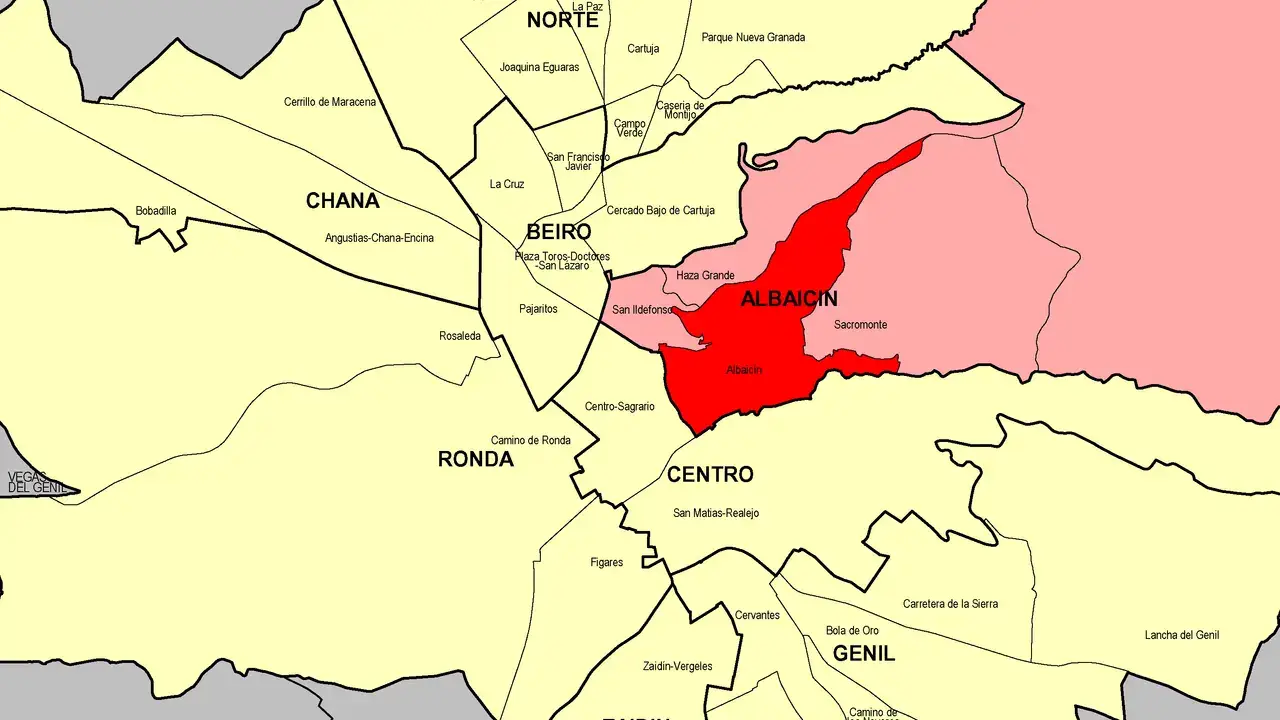
The Albaicín rewards the slow walker. Start at Plaza Nueva before 8am and the cobblestones belong to you: the churning water of the Darro, the smell of jasmine escaping a patio door, a cat crossing a wall. By noon that same route is wall-to-wall selfie sticks. Timing matters here more than anywhere else in Granada.
From Plaza Nueva, Carrera del Darro runs east along the river — the prettiest street in the city, though almost nobody arrives early enough to feel that way. The Darro runs dark green in October, milky-pale in spring snowmelt. At number 31, El Bañuelo is Granada's oldest Arab bath (11th century), small enough to visit in 20 minutes and far less crowded than anything attached to the Alhambra. The star-shaped holes cut into the vaulted ceilings let thin shafts of light move across the columns throughout the morning. Go before 11am or you'll share it with two tour groups.
Into the Albaicín proper
The hill climbs steeply once you leave the Darro. Calle Calderería Nueva runs through what Granada locals call the Moorish quarter-within-a-quarter: brass teapots, sacks of cumin, the bitter smell of kif drifting from tea shops. It's a little theatrical, but it works. Stop for a glass of mint tea and rest your legs before the steeper climb ahead.
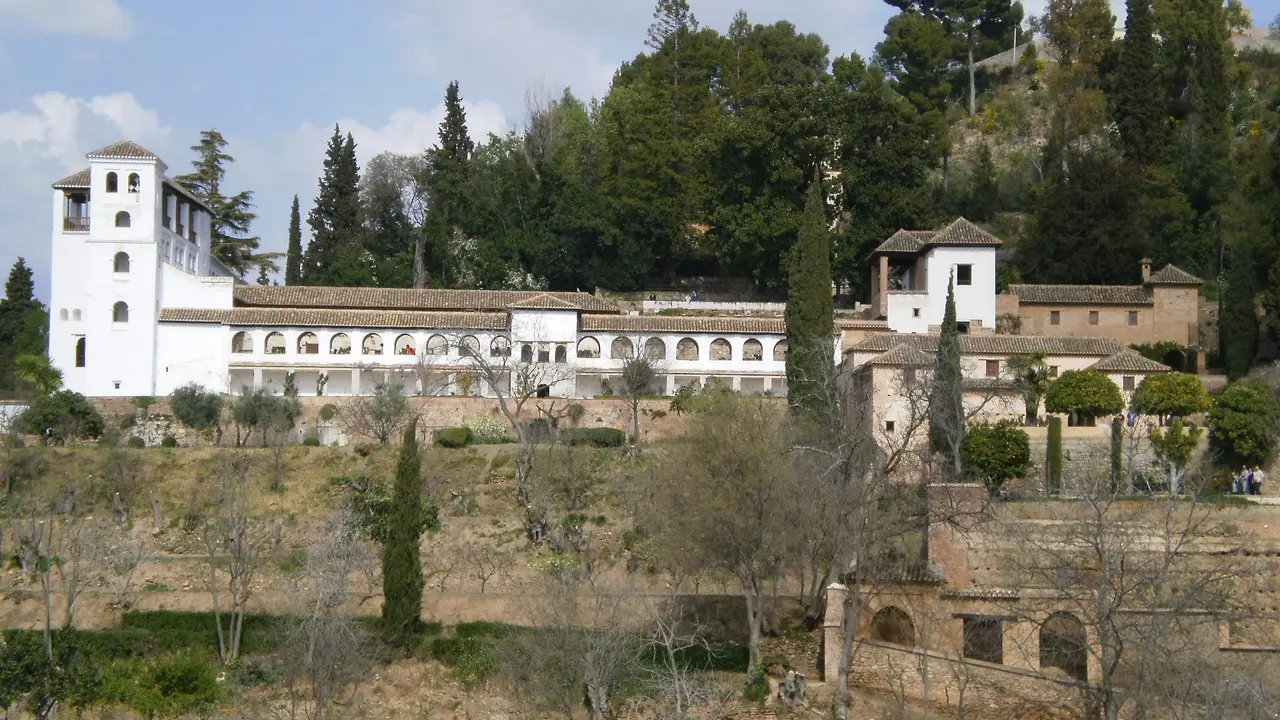
Palacio de Dar-al-Horra sits at the upper edge of the Albaicín — a 15th-century Nasrid palace with a courtyard almost as refined as anything in the Alhambra, and on most mornings you'll have it to yourself. The last queen of Granada's Nasrid dynasty lived here before the fall of the city in 1492. The silence in that patio is something else.
The payoff: Mirador de San Nicolás
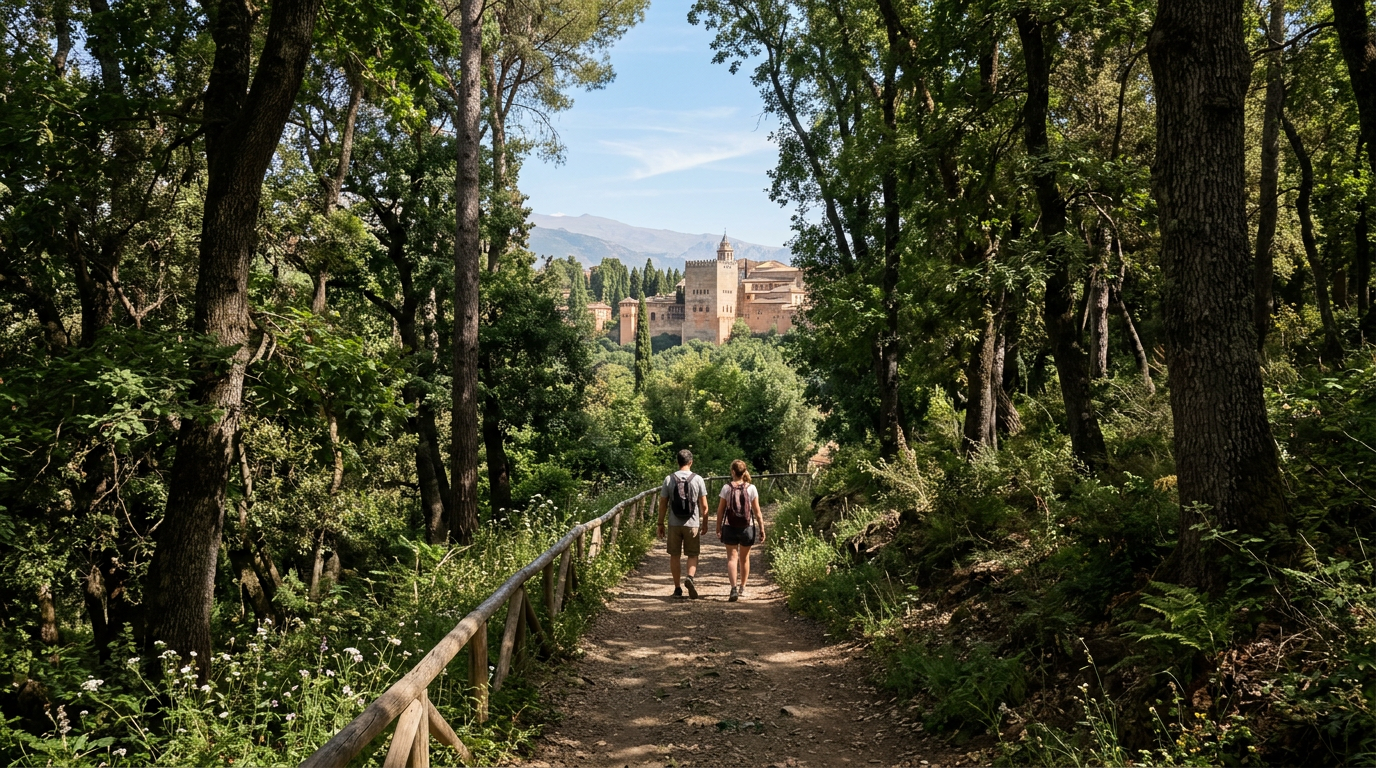
Every visitor to Granada ends up at the Mirador de San Nicolás eventually. The view across to the Alhambra with the Sierra Nevada behind it is genuinely extraordinary, and the light at sunset turns the fortress walls amber. The trick is to arrive 45 minutes before sunset, not 10: the space fills fast, the best wall positions go first, and you want to watch the light change rather than fight for a gap between tripods.
The walk down via Paseo de los Tristes is the best ending. The promenade runs along the Darro back toward Plaza Nueva, with the Alhambra walls lit above. Locals come here in the early evening with cold beers from the café terraces. The walk is circular: 2.3 km in total, with a sharp climb of perhaps 100m from the river to the Mirador.
Wear sturdy shoes. The cobblestones are uneven and the upper alleys can be slippery after rain. The route has no wheelchair-accessible sections.
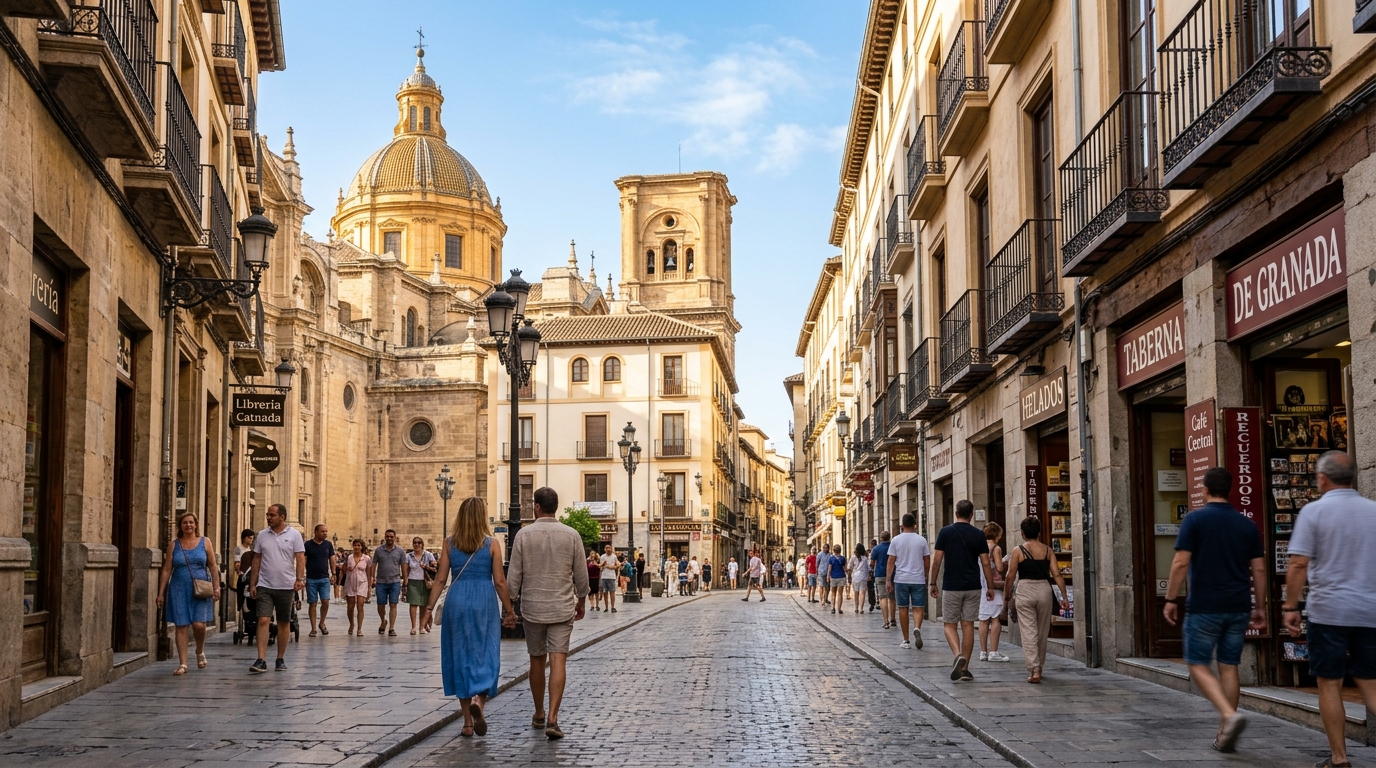
If you want to continue exploring Granada's architectural layers beyond the Moorish Albaicín, the Granada Baroque and Renaissance architecture walk picks up where the Reconquest left off — Royal Chapel, Cathedral, and La Cartuja across 3.5 km of post-1492 building.