Guide

Best Walks in Granada

Seven Granada walking routes ranked: the Albaicín, Río Darro, Sacromonte cave district, Alhambra forest path, and more. Distance, difficulty and local tips.

Granada divides itself neatly between two kinds of walker. The first kind books the Alhambra ticket, does the Albaicín at noon, and wonders why the city felt crowded. The second kind arrives early, walks the routes the guidebooks list but never describe properly, and comes away with something that stays with them. These seven routes cover the full range, from a flat 2.1 km circuit through the historic centre to a steep climb through 11th-century cave homes above the Darro valley.

All seven are self-guided and need nothing beyond a decent pair of shoes. Three are free from start to finish. Two intersect with the Alhambra and require a pre-booked ticket only if you intend to enter the palace complex itself. The forest path and the Cuesta de Gomérez approach are free at any hour, which means you can walk to the Alhambra gates and back without spending a cent.

We have ranked these routes by their overall reward: the quality of what you see, the specificity of what you learn, and the experience at the end. The Albaicín walk tops the list because the Mirador de San Nicolás view is genuinely extraordinary and the route to reach it takes you through one of the best-preserved Islamic-era urban landscapes in Europe. The Río Darro route comes second for atmosphere alone — walk it before 09:00 and Carrera del Darro feels like a private street. The others are ranked for complementary reasons: difficulty, accessibility, historical depth, and what happens when you do them at the right time of day.

A practical note on timing: Granada's summers are hot and the steeper walks — Albaicín, Sacromonte, Realejo — are best done before 10:00 or after 17:00. The forest walk to the Alhambra is shaded for its entire length and remains walkable through the afternoon. The flat historic centre circuit is the only one suitable for midday in July or August.

Ranked list

How we chose

The places on this list were selected against the following editorial criteria.

  • Scenery and viewpoints — quality of what you see at key stops
  • Historical depth — specificity of what the route reveals about Granada's layered past
  • Accessibility — grade, terrain, and suitability for different fitness levels
  • Crowd patterns — how timing affects the experience and whether early access is possible
  • Value — balance of what the route delivers against any entry costs along the way

Reporter notebook

Insider tips

Practical observations gathered the way a local journalist would keep them: short, specific, and more useful than brochure copy.

Best time

The pre-09:00 window across all walks

Granada's walking routes transform before the first tour buses arrive. Before 09:00, Carrera del Darro has almost nobody on it, the Albaicín alleys are empty enough to hear the Darro below, and the forest path to the Alhambra belongs entirely to you. The same routes at 11:00 involve navigating groups of 25. If you can move breakfast to after the walk, the entire city feels different for those two hours.

What to bring

Water for the Pilar de Carlos V — and on every hill walk

The Pilar de Carlos V fountain on the Bosque Alhambra forest walk has drinkable water roughly 400 metres from the Puerta de las Granadas. Fill a bottle there. On the Albaicín and Sacromonte walks, there are no fountains between the start and the top, and in July the temperature hits 35°C in the streets below before 10:00. A litre per person minimum, more in summer.

Top picks

Albaicín Self-Guided Walk

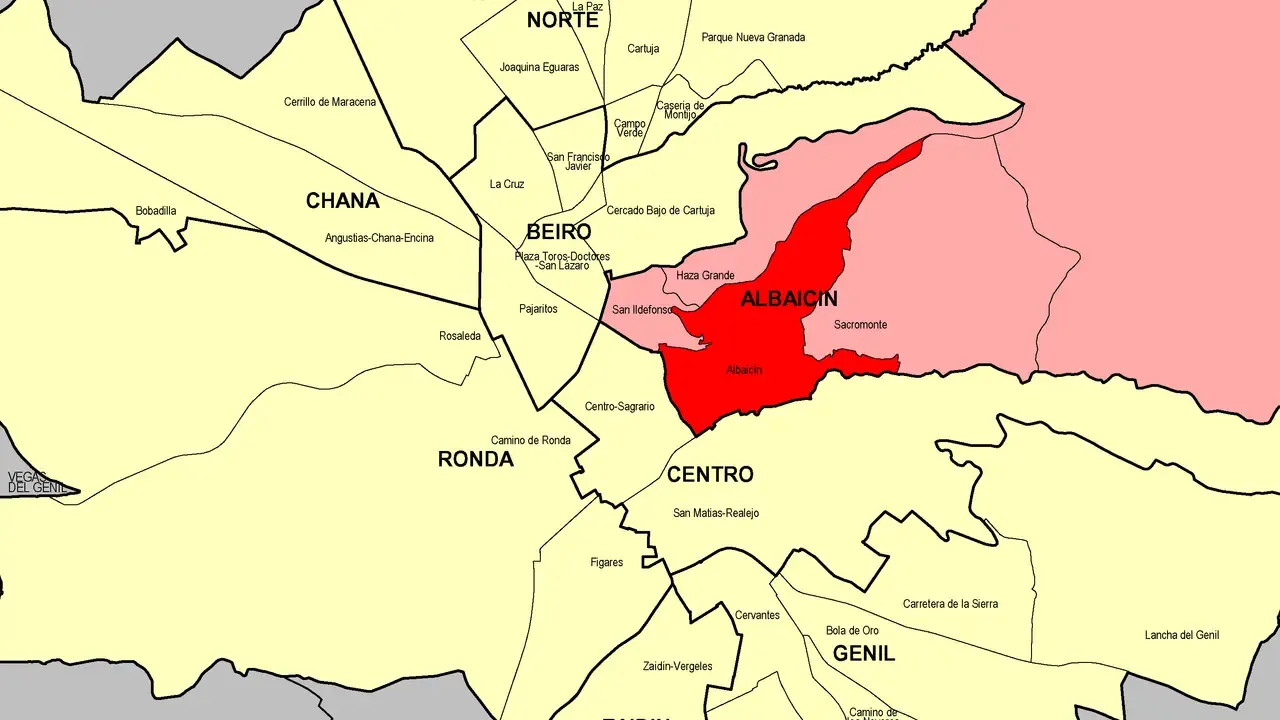
The Albaicín walk is the one that earns its reputation. The 2.3 km circular route climbs 100m from Plaza Nueva through Arab bath ruins, a 15th-century Nasrid palace where the last queen of Granada lived before 1492, and the labyrinthine alleys of the old Moorish quarter, arriving at Mirador de San Nicolás for a panorama of the Alhambra with the Sierra Nevada rising behind it. The view is real — not overhyped. What makes this route the best in Granada is the sequence: each stop builds toward the mirador, and the route back down via Paseo de los Tristes closes the loop with the Alhambra walls lit from the south. Start before 08:00. The same route at noon is a slow shuffle through tour groups.

Río Darro Riverside Walk

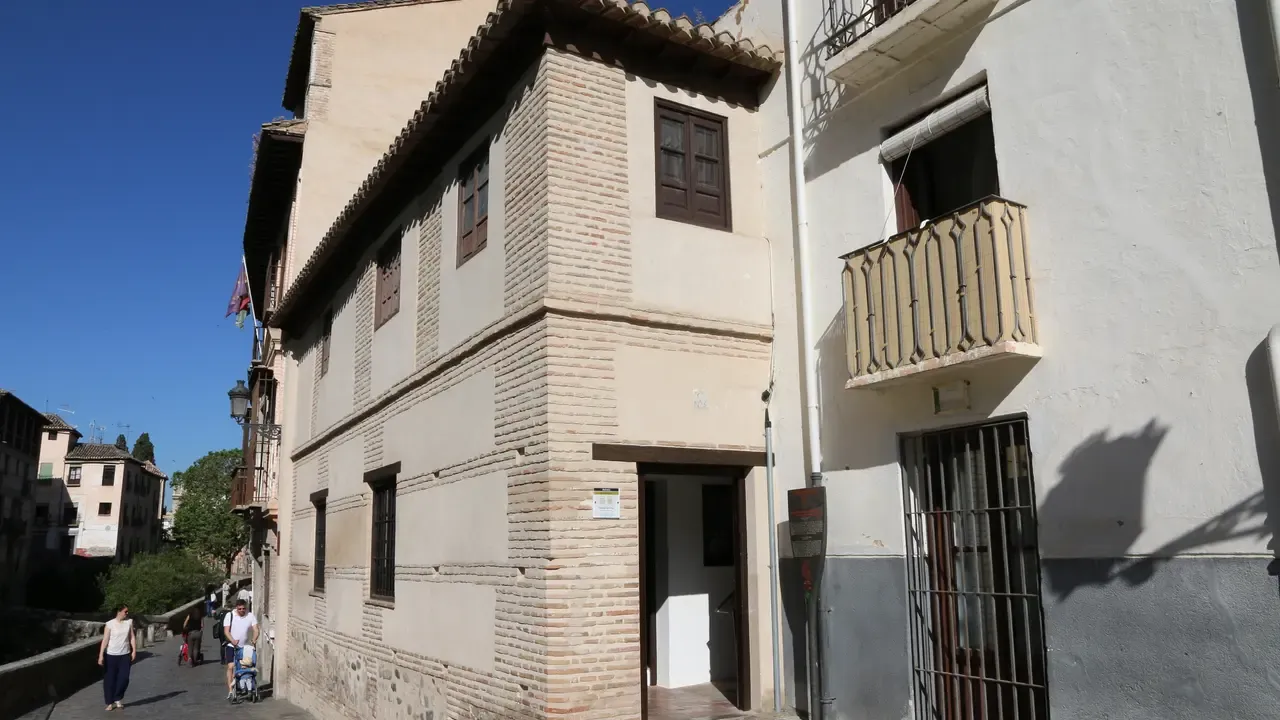
The 2.8 km Río Darro walk is the most atmospheric flat route in Granada: almost no elevation gain, almost no effort, and some of the best architecture photography in the city available to anyone who arrives before the groups. Carrera del Darro runs east from Plaza Nueva along the river, past El Bañuelo (an 11th-century hammam with star-ceiling light shafts, entry €3–5), the 1539 Renaissance palace at number 43 (Granada's archaeological museum, entry €1.50), and out onto Paseo de los Tristes where the Alhambra cliff rises directly above the café terraces. In the late afternoon from 17:00, locals claim those terrace tables for cold beers and the amber light on the fortress walls. The walk ends at Cuesta del Rey Chico: return on foot or climb to the Alhambra with a pre-booked ticket.

Sacromonte Cave Route Walk

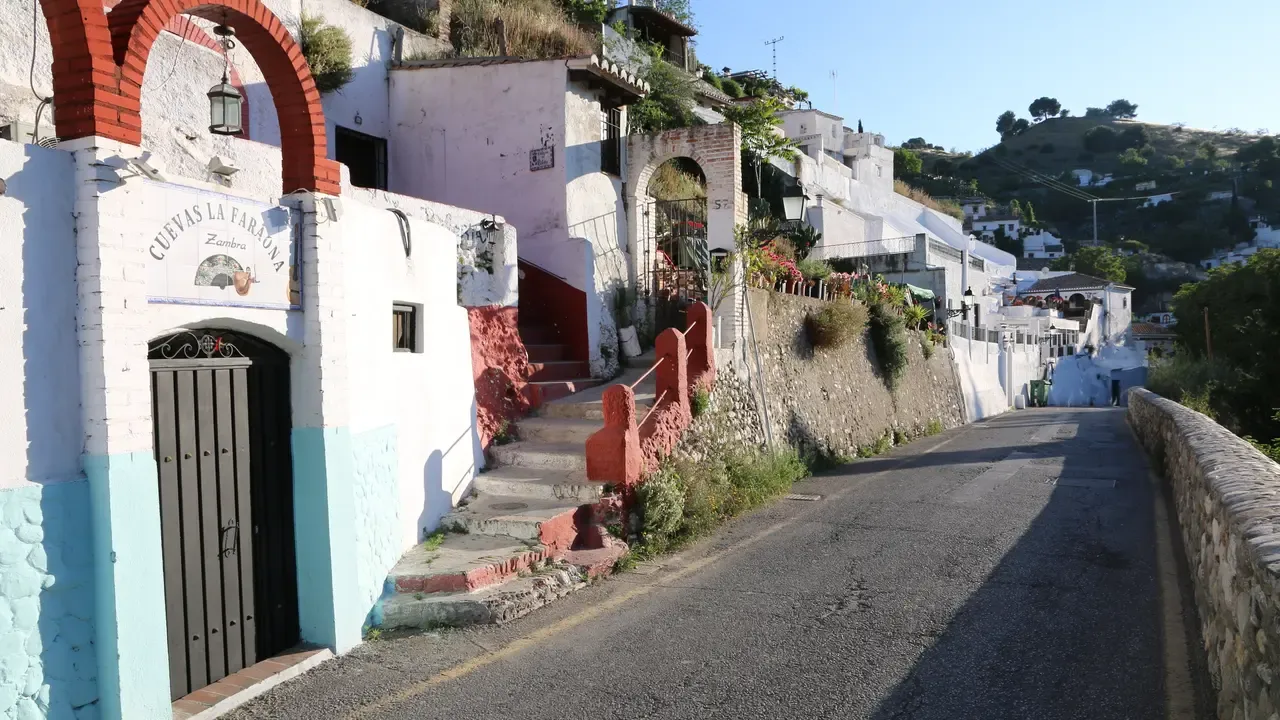
Sacromonte is Granada's other hill, and the cave route walk is the city's most distinctive 4 km route. The climb starts at Paseo de los Tristes, ascending Cuesta del Chapiz to the whitewashed cave district where Romani families have lived since the 15th century. The Museo Cuevas del Sacromonte (entry €5–6) occupies 11 original cave dwellings and documents domestic, craft and agricultural life across three rooms that most visitors rush through. Slow down. The Benedictine abbey at the summit dates from 1617 and its terraces give a 360-degree view: Alhambra, Albaicín, Sierra Nevada, the whole spread of the city. The cave flamenco venues on the way back — zambra shows in actual caves on Camino del Sacromonte — are touristy by nature but the setting is unlike any other flamenco space in Spain. Book the 22:00 show, not the 21:00 one.

7 places
  1. Albaicín Self-Guided Walk

    Albaicín Self-Guided Walk

    The Albaicín walk is the one that earns its reputation. The 2.3 km circular route climbs 100m from Plaza Nueva through Arab bath ruins, a 15th-century Nasrid palace where the last queen of Granada lived before 1492, and the labyrinthine alleys of the old Moorish quarter, arriving at Mirador de San Nicolás for a panorama of the Alhambra with the Sierra Nevada rising behind it. The view is real — not overhyped. What makes this route the best in Granada is the sequence: each stop builds toward the mirador, and the route back down via Paseo de los Tristes closes the loop with the Alhambra walls lit from the south. Start before 08:00. The same route at noon is a slow shuffle through tour groups.

  2. Río Darro Riverside Walk

    Río Darro Riverside Walk

    The 2.8 km Río Darro walk is the most atmospheric flat route in Granada: almost no elevation gain, almost no effort, and some of the best architecture photography in the city available to anyone who arrives before the groups. Carrera del Darro runs east from Plaza Nueva along the river, past El Bañuelo (an 11th-century hammam with star-ceiling light shafts, entry €3–5), the 1539 Renaissance palace at number 43 (Granada's archaeological museum, entry €1.50), and out onto Paseo de los Tristes where the Alhambra cliff rises directly above the café terraces. In the late afternoon from 17:00, locals claim those terrace tables for cold beers and the amber light on the fortress walls. The walk ends at Cuesta del Rey Chico: return on foot or climb to the Alhambra with a pre-booked ticket.

  3. Sacromonte Cave Route Walk

    Sacromonte Cave Route Walk

    Sacromonte is Granada's other hill, and the cave route walk is the city's most distinctive 4 km route. The climb starts at Paseo de los Tristes, ascending Cuesta del Chapiz to the whitewashed cave district where Romani families have lived since the 15th century. The Museo Cuevas del Sacromonte (entry €5–6) occupies 11 original cave dwellings and documents domestic, craft and agricultural life across three rooms that most visitors rush through. Slow down. The Benedictine abbey at the summit dates from 1617 and its terraces give a 360-degree view: Alhambra, Albaicín, Sierra Nevada, the whole spread of the city. The cave flamenco venues on the way back — zambra shows in actual caves on Camino del Sacromonte — are touristy by nature but the setting is unlike any other flamenco space in Spain. Book the 22:00 show, not the 21:00 one.

  4. Bosque Alhambra Forest Walk

    Bosque Alhambra Forest Walk

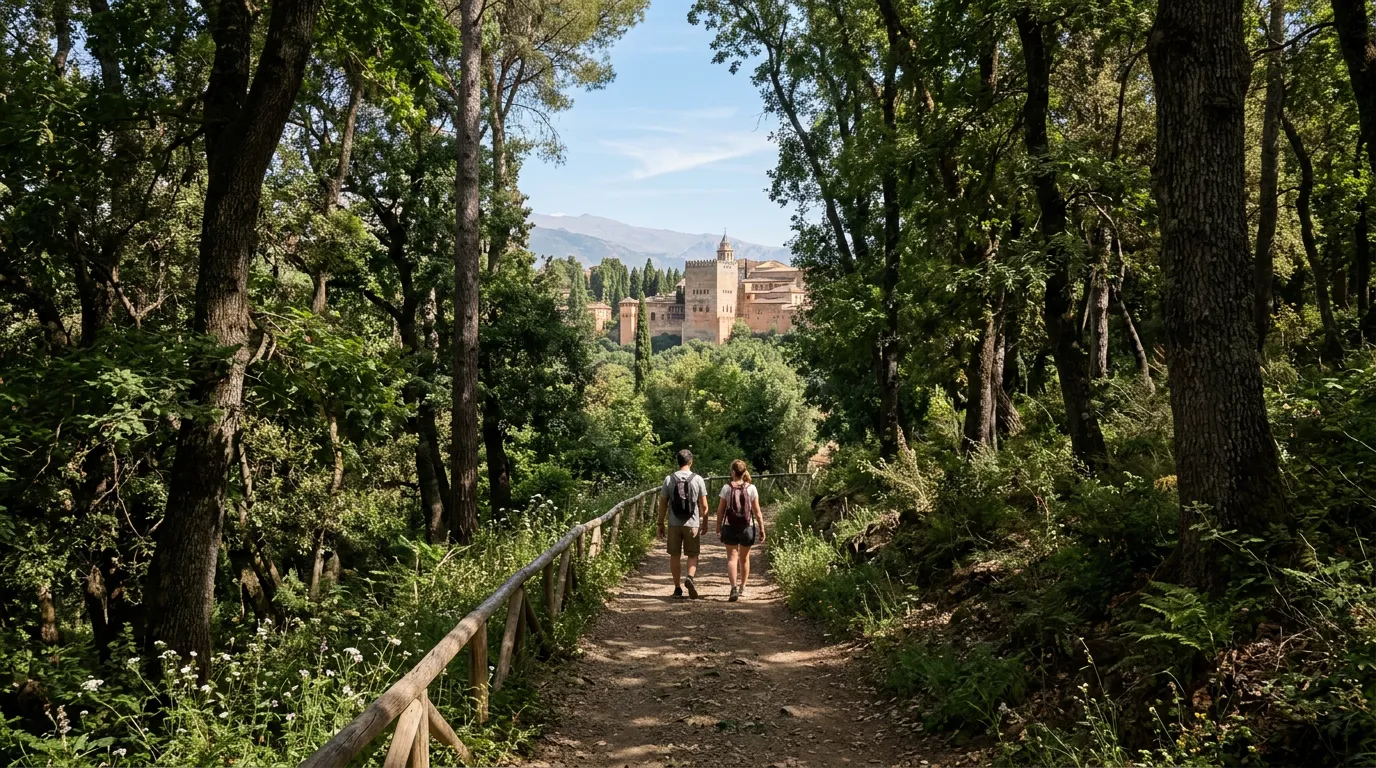
    Pass through the Puerta de las Granadas (Pedro Machuca's 1536 Renaissance arch at the top of Cuesta de Gomérez) and the city noise stops within thirty metres. The 1.5 km Bosque Alhambra forest walk climbs through holm oaks and elms to the Alhambra gates, entirely free, at any hour. The canopy overhead was planted by Wellington's troops in 1812 after Napoleonic forces stripped the hillside. About 400 metres in, the Pilar de Carlos V (1545, designed by Machuca, carved by Niccolò da Corte) offers three carved stone heads representing Granada's rivers, drinkable water in summer heat, and the best photography stop on the route. In July the temperature under the canopy can be 15°C cooler than the streets below. You need a ticket only to pass through the Puerta de la Justicia into the palace complex itself.

  5. Cuesta de Gomérez — Historic Approach to the Alhambra

    Cuesta de Gomérez — Historic Approach to the Alhambra

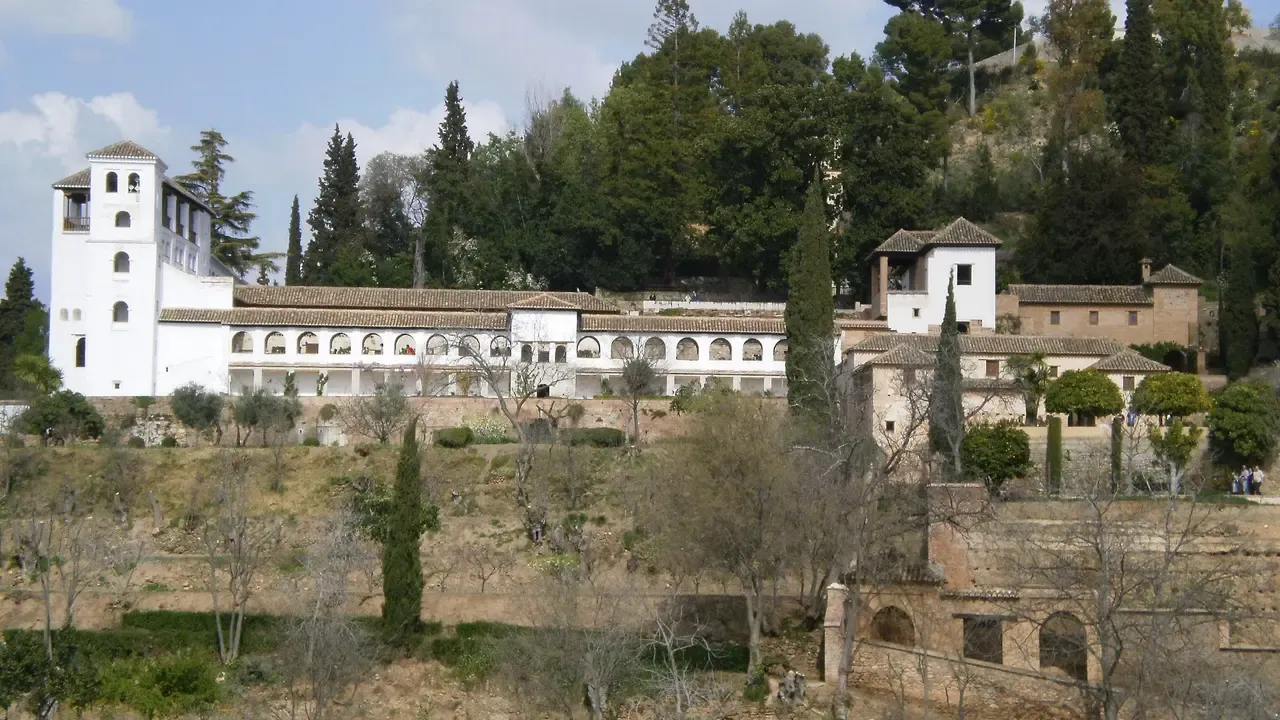
    The Cuesta de Gomérez is the correct way to arrive at the Alhambra — a 1.5 km tree-lined medieval avenue that has served as the main approach since the 14th century. The gradient is steady but gentle, nothing like the Albaicín's steep alleys. Guitar workshops line the lower section, some operating since the early 20th century. At the top stands the Puerta de las Granadas (1536, also designed by Pedro Machuca, decorated with pomegranates and the Imperial eagle of Charles V), marking the formal entrance to the Alhambra grounds and the start of the shaded forest path that continues to the ticket office. Walking up rather than taking the Line C3 minibus from Plaza Nueva adds 45 minutes and subtracts the sense of arriving by bus at a palace. The walk itself is free.

  6. Centro Histórico Self-Guided Walk

    Centro Histórico Self-Guided Walk

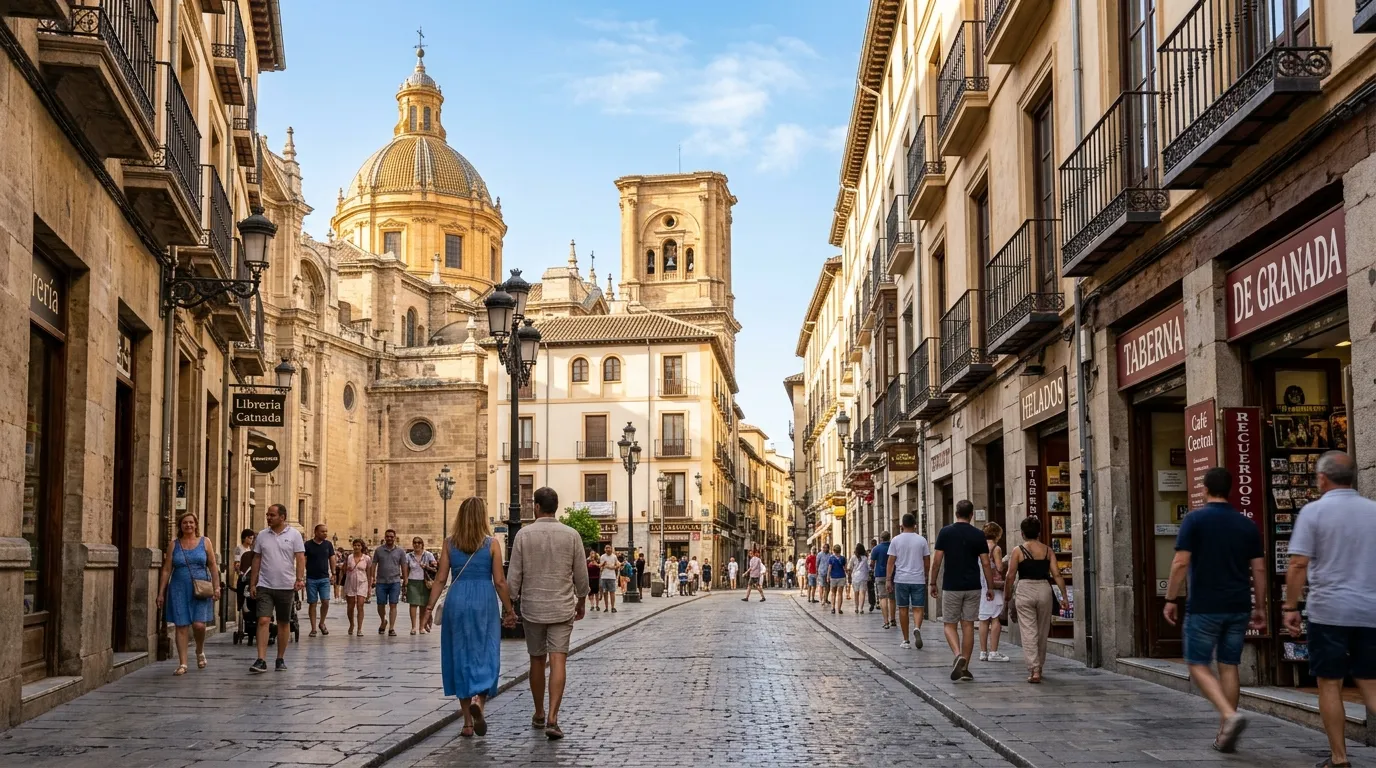
    The historic centre circuit is 2.1 km of entirely flat walking on pedestrianised streets: no hills, no cobblestones steep enough to trouble a pushchair, no commitment to any particular fitness level. The route goes from Plaza Isabel la Católica to the Cathedral facade on Gran Vía (Diego de Siloé's Renaissance basilica built from 1528 on the site of the main Nasrid mosque, entry €5), through the Alcaicería bazaar lanes (smell of cumin and cedar, 19th-century reconstruction of the original Nasrid silk market), past the Corral del Carbón (a free, uncrowded 14th-century alhóndiga and the only surviving Moorish warehouse-inn in Spain), and out into Plaza de Bib-Rambla where the Neptune fountain stands in what was once the main public square of Nasrid Granada. Mornings only for the Cathedral (first tour groups arrive at 10:30). Tapas open at 13:00 on Plaza de las Pasiegas.

  7. Realejo Barrio Walk

    Realejo Barrio Walk

    The Realejo is Granada's former Jewish quarter, south of the cathedral and below the Alhambra hill, and it gets a fraction of the visitor numbers of the Albaicín. The 2.5 km route climbs from Plaza Isabel la Católica through medieval streets past the Iglesia de San Cecilio (built 1534 on a synagogue's foundations), Casa de los Tiros (a Renaissance palace with gun muzzles in the tower frieze, free on Sundays), and the broad Campo del Príncipe square where the late afternoon atmosphere is among the most genuinely local scenes in central Granada: families, students, locals nursing a beer around 17:00. The walk ends at Torres Bermejas, three 11th-century Moorish watchtowers in red sandstone that predate the Alhambra by more than four centuries, free to enter, visited by almost nobody. From the walls you see the city from a direction most visitors never find.

The Albaicín and Río Darro walks together make the essential Granada day on foot: Darro before 09:00 for the empty street and the river, Albaicín from mid-morning with the mirador timed for the late afternoon light. The Sacromonte cave route is the best addition if you have a second full day; combine it with an evening zambra show in the cave venues on the way back down. For the Alhambra approaches, the forest walk is the correct choice over the bus in every season except a summer afternoon after noon. The flat historic centre circuit is the best option for families with young children, older visitors, or anyone who simply wants to see the cathedral and the Corral del Carbón without climbing a hill. The Realejo belongs to those who have seen the obvious and want what the Albaicín crowds have missed.

Practical notes across all seven routes: bring water on any walk that involves a climb, especially between May and September. Sturdy shoes with ankle support are worth more than trainers on the Albaicín and Sacromonte cobblestones. The forest path to the Alhambra is the one exception — it's smooth and shaded throughout. Granada's best walking is before 10:00 and after 17:00. Almost everything else the city offers is still there at noon; the walks are not the same.

Frequently asked questions

Which walk in Granada is best for first-time visitors?

The Albaicín self-guided walk. It covers the city's most distinctive neighbourhood — the old Moorish quarter with El Bañuelo Arab baths, Palacio de Dar-al-Horra, and the best single viewpoint in Granada at Mirador de San Nicolás. The 2.3 km circular route starts and ends at Plaza Nueva and takes around 2 hours. Start before 08:00 for empty streets; arrive at the Mirador 45 minutes before sunset for the best light on the Alhambra.

Are there free walks in Granada?

Yes. The Río Darro riverside walk (2.8 km), the Bosque Alhambra forest path (1.5 km), the Cuesta de Gomérez approach (1.5 km), and the Realejo barrio walk (2.5 km) are all free throughout. The Albaicín and Sacromonte routes pass paid attractions (El Bañuelo, the Sacromonte cave museum) but neither is required to complete the walk. The historic centre circuit passes Granada Cathedral (€5) and the Capilla Real (€5) — both optional.

Which walk is best for families with young children?

The Centro Histórico circuit is the only entirely flat walk on this list, with 2.1 km on pedestrianised streets and even pavements. No hills, no significant cobblestones, and suitable for pushchairs on the main routes. The Río Darro riverside walk is also manageable — almost flat throughout — though the narrow Carrera del Darro section is cobblestoned. Avoid the Albaicín and Sacromonte with very young children: both involve steep, uneven climbs.

How many walks can you fit into one day in Granada?

Two comfortably, three if you manage your timing well. The Río Darro walk and the Albaicín together cover a logical morning into afternoon: Darro before 09:00, Albaicín from 10:00 with the mirador timed around sunset. Adding the Cuesta de Gomérez forest walk gives you the Alhambra approach as well, but that means a full eight-hour walking day. Do not try to combine all seven routes in one visit — the Albaicín and Sacromonte routes each deserve a proper pace.

Do I need to book anything in advance for these walks?

Only if you plan to enter the Alhambra palace complex. The Nasrid Palaces require advance booking at www.alhambra-patronato.es — no walk-up tickets. The forest walk and the Cuesta de Gomérez approach both lead to the Alhambra gates but are free without any booking. El Bañuelo (Arab baths on the Darro route) and the Museo Cuevas del Sacromonte can both be entered on the day without advance reservation. Cave flamenco (zambra) shows in Sacromonte should be booked in advance during high season.