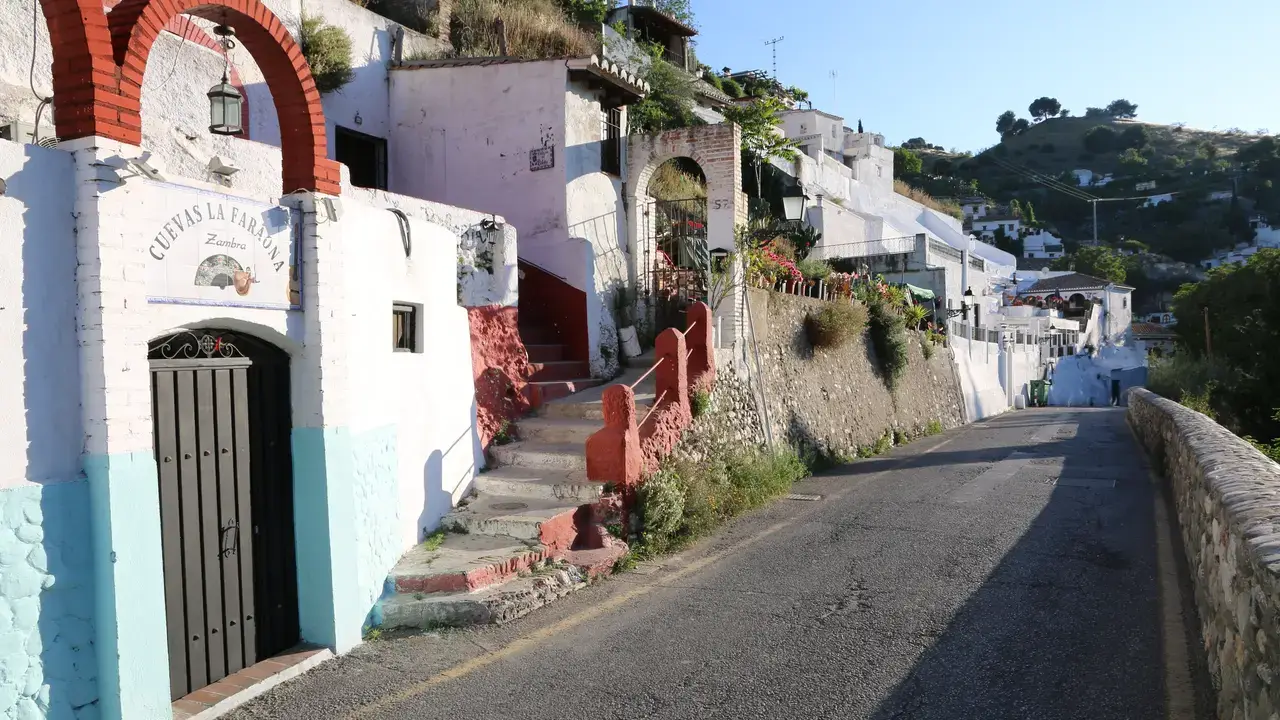
Whitewashed cave dwellings on Camino del Sacromonte above Granada with the Alhambra visible in the background
Culture Moderate Free

Sacromonte Cave Route Walk

Walk Sacromonte's cave-lined hillside above Granada, visiting the ethnographic museum, the 17th-century Benedictine abbey, and terraces with Alhambra views.

At a Glance

Distance
4 km
Duration
2–2.5 hours (add 1 hour if visiting both museums)
Stops
6 stops
Route type
Circular

Best time to walk

Morning (08:00–11:00) for cooler temperatures and clear views. Avoid weekend afternoons when the cave path gets busy with day-trippers.

Accessibility

Steep uphill sections on Cuesta del Chapiz and Camino del Sacromonte. Around 250m elevation gain. Not wheelchair-accessible. Sturdy footwear essential. Bus lines 31/32/35 stop at Camino del Sacromonte for those who want to skip the climb.

On this page

Route Map

Loading map…

Click on any marker to see stop details. Numbered markers follow the suggested route order.

Stop-by-Stop Route

  1. 1

    Paseo de los Tristes

    Landmark 5 min

    Tree-lined promenade at the base of the Sacromonte hill, running alongside the Darro river. The starting point for the climb into the cave district.

    Tip: Start early for cooler temperatures on the climb. The café terraces here are good for a coffee before you set off.

  2. 2

    Cuesta del Chapiz

    Landmark 15 min

    The steep uphill street connecting lower Granada to the Sacromonte cave district. The hardest section of the climb, with views opening over the Albaicín as you gain height.

    Tip: The most strenuous part of the walk. Take it slowly with rest stops at the natural landings — the views are worth lingering over.

  3. 3

    Camino del Sacromonte

    Landmark 20 min

    The main path through the Sacromonte cave district, lined with whitewashed cave homes and agave plants. Many caves are still inhabited. Alhambra views throughout.

    Tip: Mid-morning light is best for photography — the whitewash catches it well. Pause at the informal viewpoints for unobstructed Alhambra shots.

  4. 4

    Museo Cuevas del Sacromonte

    Museum 45 min

    Ethnographic museum in 11 original cave dwellings documenting Romani life, crafts and agriculture in Sacromonte. One of the best small museums in Andalusia. Entry €5–6.

    Tip: Buy tickets at the entrance. The cave kitchen and the blacksmith's workshop are the most atmospheric rooms.

  5. 5

    Sacromonte Abbey (Abadía del Sacromonte)

    Monument 60 min

    17th-century Benedictine abbey with a baroque church, underground holy caves and cloister gardens. Built on the site where early Christian martyrs were supposedly buried. Entry €6–7.

    Tip: The self-guided audio app is available at reception and adds real depth. Allow a full hour for the church, caves and cloisters.

  6. 6

    Sacromonte terrace viewpoint

    Landmark 15 min

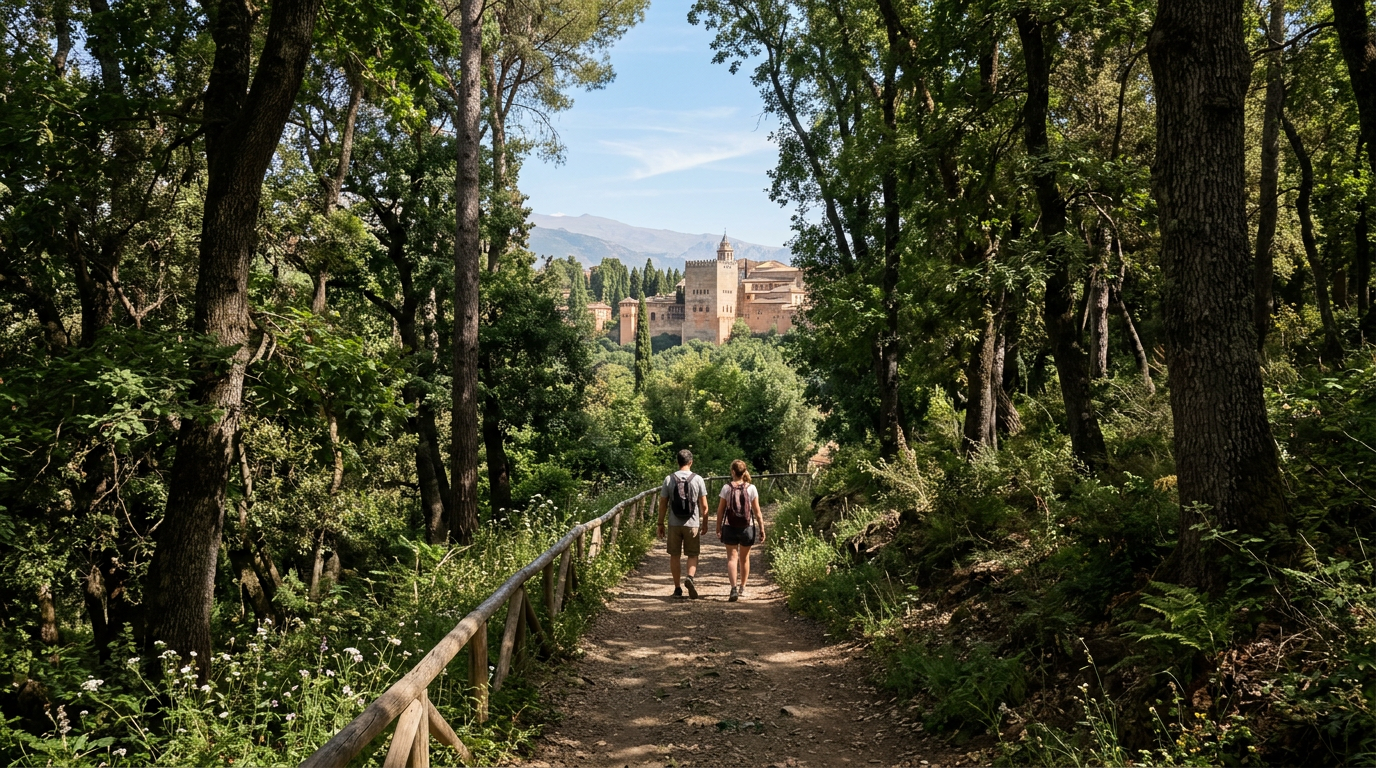
    The open terraces at the top of the abbey grounds give 360-degree views across Granada, the Alhambra, and the Sierra Nevada. The best panorama on this side of the city.

    Tip: Cloud cover clears early most days — the view is sharpest before 10am.

Granada's other hill

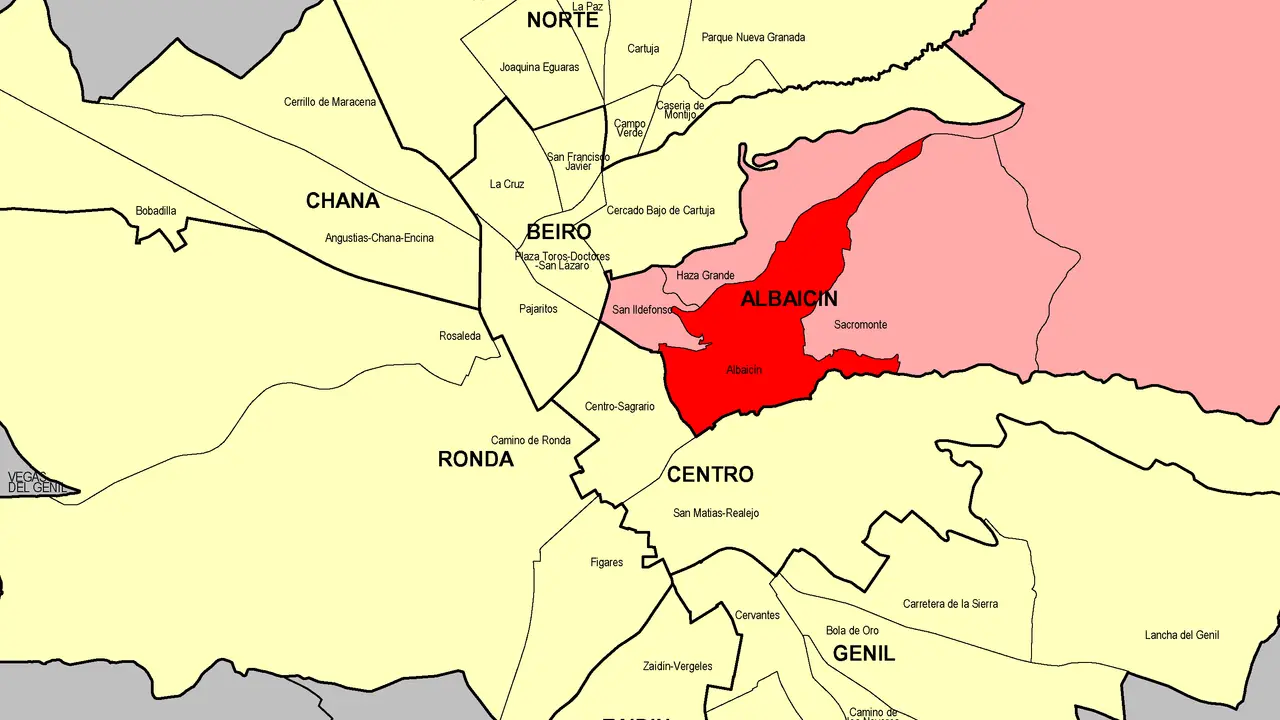
Most visitors to Granada focus entirely on the Alhambra. Sacromonte, the hill directly east across the Darro ravine, is the city's other story: whitewashed cave homes carved into the red-clay hillside, a Romani community that has lived here since the 15th century, and the origins of Granada flamenco. The cave route takes you from the river promenade at the base to the Benedictine abbey at the summit, climbing roughly 250 metres through a landscape that feels unlike anywhere else in Andalusia.

The climb starts at Paseo de los Tristes, then turns up Cuesta del Chapiz — the steepest section of the whole route and the one that earns the rest. Take it slowly. The views open up quickly once you gain height, and there are natural rest stops at every turn.

The cave community

Camino del Sacromonte is the main path through the cave district. The dwellings here are partly homes and partly history: families still live in many of them, and the tradition of cave habitation goes back to the gitano (Romani) communities who arrived after the Christian conquest in 1492. The whitewash is applied each spring. Agave plants colonise the gaps between the paths.

Museo Cuevas del Sacromonte occupies 11 original cave dwellings and runs without commentary through domestic, craft and agricultural spaces that document how people actually lived here. Entry is €5–6. Allow 45 minutes. It's one of the better ethnographic museums in Andalusia, and it answers questions the caves themselves raise without answering.

The abbey and its views

Abadía del Sacromonte at the top of the hill is a 17th-century Benedictine foundation built on holy caves where early Christian martyrs were supposedly buried. The baroque church is worth an hour, but the terraces are the real reward: a 360-degree view that takes in the Alhambra, the Albaicín, the Sierra Nevada, and the whole spread of the city below. Entry €6–7, with a self-guided app available at reception.

The return descends the same route. On the way back, stop at one of the cave bar terraces on Camino del Sacromonte for a cold beer and the last of the afternoon light on the Alhambra.

The whole route is 4 km and takes around 2–2.5 hours, more if you visit both museums. Bus lines 31, 32 and 35 stop on Camino del Sacromonte for anyone who wants to skip the uphill section.
Reporter notebook

Insider tips

Practical observations gathered the way a local journalist would keep them: short, specific, and more useful than brochure copy.

Best time

The morning window before the heat

The climb to Sacromonte Abbey takes 45 minutes to an hour and there is almost no shade on the upper sections. In July and August, starting after 10am means ascending in direct sun with temperatures above 35°C. Leave Paseo de los Tristes by 8am and you'll reach the abbey before the heat builds.

Local custom

Cave flamenco is real here

The zambra flamenco shows performed in the cave venues on Camino del Sacromonte have roots going back centuries in the Romani community. They're touristy by nature — but the cave settings are atmospheric and the performers are local. Cuevas Los Tarantos and Cueva de la Rocío are the most respected venues. Book the 22:00 show, not the 21:00 one.

What to bring

Water and a small torch

The route has no drinking fountains between Paseo de los Tristes and the abbey. Bring at least 1 litre per person, more in summer. A small torch or your phone flashlight is useful inside the ethnographic museum caves, where some rooms are dimly lit.

Sacromonte Cave Route Walk FAQ

Can you walk to Sacromonte from the city centre?

Yes. The walk from Paseo de los Tristes to the Sacromonte Abbey is 2 km one way, climbing around 250m. It takes roughly 45 minutes to reach the abbey on foot. Buses 31, 32 and 35 serve Camino del Sacromonte if you prefer to skip the steepest section.

Is the Sacromonte cave museum worth visiting?

Yes, especially if you want to understand how people actually lived in the cave homes rather than just walking past them. The museum occupies 11 original dwellings and covers domestic life, crafts and agriculture. Entry is €5–6 and a visit takes about 45 minutes.

Where do you watch flamenco in Sacromonte?

Sacromonte's cave flamenco shows — called zambra — take place in the cave venues along Camino del Sacromonte, typically starting at 21:00 or 22:00. The performances are staged for tourists but the setting, inside a lit cave, is unlike any other flamenco venue. Book in advance, especially in summer.

More Walking Tours