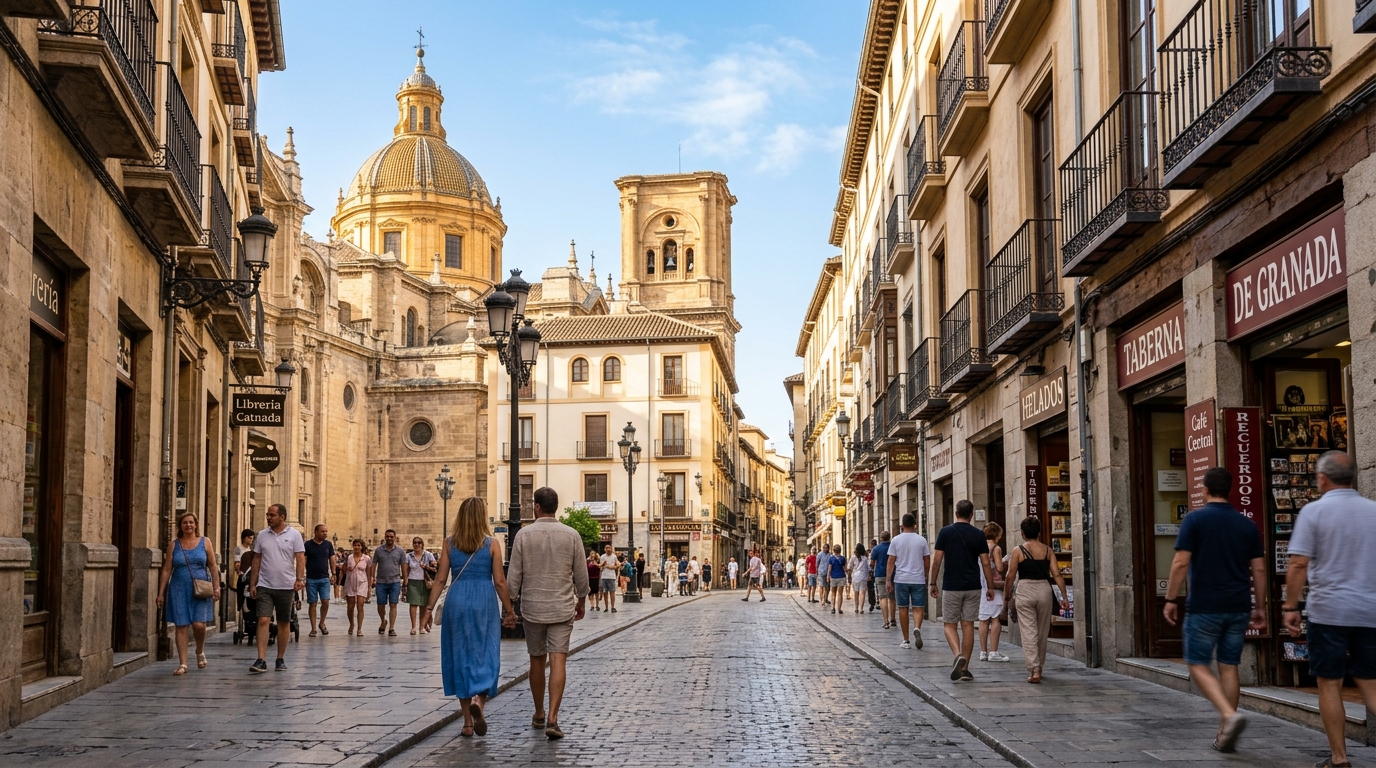
Narrow cobblestone street in the Realejo neighbourhood, Granada, with the Torres Bermejas visible in the distance
History Moderate Free

Realejo Barrio Walk

Walk the Realejo, Granada's former Jewish quarter: Renaissance churches, Moorish watchtowers, and Campo del Príncipe, the neighbourhood's social heart.

At a Glance

Distance
2.5 km
Duration
1.5–2 hours
Stops
7 stops
Route type
Circular

Best time to walk

Late afternoon (16:00–18:00) for the social atmosphere at Campo del Príncipe. Spring and autumn are ideal for temperature. Avoid midday in summer.

Accessibility

Multiple steep cobblestone streets with elevation changes, particularly between Plaza Isabel la Católica and Iglesia de San Cecilio, and again toward Torres Bermejas. Not wheelchair-accessible. Sturdy shoes essential.

On this page

Route Map

Loading map…

Click on any marker to see stop details. Numbered markers follow the suggested route order.

Stop-by-Stop Route

  1. 1

    Plaza Isabel la Católica

    Landmark 10 min

    Historic plaza at the entry to the former Jewish quarter, marked by a statue of Columbus presenting his maps to the queen. Good café options before the climb.

    Tip: A flat, easy starting point. Note the Columbus statue — the queen who funded the New World voyage also expelled the Jewish community from this neighbourhood in 1492.

  2. 2

    Calle Pavaneras / Calle San Matías

    Landmark 10 min

    Narrow medieval streets climbing steeply from the plaza into the Realejo. The noise of the Gran Vía drops away within a minute. Cooling shade from the close-set buildings.

    Tip: The steep sections at the start are the hardest of the walk. It levels off once you reach San Cecilio.

  3. 3

    Iglesia de San Cecilio

    Monument 15 min

    Plateresque church built in 1534 on the foundations of a synagogue. The elevated plaza in front has rooftop views toward the Sierra Nevada.

    Tip: The church is often closed, but the exterior and the small plaza viewpoint are worth a few minutes regardless.

  4. 4

    Casa de los Tiros

    Monument 20 min

    16th-century Renaissance palace with gun muzzles cast into the tower frieze — an unusual architectural detail from the post-Reconquista period. Museum of Granada art and crafts inside, entry €3, free Sundays.

    Tip: Free on Sunday mornings. The courtyard is well-preserved and worth seeing even if you skip the museum galleries.

  5. 5

    Campo del Príncipe

    Landmark 20 min

    The broad central plaza of the Realejo, surrounded by bars and restaurants. A gathering place since Nasrid times. Most animated in the late afternoon when locals arrive in numbers.

    Tip: Arrive around 17:00 for the social atmosphere. The bars on the south and east sides have the best terrace positions.

  6. 6

    Placeta de la Puerta del Sol

    Landmark 10 min

    A small hidden plaza with a historic public laundry building and direct views up toward the Torres Bermejas and the Alhambra. One of the least-visited spots in the Realejo.

    Tip: Early morning light falls directly onto the watchtowers from this angle. A better photography position than the main road below.

  7. 7

    Torres Bermejas

    Monument 20 min

    11th-century Moorish watchtowers in red sandstone, part of Granada's original defensive walls built more than 400 years before the Alhambra. Free access. Views back over the Realejo.

    Tip: Walk up through the garden to the base of the towers rather than photographing from below. The Roman-era masonry mixed into the foundations is visible from close range.

The neighbourhood nobody fights over

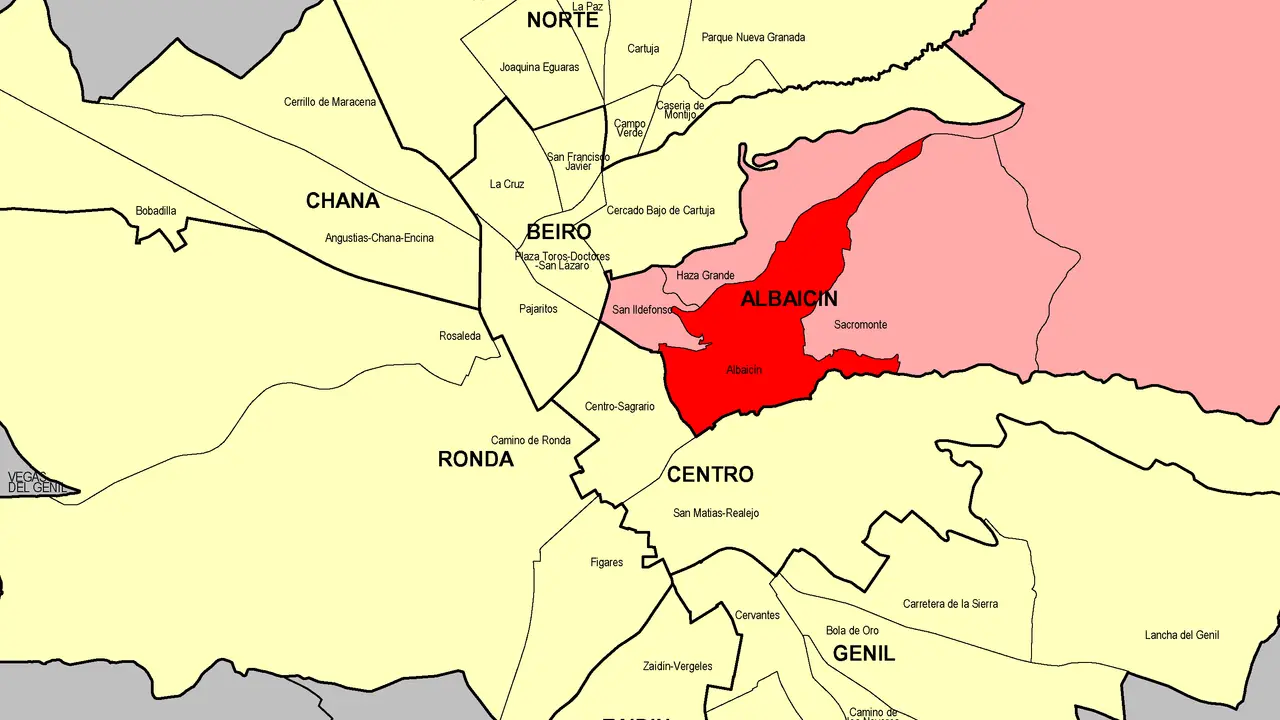
The Realejo sits south of the cathedral and below the Alhambra hill, and it has somehow avoided the worst of Granada's tourism pressure. The Albaicín gets the postcards; the Realejo gets the locals. This walk threads through narrow medieval streets, past Renaissance churches built on Jewish foundations, and ends at the Torres Bermejas — the red-sandstone Moorish watchtowers that predate the Alhambra and are visited by almost nobody.

The starting point, Plaza Isabel la Católica, faces the Gran Vía and marks the historical boundary between the Christian city and the old Jewish quarter. A statue of Columbus presenting his plans to the queen stands in the middle of the square — an odd choice for the entrance to a Jewish neighbourhood, but typical of Granada's layered and occasionally uncomfortable history.

The climb into Realejo

Calle Pavaneras and Calle San Matías climb steeply from the plaza into the Realejo proper. The streets narrow quickly, the noise of the Gran Vía drops away, and you're walking on smooth medieval stone. Casa de los Tiros, just off the main route, is a Renaissance palace with gun muzzles built into the tower frieze — the kind of absurd architectural detail that only makes sense in post-Reconquista Castile. The museum inside is free on Sundays and has some good material on Granada's history before the tourist-friendly version kicks in.

Iglesia de San Cecilio was built in 1534 on the ruins of a synagogue. The church is often closed, but the elevated plaza in front gives good views down over the rooftops toward the Sierra Nevada.

Campo del Príncipe

The social hub of the Realejo is Campo del Príncipe, a broad square that has been a gathering point since Nasrid times. The bars around the edge are a genuine mix of locals and visitors. Late afternoon is when the square comes alive: families, students from the nearby university, people nursing a beer in the sun. The large crucifix at the centre dates from 1640. Locals will tell you it's miraculous; what's miraculous is how unphotographed the whole scene is, compared to the Albaicín.

Torres Bermejas

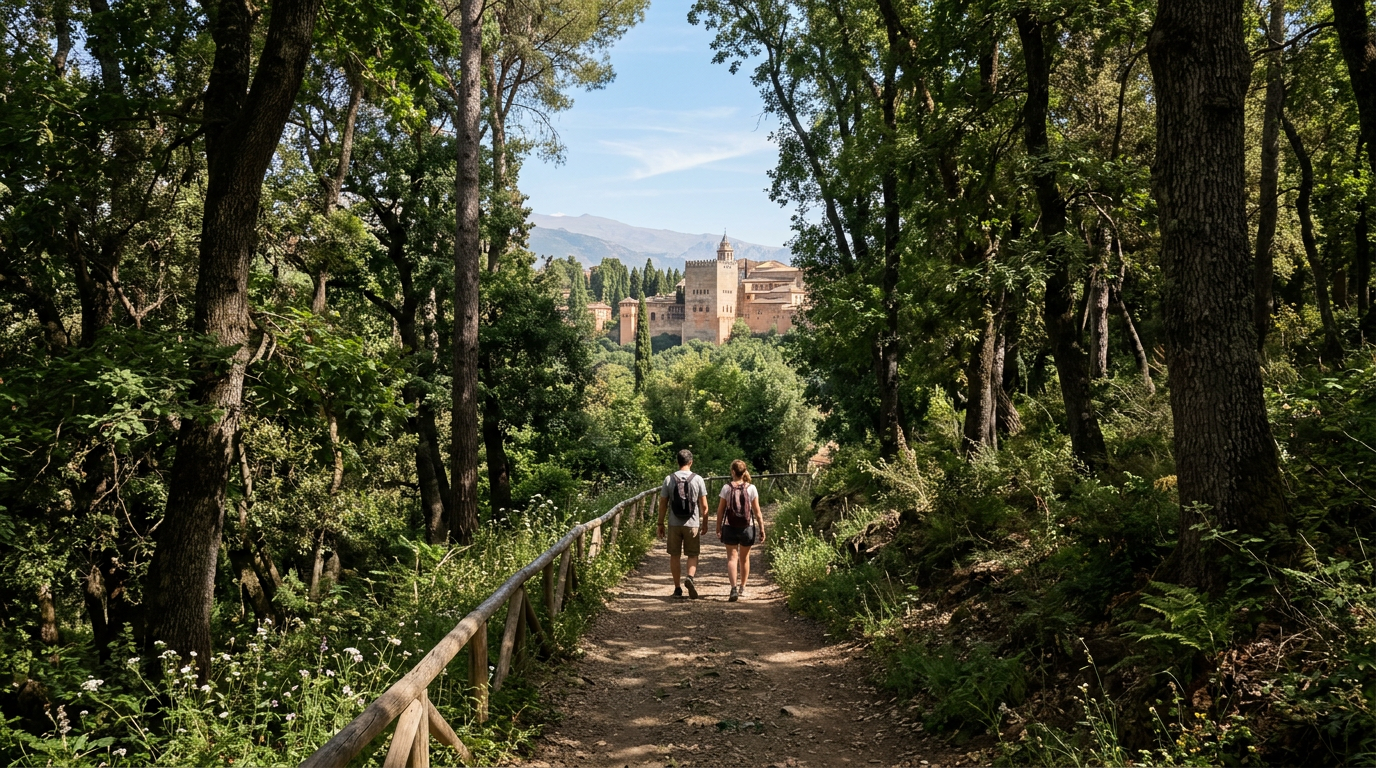
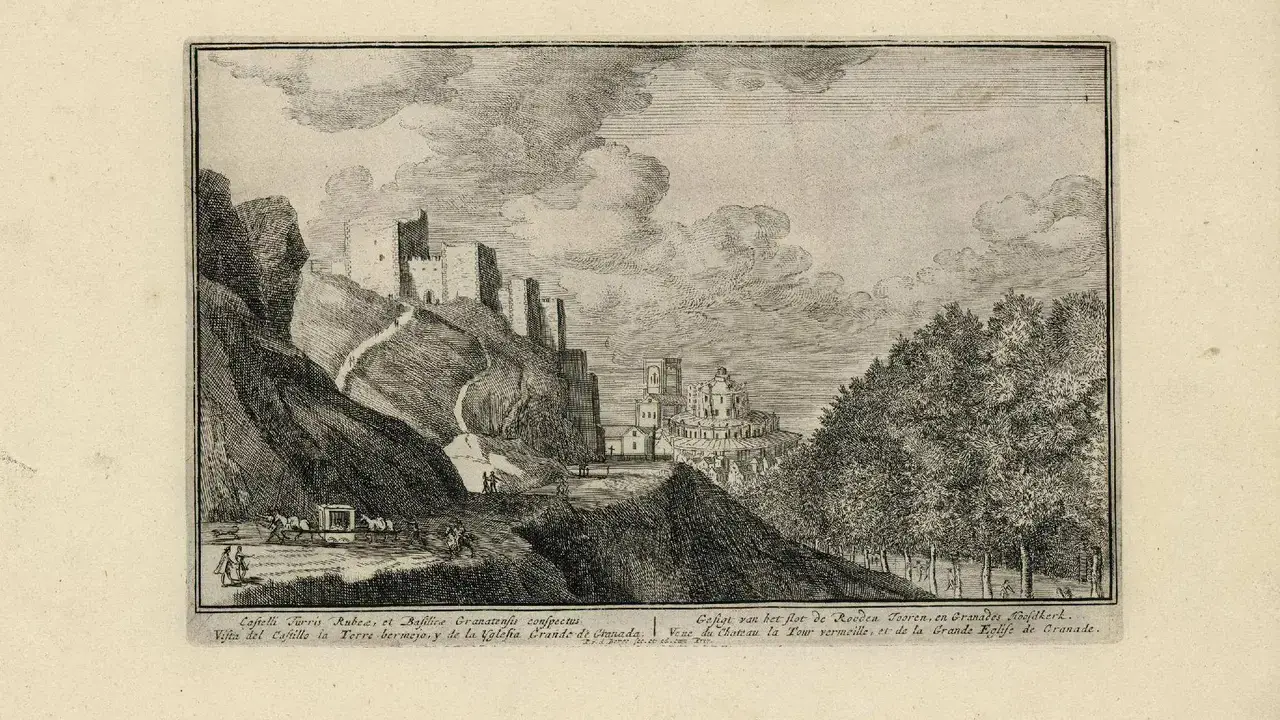
The walk ends at Torres Bermejas, three Moorish watchtowers in distinctive red sandstone built in the 11th century, more than four centuries before the Alhambra was finished. They were part of Granada's original defensive wall and remain mostly intact. Access is free. Most people photograph them from the road below; the better move is to walk up through the small garden and stand against the walls themselves, where you can see the rough Roman-era masonry mixed into the base.

Return via Campo del Príncipe for a drink before heading back into the centre.
Reporter notebook

Insider tips

Practical observations gathered the way a local journalist would keep them: short, specific, and more useful than brochure copy.

Crowd tip

The least-photographed part of Granada

The Realejo gets a fraction of the visitor numbers of the Albaicín, and Torres Bermejas almost nothing at all. If you visit any part of Granada looking for somewhere to think clearly rather than manage crowds, this is the walk. Campo del Príncipe at 17:00 has a genuinely local atmosphere that is hard to find in this city.

Money tip

Casa de los Tiros is free on Sundays

The museum inside Casa de los Tiros costs €3 on weekdays but is free on Sunday mornings. The Renaissance courtyard alone is worth a look. The upper-floor exhibition on Granada's silk trade and Jewish heritage is better than the guidebooks suggest.

Photo spot

Placeta de la Puerta del Sol at dawn

The hidden square off Cuesta de Santa Inés frames the Torres Bermejas with rooftops in the foreground. Early morning light hits the red sandstone directly. Almost nobody knows this angle and it takes under 5 minutes to find from Campo del Príncipe.

Realejo Barrio Walk FAQ

What is the Realejo in Granada?

The Realejo is Granada's former Jewish quarter, located south of the cathedral and below the Alhambra hill. It was home to one of the largest Jewish communities in medieval Andalusia until the expulsion of 1492. Today it's one of the most authentic and least touristed neighbourhoods in the city.

Are the Torres Bermejas worth visiting?

Yes. The three red-sandstone watchtowers date from the 11th century and predate the Alhambra by several centuries. Access is free and crowds are minimal. The views back over the Realejo and toward the Sierra Nevada are good, and the towers themselves are in better condition than most visitors expect.

How does the Realejo differ from the Albaicín?

The Albaicín was the Moorish quarter after the Reconquista, while the Realejo was the Jewish quarter. The streets in the Realejo are less steep and somewhat wider, the architecture is more Renaissance than Mudéjar, and the atmosphere is quieter and more residential. Both neighbourhoods sit below the Alhambra on different sides of the hill.

More Walking Tours