Guide

Best Neighbourhoods in Granada

Six Granada neighbourhoods ranked: which to base yourself in, where the free tapas are most generous, and which hillside gives you the best Alhambra views.

Granada's geography makes the neighbourhood question unavoidable. The city is built on three hills: the Alhambra on one, the Albaicín on another, Sacromonte on the third, with the flat modern city spread across the valley between them. Each hill has a distinct character, a different pace, and a completely different reason to stay there. The zones below (Centro, Realejo, Universidad, and Zaidín) follow a different logic: convenience, value, or the particular pleasure of a city that is actually functioning around you.

Most visitors default to Centro because it is closest to everything. That is a reasonable choice, but it is rarely the best one. The Albaicín is worth the climb for reasons that have nothing to do with the Mirador de San Nicolás view, though the view is real enough. The Realejo, at the foot of the Alhambra hill, is where Granada's tapas concentration is highest and the tourist-to-local ratio is still tilted in your favour. Universidad is where the city stops performing for visitors entirely.

This guide ranks the six main neighbourhoods by what they offer a first-time visitor with limited time. The criteria: walking distance from the major monuments, quality of independent restaurants and bars (Granada's free-tapas tradition means this question matters more than in most Spanish cities), atmosphere at different times of day, and whether the neighbourhood has something worth seeing that is not already in every other guide.

Ranked list

How we chose

The places on this list were selected against the following editorial criteria.

  • Proximity to major monuments, particularly the Alhambra
  • Quality and concentration of independent restaurants and bars
  • Authenticity: proportion of local versus tourist-facing venues
  • Walkability and neighbourhood character at different times of day
  • Accommodation value relative to position

Reporter notebook

Insider tips

Practical observations gathered the way a local journalist would keep them: short, specific, and more useful than brochure copy.

Best time

Reach the Albaicín before 9am or after 7pm

The lanes are at their best in the early morning, before tour groups arrive from the hotels around Plaza Nueva, and in the early evening when the light on the Alhambra turns. The Mirador de San Nicolás crowds peak in the half-hour around sunset. Mirador de San Cristóbal, a few hundred metres further along the ridge, offers a comparable view with a fraction of the visitors.

Local custom

The free tapas rule in Granada

Granada is one of the few cities in Spain where every drink comes with a free tapa; the bar chooses what it is. In the Realejo and Centro, this is standard practice without asking. The size of the tapa tends to grow with the number of rounds you order. Order house wine or draught beer — the tapas that come with tourist-menu drinks are noticeably smaller.

Top picks

Albaicín

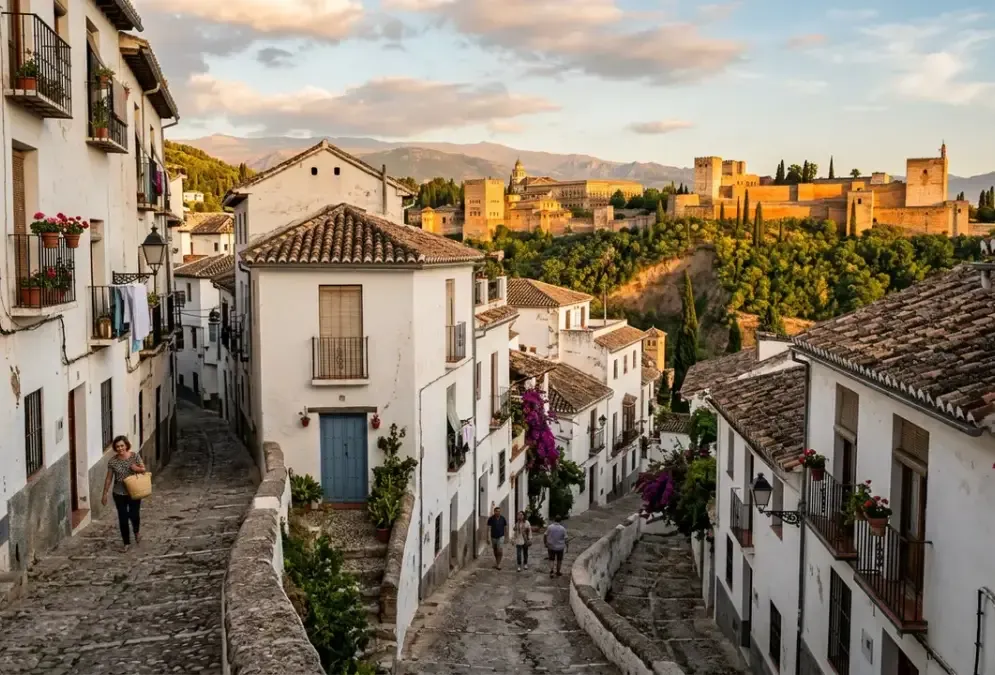
The Albaicín is the most important neighbourhood in Granada for a single reason: it is the only place in the city where you can read the Nasrid urban fabric from the inside. UNESCO listed it in 1994, sharing its designation with the Alhambra across the Darro gorge. The listing was not for individual monuments (El Bañuelo, the 11th-century hammam on Carrera del Darro, is the most significant) but for the entire urban structure: the street plan, the relationship between lanes and sky, the cármenes (private walled gardens) that appear above rooflines in spring. Walking through the Albaicín is walking through a medieval Islamic city that still works as a residential neighbourhood. The Mirador de San Nicolás is worth the climb, but it is not the reason to come. The lanes behind the convent of Santa Isabél la Real, the smell of orange blossom in April when the courtyard trees are in flower, the cold of marble underfoot in the teterías on Calle Calderería Nueva: those are the reasons.

Realejo / Jewish Quarter

The Realejo sits at the foot of the Alhambra hill, where the palace complex meets the city. For more than a thousand years this was Garnata al-Yahud, Granada's Jewish quarter: a Sephardic district that produced some of the most significant Jewish scholars of medieval Iberia, including Samuel ibn Naghrela, the 11th-century vizier of the Granadan caliphate. In 1492, the Catholic Monarchs expelled the community and renamed the quarter. The street plan survived, and so did the logic of the neighbourhood: sinuous, residential, denser than it looks from the outside. Campo del Príncipe, the main square, fills up from around 19:00 with a crowd that is overwhelmingly local. In Granada each drink arrives with a free small plate, and that tradition reaches its most generous expression in the bars around this square. For visitors planning their day around an Alhambra visit, the Realejo is the most logical base: the Puerta de las Granadas, the main pedestrian entry to the palace grounds, is a short walk uphill from the square.

Sacromonte

Sacromonte occupies the hill directly east of the Albaicín, above the Darro valley, and it looks like no other neighbourhood in the city. The houses are cut into the limestone hillside rather than built on it. Since the 15th century, Roma families have inhabited these caves, extending and whitewashing them, fitting wooden doors into the rock face. Several hundred cave dwellings remain occupied. The neighbourhood is the origin of zambra flamenco: a form rooted in Arabic ceremonial music, performed in the original caves with stone walls, low ceilings, and acoustic intimacy that a theatre cannot replicate. The Museo Cuevas del Sacromonte, halfway up the ridge, opens the cave complex for €5. Seeing how the domestic and agricultural organisation of cave life actually worked makes the neighbourhood substantially more legible. The walk up via the Camino del Sacromonte from the Albaicín takes 20 minutes and offers a continuous view across the Darro valley. Take the bus up and walk back down along Carrera del Darro at dusk.

6 places
  1. Albaicín

    Albaicín

    The Albaicín is the most important neighbourhood in Granada for a single reason: it is the only place in the city where you can read the Nasrid urban fabric from the inside. UNESCO listed it in 1994, sharing its designation with the Alhambra across the Darro gorge. The listing was not for individual monuments (El Bañuelo, the 11th-century hammam on Carrera del Darro, is the most significant) but for the entire urban structure: the street plan, the relationship between lanes and sky, the cármenes (private walled gardens) that appear above rooflines in spring. Walking through the Albaicín is walking through a medieval Islamic city that still works as a residential neighbourhood. The Mirador de San Nicolás is worth the climb, but it is not the reason to come. The lanes behind the convent of Santa Isabél la Real, the smell of orange blossom in April when the courtyard trees are in flower, the cold of marble underfoot in the teterías on Calle Calderería Nueva: those are the reasons.

    A UNESCO-listed hillside of narrow Moorish lanes, private walled gardens, and the finest views of the Alhambra anywhere in the city
  2. Realejo / Jewish Quarter

    Realejo / Jewish Quarter

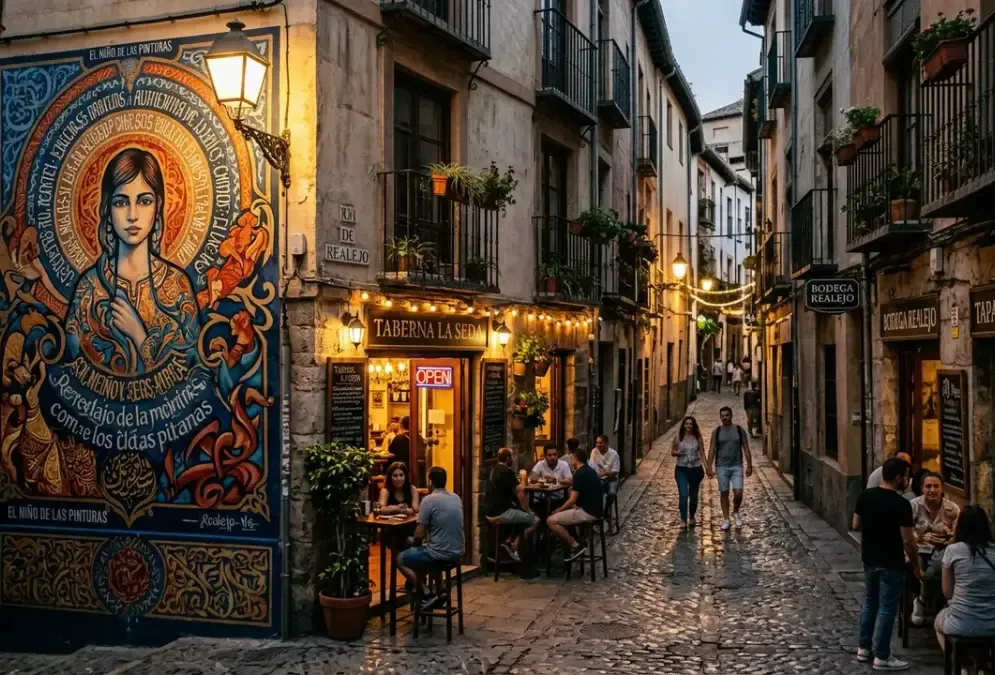
    The Realejo sits at the foot of the Alhambra hill, where the palace complex meets the city. For more than a thousand years this was Garnata al-Yahud, Granada's Jewish quarter: a Sephardic district that produced some of the most significant Jewish scholars of medieval Iberia, including Samuel ibn Naghrela, the 11th-century vizier of the Granadan caliphate. In 1492, the Catholic Monarchs expelled the community and renamed the quarter. The street plan survived, and so did the logic of the neighbourhood: sinuous, residential, denser than it looks from the outside. Campo del Príncipe, the main square, fills up from around 19:00 with a crowd that is overwhelmingly local. In Granada each drink arrives with a free small plate, and that tradition reaches its most generous expression in the bars around this square. For visitors planning their day around an Alhambra visit, the Realejo is the most logical base: the Puerta de las Granadas, the main pedestrian entry to the palace grounds, is a short walk uphill from the square.

    A layered neighbourhood of Sephardic memory, Renaissance palaces, street murals, and some of the most concentrated tapas culture in the city
  3. Sacromonte

    Sacromonte

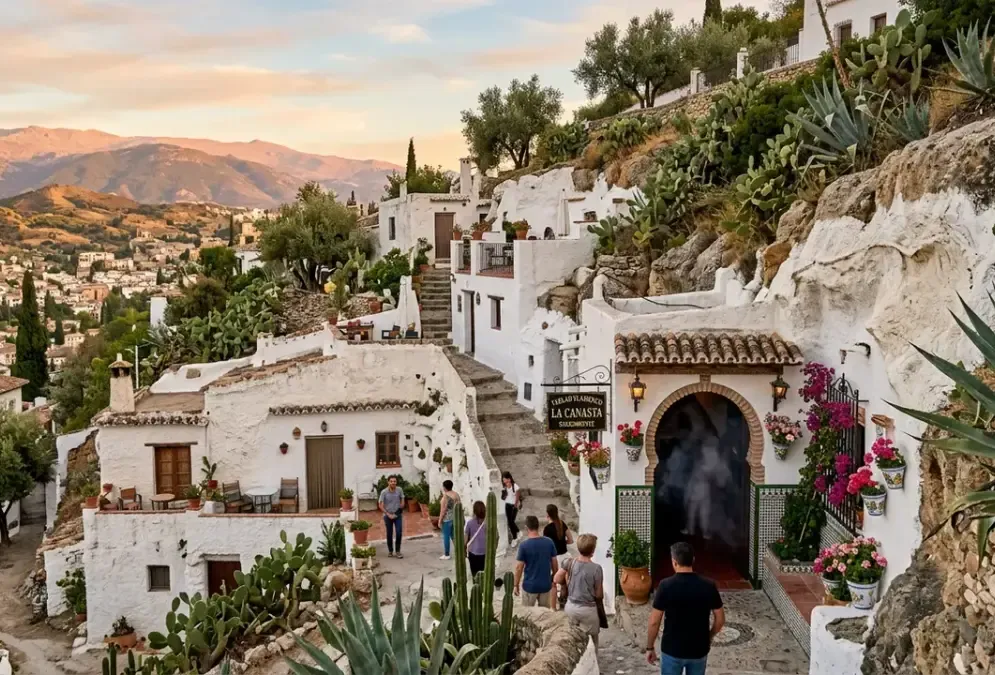
    Sacromonte occupies the hill directly east of the Albaicín, above the Darro valley, and it looks like no other neighbourhood in the city. The houses are cut into the limestone hillside rather than built on it. Since the 15th century, Roma families have inhabited these caves, extending and whitewashing them, fitting wooden doors into the rock face. Several hundred cave dwellings remain occupied. The neighbourhood is the origin of zambra flamenco: a form rooted in Arabic ceremonial music, performed in the original caves with stone walls, low ceilings, and acoustic intimacy that a theatre cannot replicate. The Museo Cuevas del Sacromonte, halfway up the ridge, opens the cave complex for €5. Seeing how the domestic and agricultural organisation of cave life actually worked makes the neighbourhood substantially more legible. The walk up via the Camino del Sacromonte from the Albaicín takes 20 minutes and offers a continuous view across the Darro valley. Take the bus up and walk back down along Carrera del Darro at dusk.

    A hillside of inhabited limestone caves, Romani heritage, and the intimate flamenco form of zambra — one of the most singular neighbourhoods in Andalusia
  4. Centro / Sagrario

    Centro / Sagrario

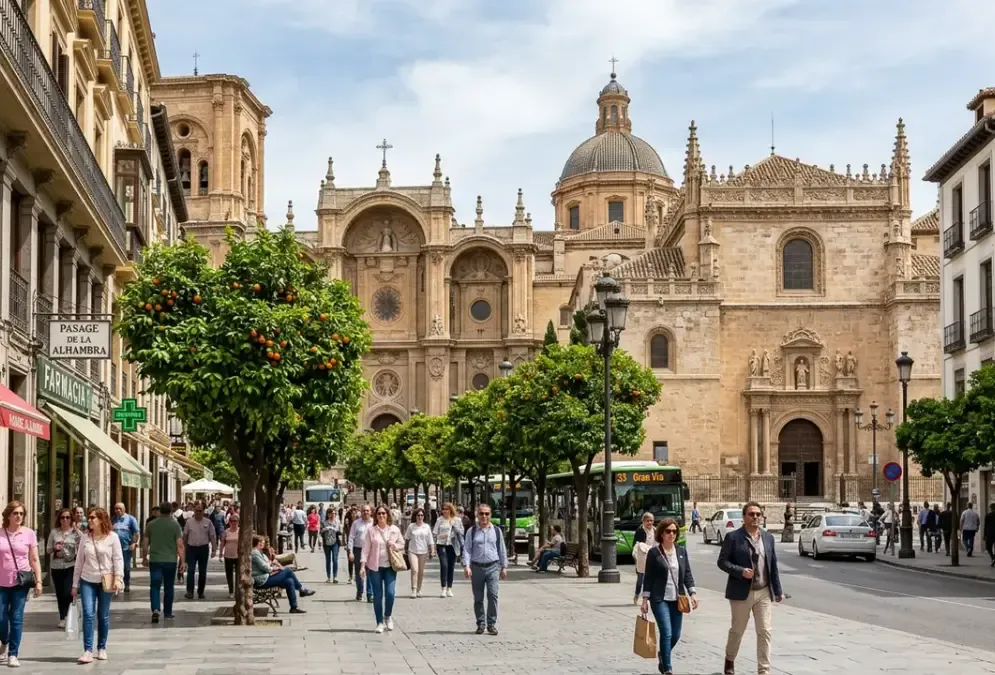
    The historic centre holds five of Granada's most significant built monuments within a 10-minute walk of each other: the Granada Cathedral, begun in 1523 on the site of the main mosque; the adjacent Royal Chapel, where Ferdinand and Isabella are buried; the Alcaicería, a 19th-century reconstruction on the footprint of the Nasrid silk bazaar; the Madraza, the 14th-century Koranic school with a Nasrid interior concealed behind its Baroque facade; and the Corral del Carbón, the only surviving Nasrid funduq in Spain, free to enter and almost always quiet. The Cathedral and Royal Chapel require separate tickets; buy both in advance in summer. Plaza Bib-Rambla, two blocks south of the cathedral, is the centre's living room: flower stalls in the morning, outdoor tables from noon. The streets behind it toward Calle Navas and Calle Elvira are where Centro's better independent restaurants are. Centro is the most practical base for a short visit, but not the most interesting place to stay once you have seen the monuments.

    The urban core of Granada: Renaissance cathedral, Nasrid civic buildings, a working commercial district, and café-lined squares where city life flows around the monuments
  5. Universidad

    Universidad

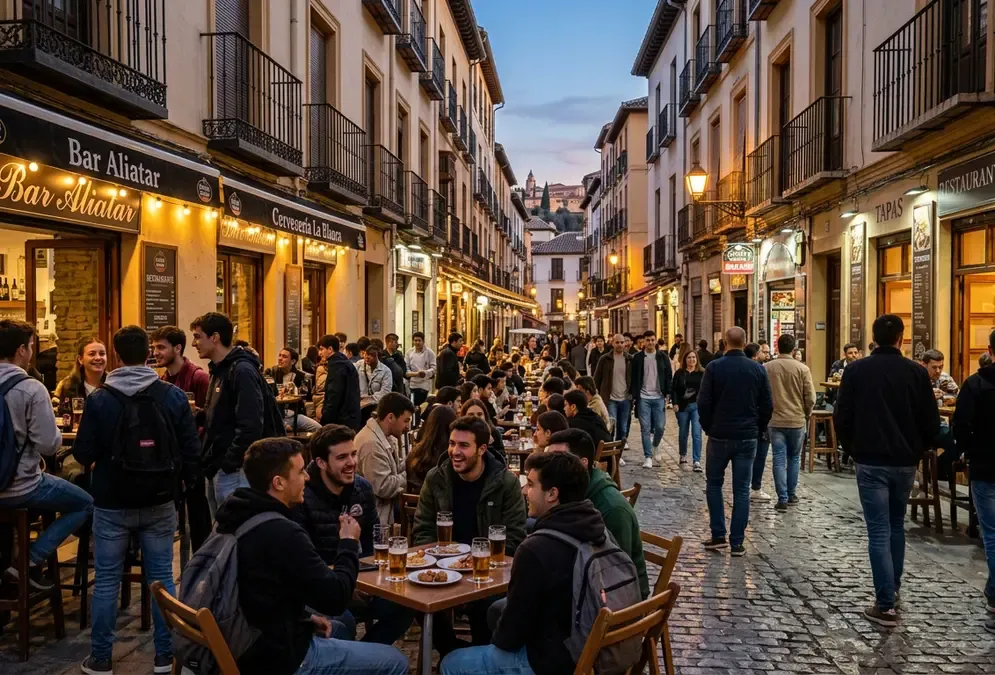
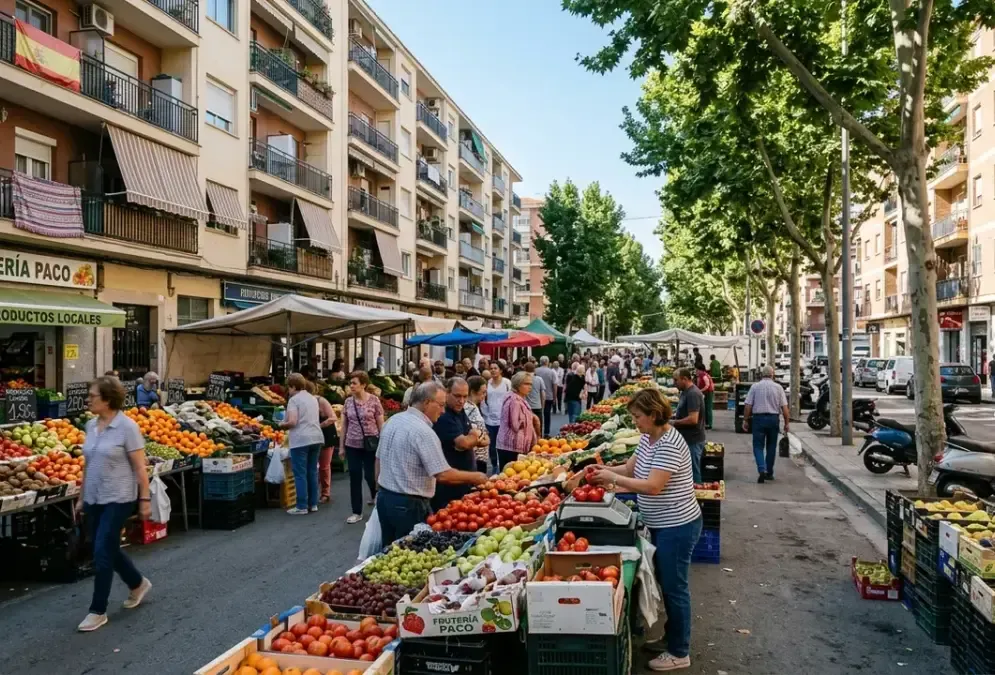
    The Universidad quarter sits west of Centro and almost nobody ends up there by accident. The Universidad de Granada was founded in 1531 by Charles V, and over 60,000 students now attend, making it the fourth largest university in Spain. The most significant building in the quarter is the Hospital Real on Calle Hospital Real: a 15th to 17th-century accumulation of Gothic, Mudéjar, Plateresque, and Renaissance work, now the university's rectorate. The interior is closed to visitors, but the facade repays a long look. A short walk south, the Faculty of Law contains a free botanical garden with 70 large tree specimens and a ginkgo biloba among the first planted in the Iberian Peninsula. The reason most visitors come, though, is Calle Pedro Antonio de Alarcón: a full kilometre of bars where a beer costs €2 to €2.50 and the clientele is Spanish. This is the part of Granada that does not perform for tourists. Come on a Wednesday or Thursday evening during semester time (October to November or February to April) for the most honest version of it.

    Cobblestone streets west of the Cathedral, almost no tourists, €2 beers, and a Renaissance hospital that most visitors walk past without stopping
  6. Zaidín

    Zaidín

    Zaidín is Granada's most populated district and the one least likely to appear in a standard itinerary, which is an honest enough reason to know it exists. South of the Genil river, the neighbourhood has wide residential avenues, neighbourhood bars with hand-written daily menus, and accommodation that costs 30 to 50% less than equivalent options in Centro or the Albaicín. The Parque de las Ciencias is the one genuinely visitor-facing attraction: Andalusia's main interactive science museum, with a planetarium, butterfly house, and permanent natural history collection. Entry is around €7 for adults and it is particularly good with children. The rest of Zaidín is a functioning Spanish residential district. For visitors on a longer stay who want perspective beyond the Alhambra circuit, and significantly lower accommodation prices, Zaidín is the practical answer.

    Granada's largest residential district: wide avenues, neighbourhood bars, the Science Park, and the everyday rhythms of a city that functions beyond the tourist zones

The Albaicín and Realejo reward visitors who want to understand Granada rather than just photograph it. The Albaicín gives you the medieval city; the Realejo gives you the best tapas density and the most useful position relative to the Alhambra. Centro is the most convenient base for a one- or two-day visit focused on monuments, but the neighbourhood itself is more interesting at the edges than at the centre. Sacromonte requires an evening: go for a zambra show in one of the original cave venues and walk back down along the Darro at night. Universidad is for visitors who want a few hours of real Granada alongside the heritage circuit — arrive at the Hospital Real, walk through the botanical garden, end up on Pedro Antonio de Alarcón around eight in the evening during term time. Zaidín is a budget base for longer stays. Most visitors need the Albaicín, the Realejo, and a functional position relative to the Alhambra. Two of those three overlap, which makes the Realejo the single best-placed neighbourhood for most first-time visitors.

Frequently asked questions

Which neighbourhood in Granada is best for first-time visitors?

The Realejo is the most useful base for most first-time visitors: it sits at the southern foot of the Alhambra hill, has the highest tapas bar density in the city, and the Puerta de las Granadas (the main pedestrian entry to the palace grounds) is a short walk uphill from Campo del Príncipe. The Albaicín is a better choice if your primary interest is the Moorish heritage rather than convenience. Centro works for visitors focused solely on monument-ticking.

Which Granada neighbourhood has the best tapas bars?

The Realejo, particularly the streets around Campo del Príncipe, has the most concentrated tapas zone in Granada with a good local-to-tourist ratio. The bars in the Centro around Calle Navas and Calle Elvira are also reliable. Granada's tapas tradition (each drink comes with a free small plate) means the neighbourhood question matters more here than in most Spanish cities.

Is the Albaicín safe for tourists?

Yes. The main routes (Carrera del Darro, Cuesta de Chapiz, the path to Mirador de San Nicolás) are well-populated throughout the day and into the evening. The deeper lanes in the upper Albaicín are quiet after dark, but the neighbourhood has a residential character rather than a reputation for crime. Use the same judgment you would in any dense urban area. Minibuses 31 and 32 run from Calle Reyes Católicos for the uphill journey.

How far is the Albaicín from the Alhambra?

The two hills face each other across the Darro gorge. The view from Mirador de San Nicolás is the Alhambra, roughly 500 metres as the crow flies. Walking between them takes about 40 minutes on foot via the Carrera del Darro and the Cuesta de Gomérez approach. They share a UNESCO World Heritage designation, listed together in 1994 as the Alhambra, Generalife, and Albaicín of Granada.

Which Granada neighbourhood is cheapest to stay in?

Zaidín, south of the Genil river, offers accommodation at 30 to 50% less than equivalent options in Centro or the Albaicín. The trade-off is walking distance: the northern edge of Zaidín is about 1.5 km from Plaza Nueva, and the southern end considerably further. City buses connect Zaidín to the centre in 10 to 15 minutes. The Universidad quarter is the best budget option that still puts you close to the historic centre.