The Granada Cathedral draws the queues. La Cartuja draws the people who've already done the cathedral and want to understand why Spain's 17th-century church architects kept pushing further.
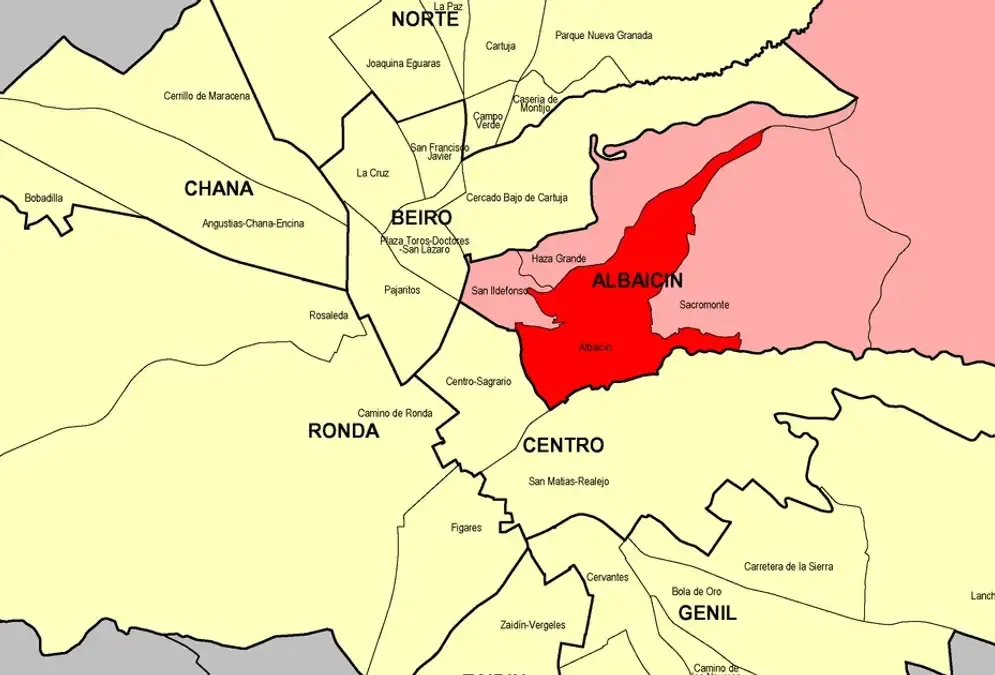
La Cartuja sits on the northern edge of Granada, a 20-minute walk from the city centre, in a part of town that most visitors never reach. The monastery was founded in 1506 by the Gran Capitán, Gonzalo Fernández de Córdoba, and construction ran in fits and starts for roughly three centuries. What resulted is a building with multiple personalities: a sober Renaissance cloister, a dark and meditative church nave, and then — through the door at the far end — the Sagrario.
The Sagrario: what you actually came for
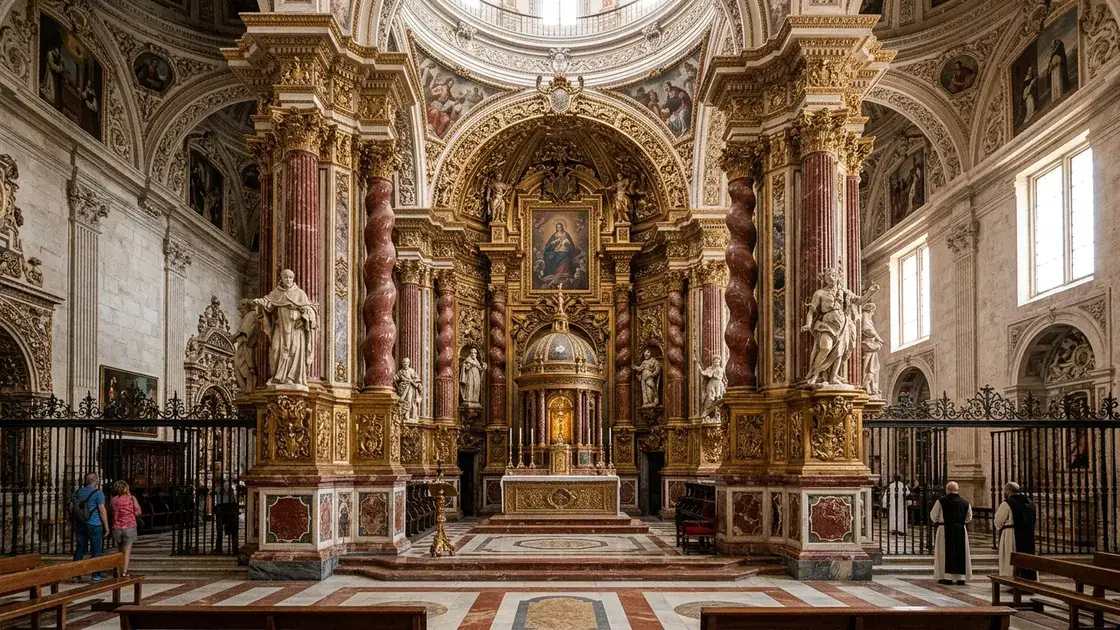
The Sagrario is Granada's most extreme room. Built between 1713 and 1720 by Francisco Hurtado Izquierdo, it sits at the eastern end of the church and is dressed floor-to-ceiling in a Churrigueresque scheme of stucco reliefs, marble inlay, and gilded decoration that leaves almost no surface unworked. Jasper columns in red and green, twisting serpentine pilasters, shell niches crammed with saints: it is deliberately overwhelming, a deliberate contrast to the monastic austerity of the spaces that precede it.
The effect only works because the approach through the church is so restrained. Walk slowly. The step across the threshold into the Sagrario is genuine visual shock.
The Sacristy and the cloister
Before the Sagrario, the Sacristy (1732–1764) deserves a long look. The joinery here — cedar furniture built into the walls, inlaid with tortoiseshell, ivory, and ebony — is the work of lay brother Francisco Vázquez Mora and took decades to complete. The marquetry patterns are geometrically precise, a technique that connects explicitly to the Nasrid tradition the Carthusian monks were working alongside.
The cloister is earlier and calmer: 16th-century, with orange trees and a well in the centre, the kind of quiet that the rest of the monastery was designed to support. Give it ten minutes. The contrast with what follows is part of the architecture.
Visiting La Cartuja: logistics
Entrance is €5, paid at the door. Summer opening hours are 10:00–13:00 and 16:00–20:00 (hours vary seasonally — check before you go, as the afternoon break can catch people out). No booking required. A complete visit takes between 60 and 90 minutes at a reasonable pace, though the Sacristy alone can hold your attention for 20 minutes if you work the details.
Getting there is straightforward: bus line 8 from Gran Vía stops at Cartuja, or it's a 20-minute walk north from the cathedral through unremarkable streets. The neighbourhood around the monastery is the University of Granada campus — pleasant enough, but the monastery stands apart from it in both age and scale.
La Cartuja doesn't appear on most one-day Granada itineraries, which is the practical reason to go: you will not share the Sagrario with a tour group. On a Tuesday afternoon in August, it is possible to stand in that room alone. At the Alhambra in the same week, you're one of 6,600.