Día de Andalucía
28 February (annual, fixed date) Free cultural

Andalusia Day in Granada: Free Museums, Street Celebrations, and What to Expect on 28 February

Día de Andalucía

28 February 2027
Granada city centre, Museo Arqueológico, Alhambra, main plazas
All events

28 February is a public holiday across Andalusia, commemorating the 1980 referendum in which the region voted to become an autonomous community of Spain. In Granada, it translates into a day of free museum entry, outdoor performances, and a city that slows right down — most shops, supermarkets, and shopping centres are shut.

Free museums and what to expect at each

The Museo Arqueológico de Granada (Archaeological Museum) is the standout venue. Every year it runs El Juego de la Liebre, a giant version of Snakes & Ladders played out across the museum's courtyard, with questions themed around the collection. It draws families from across the city and fills up fast — arrive before 10:30 if you want to join a session.

Most other state-run and municipal museums in Granada also waive entry fees on this day. The Alhambra y Generalife may participate, but it operates under separate management from the city's museums, so confirm directly on the official Alhambra website before your visit — free-entry policies there are announced year by year.

The Centro Federico García Lorca near Puerta Real is another one worth checking. Entry is occasionally free on Día de Andalucía; the building itself is worth seeing regardless.

What happens in the streets

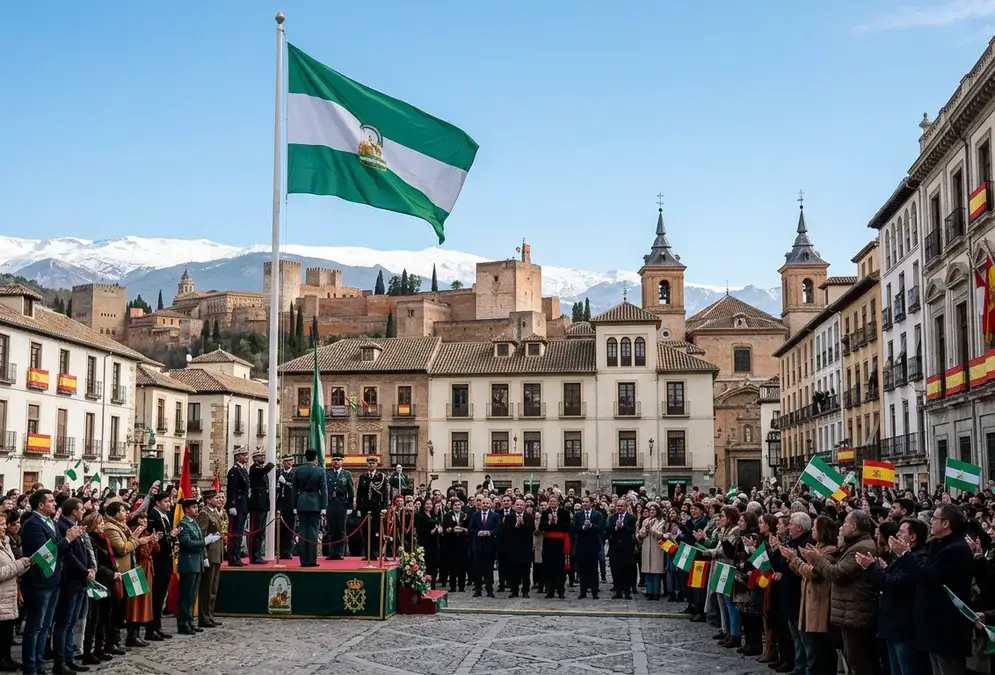
The day starts early with flag-raising ceremonies in the city's main squares. The green-and-white Andalusian flag goes up outside the Ayuntamiento and in Plaza del Carmen; local officials give short speeches, marching bands play, and the whole thing is over by mid-morning.

After that, look for desayunos andaluces (Andalusian breakfasts) laid on free at public events around the centro — typically mollete bread with olive oil and tomato, washed down with coffee. Community groups and local institutions organise these, and they are genuinely free, not a tourist gimmick.

By midday, parks and plazas fill out with live performances: flamenco groups, brass bands, occasionally film screenings in outdoor spaces. The atmosphere in the Realejo and along the Paseo del Salón tends to be relaxed and local — this is Granada celebrating for itself rather than for visitors.

Evenings bring free concerts at larger venues. Programme details are announced each year by the Ayuntamiento de Granada; check their website in the week before the holiday.

Practical logistics

Transport runs on a limited Sunday/holiday schedule. Taxis are available but in higher demand than usual. Walking is the sensible option in the historic centre.

Plan your museum visits in the morning. Lines at the Museo Arqueológico and other free venues build through the afternoon. By 1 pm, waits of 30–45 minutes are common at the most popular sites.

Almost all supermarkets and shopping centres are closed. Small neighbourhood shops (colmados) sometimes open for part of the morning, but do not rely on them for supplies. Stock up the day before.

Restaurants and cafes in the tourist areas of the centre stay open; in residential neighbourhoods, expect reduced hours. The Albaicín and Realejo tend to have better coverage than the newer shopping districts.

If the Alhambra is part of your plans, book a timed-entry slot in advance regardless of whether free entry is offered — the Alhambra manages its own ticketing and slots sell out weeks ahead.
Highlights

  • Free entry to the Museo Arqueológico de Granada and other state-run museums
  • El Juego de la Liebre — giant interactive Snakes & Ladders in the Archaeological Museum's courtyard
  • Flag-raising ceremonies and official acts in Plaza del Carmen and main city squares
  • Free community Andalusian breakfasts (desayuno andaluz) around the centro
  • Live flamenco, brass bands, and outdoor concerts throughout the day

Key moments

28 February — Morning 09:00–10:30

Flag-raising ceremony

Official flag-raising outside the Ayuntamiento and in Plaza del Carmen, with local officials, a brief address, and marching band. Free to attend. Over quickly — locals gather and disperse by mid-morning.

28 February — Morning 10:00–12:00

Desayuno andaluz

Community Andalusian breakfasts organised by local groups around the centro — mollete with olive oil and tomato, coffee. Look for stands near the Ayuntamiento and in neighbourhood squares. Free.

28 February — Morning to afternoon 10:00–20:00

Museum free entry

State-run and municipal museums open free, including the Museo Arqueológico de Granada. The Archaeological Museum runs El Juego de la Liebre (giant themed Snakes & Ladders) in its courtyard — arrive early. Alhambra free entry must be confirmed separately each year.

28 February — Afternoon 12:00–19:00

Street concerts and performances

Live performances in parks and plazas across the centre — flamenco groups, brass bands, film screenings. The Realejo and Paseo del Salón are reliable spots. Evening concerts at larger venues; programme announced by the Ayuntamiento in the preceding week.

Practical information

Hours

Flag-raising: from 09:00. Museums: typically 10:00–20:00 (check each venue). Street events and concerts: throughout the day from late morning.

Best time

Arrive at the Museo Arqueológico before 10:30 for El Juego de la Liebre. Flag-raising is done by 10:30. Afternoon is best for outdoor concerts in the Realejo.

Tips

Shops and supermarkets are closed — buy supplies on 27 February. Confirm Alhambra free-entry status directly on their official website. Museum queues build from midday; go in the morning.

Getting there

Limited holiday bus schedule. Walking recommended in the historic centre. Taxis available but in high demand.

Price

Free (public holiday celebrations). Museum entry free on this day at participating venues.

Tags

andalusia day dia de andalucia public holiday free museums cultural events granada celebrations free entry andalusia

Frequently asked questions

Is the Alhambra free on Andalusia Day?

It may be, but it is not guaranteed. The Alhambra is managed independently from Granada's city museums and announces its own free-entry policy year by year. Check the official Alhambra website (www.alhambra-patronato.es) in January or February for confirmation. Even if entry is free, you still need a timed-entry ticket — book one in advance as slots are limited.

Which museums are definitely free on 28 February in Granada?

The Museo Arqueológico de Granada (Archaeological Museum) confirms free entry annually and runs the El Juego de la Liebre workshop. Most other state-run and municipal museums follow suit, including potentially the Centro Federico García Lorca. Confirm directly with each venue for the current year as policies can change.

What is El Juego de la Liebre at the Archaeological Museum?

It is a giant version of Snakes & Ladders played out in the museum's courtyard, with questions and challenges themed around the museum's collection. Organised annually for Día de Andalucía, it is popular with families and fills up quickly. Arrive before 10:30 to join a session.

Are shops and restaurants open on Andalusia Day?

Most shops, supermarkets, and shopping centres close on 28 February. Restaurants and cafes in the tourist areas of the centre generally stay open, though hours may be reduced. Small neighbourhood shops sometimes open in the morning. Stock up on groceries the day before.

What free events happen on Andalusia Day beyond the museums?

Flag-raising ceremonies in the main plazas start around 09:00. Community Andalusian breakfasts (desayuno andaluz — mollete with olive oil, tomato, and coffee) are laid on for free around the centro from 10:00. Live concerts and flamenco performances fill parks and plazas throughout the afternoon, with evening concerts at larger venues. The Ayuntamiento de Granada publishes the full programme in the week before the holiday.