The Madraza: Granada's 14th-Century Nasrid Islamic College
madraza nasrid islamic-heritage

The Madraza: Granada's 14th-Century Nasrid Islamic College

The Madraza, founded in 1349 by Sultan Yusuf I, was Granada's first Islamic college. Its Nasrid oratory and Baroque facade stand near the Royal Chapel.

Mon–Fri 08:00–20:00; Sat 09:00–14:00. Closed Sunday. Hours may vary during university events.
Free entry to ground floor; check for temporary exhibition fees
Itineraire

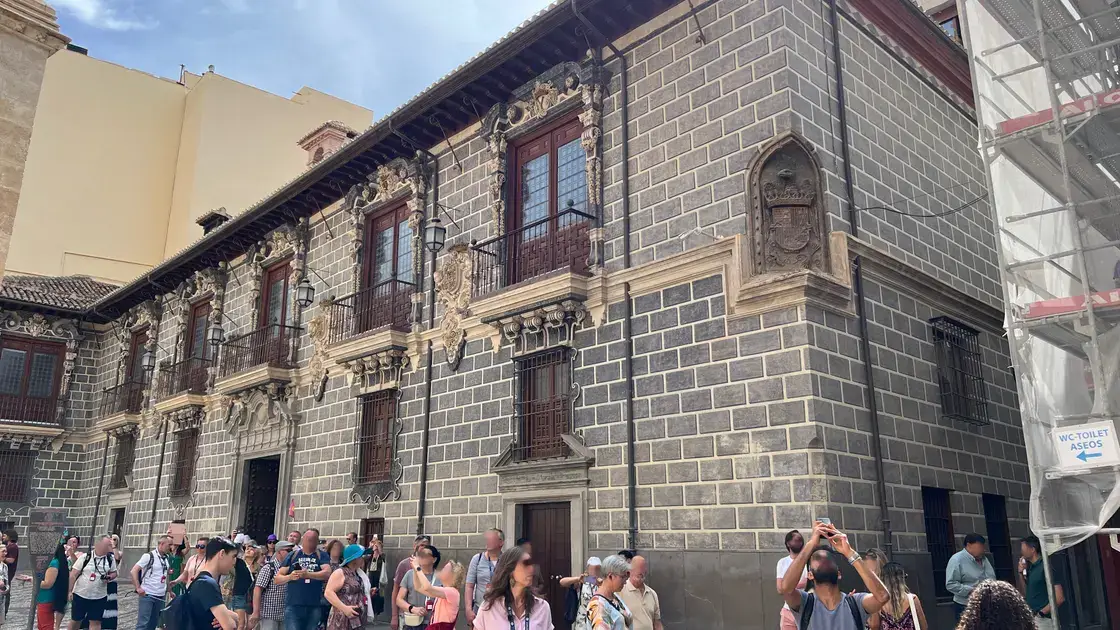
The Madraza of Granada stands on Calle Oficios, directly opposite the entrance to the Royal Chapel, in the heart of the city's historic core. Founded in 1349 by the Nasrid sultan Yusuf I, it was the only major Islamic college, or madrasa, built in al-Andalus, and it functioned as the primary center of theological and juridical education in the Nasrid kingdom for the century and a half before Granada's fall in 1492. The building takes its name from the Arabic term for a place of learning derived from Islamic law.

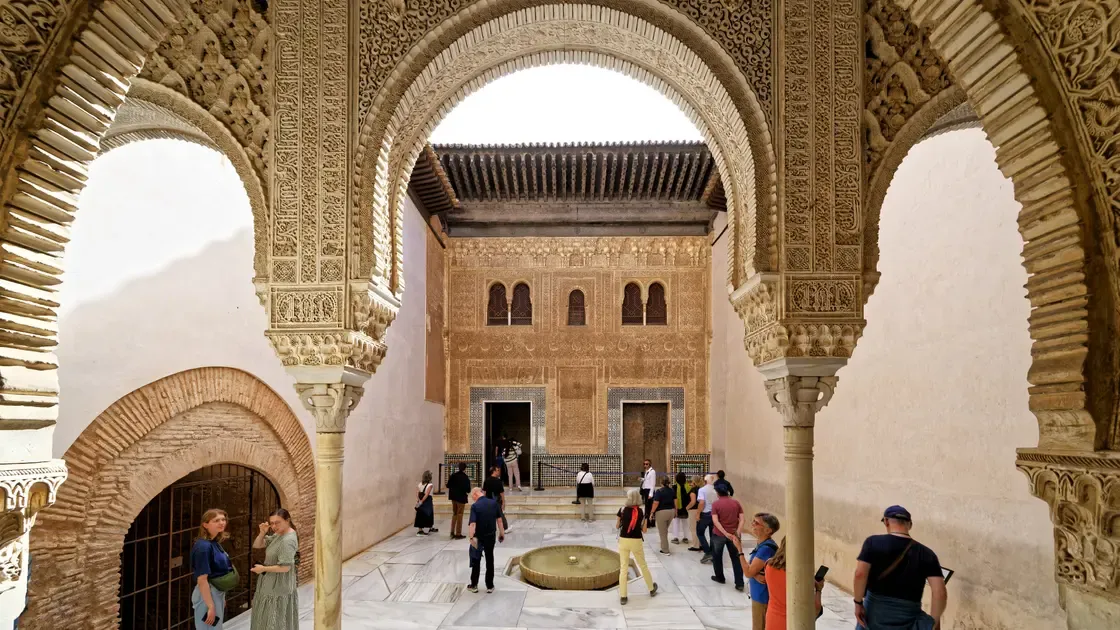
The original Nasrid structure was substantially rebuilt in the early 18th century, when the University of Granada's predecessor institution added a Baroque facade and reorganized much of the interior. What survives from the 14th century is the prayer room, or oratory, which was hidden behind a false ceiling until restoration work in the early 20th century revealed it. The oratory is a room of striking refinement: its walls are covered in stucco work with Arabic calligraphic inscriptions, geometric patterns, and vegetal ornament in the Nasrid style familiar from the Alhambra, though executed on a smaller and more intimate scale. A wooden mihrab niche indicates the direction of Mecca.

After the Catholic Monarchs took Granada, Ferdinand II donated the building to the city council in 1500. The library, reportedly one of the finest in the western Mediterranean, was destroyed on the orders of Cardinal Cisneros, who had the books burned in the Bib-Rambla square. The building served various civic functions over the centuries before being transferred to the University of Granada in 1976, which now uses it for lectures, exhibitions, and events. The Royal Academy of Fine Arts of Our Lady of Sorrows also maintains a presence here.

The ground floor is generally open to visitors free of charge during business hours, though upper floors and temporary exhibitions may require tickets. The oratory is the primary reason to visit. It is compact and easy to miss if you do not know it is there: ask staff at the entrance to point you toward it. The Madraza sits in the middle of Granada's densest cluster of Christian and Islamic monuments, making it a natural stop on any walk that takes in the cathedral, Royal Chapel, and Corral del Carbón nearby.
Practical information

Opening hours

Mon–Fri 08:00–20:00; Sat 09:00–14:00. Closed Sunday. Hours may vary during university events.

Admission

Free entry to ground floor; check for temporary exhibition fees

Address

Calle Oficios 14, 18001 Granada

View on Google Maps

Tags

madraza nasrid islamic heritage history architecture university medieval

Frequently asked questions

What is the Madraza of Granada?

The Madraza was the only major Islamic college built in al-Andalus. Founded in 1349 by Sultan Yusuf I, it served as the Nasrid kingdom's main center for theological and legal education. After the Christian reconquest it became Granada's first town hall, then later part of the University of Granada.

What is left of the original Nasrid building?

The prayer room, or oratory, is the principal surviving element from the 14th-century structure. It features Nasrid stucco panels with Arabic inscriptions and geometric ornament, and a mihrab niche, all in a style closely related to the Alhambra's decoration. The rest of the building reflects 18th-century Baroque reconstruction.

What happened to the library?

Cardinal Cisneros ordered the library's contents destroyed around 1500. The books — spanning theology, law, philosophy, and science — were burned in the Plaza de Bib-Rambla. It is considered one of the major cultural losses of the early modern period in Spain.

Is the Madraza free to visit?

The ground floor, including the Nasrid oratory, is generally free and open to the public during university business hours. Temporary exhibitions on upper floors may charge a small admission fee.

How does the Madraza connect to the Alhambra?

Sultan Yusuf I, who founded the Madraza in 1349, is the same monarch who built the Comares Tower and the Comares Palace at the Alhambra. The stucco decoration of the Madraza's oratory uses the same vocabulary of calligraphic bands, geometric tracery, and muqarnas cornices, making the two buildings complementary examples of his patronage.