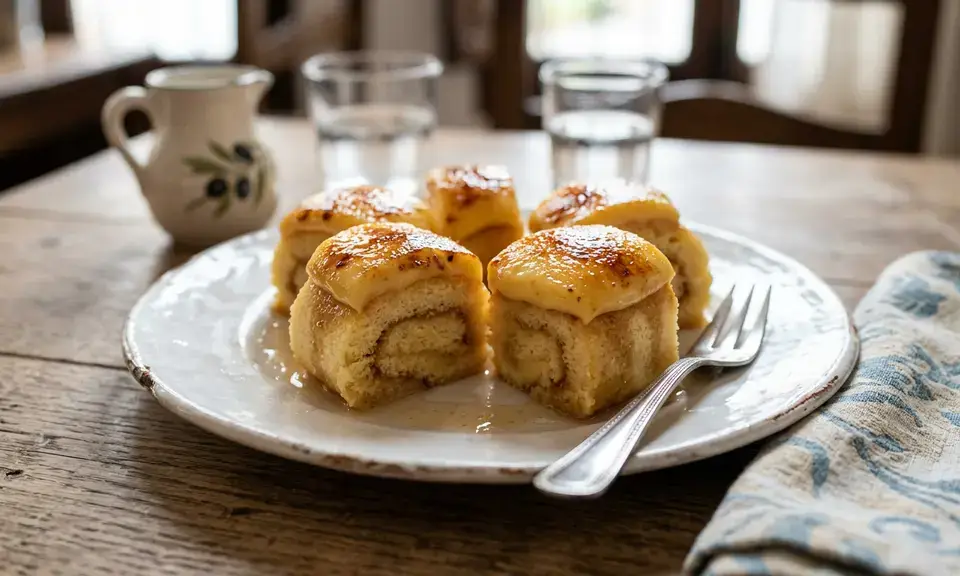
In 1897, a pastry chef named Ceferino Isla rolled a thin piece of sponge cake around a filling of egg yolk and cinnamon, soaked it in rum-laced syrup, and topped it with caramelised cream. He opened a shop in Santa Fe, a town 14 kilometres west of Granada, and named the pastry after Pope Pius IX — Pío Nono in Italian. Within two decades, the pionono de Santa Fe had a royal warrant: in 1916, Pedro Galatino presented one to Alfonso XIII, who liked it enough to make Casa Ysla official supplier to the Spanish court.
The pastry is consumed in one or two bites. That's intentional. The combination of syrup-saturated cake, rich cream, and burnt-sugar crown is intense enough that a small portion is the right portion. Granada locals eat it with a strong black coffee, not a milky one — the bitterness cuts through the sweetness in a way a cappuccino never does.
What to expect
A pionono arrives on a small paper square, upright, about the size of a wine cork. The outside is golden-brown from the caramelised topping. Cut one open and you see the rolled sponge and pale cream inside. The sponge should be moist from the syrup without being soggy; the cream should hold its shape. If either is dry or collapsed, move on to the next bakery.
The traditional recipe uses only sponge cake, egg yolk, cinnamon, sugar, and syrup. Modern variations exist — chocolate, coffee, matcha, fruit — sold at places like La Crème de la Crème in the Realejo. These are worth trying if you're curious, but the original at Casa Ysla is the one to start with.
Where to find it in Granada
The original Casa Ysla still operates in Santa Fe, 20 minutes by bus from Granada's city centre, and keeps the 130-year-old recipe unchanged. In the city, Pastelería López-Mezquita on Calle Reyes Católicos has been making piononos for generations. Both sell them individually in small paper boxes — they travel well if you refrigerate them and eat them within a day.
For a detour worth making, combine a visit to Santa Fe with the drive back from the Sierra Nevada or the Vega de Granada. The town itself is a footnote in most guidebooks, but Casa Ysla remains busy with locals who make the trip specifically for piononos.
Practical details
Price: €1.20–1.80 per piece in most bakeries. A box of six runs €7–10. The pastry contains gluten (wheat sponge), eggs, dairy (cream), and often alcohol (rum syrup) — ask if you need clarification on the syrup recipe, as some shops use a plain sugar version. Not suitable for vegans. Gluten-free versions exist at a handful of modern bakeries, including La Crème de la Crème.
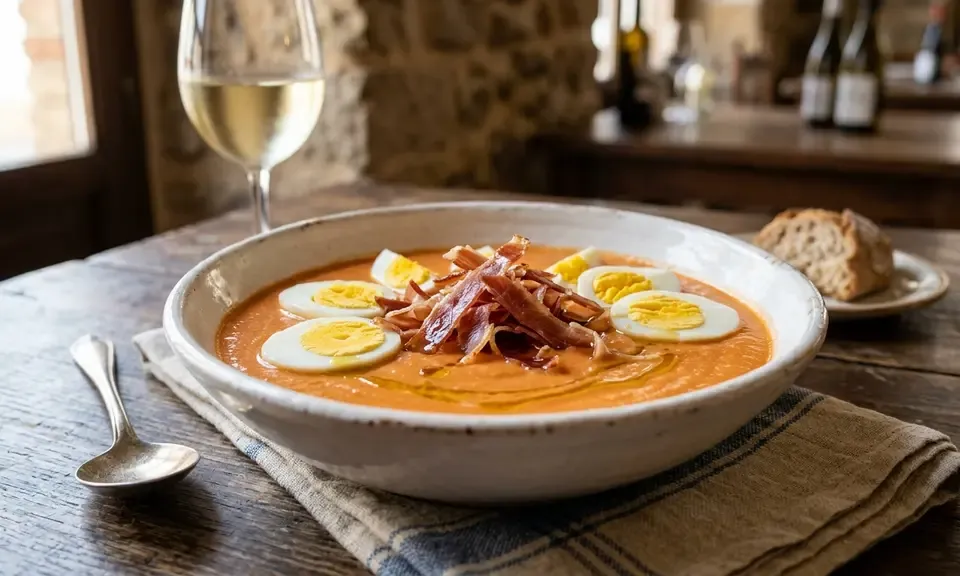
Piononos pair well with salmorejo as part of a broader introduction to Granada's culinary heritage — one sweet, one savoury, both rooted in 19th-century Andalusian tradition.