The traditional recipe calls for eggs, cooked pork or lamb brains, testicles, and bone marrow. This is not the version served in tourist restaurants. The tortilla del Sacromonte originated in the cave-dwelling gitano (Romani) communities of Sacromonte, Granada's hillside barrio cut into the limestone above the Darro river, and it was built from what was available after the rest of the animal had been used.
One account holds that the dish appeared after organ meats were left behind during a monastery feast — the cook, working with what remained, folded brains and testicles into eggs. Whether or not that specific story is accurate, the philosophy behind it is real: nose-to-tail cooking in a community where nothing went to waste.
What you're actually ordering
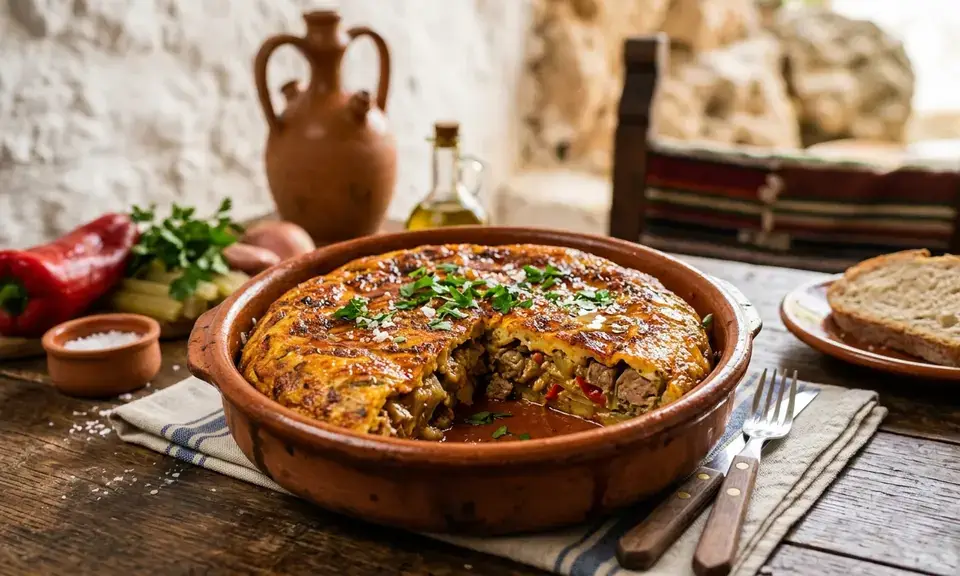
The full recipe combines six eggs with boiled brain and testicle, cut small, plus optional additions: diced jamón de Trevélez, chorizo, walnuts, peas, or potatoes. The offal is boiled first with bay leaf, white wine, and salt, then cooled and folded into the egg mixture. The result is cooked in olive oil and flipped like a standard Spanish tortilla — thick, set, sliced in wedges.
Modern versions in many Granada restaurants substitute the organ meats entirely with jamón and chorizo. These are edible but historically hollow. If you want to understand what the dish actually is, you need to find a bar in Sacromonte that still makes the original.
Where to find it
Casa Juanillo in Sacromonte serves it in a cave setting — exactly the environment where the dish comes from. Mirador de Morayma, higher up the hill with views across Granada to the Alhambra, also keeps it on the menu. Neither is cheap, and neither is in the city centre. Take the bus up Camino del Sacromonte or walk up through the Albaicín from Plaza Nueva — about 25 minutes on foot.
Avoid ordering it at a place in the city centre that happens to have it on the menu. The further you are from Sacromonte, the more likely you are to get the ham-only version.
What to expect
The dish arrives hot, cut in wedges or as a whole omelette on a ceramic plate. The texture is dense and slightly creamy from the cooked brain; the flavour is mild, earthier than a potato tortilla, with the offal absorbed rather than dominant. If you've eaten sweetbreads or liver pâté and tolerated them, this is less challenging than either.
It's a winter dish by tradition — warming, filling, suited to cold evenings in the caves. Year-round availability exists, but late autumn and winter is when Sacromonte bars are least touristic and the dish is most in its element.
Pairing: a glass of Vino de Granada (local red) or dry Amontillado sherry works well. The tannic dryness of both cuts through the richness of the offal without overwhelming the flavour.