Stone archways and carved stucco inside an ancient Arab bath in Granada's Albaicín quarter
Off the beaten path

Granada's hidden gems

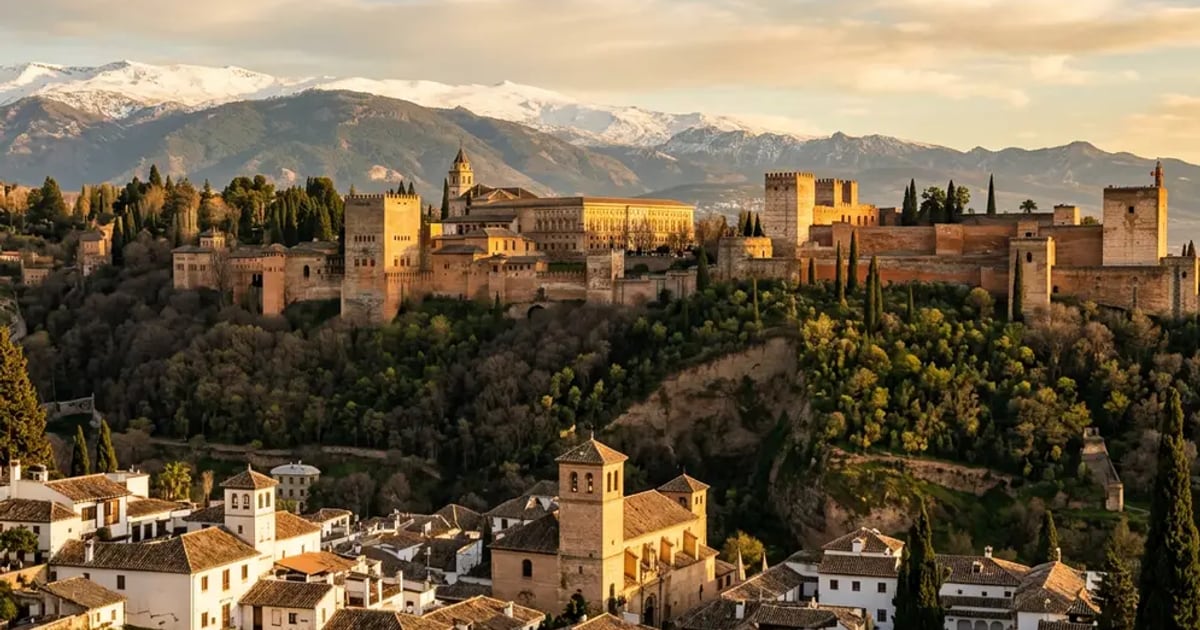
The Alhambra pulls every visitor north. Everything else — an 11th-century hammam, a Baroque church with a gold ceiling, seven hectares of palace gardens — waits in the shadow, almost always empty.

The peculiar thing about Granada's lesser-known monuments is that many of them are not obscure at all — they are right there, visible from the main streets, a short walk from the Alhambra gates. The problem is that the Alhambra is so thoroughly dominant that everything else in the city effectively disappears. Visitors arrive, book their Nasrid Palaces tickets, spend a morning inside the palace complex, and leave. The city beyond is an afterthought.

What gets left behind is, in some cases, older and architecturally more original than the famous palace. El Bañuelo, on the Carrera del Darro riverbank, is an 11th-century Arab bathhouse — the oldest surviving hammam in Andalusia, predating most of the Alhambra by two centuries. Cuarto Real de Santo Domingo in the Realejo is a 13th-century Nasrid palace that was standing before the Alhambra received its most celebrated rooms. The Basílica de San Juan de Dios has a 50-metre gold-leaf dome that ranks among the most extravagant Baroque interiors in Spain. None of them are on most visitors' itineraries. None of them have queues.

This guide covers nine sites that the Alhambra's shadow swallows: two viewpoints quieter than Mirador de San Nicolás, a church whose exterior gives nothing away, a convent with irregular hours and a Mudéjar nave unlike anything else in the city, palace gardens that cost nothing to enter, and a 900-year-old bathhouse most visitors walk past without realising what it is.

Viewpoints: better than San Nicolás

Mirador de San Nicolás is worth visiting — but it stopped being a local secret around 2010. By mid-morning the terrace is dense with tour groups. Two other viewpoints give comparable or better angles with a fraction of the people, and both are free.

Mirador de San Cristóbal — the north-facing view

Free · Open 24/7 · 30–45 minutes

Most Albaicín visitors stick to the main streets and turn south toward San Nicolás. San Cristóbal is a 20-to-30-minute uphill walk from Plaza Nueva in the other direction, or a short drive with parking available. The view faces north, which means it catches morning light differently from the sunset-facing terraces lower down. What you see: the old Nasrid city wall, the Alhambra on the ridge to the east, the cathedral dome below, the Palace of Dar al-Horra on the near hillside. Wheelchair accessible. The photographers who come here know that; it's why you'll find two or three of them most mornings and almost nobody else.

Best time: 7–9am for the golden hour light and empty terrace. After 10am it gets busier, though never approaching San Nicolás levels.

Mirador de la Lona — the highest view, facing west

Free · Open 24/7 · 45 minutes to 1 hour

Higher than San Cristóbal, harder to find, and almost never mentioned in tourist material. The climb from lower Albaicín takes 20–25 minutes on foot up Carril de la Lona — there is no sign pointing you to it. The reward is a panorama facing west over the whole valley: the cathedral dome, the Basílica de San Juan de Dios towers, the Monasterio de San Jerónimo beyond. A small café operates on-site (hours variable). The composition is the cleanest in the city: rooftops, domes, bell towers, no tourist infrastructure in the foreground. Almost nobody knows it.

Best time: Early morning (7–9am) or late afternoon (5–6:30pm) for soft light. The westward orientation makes late afternoon the better option for colour.

Churches and palaces worth entering

Basílica de San Juan de Dios — the interior nobody expects

€10 (includes audio guide + VR) · Mon–Sat 9:30am–6:50pm · Sun 9–11:50am, 1:30–6:50pm · Calle San Juan de Dios 17–19

The Baroque façade with its twin spires, built between 1737 and 1759, is unremarkable. This is deliberate — or at least convenient. Step inside and the scale hits you immediately: a 50-metre dome covered in gold leaf, frescoes by Diego Sánchez Sarabia and Italian masters across every surface, woodwork layered thick from floor to vault. Behind the main altar, a silver urn holds the relics of San Juan de Dios himself, the Portuguese-born founder of the Order of Hospitallers who lived in Granada in the 16th century and became the city's patron saint after his death here in 1550.

Many guidebooks prioritise the cathedral and the Royal Chapel. This church competes with both of them and has shorter queues. The €10 is for the interior — the exterior is free and gives no reason to pay. Pay it. The audio guide explains the fresco cycles, which are otherwise just beautiful confusion.

Cuarto Real de Santo Domingo — a Nasrid palace in the Realejo

Realejo neighbourhood · Verify hours locally on arrival

Most tourists never venture south of the cathedral into the Realejo, Granada's former Jewish quarter. The exterior of Cuarto Real gives nothing away — a modern concrete façade on an ordinary street. The interior is 13th-century Nasrid architecture: carved stucco walls, zellij tilework, a coffered wooden ceiling with geometric motifs. This building predates much of the Alhambra and is one of the earliest surviving Nasrid structures in the city.

Opening hours are irregular — check with the Realejo tourism office or ask locally before making a special trip.

Iglesia de Santa Ana — the minaret hiding as a bell tower

Free · Plaza de Santa Ana (transition from Plaza Nueva) · 20–30 minutes

The slender brick tower on the edge of Plaza Nueva is easy to overlook when you're navigating toward the Alhambra or the Albaicín. It is, in fact, a converted mosque minaret — built 1561–1563 on the foundations of a Moorish minaret that stood on this spot before the Reconquista. The church itself dates from 1537 in Mudéjar style, with five chapels per side and paintings and sculptures from the 16th and 17th centuries. The tower is one of the few surviving Mudéjar structures in the city centre. Visiting hours follow prayer times, so the church is not always open; arrive in the morning for the best chance.

Convento de Santa Isabel la Real — irregular hours, worth timing right

Free (exterior) / €7 donation (Saturday tour) · Upper Albaicín, 15–20 min walk from Plaza Nueva

An active convent founded by Queen Isabella on the site of the former Moorish palace of Dar al-Horra. The Mudéjar nave, with fretted woodwork that blends Islamic geometry with post-conquest Christian forms, is a direct physical record of what happened architecturally in Granada after 1492. A small chapel holds works by 16th-to-18th-century masters. Because this is a functioning convent, access is limited: Monday, Wednesday, and Friday, 10am–1:30pm and 4–6pm; and a guided tour every Saturday at 11:30am for a €7 donation. The Saturday tour is the reliable option. Verify weekday hours locally, as the sisters do not always follow posted timetables.

Gardens, baths, and literary shrines

Carmen de los Mártires — seven hectares opposite the Alhambra, free

Free · Apr–Oct: Mon–Fri 10am–2pm and 6–8pm, weekends 10am–8pm · 1–1.5 hours

The gardens of Carmen de los Mártires sit on the southern slopes of Mauror Hill, directly opposite the Alhambra complex — separated from it by a road. Most visitors at the Alhambra never look across the road. Those who do assume the gardens are part of the paid complex. They are not. Seven hectares of formal gardens (French parterre, English landscape, Spanish patio styles), fountains, grottos, a small lake, and peacocks that wander where they choose. One of Granada's largest gardens. The Alhambra is visible on the ridge above.

October to March hours: Monday to Friday 10am–2pm and 4–6pm, weekends 10am–6pm. The easiest approach on foot is from Campo del Príncipe behind the Alhambra hotel, or from Plaza Nueva via the Arco de las Granadas path up to the Alhambra.

El Bañuelo (Hammam al-Yawza) — the oldest Arab bath in Andalusia

Included in Monumentos Andalusíes pass · Carrera del Darro (5 min from Plaza Nueva) · 20–30 minutes

Five minutes' walk from Plaza Nueva along the Carrera del Darro riverbank, past the old buildings overhanging the water, there is a compact entrance that most visitors walk past. Behind it: a National Monument since 1918, three intact chambers from an 11th-century hammam — cold room, warm room, hot room — with the original star-shaped apertures in the vaulted ceilings still admitting shafts of natural light. The walls carry horseshoe arches on re-used Roman and Visigothic columns. The full El Bañuelo guide covers what to look for inside each chamber.

Visitors often confuse it with the Hammam Al Ándalus nearby, which is a functioning commercial spa. El Bañuelo is the archaeological site. Look for the street-level entrance on the riverbank; there is no intrusive signage, which is most of why it gets missed.

Don't confuse El Bañuelo with the modern spa

Hammam Al Ándalus (on Calle Santa Ana) is a contemporary Arabic-style spa experience that costs €35–€60. El Bañuelo is the actual 11th-century building, four hundred metres away on the Carrera del Darro. They share a name in spirit but nothing else.

Casa-Museo Federico García Lorca (Huerta de San Vicente)

€1.80 · Guided tours every 45 min — book ahead: 958 849 112 · Bus 5, 9, 21, U1, U3

The Lorca house museum sits in the south of the city, outside the tourist zone, which is most of why few casual visitors reach it. This was the García Lorca family's summer house — where Federico wrote Yerma, Blood Wedding, and Doña Rosita the Spinster in the early 1930s. The period furnishings are intact. His piano, his writing desk, the light in the upstairs rooms. For visitors with any interest in Spanish literature or 20th-century history, an hour here lands differently than another palace with carved stucco.

Visits are guided only, in groups, every 45 minutes. Book ahead by phone — the number is 958 849 112, open 9am–2:30pm. Winter hours (16 September to 31 May): 10am–4:30pm. Summer hours (1 June to 15 September): 9am–2:30pm. Entry is €1.80. This is not a walk-in site.

A half-day route combining them all

This route takes 4–5 hours on foot and avoids doubling back. It works as a morning or an afternoon-into-evening loop. If you want to catch the Saturday Convento Santa Isabel tour, start at 8am to be at the convent by 11:30am.

1

7:30am — Mirador de la Lona

Start at the top. Climb Carril de la Lona from lower Albaicín (25 minutes on foot, no signs). Spend 45 minutes with the westward view. The city is quiet and the light is flat-gold on the cathedral dome.

2

9am — Descent through Albaicín, stop at Iglesia de Santa Ana

Walk back down through the Albaicín lanes to Plaza Nueva. At the plaza's eastern edge, look for the Mudéjar brick tower of Iglesia de Santa Ana — the converted minaret. Enter if the church is open (morning is the best window).

3

9:30am — El Bañuelo on the Carrera del Darro

Walk east from Plaza Nueva along the Carrera del Darro riverbank. The hammam entrance is on the left after about five minutes. Spend 20–30 minutes inside. Morning light reaches the ceiling apertures best.

4

10:30am — Back up to Convento de Santa Isabel la Real

Return to upper Albaicín. The convent is 15–20 minutes uphill from Plaza Nueva. On Saturday, the 11:30am guided tour starts here; arrive slightly early. On other days, check if the door is open.

5

12:30pm — Lunch, then Mirador de San Cristóbal

Eat in the Albaicín or descend to Plaza Nueva. After lunch, walk north to Mirador de San Cristóbal (15 minutes from the convent). Different angle from the morning viewpoint — old walls and the Alhambra ridge.

6

Afternoon — Basílica de San Juan de Dios (city centre)

Descend to the city centre. The basílica is on Calle San Juan de Dios 17–19, walking distance from the cathedral. Pay the €10 and use the audio guide. An hour is about right.

7

Late afternoon — Carmen de los Mártires

Walk or taxi up to the Alhambra area. From Campo del Príncipe, the garden entrance is a short walk. In summer, the gardens open again at 6pm after the midday closure. Enter free, spend 60–90 minutes, and watch the evening light on the Alhambra from the terrace.

Cuarto Real de Santo Domingo — add if hours align

The 13th-century Nasrid palace in the Realejo fits into this route on the way from the city centre to the Alhambra. Its visiting hours are irregular — ask at the Realejo tourism office or check locally on the day. If it is open, it adds 45 minutes to 1 hour and is architecturally worth it.

Frequently asked questions

Frequently asked questions

Is Mirador de San Nicolás actually a hidden gem?

No. San Nicolás is in every guidebook and every Instagram feed. It's worth visiting, but expect crowds from mid-morning onwards. The genuinely quieter viewpoints are Mirador de San Cristóbal (north-facing, mostly locals and serious photographers) and Mirador de la Lona (highest of the main viewpoints, requires a deliberate climb). Both give different angles — San Cristóbal shows the old city walls, la Lona frames the cathedral and Monasterio de San Jerónimo. Early morning is when these places belong to you.

What is El Bañuelo and is it worth visiting?

El Bañuelo (officially the Hammam al-Yawza) is an 11th-century Arab bathhouse on Carrera del Darro, a five-minute walk from Plaza Nueva. It's the oldest surviving Arab bath in Andalusia and the best-preserved on the Iberian Peninsula — three chambers (cold, warm, hot) with star-shaped ceiling apertures still letting in natural light. Many visitors mistake it for a ruin or a private building. It's neither: El Bañuelo is a National Monument and open to visitors. It's included in the Monumentos Andalusíes combined pass.

How much does Carmen de los Mártires cost to enter?

Nothing. Carmen de los Mártires is free. The gardens are seven hectares on the southern slopes of Mauror Hill, directly opposite the Alhambra. Hours vary by season: April to October, Monday to Friday 10am–2pm and 6–8pm, weekends 10am–8pm. October to March hours compress to 10am–2pm and 4–6pm weekdays, 10am–6pm weekends. Most visitors spend 60–90 minutes. The peacocks don't keep to a schedule.

Is the Casa-Museo Federico García Lorca open to walk-ins?

No. The Huerta de San Vicente, Lorca's family summer house in the south of the city, runs guided tours only. Tours leave every 45 minutes; book ahead by calling 958 849 112 (open 9am–2:30pm). Entry costs €1.80. Winter hours (16 September to 31 May) run 10am–4:30pm; summer schedule (1 June to 15 September) compresses to 9am–2:30pm. It's not walkable from the historic centre — take bus 5, 9, 21, U1, or U3.

How much does Iglesia de San Juan de Dios cost?

€10, which includes an audio guide and a VR experience. The exterior is plain Baroque and gives nothing away. The interior, completed between 1737 and 1759, has a 50-metre dome with gold leaf and frescoes by Diego Sánchez Sarabia. The silver urn behind the main altar holds the relics of San Juan de Dios himself, Granada's patron saint. Open Monday to Saturday 9:30am–6:50pm, Sunday 9–11:50am and 1:30–6:50pm. The €10 is for the interior; that's the entire point of going.

Reporter notebook

Insider tips

Practical observations gathered the way a local journalist would keep them: short, specific, and more useful than brochure copy.

Best time

Mirador de la Lona at 7:30am

The city is quiet before 8am and the light on the cathedral dome is softer than anything you get mid-morning. The climb from lower Albaicín takes about 25 minutes on foot — there are no signs pointing to it, which is most of why it stays uncrowded. The small café on-site opens around 9am; get there beforehand and you have the whole terrace to yourself.

Crowd tip

Visit San Juan de Dios between 11am and 1pm

School groups tend to arrive early (before 10:30am) and tour buses cluster in late afternoon. The mid-morning window is when sunlight reaches the dome and the gold surfaces show well. The €10 entry includes an audio guide — use it; the fresco stories and relic history are what make the room make sense.

Money tip

The Monumentos Andalusíes pass covers El Bañuelo

The combined pass for Granada's Andalusian monuments includes El Bañuelo, Dar al-Horra, and Casa Horno de Oro. If you plan to visit more than one, the pass saves money over separate entries. Check the current price at any of the three sites on arrival — it changes periodically.

Local custom

Saturday morning at Convento de Santa Isabel la Real

The convent runs a guided tour every Saturday at 11:30am for a €7 donation. Weekday visiting is possible but hours are irregular — the sisters open and close according to their own schedule, not a posted timetable. If you arrive on a Saturday and time it right, you get the Mudéjar nave and woodwork that no other building in Granada has preserved quite like this.