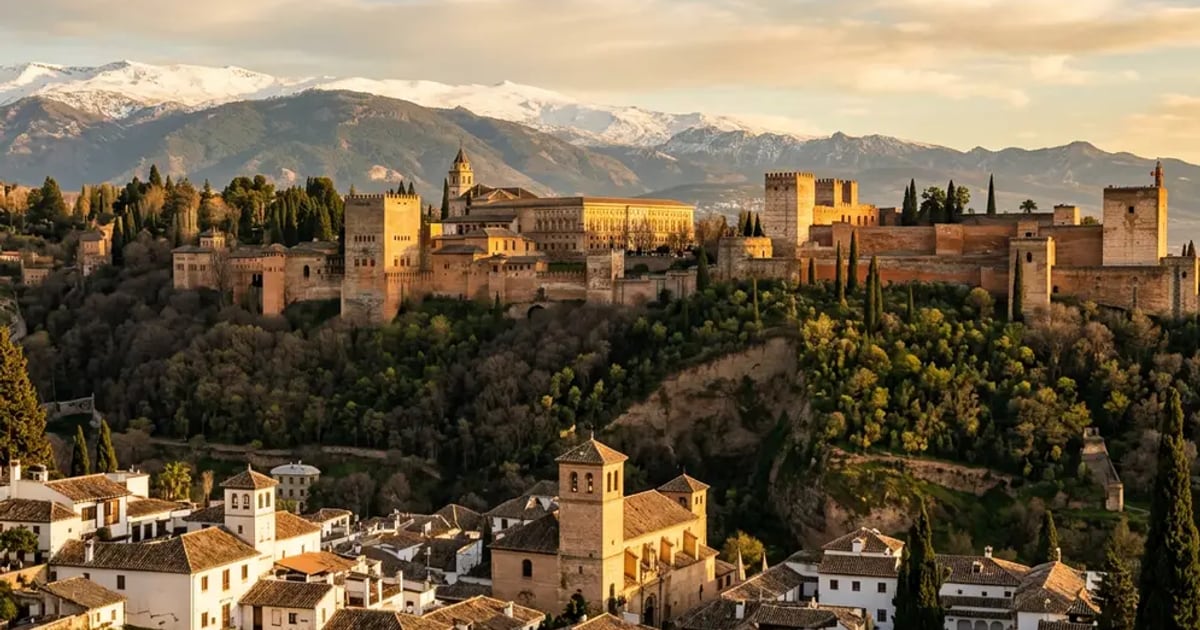
The Alhambra palace viewed from Mirador San Nicolás at golden hour, Granada
Photographer's guide

Photography spots in Granada

The Alhambra towers against snow-covered Sierra Nevada, medieval lanes climbing the Albaicín at dawn, Niño de las Pinturas murals on Realejo walls. This guide covers where to stand, what lens to use, and what the crowds miss.

Granada photographs well regardless of skill level, but the difference between a tourist snapshot and a photograph worth keeping comes down to two things: the right position and the right hour. The city has Andalusia's most dramatic backdrop (the Alhambra against the Sierra Nevada), the most photogenic medieval neighbourhood in southern Spain (Albaicín), and a set of miradores that most visitors never find. It also has crowds at the obvious spots from 11am daily, which means timing is everything.

This guide covers specific locations with recommended focal lengths, access times, and crowd patterns. It also covers what genuinely does not work: the shots most visitors attempt that produce mediocre results, and why. The Alhambra photography rules are included in detail because the Patronato's restrictions on tripods and flash inside the Nasrid Palaces catch people off guard. Drone rules are covered honestly, which means acknowledging that recreational flights near the Alhambra are largely prohibited.

For night photography practicalities at the Alhambra, including the specific rules and gear recommendations for the 22:00 visit, read the Alhambra night visit guide.

Why Granada is one of Europe's best cities for photographers

Three things set Granada apart from other photogenic Andalusian cities. The first is the backdrop: the Sierra Nevada sits close enough (30 kilometres) to appear as a wall of peaks behind the Alhambra, and from October to May those peaks carry snow. No other city in southern Spain has a major medieval monument against that kind of alpine horizon. Córdoba and Seville have nothing comparable.

The second is the light. Granada sits at 689 metres above sea level on a high plain ringed by mountains. The air is drier and cleaner than the coast, which gives the golden-hour light a quality that photographers from northern Europe find almost disorienting: sharp, warm, and prolonged. On clear October evenings the light on the Alhambra towers turns amber forty minutes before sunset and stays warm for twenty minutes after.

The third is variety within a small area. In thirty minutes on foot from Plaza Nueva you can photograph 14th-century Nasrid architecture, Baroque cave dwellings in Sacromonte, medieval Arab streetscapes in the Albaicín, and large-scale contemporary murals in the Realejo. Most cities force you to choose a theme. Granada gives you four in a morning.

Best season

October (warm light, thin crowds) and April (snow peaks, Generalife in bloom)

Peak crowd hours

11am to 6pm, April to October. Before 9am and after 7pm: manageable at most spots

Tripod rules

Banned inside the Alhambra without a permit. Allowed at outdoor miradores and public streets

The classic shots

These are the photographs Granada is known for. Calling them "classic" is not a reason to skip them: they are classic because the compositions are genuinely excellent. The goal is to make them at the right conditions rather than settling for the flat midday version.

Mirador San Nicolás: the Alhambra against the Sierra Nevada

Albaicín · Free · 24h access
Classic postcard

The view south from San Nicolás places the full length of the Alhambra against the Sierra Nevada. In good conditions, the mountain peaks are snow-capped from November to May. The composition is naturally strong because the fortified hillside fills roughly the middle third of the frame with sky above and the Darro valley below.

Focal length: 50–85mm equivalent. Wider pulls in foreground tourists; longer compresses the mountains into the frame behind the towers.
Best time: Golden hour, roughly 45 minutes before sunset. In winter, morning light (the sun rises to the east, behind you) gives front-lit walls and sharper Sierra Nevada detail.
Crowds: Busy from 4pm in summer. Empty before 8am. Mid-winter mornings are the exception: the mirador is quiet even at sunset.

Alhambra from the Carrera del Darro

Río Darro riverbank · Free · 24h access
Underused angle

Walk north from Plaza Nueva along the Carrera del Darro for about 400 metres. The path curves left and the eastern Alhambra towers appear above the tree canopy, reflected in the Darro when the water is still. This angle shows the military fortress wall rather than the palace interior, which gives a more dramatic, austere shot than San Nicolás. Early morning only: by 10am the sun is above the cliff and the reflections disappear.

Focal length: 85–135mm equivalent to compress the towers against the hillside. Wide shots include too much bridge and road.
Best time: 7–9am. Water is still, no foot traffic, morning light is lateral on the tower stone.

Generalife gardens: the Acequia del Generalife

Alhambra complex · Included with general ticket
Reflective pools

The central water channel of the Generalife, flanked by jets and clipped hedges, is the garden shot most associated with Granada. The channel runs approximately 50 metres through the courtyard; shoot from one end looking toward the Nasrid Palace arch at the far end. The jets are on a timed cycle; wait for a still moment between bursts for a clean reflection.

Focal length: 24–35mm to include the full channel and framing arch. Portrait orientation works better than landscape here.
Best time: Before 11am. The courtyard faces south and fills with direct overhead light by midday, which kills the reflection. First thing in the morning, the side walls shade the water.
Access: Included with the general Alhambra ticket (€22.27). The Generalife night tour (€8.48 separate) gives a completely different atmosphere.

Book Alhambra tickets before you plan anything else

The Nasrid Palaces entry slot is fixed at booking. Miss it by 15 minutes and you lose access. Plan your photography circuit around your slot time, not the other way around. The Generalife and Alcazaba are more flexible but close at the same time.

Less-crowded miradores

San Nicolás has the most famous view. These three have no queues, no guided tour groups, and in some cases a better photograph. All three are described in detail in the hidden gems guide, which includes walking directions.

Mirador de la Lona

Upper Albaicín · Free · 24h access
Best western view

Granada's highest viewpoint faces west across the full city: the cathedral dome, the Monasterio de San Jerónimo, and the Vega plain beyond. This is a completely different photograph from San Nicolás. The Alhambra does not appear in this frame at all, which is exactly the point: it is the city without its most photographed building, and it reads as more purely Andalusian.

Access: Carril de la Lona, upper Albaicín. Steep climb from Plaza Nueva (30–40 minutes on foot). Small bar on site. Sunrise here is excellent: mist in the Vega valley, city below in shadow.

Mirador San Cristóbal

Northern Albaicín · Free · 24h access
Albaicín overview

Faces south-east across the rooftop terraces of the lower Albaicín toward the Sacromonte hillside. The Alhambra appears in the far right of the frame rather than centre-stage. The photograph here is about the white cubes of the Albaicín houses stacked on the slope, with the cave-riddled Sacromonte ridge above them on one side and the Alhambra on the other.

Best time: Morning (7–10am) when the sun lights the white Albaicín walls from the east. Evenings can work if the sky is clear and colourful.

Mirador San Miguel Alto

Sacromonte hill · Free · Church hours vary
Full panorama

Above the San Nicolás viewpoint, on the Sacromonte side of the Darro. The Alhambra, the Albaicín, and the city below all appear in a single 180-degree sweep. The climb (30 minutes from the Albaicín plateau) means almost nobody comes here for casual tourism. The church courtyard, when open, gives the highest fixed vantage point in the immediate city area.

Practical: The church itself is often closed; the terrace around it is the photography position. Bring water. The path up from San Nicolás is steep and not paved. At golden hour, arrive 40 minutes early to allow for the climb.

Inside the Alhambra: rules and best shots

The Nasrid Palaces offer some of the most photographed interiors in Spain. The plasterwork, geometric tile dados, and the pools of the Comares and Arrayanes courtyards reward patience and good camera handling.

Photography rules inside the Alhambra

  • Photography is permitted throughout, including inside the Nasrid Palaces.
  • Tripods are not allowed without a Patronato permit (apply in advance; not typically granted for tourist visits).
  • Flash is prohibited inside the Nasrid Palaces. Use a fast lens.
  • Video is permitted without a special permit for personal use.
  • During the night visit, tripods are not permitted under any circumstances. See the night visit guide for gear recommendations.

Patio de los Arrayanes (Court of the Myrtles)

The long rectangular pool reflects the Comares Tower above it. The photograph most people know. From the south end of the pool, a 24–35mm lens captures both the length of the water and the tower. Shoot at 9am when your entry slot starts; by 10am tour groups block both ends of the pool. The water is still early in the morning; by midday people are walking the edge and the surface is disturbed.

Patio de los Leones (Court of the Lions)

The 12 lion fountain at the centre is the iconic image, but the more interesting photograph is the carved plasterwork of the surrounding gallery: stand with your back to the lions and shoot up into the muqarnas (stalactite vaulting) of the pavilions at either end. A 24mm lens can fill the frame with geometric stucco. The light inside the gallery is dim; set ISO to 800–1600 and accept grain rather than motion blur.

Sala de las Dos Hermanas (Hall of the Two Sisters)

The honeycomb muqarnas ceiling is the most elaborate in the palace. Photographing it well handheld is genuinely hard: slow enough for depth of field, bright enough to avoid blur on the carved surface. ISO 1600, f/4, and the widest prime you have. Most people get a blurry blob; a sharp image of this ceiling is a genuine technical achievement. Look through a few exposures before committing to one.

Sacromonte, Realejo, and the Albaicín

Three neighbourhoods, three completely different visual registers. None of them requires paid entry or advance booking.

Sacromonte at dusk

Cave neighbourhood · Free access

The Sacromonte hillside is riddled with cave dwellings, their whitewashed facades set against the red earth of the cliff. At dusk, lights come on inside the caves and warm yellow rectangles appear in the hillside while the sky behind goes blue. The Alhambra is visible across the Darro gorge from several points on the upper Sacromonte path.

What to shoot: Cave doorways with interior light visible, the view across the gorge toward the Alhambra from the Camino del Sacromonte, and the whitewashed walls against red earth in afternoon light.

Best time: 45 minutes before sunset into blue hour. Carry a tripod for the blue hour cave-light shots; the path is public and tripods are permitted.

Realejo street art: Niño de las Pinturas

Realejo neighbourhood · Free · 24h access

Raúl Ruiz, known as Niño de las Pinturas, has covered the exterior walls of the Realejo with large-scale murals since the early 2000s. The work is concentrated around Calle Arabial and the surrounding streets. The scale means you need a wide-angle lens (24mm or less) to get a full mural in frame, or a standard prime (50mm) for detail of individual figures. The Granada street art guide maps every major wall across the Realejo and beyond, with the artists and stories behind each piece.

Best time: Overcast days give even, diffused light on the painted surfaces without harsh shadows from building edges. On clear days, shoot before 10am or after 5pm to avoid direct sun glare on the flat painted wall surfaces.

Getting there: 15-minute walk from Plaza Nueva or a short taxi from the Alhambra entrance.

Albaicín narrow-street compositions

Albaicín · Free · 24h access

The Albaicín's whitewashed lanes are at their best in the morning before 9am. Calle Calderería Vieja (the "tea street", lined with Moroccan teterías) is especially good: the narrow lane forces a strong leading line and the hand-painted tilework and lanterns give colour. Arrive before the shops open for empty-lane compositions; once the teterías open at 9am, it fills quickly with shoppers and tourists from the nearby plaza.

Focal length: 35mm for the lane as a whole; 85mm for details of tilework, latticed windows, and tea-house signage.

Light: The Albaicín's lanes run in irregular directions; some catch morning sun on the walls, others stay in deep shadow until midday. Explore with a camera rather than committing to a single position.

Best times by season

Autumn (October, November)

The strongest season for Granada photography. October gives warm, low-angled golden-hour light, clear skies, and the first snow on the Sierra Nevada peaks. Crowds drop significantly after mid-September. The Albaicín is quiet enough in the mornings to shoot empty lanes. November is even quieter but cloud cover increases. For a full picture of what the city offers in these months beyond photography — festivals, temperatures, and where to stay — the Granada in autumn guide covers the season in detail.

Golden hour (October): sunrise around 8am, sunset around 7pm.

Winter (December to February)

Underrated. On clear days after snow, the Sierra Nevada stands in sharp white behind the Alhambra towers. The photographs look implausible to anyone who only knows Granada in summer. The city is empty; San Nicolás at sunrise might have three people. The cold (it can reach -5°C at night) requires preparation, and cloud can sit over the city for days.

Golden hour (January): sunrise around 8:15am, sunset around 6pm.

Spring (March to May)

The Generalife gardens green up quickly and the Sierra Nevada keeps snow through April. Light is warm and the days are long. Crowds build from Easter (which falls in March or April) and are substantial by May. April is the best balance of light quality, green Generalife, and manageable crowds.

Golden hour (April): sunrise around 7:30am, sunset around 8:30pm.

Summer (June to August)

Avoid midday entirely. From 11am to 6pm the light is harsh, the crowds are at their worst, and temperatures in July and August regularly exceed 37°C. The compensation: golden hour extends to 9:30–10pm, which gives a long, warm shooting window in the evening. The Alhambra night visit (22:00) works especially well in summer.

Golden hour (July): sunrise around 7am, sunset around 9:30pm.

Gear recommendations and drone rules

Recommended focal lengths

  • 24–35mm: Generalife gardens (wide channel shots), Albaicín interior courtyards, Nasrid Palace ceilings
  • 50mm: Calle Calderería Vieja lane compositions, Realejo murals (detail), street portraits
  • 85mm: Alhambra towers from Carrera del Darro, street scenes from a distance
  • 70–200mm: Sierra Nevada compression shots from San Nicolás; Alhambra towers from the Vega plain

Other gear notes

  • Tripod: Allowed at outdoor miradores and public streets. Banned inside the Alhambra without a Patronato permit. Banned during the night visit.
  • Fast prime: f/1.8 or wider for the Nasrid Palace interiors (no flash permitted, no tripod). ISO 800–1600 is normal indoors.
  • Gimbal/stabiliser: Permitted inside the Alhambra. Useful for the Nasrid Palaces at night.
  • Polarising filter: Cuts glare on the Generalife pool and Darro river surface; useful in morning light.

Drone rules near the Alhambra: read before you fly

Recreational drone flights over Granada city centre and the Alhambra are largely prohibited. The Alhambra falls under restricted airspace managed by the Patronato de la Alhambra; flying requires their specific written authorisation, which is rarely granted for non-commercial purposes. Spanish AESA regulations also restrict UAV flights over populated urban areas and crowds without prior authorisation. Contact the Patronato (alhambra-patronato.es) and Spain's civil aviation authority (AESA) well before your trip. Do not assume any general "open airspace" rules apply near the monument.

Suggested 1-day photography circuit

This circuit assumes an Alhambra general ticket with a mid-morning Nasrid Palaces slot (10:00 or 10:30). Adjust around your actual booking time.

7am

Carrera del Darro

Walk north from Plaza Nueva. Photograph the Alhambra towers reflected in the Darro. Empty streets, still water. 45 minutes.

8am

Calle Calderería Vieja, Albaicín

Before the teterías open. Empty lane compositions, hand-painted signs, tile detail. 30 minutes.

9am

Alhambra: Alcazaba and Generalife

Arrive early to use the Alcazaba tower views and Generalife gardens before your Nasrid Palaces slot. The Acequia del Generalife is best before 11am.

10:30am

Nasrid Palaces

Enter at your timed slot. Patio de los Arrayanes, Sala de Comares, Patio de los Leones, Sala de las Dos Hermanas. Allow 90 minutes. No flash, no tripod.

1pm

Lunch and rest (midday pause)

Midday light is flat and harsh. This is the right time to eat, review images, or visit a museum.

4pm

Realejo murals

Niño de las Pinturas work on Calle Arabial and nearby streets. Afternoon light is still direct but the buildings begin to shade the lower walls. 45 minutes.

6pm

Mirador San Nicolás (or Mirador de la Lona)

Arrive an hour before sunset to claim a position. San Nicolás for the classic Alhambra view; La Lona for a quieter city panorama facing west. Stay for blue hour (20 minutes after sunset).

8:30pm

Sacromonte at blue hour (optional)

Cave doorways lit from inside against a deep blue sky. Bring a tripod; the path is public. 30–40 minutes.

Common mistakes

Shooting San Nicolás and calling it done

San Nicolás is one view, facing one direction, at one focal length range. It is a starting point, not the full picture. La Lona, San Cristóbal, and San Miguel Alto each give a genuinely different photograph. Spending a day exclusively at San Nicolás means going home with fifty versions of the same image.

Ignoring blue hour

Most people pack up when the sun drops below the Sierra Nevada. Blue hour begins twenty minutes later and lasts another fifteen. The sky turns a saturated deep blue, the Alhambra walls turn orange from the floodlights, and the Sacromonte cave doorways glow. It requires a tripod at the outdoor spots, but the images are completely distinct from golden-hour shots.

Missing the Generalife in early morning

Most visitors walk through the Generalife after the Nasrid Palaces, which means arriving there at 12pm or later. By that point the Acequia del Generalife is in harsh overhead light and the reflections are washed out. The Generalife is a morning location; if your Nasrid Palace slot is late in the day, ask yourself whether you can arrive at the Alhambra early enough to do the Generalife before your palace entry time.

Attempting flash inside the Nasrid Palaces

Flash is prohibited inside the Nasrid Palaces and guards are attentive. A fast prime (f/1.8 or faster) at ISO 800–1600 handles the dim interior light without flash. Auto ISO with a minimum shutter speed of 1/60s is a practical starting point; review and adjust from there.

Assuming drone clearance without checking

The consequences of flying without authorisation near the Alhambra include equipment confiscation and significant fines. Check with the Patronato and AESA before bringing a drone to Granada. Do not rely on general "open airspace" apps for areas near major protected monuments.

Reporter notebook

Insider tips

Practical observations gathered the way a local journalist would keep them: short, specific, and more useful than brochure copy.

Crowd tip

Mirador de la Lona beats San Nicolás for sunset in every way except crowds

San Nicolás is in every guidebook and fills up from 4:30pm in summer. La Lona is 15 minutes further up the hill, faces a completely different direction (west toward the cathedral and Sierra Nevada skyline, not south toward the Alhambra), and on most evenings holds a dozen people at most. The small bar on site means you can arrive at 6pm, wait for golden hour in a chair with a drink, and leave after the last light. On clear winter mornings, the snow on the peaks catches the first pink light while the city below is still in shadow.
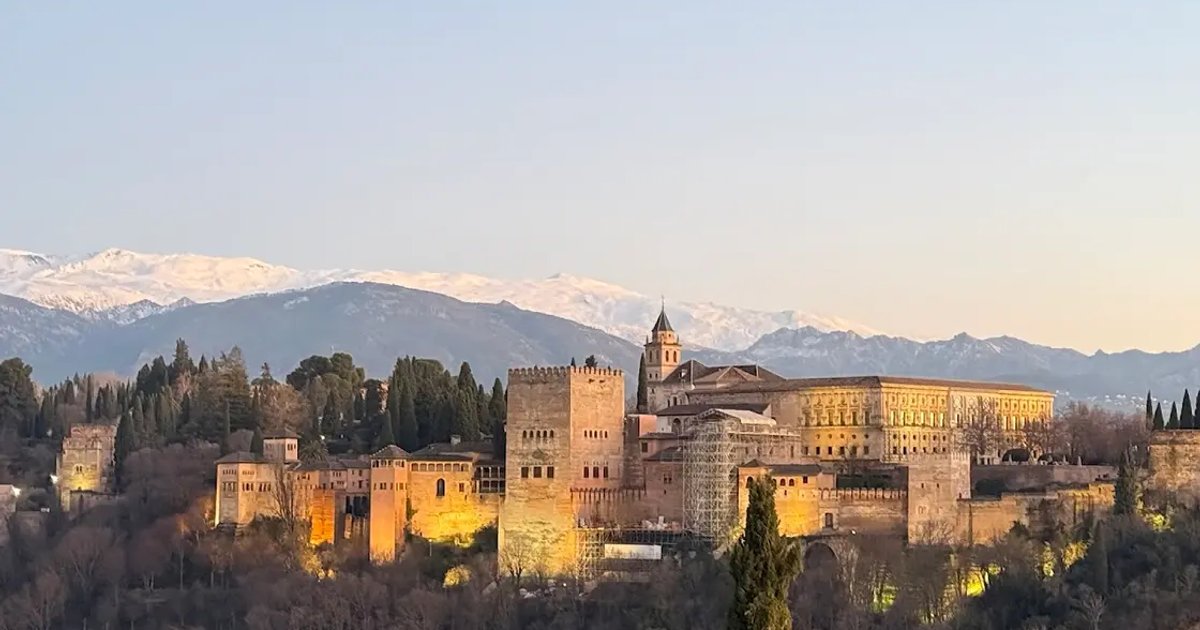
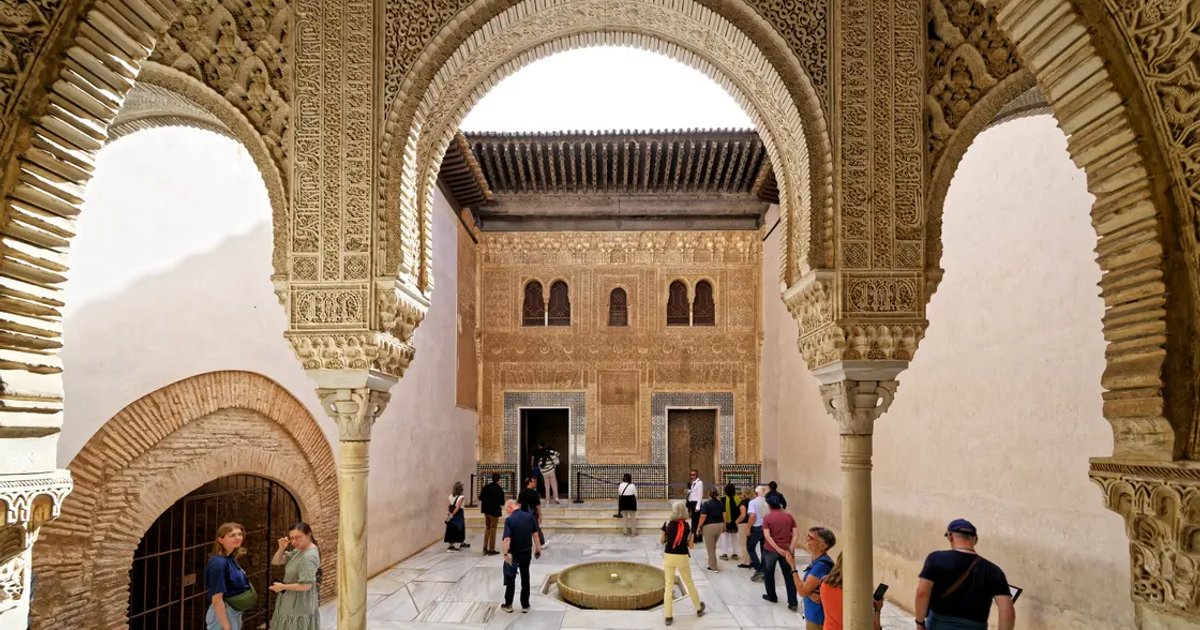
Photo spot

Shoot the Alhambra silhouette from the Generalife terrace before your timed entry slot

If your Nasrid Palaces slot is mid-morning, arrive 45 minutes early and walk straight up to the Generalife terrace rather than queuing at the palace entrance. From the upper garden terraces you get the Alhambra towers framed against the city below, at a height most visitors never reach before the palaces open. The Acequia del Generalife reflects the sky best before 11am, when sunlight reaches the water at an angle rather than from directly above.

Best time

January and February snow shots are worth the uncertainty

When the Sierra Nevada gets a heavy snowfall and Granada wakes up cold and clear, the Alhambra against snow-covered peaks from Mirador San Nicolás is the defining image of the city. It cannot be predicted more than 48 hours out. If you are in Granada in winter and the forecast shows snow above 1,000 metres followed by clearing skies, set an alarm for 7am. The window is usually one to two days before cloud or melt obscures the view. Bring a 70–200mm equivalent and shoot from the left side of the mirador to compress the Sierra Nevada into the frame behind the palace towers.

FAQ: photographing Granada

What is the single best photography spot in Granada?

Mirador San Nicolás at golden hour is the canonical answer: the Alhambra fills the frame against the Sierra Nevada, and on a clear winter morning the peaks are snow-capped. But San Nicolás is busy from 5pm daily. For a less contested shot of the same panorama, Mirador San Miguel Alto is higher, quieter, and catches the same light without fifty people in the frame. For a completely different axis, Mirador de la Lona faces west toward the cathedral and San Jerónimo rather than south toward the Alhambra, a genuinely different photograph.

Can you take photos inside the Nasrid Palaces?

Yes. Photography is permitted throughout the Nasrid Palaces without a permit. Tripods are not allowed inside any part of the Alhambra (including the Alcazaba and Generalife) unless you hold a specific tripod permit issued by the Patronato de la Alhambra. Flash is prohibited inside the Nasrid Palaces. Gimbals and handheld stabilisers are allowed.

Is there a tripod permit for the Alhambra?

The Patronato de la Alhambra issues a tripod permit for professional or semi-professional shoots on application. Standard tourist visits do not include tripod access. The permit involves a fee and prior approval; apply via the Patronato website or by contacting them directly at +34 958 027 971. For the night visit specifically, tripods are not permitted under any circumstances.

When is the best time of day to photograph Granada?

Golden hour varies by season. In summer (June to August), sunset falls between 9pm and 10pm, so golden hour runs 8:30–9:30pm. In spring and autumn, sunset is 7:30–8:30pm. In winter, 5:30–6:30pm. Sunrise golden hour is 45 minutes either side of the stated time. For the Alhambra view from San Nicolás, the afternoon and evening light comes from the west, which means the Alhambra is lit from the side at golden hour rather than flat-on. That directional raking light is what gives the stone its texture.

Are drones allowed in Granada city centre?

Recreational drone flights are heavily restricted in Granada. The city centre falls within controlled urban airspace under Spanish AESA regulations, which prohibit recreational UAV flight over crowds and in many densely populated zones without prior authorisation. Flying near the Alhambra requires specific Patronato authorisation, which is rarely granted for non-commercial purposes. For any aerial footage, contact the Patronato and AESA (Agencia Estatal de Seguridad Aérea) well before your visit. Do not assume clearance is possible.

What is the best season for photography in Granada?

October and April are the strongest months. October brings warm, low-angle light, the crowds drop significantly after summer, and the landscape around Sierra Nevada turns amber. April delivers clear skies, the Generalife gardens are green and blooming, and the Sierra Nevada backdrop still shows snow on the peaks. Winter is underrated: cloud cover occasionally frames the Alhambra dramatically, and the snow shots from San Nicolás (when conditions align) are the most striking images of the city.

How do I photograph the Alhambra from the Carrera del Darro?

Walk north from Plaza Nueva along the Carrera del Darro. After about 400 metres the path curves and the eastern towers of the Alhambra appear above the riverbank trees. The best composition is a telephoto shot (85–135mm equivalent) of the towers reflected in the Darro when the water is still, usually early morning before 9am. The riverside position gives a very different angle from the famous San Nicolás view: lower, closer, more intimate, with the fortified walls rather than the palaces as subject.

Can I photograph the Generalife gardens?

Yes. Photography is permitted throughout the Generalife gardens. The famous Acequia del Generalife (the reflective pool channel lined with hedges and jets) is the primary target. Morning light before 11am is best, when the sun is still low enough to side-light the water and hedges without washing out the reflections. Entry is included with the general Alhambra ticket (€22.27). The Generalife night tour (€8.48) runs separately from the Nasrid Palaces night visit.

Is Niño de las Pinturas' street art still in the Realejo?

The large-scale murals by Raúl Ruiz (Niño de las Pinturas) are on the exterior walls of buildings in the Realejo, primarily around Calle Arabial and the surrounding streets. They are outdoor public art and accessible at any hour. The murals change over time as some are painted over and new ones commissioned, but the concentration of work in this neighbourhood has been consistent since the early 2000s. Go during the day for good light on the colour; evening diffused light works well for avoiding glare on the painted surfaces.

Further reading

Official sources

  1. Patronato de la Alhambra y Generalife (opens in a new tab)

    Official photography rules, tripod permit enquiries, and Alhambra visit regulations.

  2. Granada Tourism Office (opens in a new tab)

    Official city tourism information including access details for miradores and city monuments.

  3. AESA (Agencia Estatal de Seguridad Aérea) (opens in a new tab)

    Spanish civil aviation authority — drone regulations for urban and restricted airspace.