Guide

Best of Granada for History Lovers

Ten picks for serious history travellers: Alhambra, Nasrid Palaces, Royal Chapel, Albaicín, Generalife, and guided tours of the Cathedral and La Cartuja.

Ten history-focused picks, ordered by how you should encounter them. The Alhambra sits first not because it needs introduction but because everything else in Granada makes more sense once you have been inside. The Alhambra is the starting point; the Royal Chapel three minutes downhill is the ending, the building that closes the Nasrid story as the other opens it. Between those two anchors sit the Nasrid Palaces, the Albaicín, two guided activities that make the Cathedral and La Cartuja legible, two museums that fill the gaps the monuments leave, a guided walk through the Moorish quarter, and the Generalife gardens above the palace walls.

What each era left behind is still present. The Zirid Berber kingdom founded Granada in the 11th century and built the original quarter on the Albaicín hill. The Nasrid dynasty, Granada's last, ruled from the Alhambra for two and a half centuries, constructing the palatial sequence that survives in better condition than any comparable Islamic complex in the world. January 1492 ended it: Ferdinand and Isabella accepted the keys from Muhammad XII, the last sultan, and chose Granada rather than Seville or Toledo as their burial place. The Royal Chapel they commissioned, finished in 1517, sits three minutes' walk from the mosque they converted into a cathedral. The Baroque layer came last: La Cartuja monastery, whose Sagrario was completed in 1720, is as far from Nasrid restraint as architecture gets.

Guided tours pay off here because the historical density rewards expert interpretation. The same wall may contain Roman stonework, Nasrid plasterwork, and a 16th-century Christian alteration. The difference between noticing that and walking past it is usually a guide who has been pointing it out for years.

For the city's museum offer alongside its monuments, the best museums guide covers Granada's ten best institutions in full.

Ranked list

How we chose

The places on this list were selected against the following editorial criteria.

  • Historical depth: sites where multiple civilisation layers are physically legible, not just described
  • Interpretive value: the difference a guide makes to understanding what you are looking at
  • Authenticity of material: original Nasrid, Isabelline Gothic, Plateresque, and Baroque fabric in situ
  • Practical access: opening hours, ticket logistics, and how each site connects to adjacent ones
  • Coverage across eras: Moorish, Reconquista, and Baroque Granada each represented

Reporter notebook

Insider tips

Practical observations gathered the way a local journalist would keep them: short, specific, and more useful than brochure copy.

Booking tip

Book Alhambra tickets before you book your flights

In April, May, June, and September, Nasrid Palace slots sell out six to eight weeks ahead. The official channel is tickets.alhambra-patronato.es; third-party resellers charge a premium for the same limited allocation. If you want a specific date, check availability the moment you know your travel dates. Your slot time dictates your entire day's schedule: build around it, not the other way around.

Crowd tip

The Museo de la Alhambra is free and almost always empty

Almost every visitor walks past the entrance to the Museo de la Alhambra in the Palacio de Carlos V without knowing it exists. The Nasrid ceramics and architectural fragments here are as significant as anything in the palaces above, and at eye level in good light you can actually read the detail. Add one hour to your Alhambra visit; entry is free with your ticket.

Top picks

Alhambra

The Alhambra is the largest and best-preserved medieval Islamic palatial complex in the world: a fortified city on the Sabika hill above Granada, begun under Muhammad I in the mid-13th century and extended by each successive Nasrid sultan until 1492. Entry to the Nasrid Palaces is capped at 6,600 visitors per day across timed 30-minute slots. Those slots sell out weeks ahead in spring and summer (sometimes months ahead). Book at tickets.alhambra-patronato.es and build your entire itinerary around the time you are given, not the other way around. Allow a minimum of three hours for the Alcazaba, Nasrid Palaces, and Generalife combined. The full circuit covers three kilometres on uneven historic paving. General day ticket: €22.27.

Nasrid Palaces

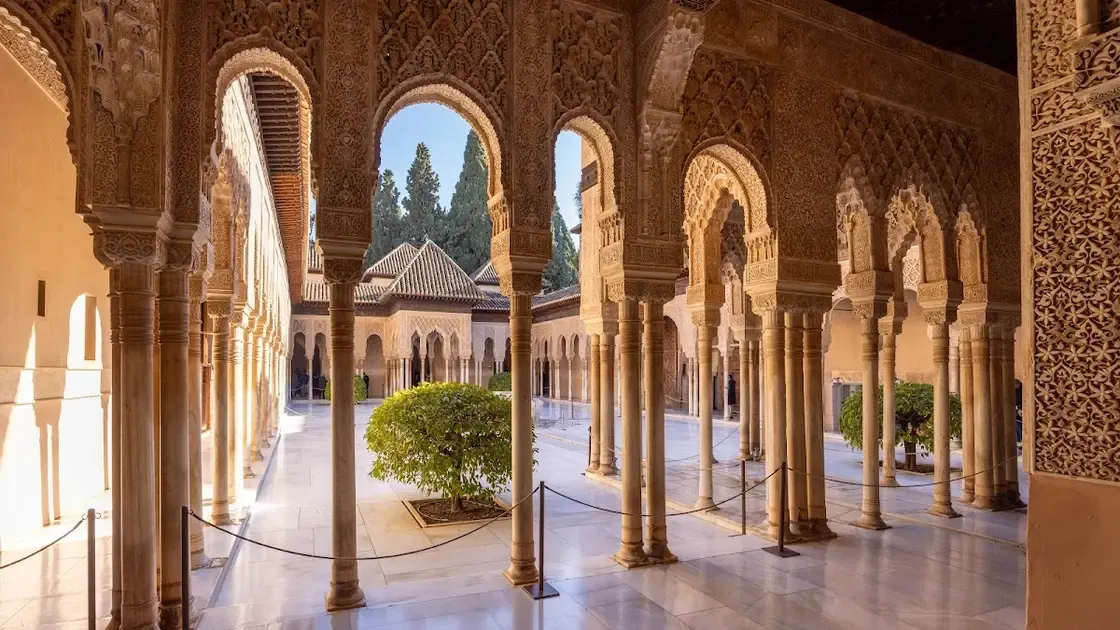
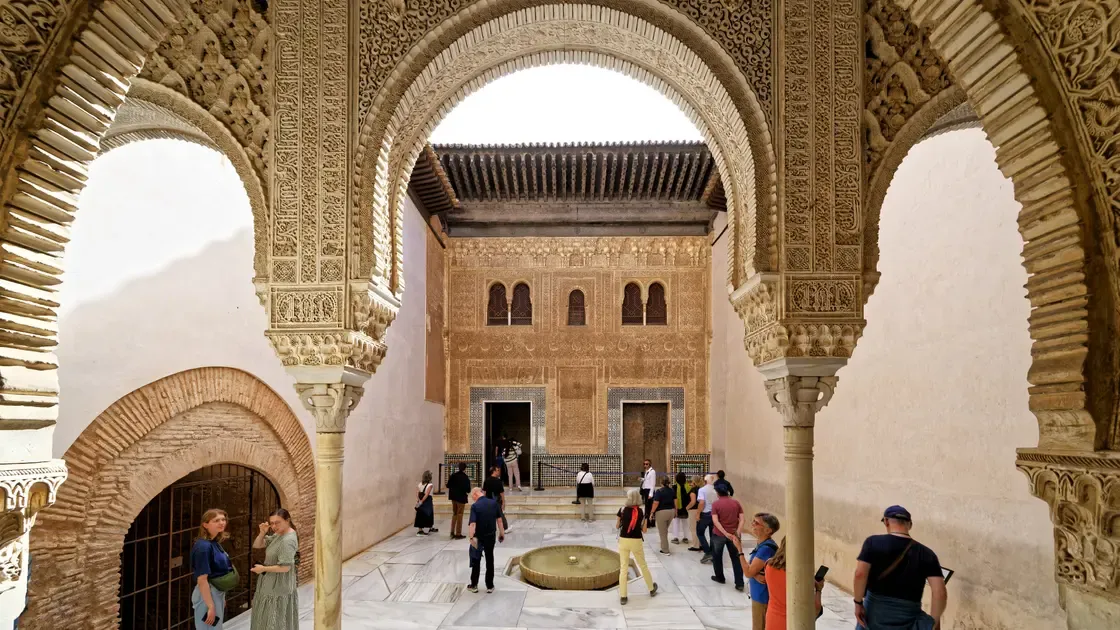
The Nasrid Palaces are the palatial core of the Alhambra: three linked royal houses built between the mid-13th and late 14th centuries whose carved stucco, muqarnas vaulting, and geometric tile are among the most elaborate surviving interiors in the medieval world. The Comares Palace, built under Yusuf I (1333–1354), centres on the Patio de los Arrayanes and the Hall of the Ambassadors: 11.3 metres square, 18 metres high, the largest room in the complex, its cedar ceiling inlaid as a cosmological map. The Palace of the Lions, added under Muhammad V (1362–1391), has the Patio de los Leones with its 12-lion alabaster fountain and two domed halls whose muqarnas ceilings contain techniques that remain poorly understood today. Entry is strictly timed: arrive within your 30-minute slot or forfeit access. Allow 45 to 90 minutes once inside.

Royal Chapel of Granada

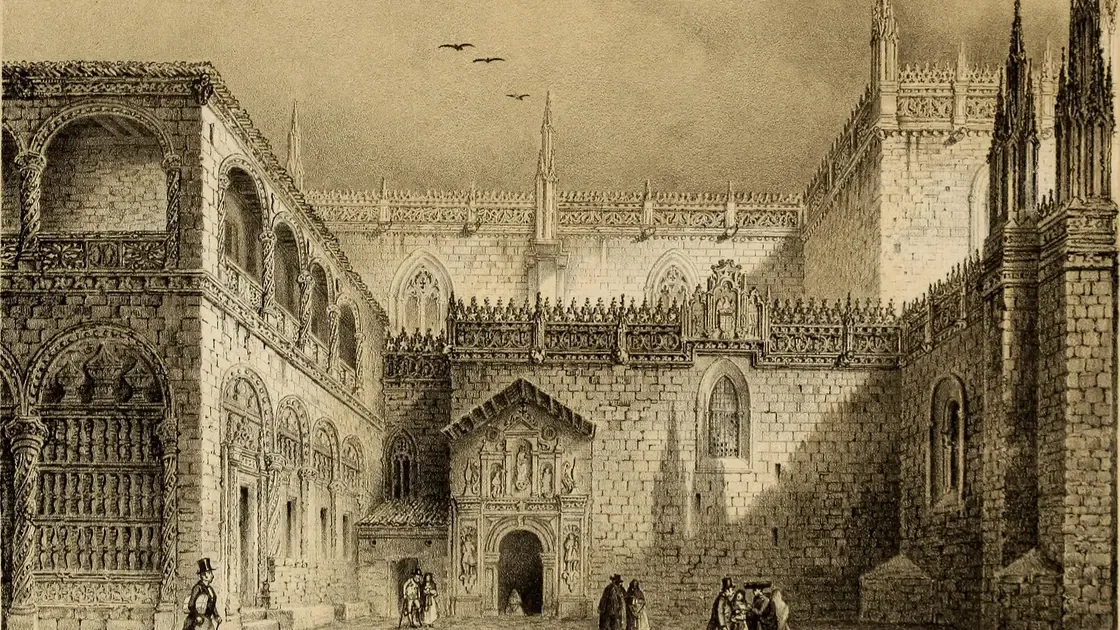
The Royal Chapel is the building that closes the Nasrid story. Isabella I commissioned it in 1504 as her burial place, a deliberate choice of Granada (the city taken from the last Nasrid sultan) over Seville or Toledo. The Isabelline Gothic nave, completed in 1517, is divided by Bartolomé de Jaén's monumental wrought-iron reja, one of the finest examples of Spanish Renaissance ironwork. Beyond it: the Carrara marble cenotaphs of Isabella and Ferdinand carved by Domenico Fancelli, and the actual lead coffins in the crypt below. The Sacristy-Museum is the other reason to come: Isabella's personal art collection includes Flemish paintings by Hans Memling, Rogier van der Weyden, and Dierick Bouts, alongside a Sandro Botticelli panel. Entry €5; free Wednesdays 14:30–18:30 (book ahead).

10 places
  1. Alhambra

    Alhambra

    The Alhambra is the largest and best-preserved medieval Islamic palatial complex in the world: a fortified city on the Sabika hill above Granada, begun under Muhammad I in the mid-13th century and extended by each successive Nasrid sultan until 1492. Entry to the Nasrid Palaces is capped at 6,600 visitors per day across timed 30-minute slots. Those slots sell out weeks ahead in spring and summer (sometimes months ahead). Book at tickets.alhambra-patronato.es and build your entire itinerary around the time you are given, not the other way around. Allow a minimum of three hours for the Alcazaba, Nasrid Palaces, and Generalife combined. The full circuit covers three kilometres on uneven historic paving. General day ticket: €22.27.

  2. Nasrid Palaces

    Nasrid Palaces

    The Nasrid Palaces are the palatial core of the Alhambra: three linked royal houses built between the mid-13th and late 14th centuries whose carved stucco, muqarnas vaulting, and geometric tile are among the most elaborate surviving interiors in the medieval world. The Comares Palace, built under Yusuf I (1333–1354), centres on the Patio de los Arrayanes and the Hall of the Ambassadors: 11.3 metres square, 18 metres high, the largest room in the complex, its cedar ceiling inlaid as a cosmological map. The Palace of the Lions, added under Muhammad V (1362–1391), has the Patio de los Leones with its 12-lion alabaster fountain and two domed halls whose muqarnas ceilings contain techniques that remain poorly understood today. Entry is strictly timed: arrive within your 30-minute slot or forfeit access. Allow 45 to 90 minutes once inside.

  3. Royal Chapel of Granada

    Royal Chapel of Granada

    The Royal Chapel is the building that closes the Nasrid story. Isabella I commissioned it in 1504 as her burial place, a deliberate choice of Granada (the city taken from the last Nasrid sultan) over Seville or Toledo. The Isabelline Gothic nave, completed in 1517, is divided by Bartolomé de Jaén's monumental wrought-iron reja, one of the finest examples of Spanish Renaissance ironwork. Beyond it: the Carrara marble cenotaphs of Isabella and Ferdinand carved by Domenico Fancelli, and the actual lead coffins in the crypt below. The Sacristy-Museum is the other reason to come: Isabella's personal art collection includes Flemish paintings by Hans Memling, Rogier van der Weyden, and Dierick Bouts, alongside a Sandro Botticelli panel. Entry €5; free Wednesdays 14:30–18:30 (book ahead).

  4. Albaicín

    Albaicín

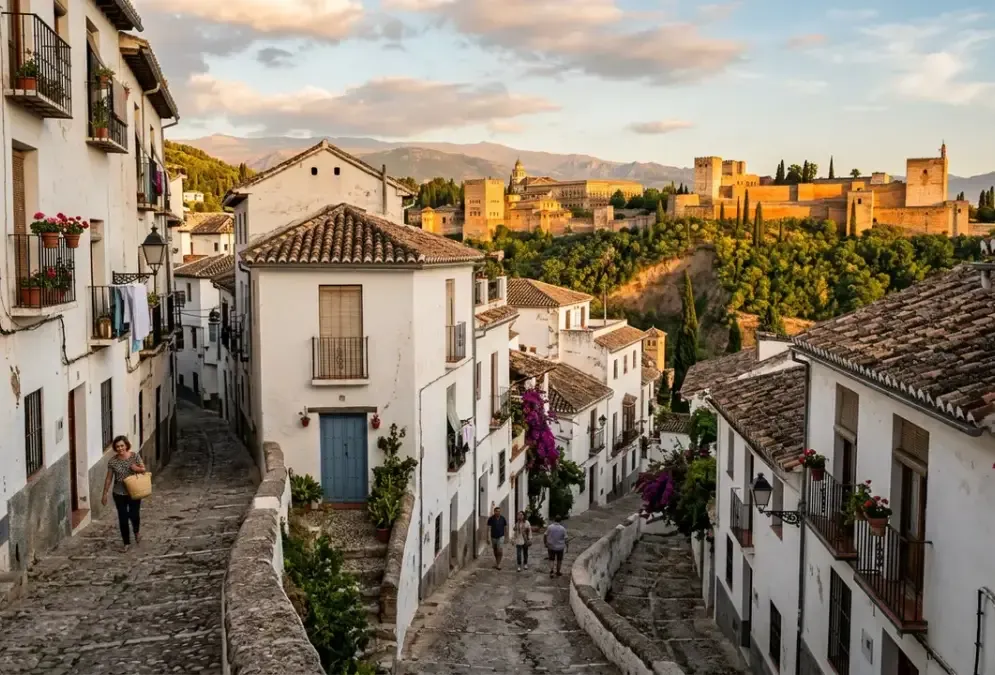
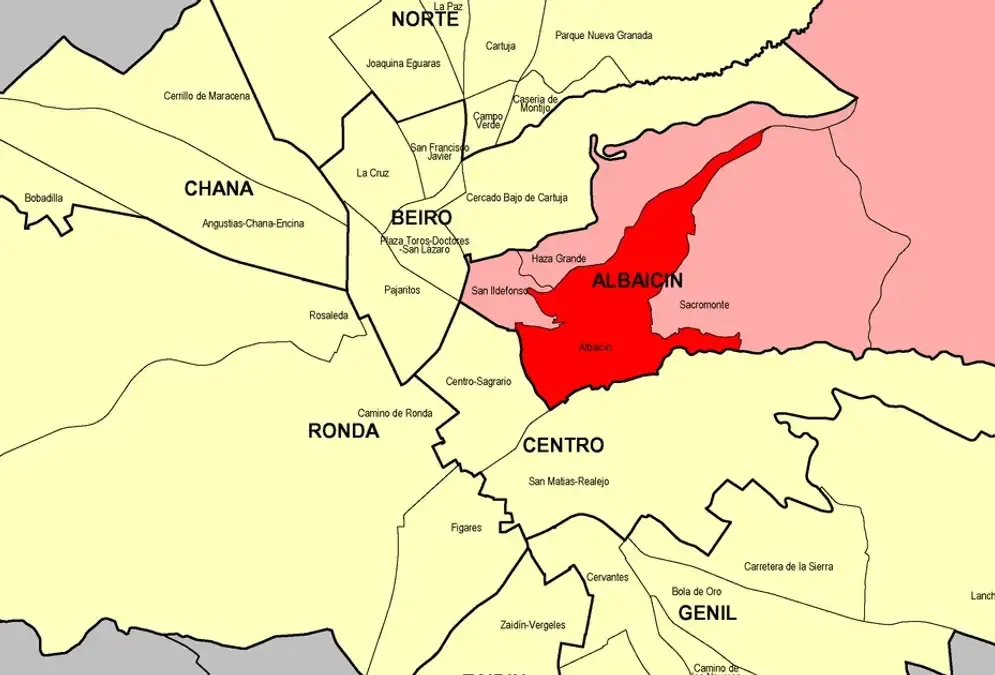
    The Albaicín is the oldest inhabited part of Granada, and its street layout has not changed meaningfully since the Nasrid period. During the 14th and 15th centuries, this hillside held more than 40,000 people and 30 mosques. UNESCO listed it as World Heritage in 1994, recognising the entire urban fabric: the placement of lanes, the relationship between street and sky, the whitewashed walls with heavy wooden doors opening onto private *cármenes*. The Mirador de San Nicolás on the ridge gives the most complete view of the Alhambra in the city, the Nasrid palaces at eye level with the Sierra Nevada behind. Go at sunset the evening before your Alhambra visit: the light is warmer and the view clarifies the relationship between the palace hill and the neighbourhood facing it across the Darro valley.

    A UNESCO-listed hillside of narrow Moorish lanes, private walled gardens, and the finest views of the Alhambra anywhere in the city
  5. Granada Cathedral Tour

    Granada Cathedral Tour

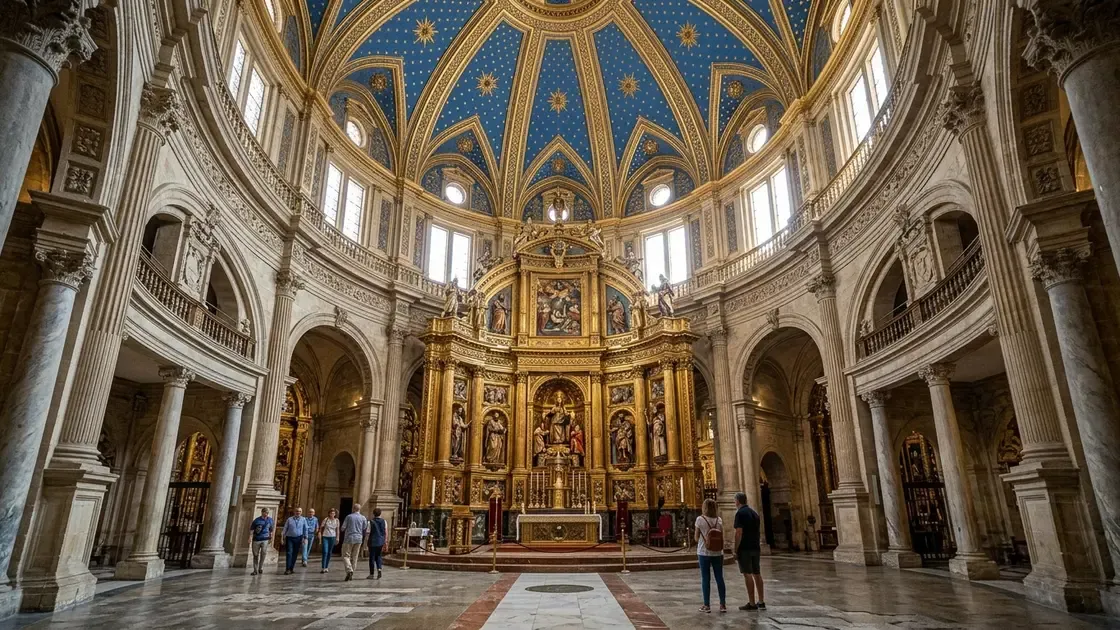
    Granada Cathedral is the first Renaissance church built in Spain, and its architecture is unusual enough that almost every visitor walks through it without understanding what they are looking at. Diego de Siloé's circular main chapel (a rotunda grafted onto a five-nave basilica) had no precedent in Spanish architecture when work began in 1528. The 34.5-metre vault, the ring of gilded altarpieces in the circular chapel, Alonso Cano's Baroque facade added 140 years after construction began: these elements belong to different centuries and different architectural logics. A guided Cathedral tour is the most efficient way to make them cohere. The better operators combine the Cathedral with the adjoining Royal Chapel, handling the transition between the two sites and explaining their deliberate relationship. From €20, including entry fees; confirm whether both venues are bundled before booking.

    Guided Tour
  6. La Cartuja Monastery

    La Cartuja Monastery

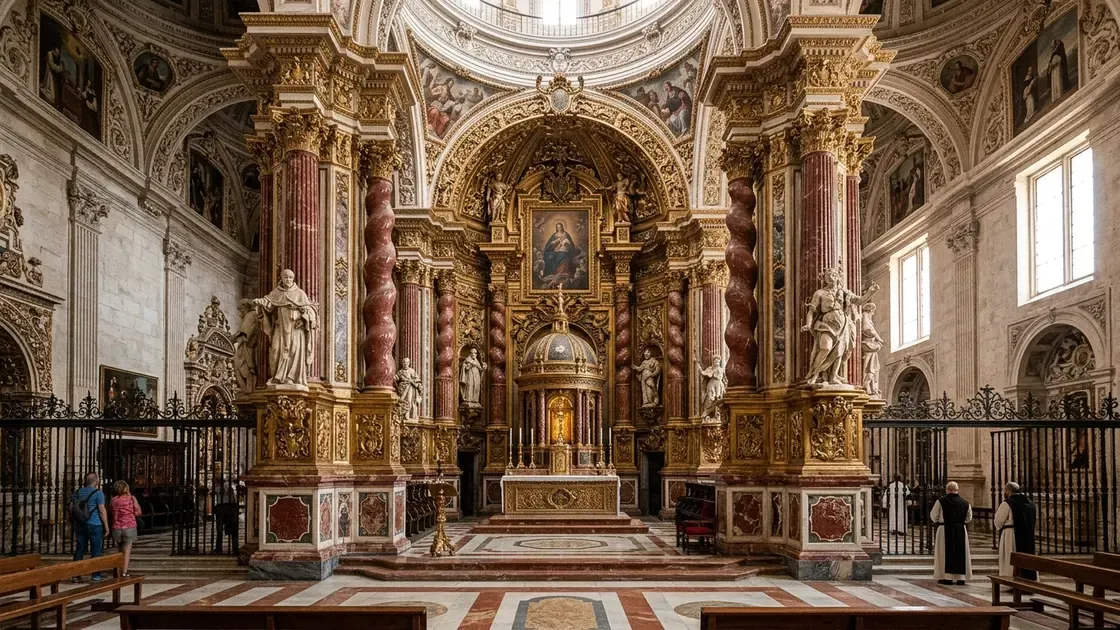
    La Cartuja sits on the northern edge of the city, a 20-minute walk from the centre, in a neighbourhood most visitors never reach. That is the practical reason to go: you will not share the Sagrario with a tour group. The monastery was founded in 1506 and construction ran for three centuries, which is why the building has multiple personalities: a sober Renaissance cloister, a dark and meditative nave, and then (through the door at the far end) Francisco Hurtado Izquierdo's Sagrario, completed between 1713 and 1720. Stucco reliefs, marble inlay, twisted jasper columns in red and green, gilded decoration with almost no surface left unworked. The Sacristy before it rewards a slower look: cedar joinery by lay brother Francisco Vázquez Mora, inlaid with tortoiseshell, ivory, and ebony, using geometric patterns that explicitly reference the Nasrid tradition the monastery was built alongside. Entry €5; no booking required.

    Guided Tour
  7. Museo de la Alhambra

    Museo de la Alhambra

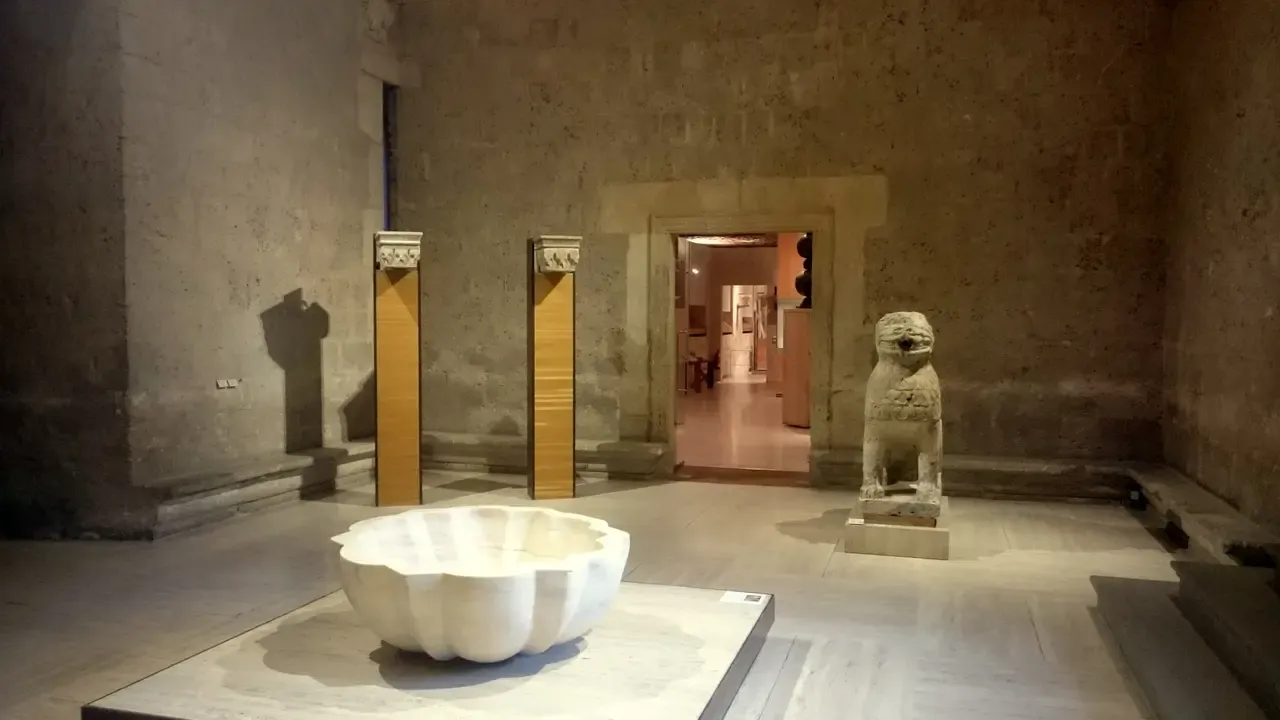
    Most visitors to the Alhambra spend their time queuing for the Nasrid Palaces. The Museo de la Alhambra, one floor below, is free and largely empty. It occupies the ground floor of the Palacio de Carlos V (a circular Renaissance courtyard of 32 Doric columns, completed in 1527) and holds one of the best collections of Islamic art in Europe. The Nasrid ceramics are the core: lustre-ware jars, bowls, and tiles in cobalt and gold, all sourced from the Alhambra complex itself. Architectural fragments let you examine carved stucco panels and inscribed capitals at eye level that in situ are overhead and dimly lit. The Blue Amphora is here: a 14th-century vase nearly a metre tall, deep blue on a buff ground, with deer and gazelles in the painted band around its widest point. Allow an extra hour after your palace visit. Entry is free.

  8. Museo Arqueológico de Granada

    Museo Arqueológico de Granada

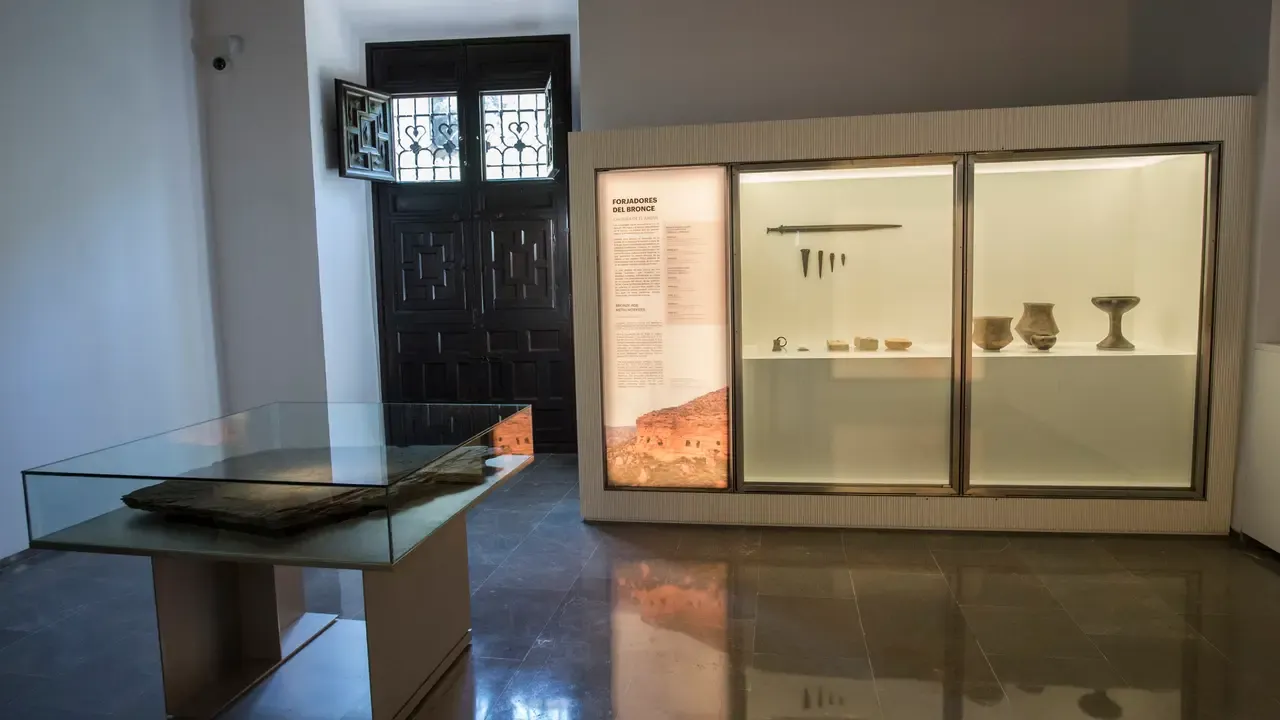
    The Museo Arqueológico occupies the Casa de Castril, a 1539 Renaissance palace on the Carrera del Darro with a Plateresque portal worth pausing at before you've even thought about what's inside: grotesque heads, shell motifs, stone carvings intricate enough to hold attention for several minutes. The museum has occupied this building since 1879 and its collection runs from the Paleolithic through Phoenician colonisation, Roman Iliberis, Visigothic rule, and on to the Nasrid period. The Phoenician artefacts are among the best-preserved in Andalusia: terracotta figures and ceramic vessels from the 7th and 6th centuries BC. The Nasrid ceramics on the upper floor show the technical sophistication of Granada's final Islamic dynasty. Admission €1.50; free for EU citizens and on Sundays. The building's internal patio, with its stone fountain and arcades, is worth ten minutes in its own right.

  9. Albaicín Walking Tour

    Albaicín Walking Tour

    Walking the Albaicín without knowing what you're looking at is perfectly enjoyable. Walking it with someone who can read the city is different. An Albaicín walking tour runs 2 to 2.5 hours through the medieval core: the Zirid kingdom that built the original quarter in the 11th century, the Nasrid expansion that turned Granada into a city of 100,000 people by the 14th century, the 1492 conquest that cleared the mosques. The guide points to what you wouldn't notice alone: a Nasrid arch built into a 16th-century wall, the remains of a Moorish bath below a later church, the logic of the street pattern as a defensive grid. The tour stops at the Mirador de San Nicolás; arrive before sunset to get a position on the terrace before the crowds settle. Free walking tours run on a tip model (€5–10 per person at the end); paid tours from €15. Book the morning slot to avoid the midday heat.

    Guided Tour
  10. Generalife Gardens Tour

    Generalife Gardens Tour

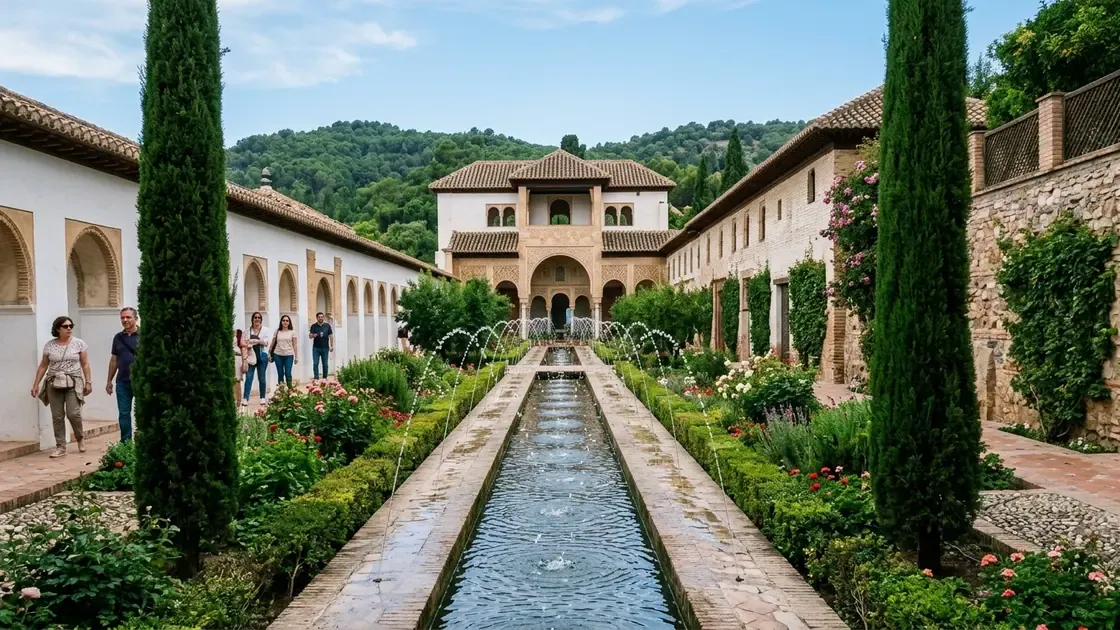
    The Generalife was the Nasrid sultans' summer estate, built by Muhammad III between 1302 and 1309 on the Cerro del Sol above the main palace complex. Most visitors see it last, after three hours in the Alhambra, and treat it as a walk-through. A focused garden tour changes that. The Patio de la Acequia is a 49-metre water garden with the Acequia Real (the royal channel bringing Sierra Nevada snowmelt) running along its axis. A guide who understands the hydraulic engineering that kept consistent pressure across the full drop from the Río Darro can make the space feel like a different place from the one in your guidebook. Above the courtyard, the Escalera del Agua: a stairway with hollow stone handrails carrying a constant flow of cold water. Views from the top take in the Alhambra rooftops, the Albaicín ridge, and the city below. Standalone Generalife ticket: €12.73; included in the €22.27 general Alhambra ticket.

    Guided Tour

A structured three-day approach. Day one for the Alhambra: book your Nasrid Palaces time slot first and plan everything around it. The Alcazaba and Generalife have no timed entry, so use them to fill the time before and after. Visit the Museo de la Alhambra immediately after the palace circuit, while the carved stucco and ceramics are still fresh; it is free and takes an hour. The evening before your Alhambra day, go to the Mirador de San Nicolás at sunset to understand the geography. Day two for the lower city: the Royal Chapel at opening (10:15) before tour groups arrive, combined with the Cathedral tour and the Museo Arqueológico on the Carrera del Darro (all within a ten-minute walk of each other). The Albaicín walking tour in the afternoon, starting from Plaza Nueva, connects the districts. Day three for what most visitors miss: La Cartuja in the morning (no booking, no queues, Sagrario alone justifies the 20-minute walk north), and the Generalife gardens in the afternoon if you want a closer look at the hydraulic engineering that supported the palace above it.

Frequently asked questions

How many days do you need to cover Granada's main historical sites?

Three days covers the essentials at a reasonable pace. Day one for the Alhambra complex (Alcazaba, Nasrid Palaces, Generalife, and the Museo de la Alhambra). Day two for the Royal Chapel, Granada Cathedral, the Albaicín, and the Museo Arqueológico. Day three for La Cartuja and a deeper look at any site from the first two days that earned more time. A fourth day opens up the Albaicín's quieter lanes, a dedicated Generalife garden tour, and the monuments most visitors miss: the Arab Baths on the Carrera del Darro and the Cuarto Real de Santo Domingo.

Do you need a guide for the Alhambra, or can you manage alone?

A guide adds real value for a first visit. The Nasrid Palaces accumulate 250 years of sultan-by-sultan additions, and understanding which hall belongs to which ruler (and why Yusuf I's Comares Palace is more politically formal than Muhammad V's Palace of the Lions) changes what you see. The audioguide covers the basics but cannot answer questions. Official small-group guided tours cap at around 10 people and run from €30 to €45, entry included. On GetYourGuide and Viator, small-group private tours run €60 to €120 for a half-day. If you visit alone, read the monument pages carefully before you go and give yourself at least 90 minutes in the Nasrid Palaces.

What is the best historical site in Granada outside the Alhambra?

The Royal Chapel, for the depth of what it holds in a small space: the marble cenotaphs of Isabella and Ferdinand by Domenico Fancelli, the actual lead coffins in the crypt below, Isabella's personal art collection in the Sacristy-Museum (Memling, van der Weyden, Botticelli), and her crown and Ferdinand's sword displayed together. Entry is €5. It takes an hour to an hour and a half done properly, and the Sacristy rewards a slow look. For something less visited: La Cartuja monastery, whose Churrigueresque Sagrario (1713–1720) is among the most extreme Baroque interiors in Spain and has almost no queue.

Is the Albaicín worth visiting, or is it just a viewpoint?

The Albaicín is worth a half-day, not just a trip to the Mirador de San Nicolás. The street layout has not changed since the Nasrid period; it is the best-preserved example of a Hispano-Muslim urban district in Andalusia. El Bañuelo on the Carrera del Darro is the most intact 11th-century Islamic bathhouse in Spain, its star-pierced roof vaults filtering light exactly as they did a thousand years ago. An Albaicín walking tour (from €15) opens up the Nasrid arches, former mosque sites, and architectural layers that the streets alone do not explain. Go at sunset for the Mirador view; go the next morning for the neighbourhood itself.

Is the Generalife worth seeing separately from the Alhambra, or is it just the gardens?

The Generalife is included in the €22.27 general Alhambra ticket, so most visitors see it as part of the main complex. It rewards a slower visit than most people give it. The Patio de la Acequia (a 49-metre water garden fed by the Acequia Real from the Río Darro) is the engineering achievement that made the entire Alhambra water supply possible. The Escalera del Agua above it has hollow stone handrails carrying a continuous flow of cold water. A standalone ticket (€12.73, Generalife only) is worth buying if you want to return without navigating the main palace complex. For April to May and September to October visits, afternoon after 16:00 is the calmest time.