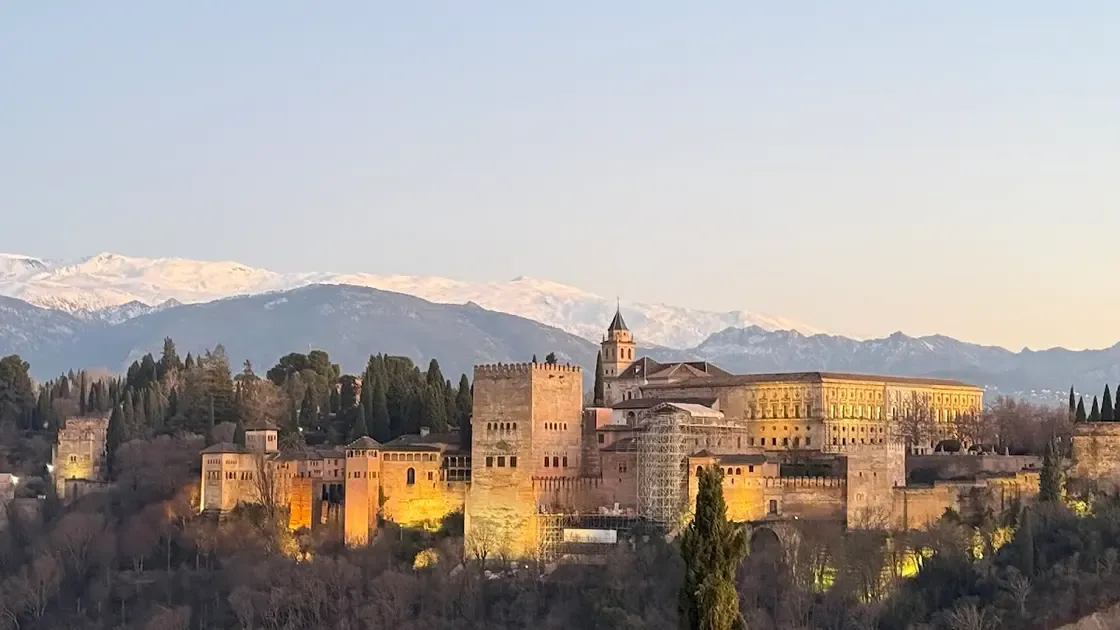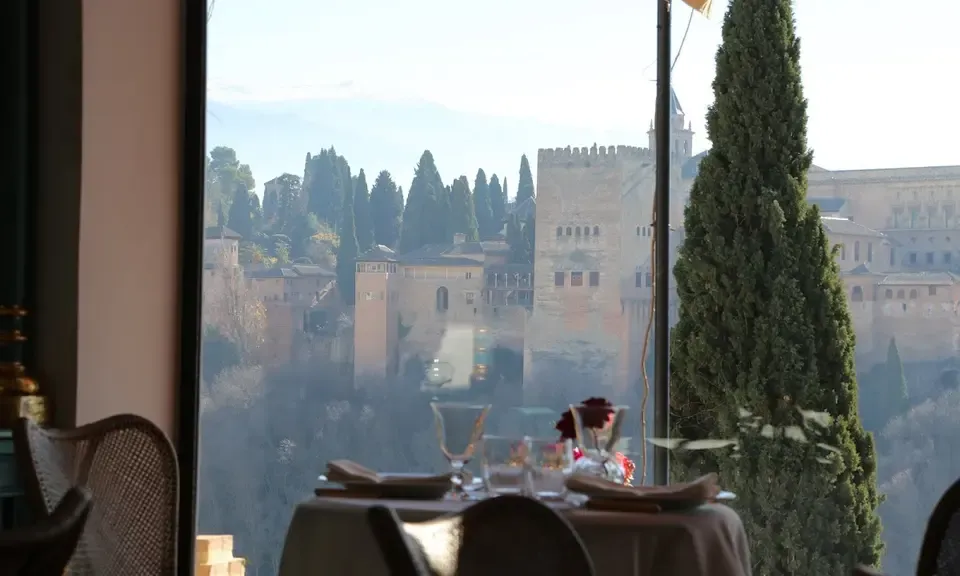
The name translates as Palace of the Free Woman — or, more precisely, the Palace of the Honest Lady — and the woman in question was Aixa al-Horra, wife of Sultan Abu al-Hasan Ali and mother of Muhammad XII, known to history as Boabdil, the last sultan of Granada. When her husband took a second wife and effectively exiled her from the Alhambra, Aixa retreated across the valley to the upper Albaicín and built this palace. She lived here through the final years of Nasrid rule and watched the Alhambra from the hill opposite. That detail — the deposed queen watching the palace she had lost from a palace she had built — gives the place a particular weight that the standard visit does nothing to dispel.
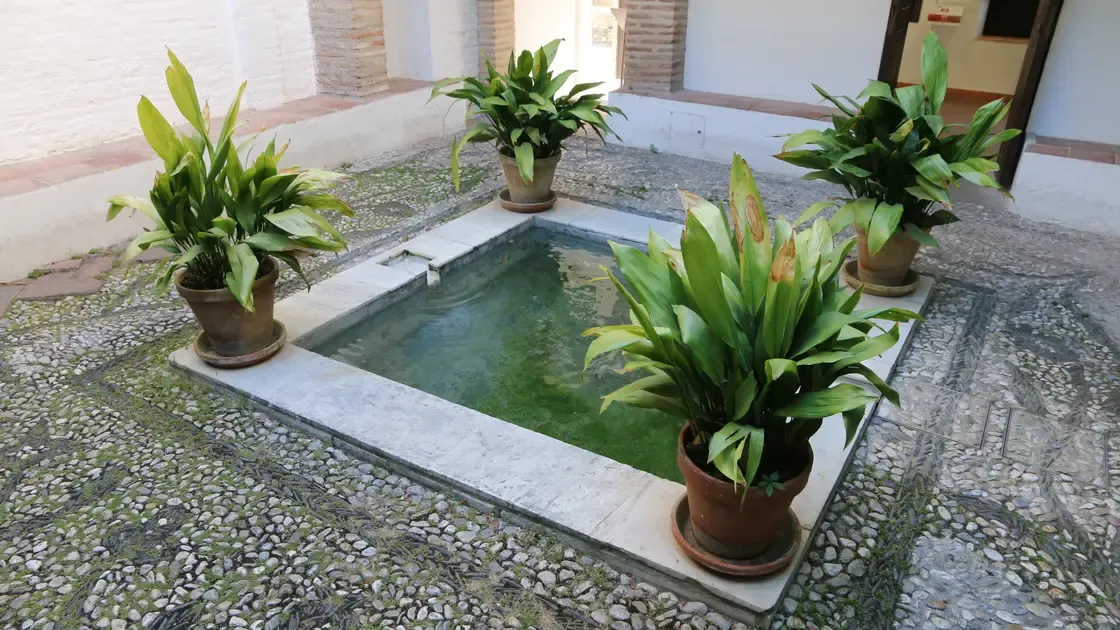
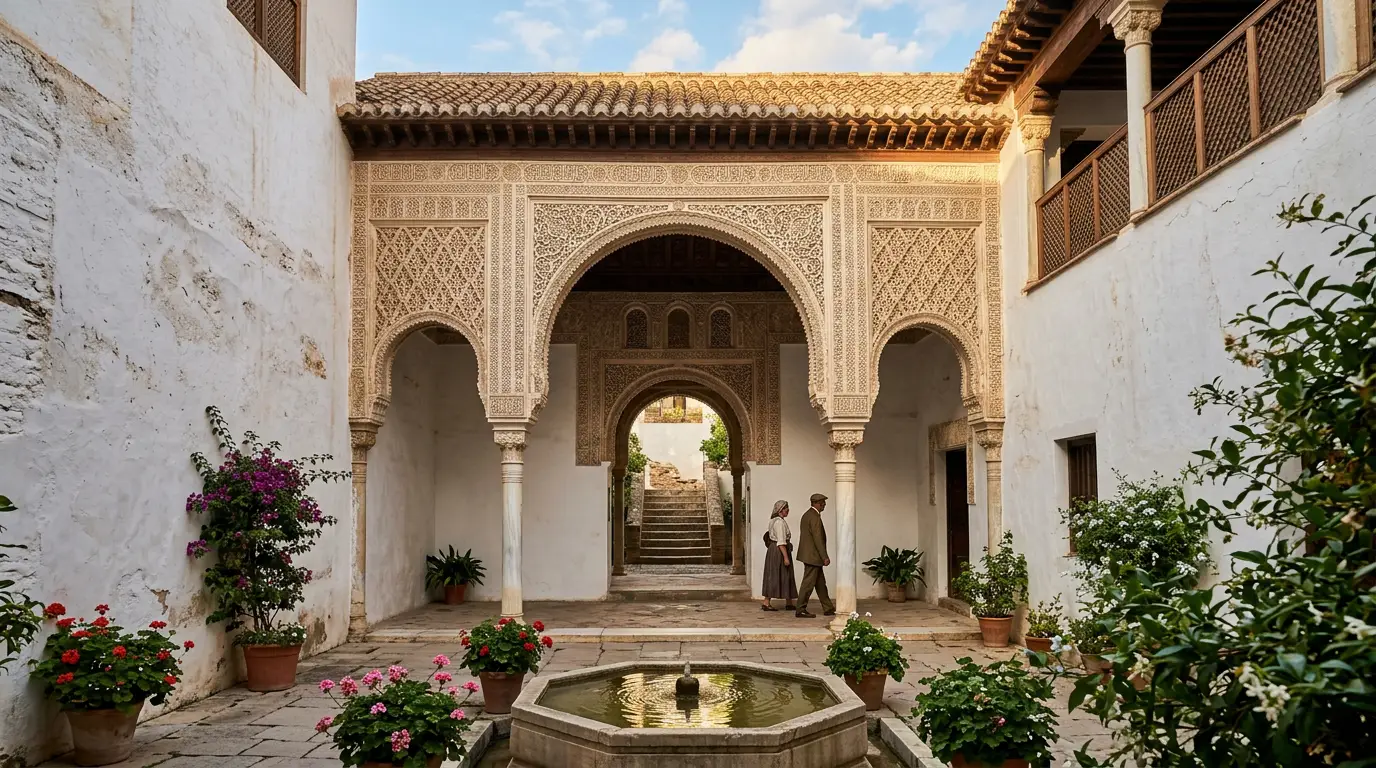
The Palacio de Dar-al-Horra dates from the mid-15th century and follows the same design principles as the Alhambra's Nasrid Palaces: a central courtyard with a reflecting pool, horseshoe arches on carved plasterwork columns, stucco decoration on the upper walls, and a two-storey structure that turns inward, away from the street, so the courtyard becomes the world. The carving is precise and well-preserved. Stand in the courtyard and the architectural logic is identical to the Comares Palace — the proportions, the shadow work, the sound of water. The difference is that here there are almost no other visitors.
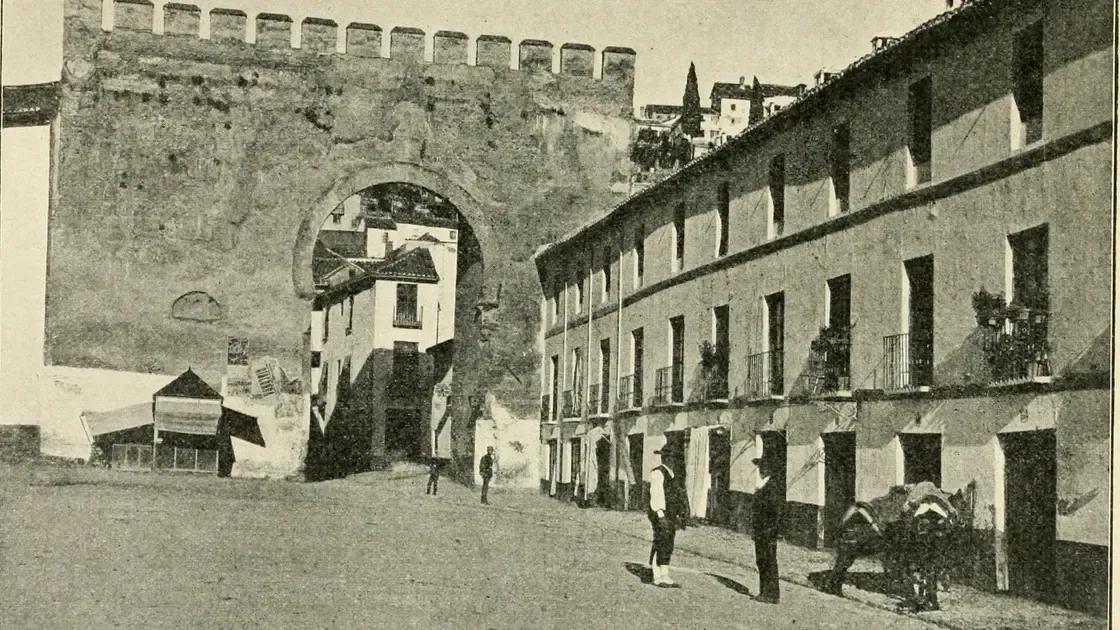
After 1492, the palace was absorbed into the Convent of Santa Isabel la Real, which occupied the adjoining building. That adjacency probably saved it: the convent walls protected the structure, and the nuns preserved the courtyard when almost every other Nasrid building outside the Alhambra was demolished or built over. The convent remains active. The palace is accessed separately, through the Callejón de las Monjas — the Lane of the Nuns — which runs off one of the upper Albaicín streets and is easy to miss if you are not looking for it.
Entry is included in the Dobla de Oro pass, which covers the main Alhambra complex plus several satellite monuments including this palace, the Generalife gardens, and the Alcazaba. Separate entry costs around €3.50. Opening hours are limited — typically mornings only, Monday through Saturday — and the palace can be closed without notice for maintenance or events. The approach through the upper Albaicín lanes is half the experience: the palace emerges from a labyrinth of whitewashed streets without signage, and finding it requires a map rather than following crowds.