Moorish Granada, at the table
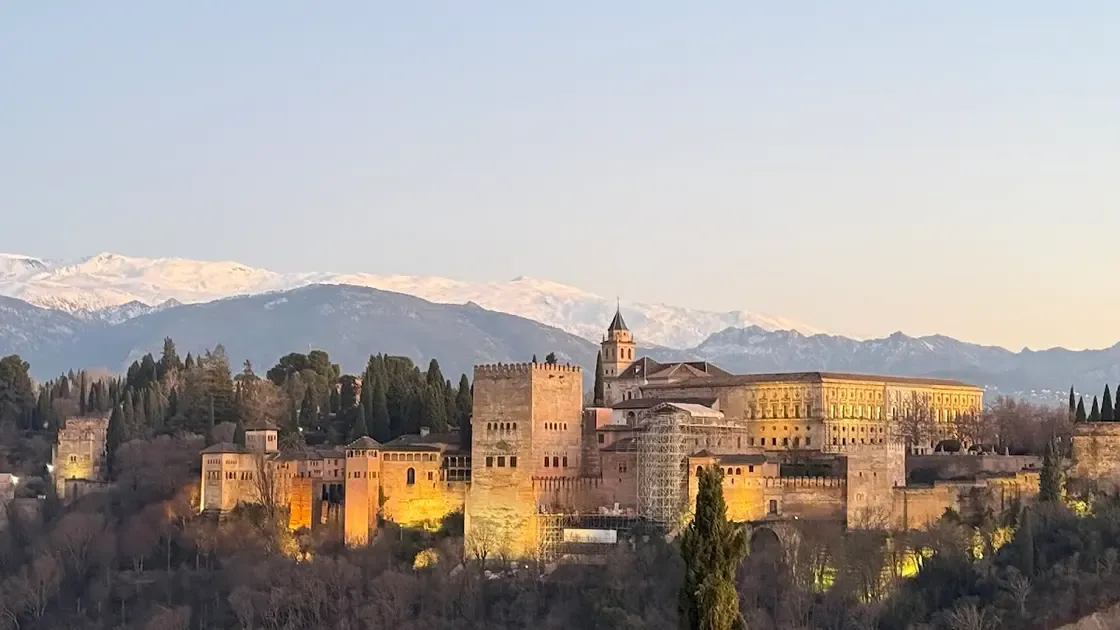
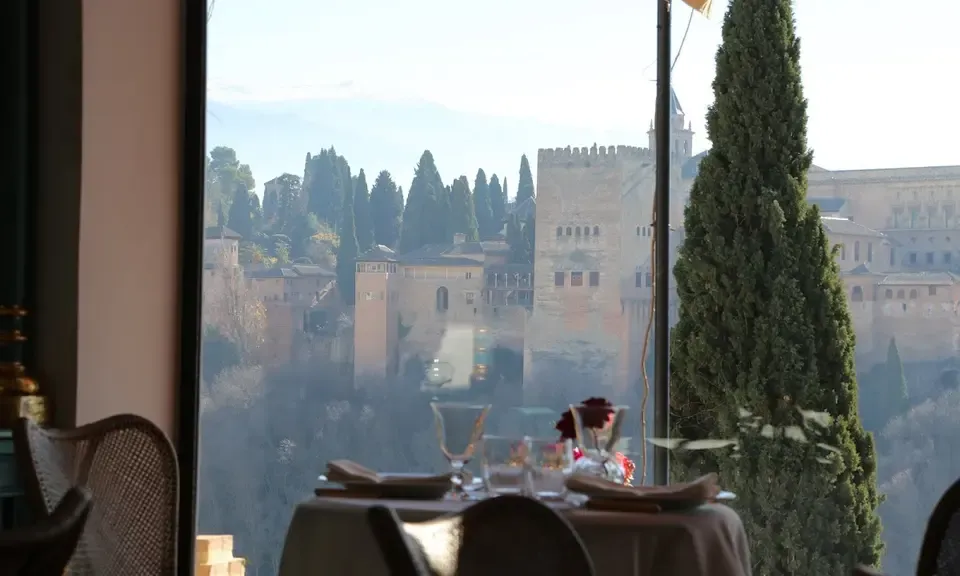
The Albaicín is the neighbourhood that most directly carries Granada's Moorish inheritance — the winding streets, the white walls, the views across to the Alhambra. Restaurante Arrayanes, on Cuesta de Marañas, makes the cultural connection explicit. The food is Moroccan. The setting is a room decorated in the North African tradition. And the geography — the Albaicín was the last Muslim neighbourhood in Granada after the Reconquista, populated for generations by families who had lived on both sides of the Strait of Gibraltar — gives the combination a resonance that a Moroccan restaurant in London or Paris simply cannot replicate.
This is not a Spanish restaurant with a Moroccan theme. The kitchen prepares food according to the Moroccan tradition, with halal sourcing throughout.
Owner Mustafa
Mustafa runs the dining room himself. He is known among the restaurant's regulars for the particular quality of his hospitality — attentive, genuinely warm, the kind of personal attention that makes a meal feel like something other than a transaction. In a city where tourist-volume restaurants dominate near the monuments, his approach stands out.
Rick Steves has mentioned Arrayanes in travel guides, which brings a certain number of visitors. The quality of the food holds up to that expectation.
What to eat
The lamb tagine is the standard reference point — slow-cooked, aromatic, the kind of preparation where the collagen from the shank has dissolved into the sauce and the meat pulls apart. The spice combination is traditional: cumin, ginger, coriander, cinnamon in the background. The cooking vessel is the tagine cone itself, brought to the table.
The chicken pastilla is the more unusual choice. Pastilla (also called bastilla in Morocco) is a sweet-savoury pastry filled with pigeon or chicken, almonds, and eggs, dusted with icing sugar and cinnamon. The sweetness of the shell against the savoury filling is the defining contrast; it does not read as dessert. This is a dish that appears rarely in Spain and requires both skill and commitment to source properly. At Arrayanes it is done well.
Briwat — small savoury pastries with meat or cheese filling — work as starters or as part of a shared spread. The kitchen uses locally sourced ingredients where the overlap allows.
The room
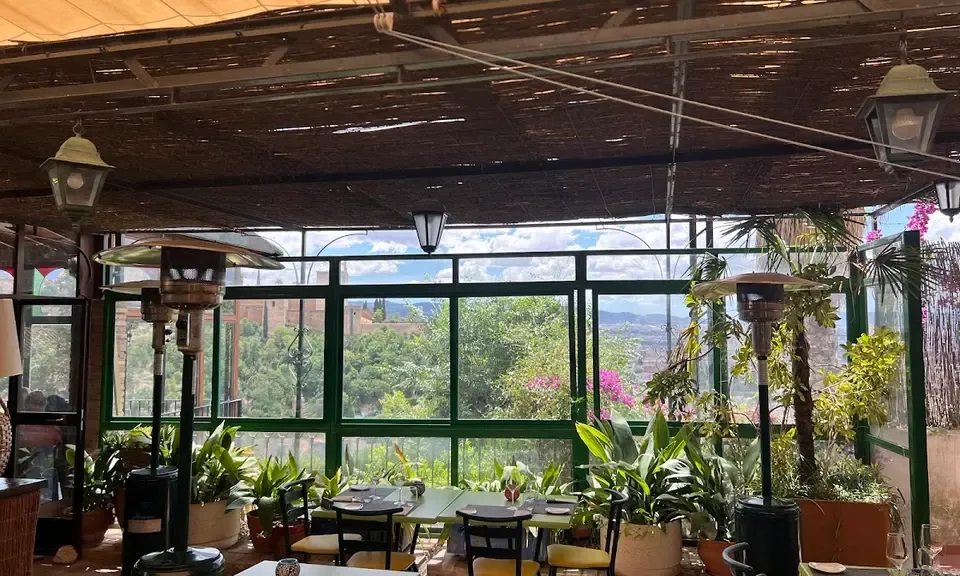
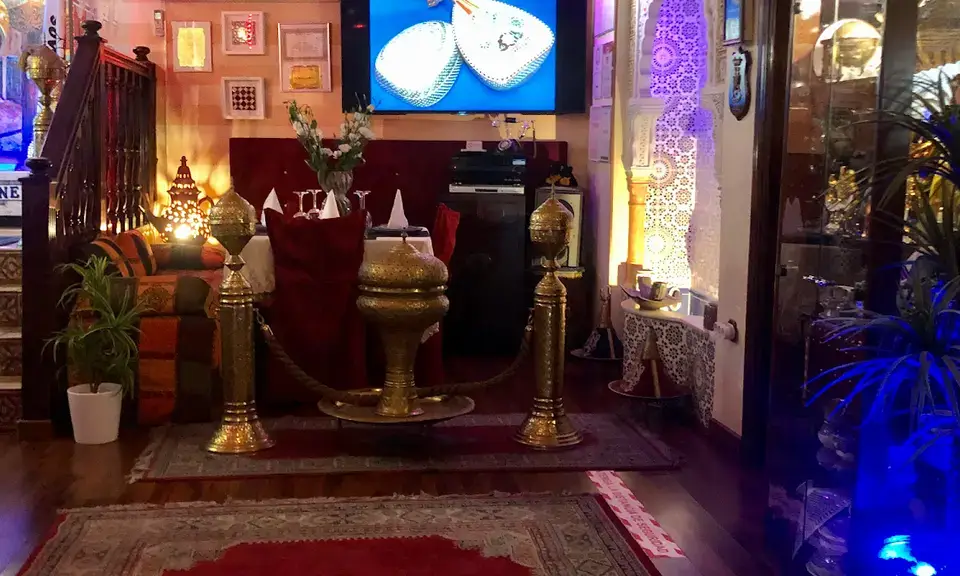
Bright red walls and Arabic textile patterns define the interior. Cushions and low seating at some tables. Geometric arabesque accents on the walls. The décor makes clear what kind of restaurant this is before the food arrives. The room is small and intimate — personal service from Mustafa is possible because the capacity is limited.
Hours and location
The restaurant opens Wednesday through Sunday, closed Monday and Tuesday. Lunch runs 13:00–16:30; dinner 19:30–23:30. The capacity is limited enough that booking is advisable at the weekend, especially in summer when the Albaicín draws its heaviest visitor traffic.
Cuesta de Marañas is a side street in the lower Albaicín, about ten minutes on foot from Plaza Nueva. The route involves some uphill walking — the Albaicín is built on a hillside.