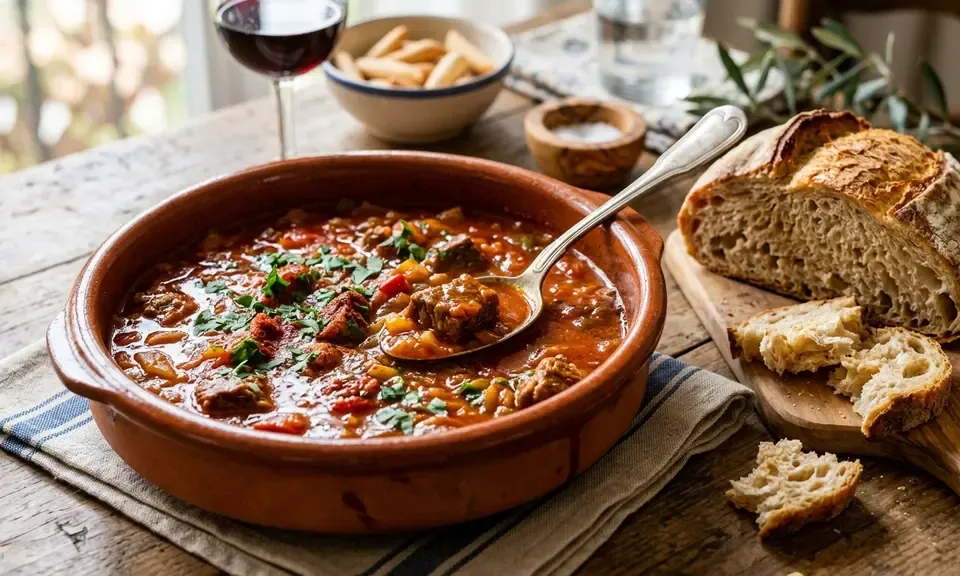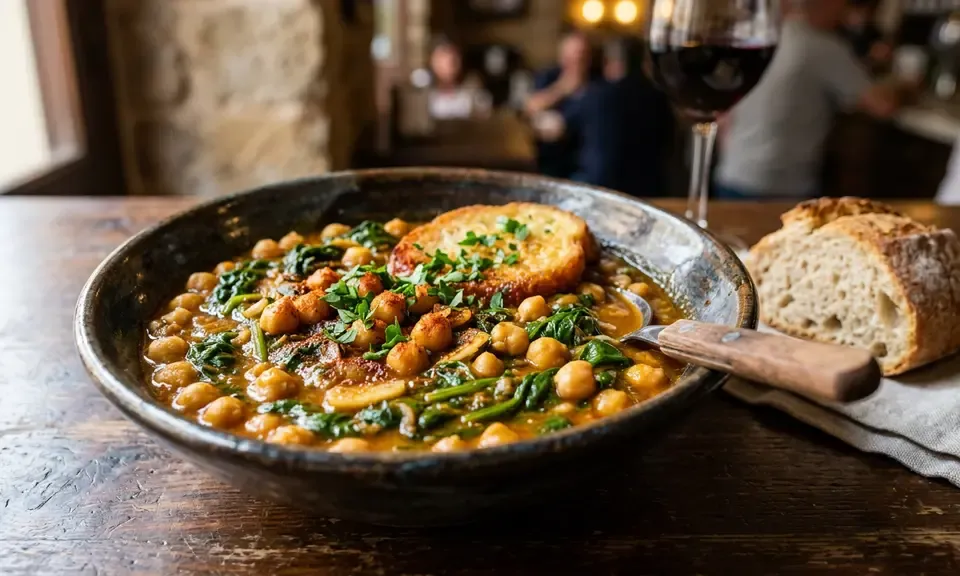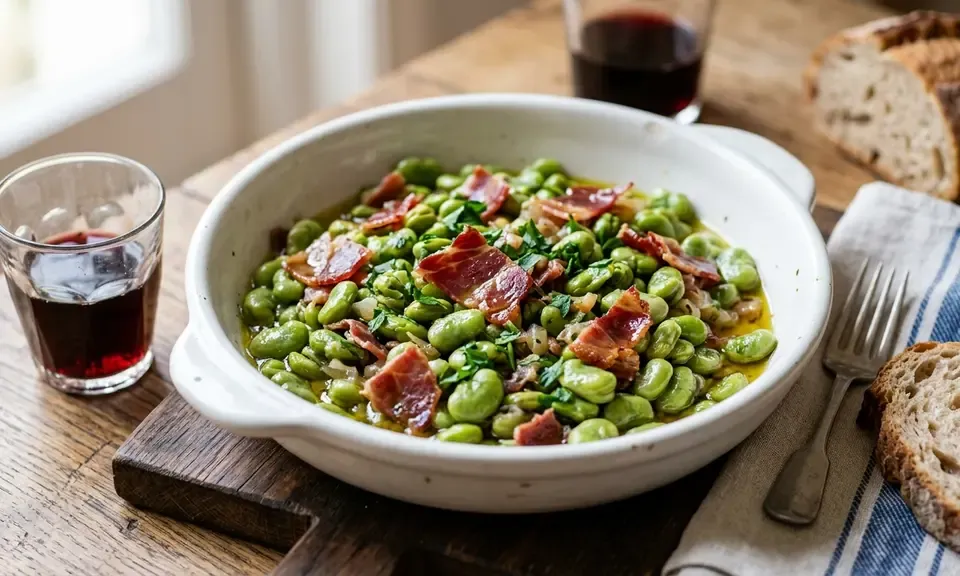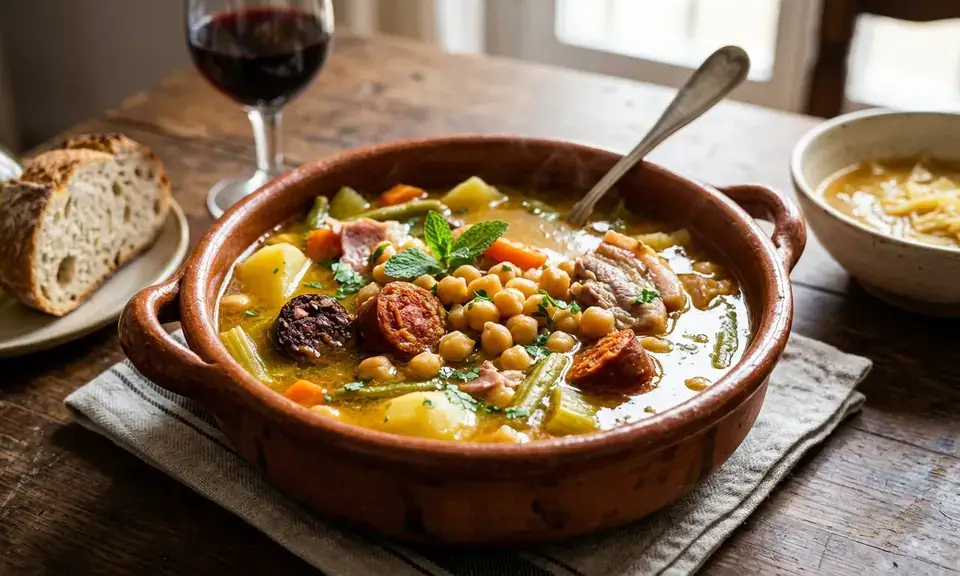
Order a puchero granadino and you get two meals on the same ticket. The kitchen sends out the broth first — cloudy, deep amber, faintly sweet from the vegetables — then clears your bowl and follows with the solids: pork shoulder, ribs, morcilla, a ham bone that's been cooking for hours, white beans or chickpeas, and whatever root vegetables went into the pot. Bread is the only accompaniment you need.
The dish splits into two main versions depending on the season. From January through April, when the fields around Granada have fresh fennel shoots, the bar will make puchero de hinojos: the pot gets a bundle of those feathery green shoots, and the broth takes on an anise note that's unmistakeable and slightly unusual the first time you taste it. The rest of the year, or whenever hinojos isn't available, it becomes puchero de coles, made with white cabbage instead. Both are correct. Locals argue about which is better the same way they argue about everything to do with food.
What you won't find in a Granada puchero is saffron. That's the Canary Islands version. And it isn't Madrid's cocido madrileño, which leans on chorizo and a garlicky broth. The Granada version is quieter in its flavour profile — the pork does most of the work, and the fennel or cabbage adds a clean, vegetable note rather than a spiced one.
The Sunday midday ritual
Puchero is Sunday food. The pot goes on the stove on Saturday evening or early Sunday morning, and by 1:30pm it's ready. Granada families have eaten it this way for generations: a long, leisurely midday meal that runs into the afternoon. Rural versions are simpler — whatever meats were on hand, whatever vegetables the garden had — but the two-course structure has always been the same.
The broth course matters. Drink it slowly. It's not a starter you rush through to get to the meat; it's half the dish. Some families pour it over a piece of stale bread in the bowl. Most bars serve it plain. Either way, it should be hot enough to steam.
In rural areas of the Granada province, puchero still appears at communal gatherings in winter — harvest dinners, family celebrations, the kind of midday meal that stops work for the afternoon.
Where to eat it in Granada
The bars in the Albaicín that cook proper daily stews are the most reliable. These aren't places that put puchero on a permanent menu; it appears when the cook decides to make it, usually in the colder months. Walk up through the Albaicín on a cold Sunday morning and follow the smell.
For a more central option, the older traditional bars near the market in the city centre sometimes carry it as a Wednesday or Sunday special. The key question to ask: '¿Tienen puchero hoy?' If the answer involves any hesitation, they probably made it yesterday.
The Granada food guide covers more of the city's traditional stew culture in detail. Puchero sits at the heavier end of what food lovers come to Granada for — it's not a dish for a warm June evening. Come back in November. Or January, when the fennel shoots are fresh and the version worth travelling for is on the stove.
Practical notes
Puchero granadino is strictly a winter dish — October through March at the outside, with January to April the window for the fennel version. Expect to pay €9–13 for a full portion at a traditional bar. It contains pork in multiple forms and is not suitable for vegetarians. The main allergens are gluten (some bars thicken the broth with bread) and the morcilla contains pork blood and often onion or rice. Ask about the specific recipe if you have dietary concerns.
For more on spending a winter day in Granada when the city is cooler, quieter, and the food is at its best, the winter guide covers the full picture.