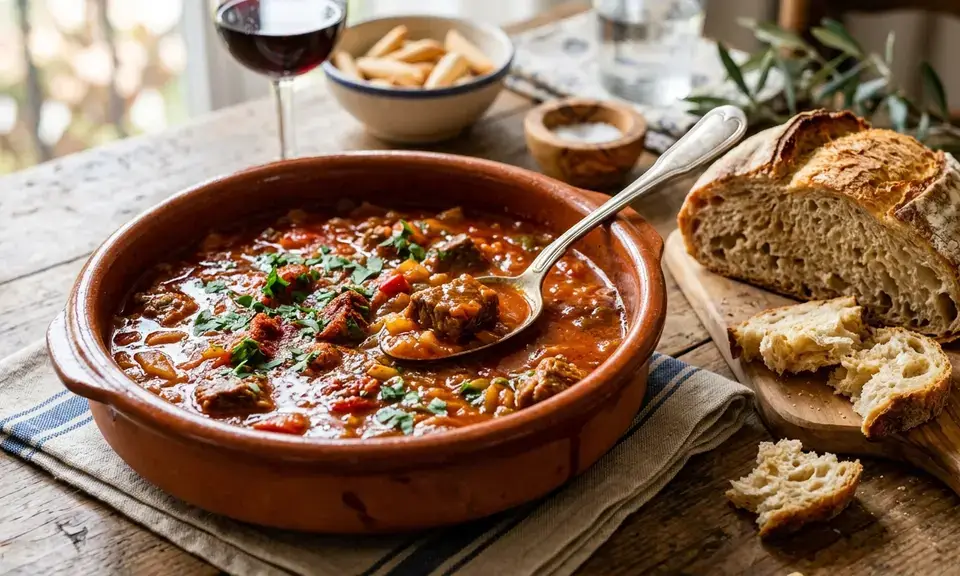
Carne en salsa granadina is one of those dishes where the sauce is the point. The meat, whether pork shoulder, lamb, kid goat, or beef shank, is cut into chunks and slow-cooked until it falls apart, but what makes the dish Granadino is the sauce it swims in: onion, garlic, red pepper, tomato, sweet paprika, cumin, bay, and a handful of blanched almonds ground to a paste. Those almonds are what distinguishes this from other Andalusian meat stews. They give the sauce a slight sweetness and a body that flour-thickened sauces can't replicate.
The cooking smell, spices blooming in olive oil before the meat goes in, is one of the characteristic smells of a Granada kitchen in autumn and winter. This is cold-weather food, the kind that gets better reheated the next day.
History and origins
The spice combination in carne en salsa granadina reflects the culinary inheritance of the Nasrid kingdom that ruled Granada until 1492. Cumin, bay, paprika (in its Spanish form), and almonds as a thickener are all patterns from medieval Andalusian cooking described in Arabic culinary manuscripts from the 11th and 12th centuries. After the Reconquista, these spice habits persisted in local kitchens, detached from their original cultural context but unchanged in practice. The use of almonds as a sauce thickener rather than cream or flour is the most direct of these survivals.
The dish is common across the province, not just Granada city. Mountain variants from the Alpujarras and the Guadix area sometimes add a pinch of clove or a saffron strand to the sauce.
When and how to eat it
Carne en salsa granadina arrives hot in a ceramic cazuela, usually with bread to mop the sauce. It's a main course, though Granada tapas bars sometimes serve a small portion as a tapa with drinks. The stew is heavier than most Andalusian food; order it for a midday meal rather than a late dinner, especially in summer.
The best season runs from October through March. In summer the stew feels out of register with the heat, though some bars serve it year-round.
Where to find it in Granada
Look for it in the older bar-restaurants of the Albaicín, particularly around Placeta de San Miguel Bajo and Calle Agua. These bars have kitchens that cook proper Spanish stews rather than tourist menus. In the city centre, the bars behind the Mercado de Abastos on Calle San Agustín tend to serve home-style food at lunch.
The Realejo also has several family-run restaurants where carne en salsa is a Wednesday special, cooked in a large pot that runs out by 2pm. Arriving at 1:30pm for the midday meal is the correct strategy.
Making it at home
Brown the meat in batches in olive oil and set aside. Fry chopped onion, garlic, and red pepper until soft, then add tomatoes, paprika, cumin, and bay. Return the meat, cover with water or stock, and simmer for at least 90 minutes. Thirty minutes before serving, stir in 50g of blanched almonds ground to a rough paste with a few tablespoons of the cooking liquid. Adjust salt, remove the bay, and serve with bread.
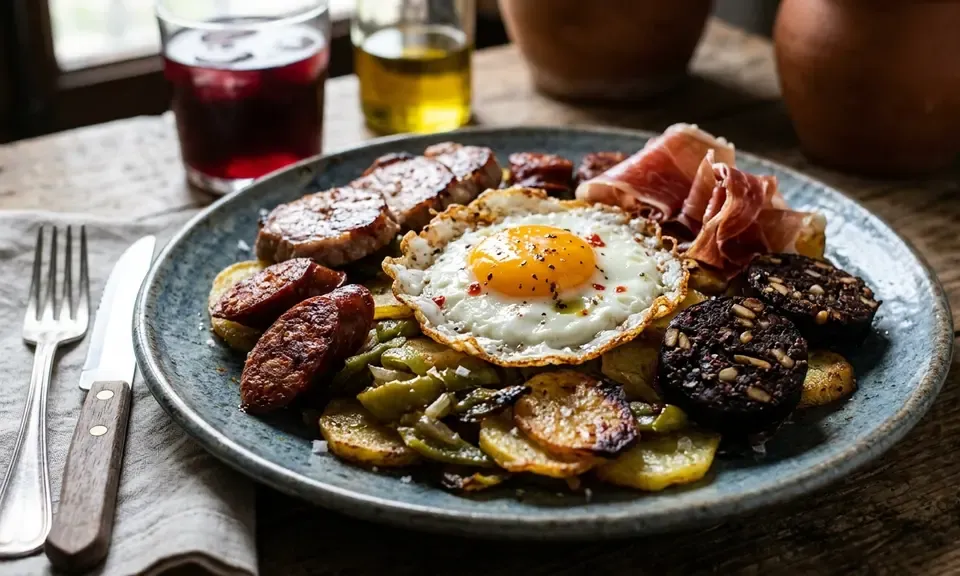
Alternatively, make the plato alpujarreño if you want the full mountain meat experience in a single platter rather than a stew.