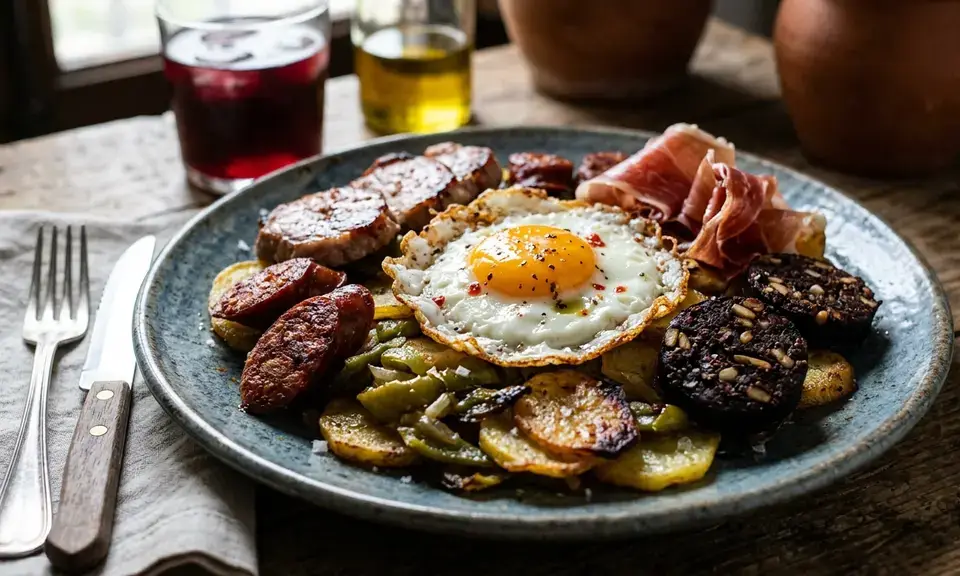
The plato alpujarreño is not a subtle dish. It arrives as a platter of fried eggs, chorizo, morcilla (blood sausage), strips of jamón de Trevélez, and potatoes cooked in olive oil, sometimes with roasted peppers alongside. Everything is hot and golden and covered in pig fat. It's the food of the Sierra Nevada villages, designed for people who spent their mornings working at altitude in winter.
The potatoes are cooked in the style known as a lo pobre, sliced thin and fried slowly in olive oil with onion until they're soft rather than crispy. The eggs go in last, fried in the same oil until the whites are set but the yolks are still runny. You break the yolks into the potatoes and eat the whole thing mixed together.
History and origins
The Alpujarras are the southern slopes of the Sierra Nevada, a string of white villages running from Lanjarón in the west to Ugíjar in the east, between 900 and 1,600 metres above sea level. After 1492, the Moors who remained in the kingdom of Granada were resettled here, and the area retained a distinct cultural identity for decades. The food that developed in these villages was based entirely on what could be raised and grown at altitude: pigs, hens, and potatoes. Every farmstead cured its own ham and sausages through winter.
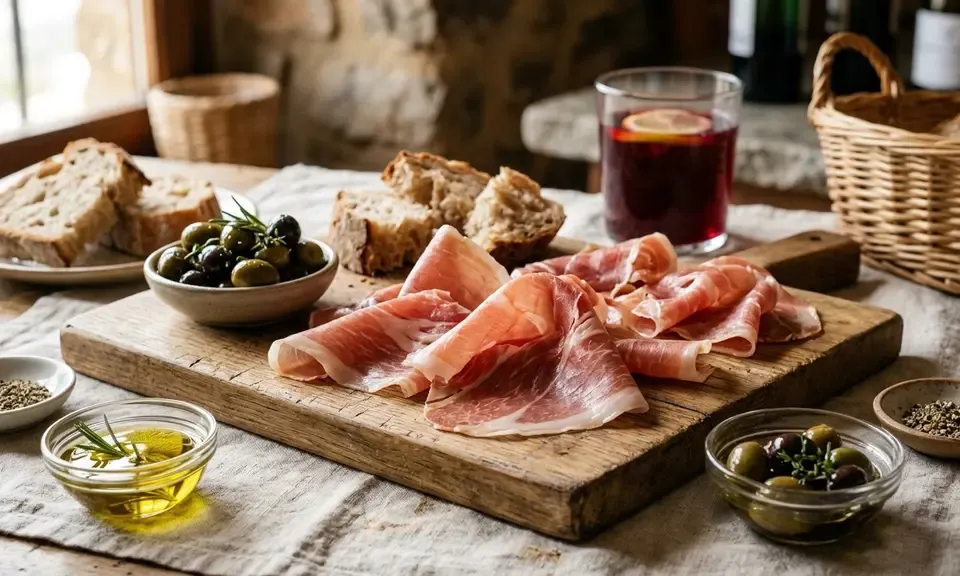
The plato alpujarreño as a named dish is a 20th-century consolidation of this mountain larder into a single tourist-friendly presentation. The individual components, ham, eggs, sausage, and potatoes, are ancient. The platter format is more recent. But the ingredients are the genuine article: morcilla from Guadix, chorizo from the Alpujarra villages, and jamón from Trevélez.
When and how to eat it
This is midday food, for two or a single large appetite. Order it before noon and you may find it overwhelming. At 1:30pm in a village bar, after a morning hike in the sierra, it makes perfect sense. Break the egg yolks into the potatoes, tear bread into the oil, and work through it slowly. A glass of local beer or a rough red wine from the Contraviesa vineyards is the pairing.
In Granada city, the dish appears on menus of restaurants that specialise in food from the sierra. It's more common in the villages themselves, particularly in Lanjarón, Pampaneira, Capileira, and Trevélez.
Where to find it in Granada city
Look for it in traditional restaurants in the Albaicín that specifically menu mountain food, or in the restaurants around Calle Mesones in the city centre. A few bars in the Realejo serve it as a weekend special.
For the most authentic version, take the bus to Lanjarón or Pampaneira and eat it there. The plato alpujarreño served in an Alpujarras village bar, using ingredients from the local cooperative, is a different experience from the Granada city version.
Making it at home
Slice potatoes thin and fry slowly in generous olive oil with sliced onion until fully soft, around 25 minutes on low heat. Remove to a plate. In the same oil, fry sliced chorizo and morcilla briefly, then push to the side and fry the eggs. Serve everything together on a single platter with warmed jamón laid over the top.