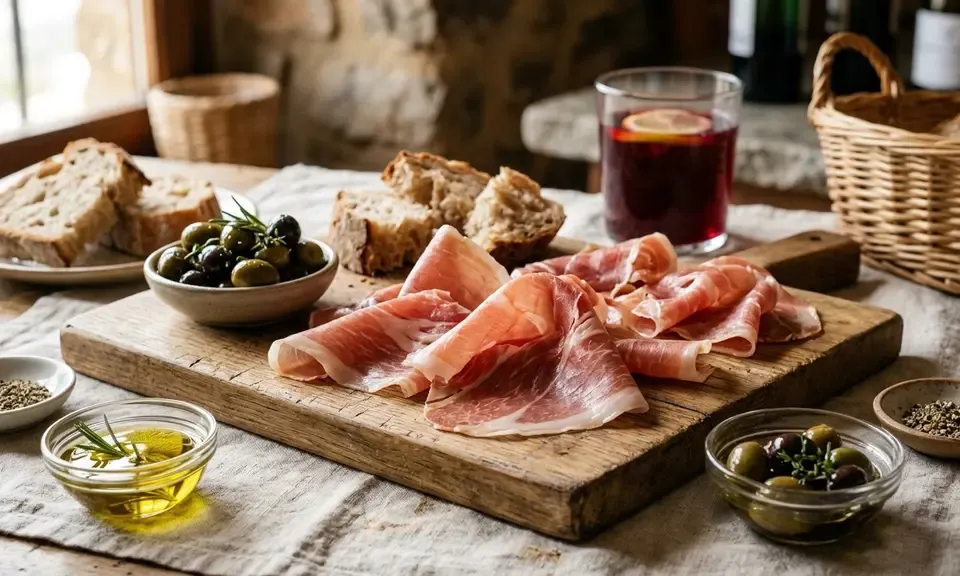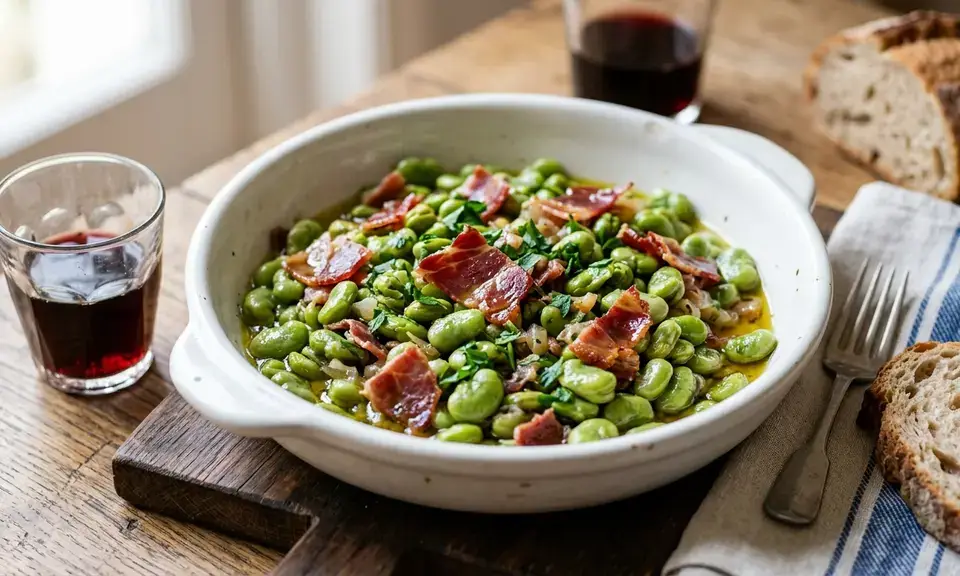
Habas con jamón is a dish that arrives in Granada markets in late April and disappears again before summer properly starts. The window for fresh broad beans is short, and bars that take the dish seriously buy them small and local, from the Vega de Granada or the Alpujarras foothills. Once shelled, the beans are stewed gently in olive oil with strips of jamón de Trevélez, the cured ham from the Sierra Nevada village at 1,476 metres above sea level. The altitude and cold mountain air give Trevélez ham its particular sweetness and depth, and that character comes through in the finished stew.
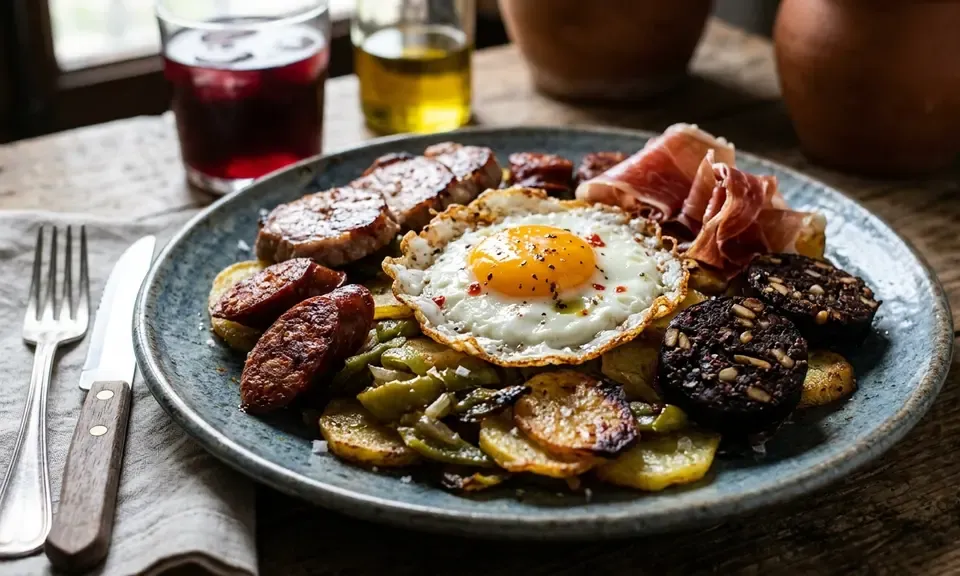
The combination is straightforward: ham fat melts into the oil, the beans absorb it, and garlic and cumin add background warmth. A fried egg cracked on top at the end is not garnish; it's how the dish is traditionally served in Granada, making it substantial enough to be a main course.
History and origins
Habas con jamón is rooted in Granada's agricultural calendar. Broad beans were grown across the Vega de Granada from at least the medieval period, and combining them with pork was common in post-Reconquista cooking. The specific link to jamón de Trevélez is a Granadino touch; the Sierra Nevada ham trade reached Granada city by mule track, and the pairing became a local standard. The dish doesn't appear in any formal culinary record as a 'Granadino classic', but any local cook over fifty will tell you they grew up eating it.
When and how to eat it
Late April through June is the right season. Outside that window, restaurants use frozen or jarred beans, which have a different texture and a slightly metallic aftertaste. The dish arrives hot in an earthenware cazuela. The egg, if it comes, should have a runny yolk; break it into the stew and mix it in. Bread for mopping the oil is expected.
Where to find it in Granada
Traditional bars in the Albaicín serve habas con jamón as a spring tapa. It also appears at the bars around the Mercado San Agustín in the city centre. In May, it shows up at the Día de la Cruz celebrations, where neighbourhood associations set up outdoor bars and cook seasonal dishes. That's the best possible context for eating it: outside, in a street, with a cold beer.
The Realejo has several old bar-restaurants where habas con jamón stays on the menu through the full bean season. Ask when ordering whether they're using fresh or frozen habas; fresh ones are worth waiting for.
Making it at home
Shell fresh broad beans and blanch them briefly to loosen the skins. Peel the inner skin from each bean for the smoothest result, though many cooks skip this. Fry garlic and diced jamón in olive oil, add the beans, a pinch of cumin, and barely enough water to keep them from catching. Simmer for 12–15 minutes, then serve with a fried egg on top.
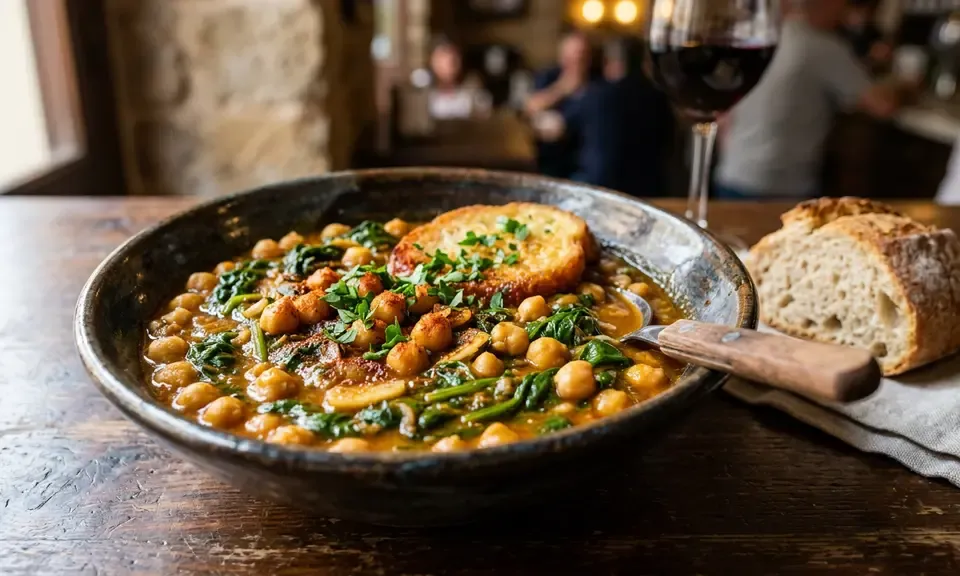
For a broader picture of what Granadinos eat in spring, habas con jamón sits naturally next to espinacas con garbanzos, another tapa built from seasonal vegetables and a simple spiced oil base.