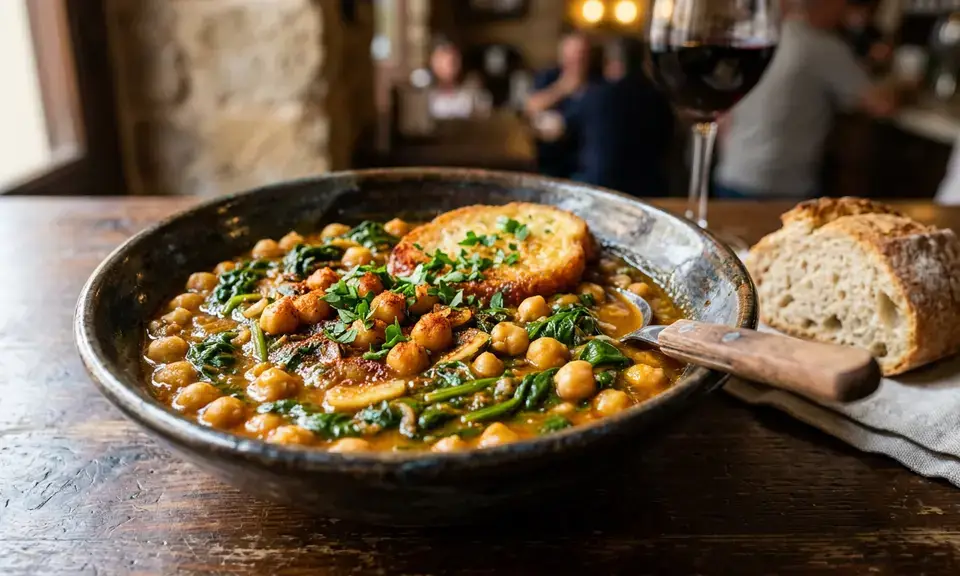
Espinacas con garbanzos is one of the most satisfying things you can eat in Granada, and also one of the cheapest. Chickpeas and fresh spinach stewed in olive oil with garlic, tomato, sweet paprika, cumin, and a splash of sherry vinegar: the spice combination is recognisably Andalusian, built over centuries from ingredients the Moors cultivated across the south of the peninsula. The vinegar brightens the sauce; the cumin gives it warmth without heat.
The dish arrives hot, sometimes with a wedge of fried bread balanced on the rim of the bowl. That bread matters. Tear it into the sauce and let it soak before eating. Without it, the dish loses half its character.
History and origins
Espinacas con garbanzos originates from Granada and Seville, where the same dish appears under slightly different guises. The spice base reflects the Nasrid-era culinary inheritance that persisted in Andalusian cooking long after 1492: cumin, paprika, cinnamon in some versions, vinegar for balance. Chickpeas were a storecupboard staple for farmers who grew them through the dry Andalusian summer. Combined with autumn spinach, the dish was inexpensive, filling, and nutritious. Nothing about it has changed much since.
When and how to eat it
Servings come hot in a small earthenware bowl, usually as a tapa or a starter. The dish is at its best from October through March, when the nights are cold and the spinach is fresh from the Vega de Granada. In summer, restaurants still serve it, but the spinach is often imported and the dish loses some of its character. Ask for pan frito on the side if it doesn't arrive automatically.
Where to find it in Granada
Nearly every traditional tapas bar in the Albaicín serves this. It's a free tapa in many of them, which means you may receive a small bowl alongside your first drink without ordering it. Bars along Calle Elvira and around Plaza de San Miguel Bajo tend to do it well. In the city centre, look for it on Calle Navas and around the cathedral. The Realejo neighbourhood also has several old-school tapas bars where this is a fixture.
Avoid versions served in thick ceramic pots at tourist restaurants near the Alhambra hill. They tend to use tinned chickpeas and powdered spices, which produce a flat, muddy result.
Making it at home
Fry garlic in olive oil, add tomato, then the spices. Add cooked (or tinned, well-rinsed) chickpeas and washed spinach, cover, and cook for ten minutes. Finish with sherry vinegar to taste. Serve with day-old bread, fried in the same olive oil.
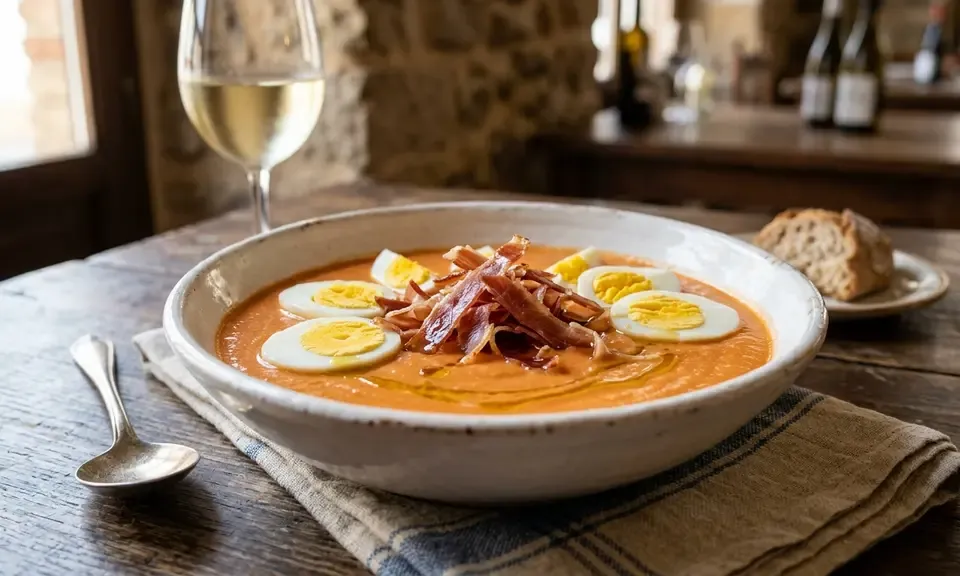
The dish pairs well with salmorejo as part of a broader Granada spread: one cold, one hot, both rooted in the same Andalusian pantry.