Granada in 72 hours: the full Alhambra complex on Day 1, the Albaicín and Sacromonte flamenco on Day 2, and a day trip into the surrounding landscape on Day 3. Three days is when the city starts to make sense.
Seven years resident in Granada. Specialist in Nasrid architecture, Al-Andalus history, and Andalusian walking routes.
Published
Updated
Three days is the right amount of time for Granada, Spain. The Alhambra gets a full morning without the rushed feeling that a single-day visit produces. The Albaicín can be walked at the pace it deserves, rather than ticked off a list. A proper flamenco night in Sacromonte fits into Day 2 without crowding out everything else. And Day 3 takes you beyond the city entirely.
What changes on a three-day visit, compared to two days, is the texture. You stop moving from highlight to highlight and start noticing the city between them. A slow morning coffee before the Alhambra, an afternoon nap before flamenco, a conversation in a tapas bar that lasts longer than it should. None of that fits in 48 hours. It fits in 72.
This itinerary assumes pre-booked Alhambra tickets (which must be sorted before anything else) and a willingness to eat dinner late. Everything else is adjustable. For a day-by-day breakdown with precise timings, distances, and logistics, the Granada 3-day planning guide covers each day in full detail.
Who this itinerary is for
This route is for visitors with three clear days in Granada — typically a Thursday evening arrival to Sunday evening departure, or a more generous Friday-to-Monday short break. It assumes moderate fitness (you will climb cobbled hills), interest in at least one of Islamic architecture, neighbourhood walking, and Spanish food culture, and the willingness to plan ahead for tickets. Prior knowledge of Granada is not required.
Good fit
First-time visitors who want the city properly, not just the highlights
Couples or small groups who want structure and flexibility
Andalusia circuit visitors with Granada as a three-night stop
Anyone drawn to the combination of monuments, food culture, and landscape
Consider four days instead
Those who want both the Cathedral complex and a full day trip
Visitors with limited mobility (more rest time between steep sections)
Anyone who wants the Alhambra night visit in addition to the morning visit
Those planning multiple Alpujarras villages rather than a single day out
Before you go: book the Alhambra now
The Alhambra has timed entry slots for the Nasrid Palaces. Arrive after your slot time and you are turned away. No exceptions, no refunds. This matters more on a three-day visit because you have planned around it — losing the Alhambra morning to a missed slot is not a recoverable problem.
How far ahead: Spring and summer (Apr–Sep): book 2–4 months ahead. Autumn: 6–8 weeks. Winter: 4–6 weeks.
Which ticket: General admission includes Nasrid Palaces (timed slot), Alcazaba, Partal, and Generalife. ~€18–20 per person; verify current price at booking.
Arriving: Be at the Nasrid Palaces entrance 5 minutes before your slot. The walk from the main gate to the Nasrid Palaces entry point takes 15 minutes — account for that.
If slots are sold out: Check at midnight — cancellations are re-released then. Or book the night visit (Nasrid Palaces only, after 22:00, ~€12.73).
At the same time, book your Sacromonte flamenco show for Day 2 evening. Cave venues hold 20–40 people; spring and summer shows fill up weeks ahead. Both bookings should happen the same day — they are both essential and both supply-constrained.
If a hammam session appeals, book the Hammam Al Ándalus Granada for Day 2 afternoon. It sits at the foot of the Alhambra hill, near Carrera del Darro, and fits neatly into the gap between the Sacromonte walk and the evening flamenco show. Peak-season slots go early.
Where to stay
For this itinerary, stay in Realejo or lower Centro near Plaza Nueva. Both put you 10–15 minutes on foot from the Alhambra entrance and at the starting point of the Albaicín walk. Realejo, the former Jewish quarter, has the city's best free-tapas bars and a quieter, more local atmosphere than the streets near the Cathedral.
Realejo
Between the Alhambra hill and the city centre. The tapas bars on Calle Navas and around Campo del Príncipe are close enough to return to repeatedly across three evenings. Less tourist-heavy than the Cathedral area. Good for couples and anyone who wants food culture to be part of the stay, not just the days out.
Lower Centro / Plaza Nueva area
Everything is walkable. Noisier at weekends, particularly on the streets near the university nightlife strip. Over three nights the noise becomes more of a factor than over two — check room reviews for sound insulation before booking. Avoid Calle Pedro Antonio de Alarcón if you sleep before midnight.
Albaicín (not recommended for this itinerary)
Beautiful neighbourhood, difficult base. Getting luggage up steep cobbled callejas is genuinely hard; some hotels have no lift and long stairways. The Albaicín is a place to spend days, not to haul cases to at midnight. Save it for a longer, slower visit where you can walk in with a day bag.
Day 1: Full Alhambra + Realejo tapas
With three days, you can do the complete Alhambra complex without the clock-watching that compresses a two-day visit. The difference is the Partal palace gardens and a genuinely unhurried Generalife — both sections that get rushed or skipped when time is short. Plan 4–5 hours at the site.
Morning (08:00–13:00): The complete Alhambra complex
Breakfast near your accommodation before 08:30 — a café coffee, something light. You want to be walking up Cuesta de Gomérez from Plaza Nueva by 08:30 at the latest. The 10–15 minute uphill walk to the Alhambra entrance is better done before the summer heat builds or the autumn rain starts. A morning slot (09:00–10:30) for the Nasrid Palaces leaves the rest of the complex clear for the remainder of the morning.
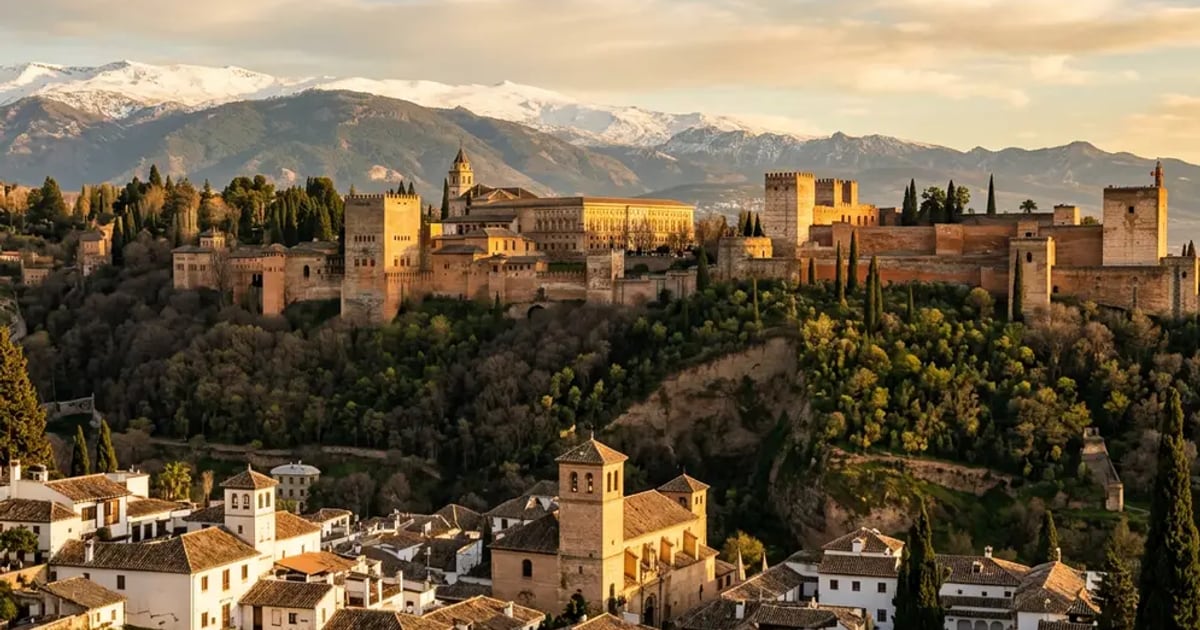
Start at the 9th-century military fortress at the western end of the complex. The Torre de la Vela gives you the first proper view of Granada's geography: the Albaicín to the north, the city centre below, the Sierra Nevada behind everything. Useful orientation before you spend two days walking those neighbourhoods. Allow 40–45 minutes.
09:45–11:30
Nasrid Palaces (timed entry)
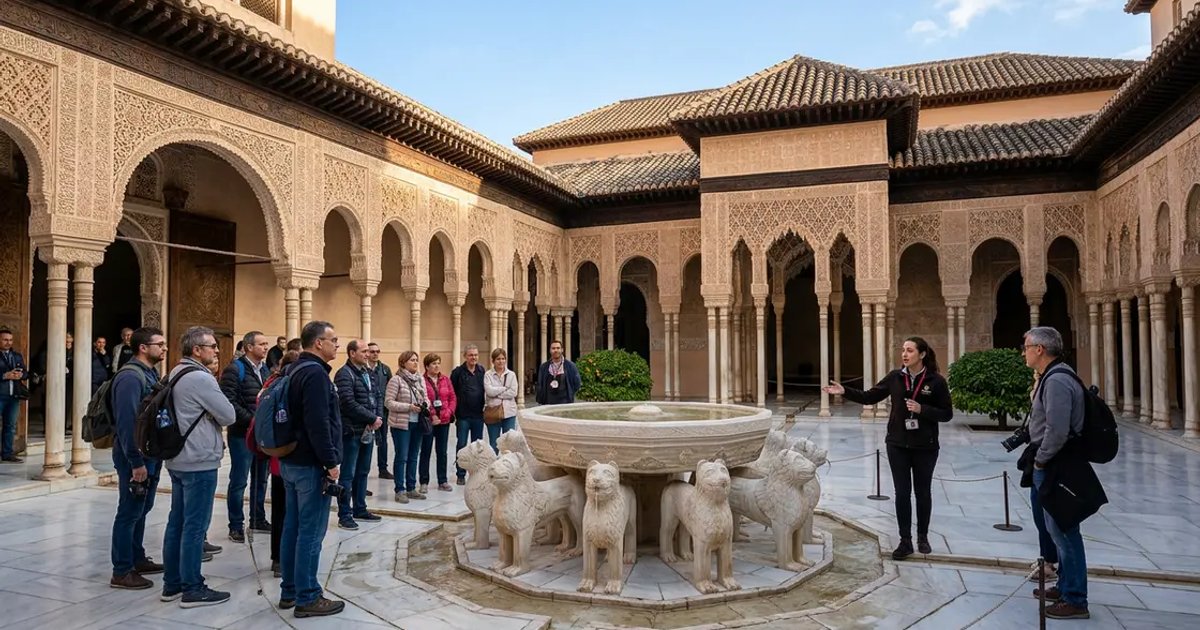
Be at the Nasrid Palaces entrance 5 minutes before your slot — the walk from the main entry gate takes 15 minutes, so factor that in. The Court of the Lions has 124 marble columns around a central fountain, built for Sultan Muhammad V around 1370. The Hall of the Ambassadors has a cedar ceiling made of 8,017 interlocking pieces. With three days you are not rushed here; allow 90–120 minutes and use the extra time on the stucco relief work that photographs miss entirely.
11:30–12:00
Partal (eastern palace section)
The Partal is the oldest surviving palace section in the complex, built in the early 14th century. Porticoed pavilions overlooking a reflecting pool, with views north across the Albaicín. Quieter than the Nasrid Palaces and often overlooked by visitors on tight schedules. This is one of the sections where having a three-day visit rather than two makes a material difference. Allow 30 minutes.
12:00–13:00
Generalife (summer palace and gardens)
The 13th-century summer retreat of the Nasrid sultans. Terraced gardens, cypress alleys, and the long water channel of the Acequia del Sultán. In spring, the rose gardens at their best; in summer, the shade here is welcome after the exposed Alcazaba. The Generalife is usually less crowded than the palace interior and easier to walk at your own pace. Allow 45–60 minutes.
Total Alhambra time: 4–5 hours. Walking within the complex: approximately 15,000–18,000 steps including stairs. Bring a water bottle — there are fountains inside but limited seating in the palace sections.
Afternoon (13:00–19:30): Carrera del Darro and Realejo
Exit the Alhambra and walk down the forested slope toward the city. If you have 10 minutes spare, the Carmen de los Mártires gardens just outside the exit are free, quiet, and almost entirely tourist-free — a good decompression stop after four hours in the complex.
Lunch near Plaza Nueva, around 13:00. Eat before the Spanish lunch peak (14:00–15:30) to avoid waiting. A tapas bar works well here — order a drink, receive a free plate, repeat.
After lunch, walk the Carrera del Darro: the flat cobbled riverside street running east from Plaza Nueva along the Darro River. The Alhambra wall rises to your right. The 11th-century Bañuelo Arab baths are a 20-minute free stop just off the path if you have the energy. By 15:00, head into Realejo for a slow afternoon: the galleries, Campo del Príncipe, the quieter side streets.
Evening (20:00–23:00): Tapas crawl in Realejo
Granada's free-tapas tradition is not a tourist gimmick. Order a drink at any proper bar in Realejo and a plate of food arrives without charge. A three or four-bar crawl — two drinks at each — costs €15–25 per person and produces more food than most restaurant starters.
Start at Bodegas Castañeda near Plaza Nueva (jamón, montaditos, always busy), then move to Los Diamantes for fresh seafood tapas. Drift toward Calle Navas in Realejo for the last bars. The tradition: move on when you finish your drink, not before.
Day 1 in numbers
Alhambra ticket: ~€18–20 per person
Lunch (tapas bar): €8–15 per person
Evening tapas crawl (4 bars, 2 drinks each): €15–25 per person
Walking: ~6–7 km total, significant uphill in the morning
Total: ~€40–60 per person, not including accommodation
Day 2: Albaicín + Sacromonte flamenco
Day 2 is slower and steeper. The Albaicín hill is not especially long, but the cobblestones are relentlessly uneven on a gradient that punishes flat trainers. This is the day where the walking shoes matter most.
Morning (09:00–13:00): Slow Albaicín walk to Mirador San Nicolás
A slightly slower start than Day 1 — 30 minutes for breakfast, no rush. The Albaicín and Mirador San Nicolás are best approached before midday heat and before the mirador fills with tour groups. Aim to be at the viewpoint by 10:00–10:30.
09:00–09:30
Carrera del Darro to Albaicín entry
Walk up Carrera del Darro from Plaza Nueva. Where the road ends, turn uphill at Calle Zafra. The neighbourhood starts immediately: whitewashed walls, geraniums in pots, passages too narrow for anything wider than a bicycle. The street plan is essentially unchanged since the 12th century.
09:30–10:00
The Albaicín labyrinth
Follow signs toward Mirador San Nicolás; you will get slightly lost, and that is fine. Download an offline map before you leave (Maps.me or Google Maps offline). The Moroccan tea houses on Calle Calderería Nueva are a worthwhile stop — mint tea and pastries for €3–5, cushioned benches, no pressure to move on quickly.
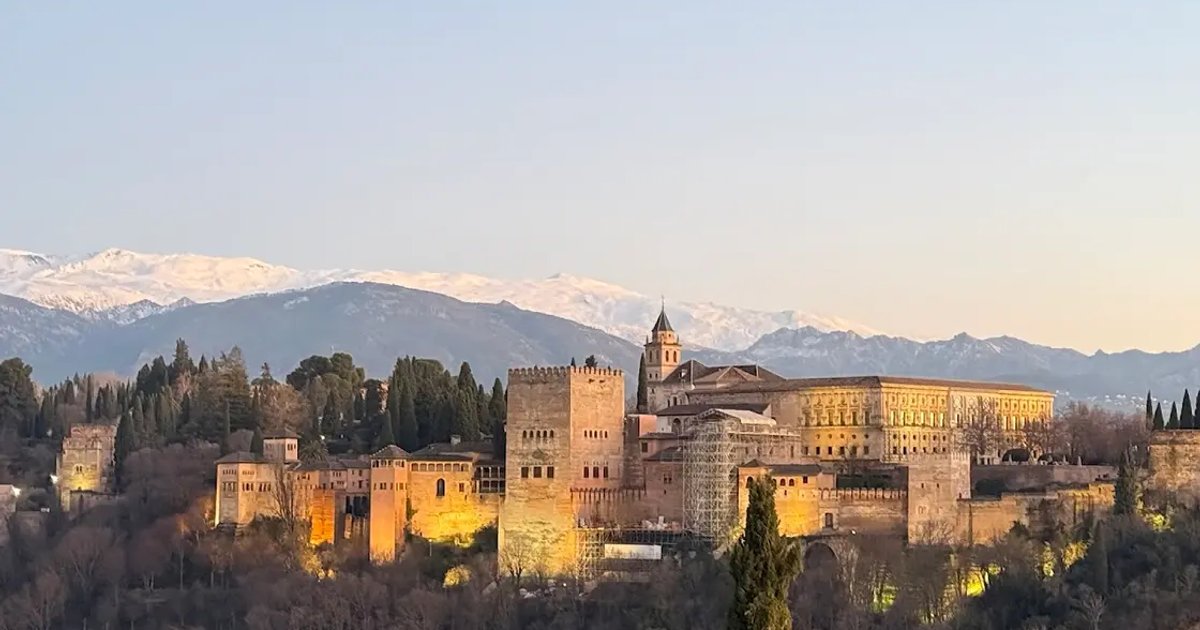
The Alhambra sits on the ridge opposite, the Sierra Nevada behind it. At 10:00 on a weekday morning there are tourists but not the full sunset crowd — you can stand still and look. The light at this hour is clear rather than golden, which is a different experience from the sunset photographs that most people have in mind. Both are worth seeing. If you want the golden-hour version, come back at sunset on Day 3 if the day trip returns you in time.
After the mirador, walk north along the ridge to the Granada Mosque gardens for a second viewpoint with fewer people. Then descend toward Sacromonte — the path east from the upper Albaicín leads naturally into the Sacromonte road.
Lunch somewhere in the lower Albaicín or back near Plaza Nueva — by 13:00 you will have been on your feet for four hours. A proper sit-down meal rather than a tapas bar makes more sense here; you want to rest before the afternoon.
Sacromonte begins where the Albaicín ends. The cave dwellings climb the Valparaíso ravine; some are residential, some are flamenco venues. Walking the Camino del Sacromonte in the mid-afternoon, when the whitewashed walls catch the low western light, is one of the less-photographed and more atmospheric walks in Granada. The Abbey of Sacromonte at the top (founded 1600) has simultaneous views of both the Albaicín and the Alhambra. Allow 60–90 minutes.
If you booked the Hammam Al Ándalus Granada, it fits here: back down from Sacromonte, the hammam is at the foot of the Alhambra hill near Carrera del Darro. A 90-minute bath circuit (around €30–40 per person) between 15:30 and 17:00 leaves you rested before the evening. Skip it if your legs have had enough — the Sacromonte walk is already a full afternoon.
Rest at your accommodation from 17:00 to 20:00. Dinner in Spain starts at 20:00 at the earliest; most Granada restaurants are quiet before 20:30. Use the rest time.
Evening (20:00–23:00): Dinner in Realejo + flamenco
Dinner around Campo del Príncipe in Realejo. The square fills from 20:00 with Granada residents rather than tourists. A final tapas crawl before the flamenco show, or a sit-down meal if you prefer to arrive at the caves without a food-and-wine blur.
The Sacromonte flamenco shows typically start at 21:00. Cave venues hold 20–40 people in close semicircles around the dancers and musicians. The sound of guitar and palmas in a space carved from the hillside, with almost no reverb, produces something that a theatre performance does not. Budget €20–40 per ticket. A taxi or rideshare up to Sacromonte from Realejo costs €5–8 and saves the uphill walk at night.
Day 2 in numbers
Albaicín walk: Free (teterías: €3–5)
Sacromonte walk: Free
Hammam (optional): ~€30–40 per person
Dinner + tapas: €20–35 per person
Flamenco show: €20–40 per person
Walking: ~5 km, very steep in the morning
Day 3: Day trip (seasonal)
Day 3 is where a three-day visit diverges from two days. Granada sits between the Sierra Nevada mountains and the Mediterranean coast, 45 minutes in opposite directions. The right day trip depends entirely on when you visit. Below are the seasonal options, followed by a city alternative for those who prefer to stay.
Transport for Day 3
Sierra Nevada (winter): Car rental recommended (€25–40/day); public buses are limited to the resort.
Alpujarras (spring/autumn): ALSA buses run to Órgiva (€5–8) with connections to Pampaneira and Capileira. Total journey ~1h 20m each way. Car gives more flexibility (€25–40/day).
Costa Tropical (summer): RENFE train to Almuñécar or Salobreña, ~45 minutes, €12–18 return. No car needed.
December – February
Sierra Nevada skiing or snowshoeing
The ski resort is 30–45 minutes by car from Granada centre, at around 2,100 metres. On a clear winter morning, Granada is visible in the valley below. The lift system covers slopes from beginner to advanced; a day lift pass costs €40–50. Snowshoeing is available for those who want the snow without skiing. Check road conditions and snow reports the evening before — mountain passes can be icy and occasionally closed.
Depart by 08:30 to arrive before the morning rush. Return to Granada by 17:00 for a final evening in the city.
March – May / Sept – Nov
Alpujarras white villages
Pampaneira and Capileira are traditional Berber-influenced white villages at around 1,050 and 1,430 metres respectively, in the southern foothills of the Sierra Nevada. The villages have maintained their distinct architecture since Moorish settlement; the streets are narrow, the houses cubic and whitewashed, the rooftops covered in flat terracotta. In April and May, wildflower meadows above the villages are in full colour.
By bus: ALSA from Granada bus station to Órgiva (€5–8, 1 hour), then local bus to Pampaneira (25 minutes). By car: 50 km south, around 55 minutes. Return bus schedule is limited — check times before you go. Lunch in either village costs €10–15 at a local restaurant; the local jamón from the Alpujarras is worth ordering.
June – September
Costa Tropical: Salobreña or Almuñécar
When Granada reaches 35–40°C in July and August, the coast is 45 minutes away and 10 degrees cooler. Salobreña is a compact village above a long grey-sand beach, capped by a 10th-century Moorish castle. Almuñécar is slightly larger with a wider beach and more seafood restaurants. Both are accessible by RENFE train (€12–18 return; check current schedules at renfe.com). The train goes through a series of tunnels in the mountains before the sea opens up.
Take the early train (aim for a 09:00–10:00 departure). The beaches fill from 11:00 in peak summer — arriving early gets you a spot. Return by 18:00 to leave time for a final evening in Granada.
City alternative: Cathedral, Bañuelo, Alcaicería
If day-trip logistics feel complicated or the weather is uncertain, Day 3 in the city is a perfectly good option. The Granada Cathedral (built 1518–1704) and adjacent Royal Chapel, where Ferdinand and Isabella are buried, are worth 90 minutes combined. The €9 ticket covers both. Best before 10:00 to avoid tour groups.
After the Cathedral: the Bañuelo Arab baths on Carrera del Darro (11th-century hammam ruins, free entry, 20 minutes), the Alcaicería silk market (historic bazaar, spices and ceramics, free to walk through), and a final afternoon at a Realejo tapas bar.
Day 3 in the city costs roughly €10–20 per person for entry tickets and leaves plenty of time for a long final evening before departure.
If you only have 2 days
The two-day itinerary covers Days 1 and 2 above: the full Alhambra, the Albaicín walk, and the Sacromonte flamenco evening. What drops is Day 3 entirely — the Sierra Nevada, the Alpujarras, and the Costa Tropical all require a dedicated day and are not compressible into an afternoon.
The Partal palace section and the more leisurely Generalife also get shorter with two days — the Alhambra visit runs to 3–3.5 hours rather than 4–5. You will see the main sections, but the eastern gardens and the quieter corners get cut.
Two days leaves most visitors wishing they had booked a third night. The extra night is usually cheaper than expected — Granada's hotel rates run below Seville and Malaga for comparable quality. Book three nights. The day trip alone justifies it.
“Three days in Granada is when you stop comparing the Nasrid Palaces to the photographs and start just looking at them.”
— James Walker
Book Alhambra, Albaicín and flamenco tours
Tours are selected for quality, not commission. We earn a small fee if you book — at no extra cost to you.
Essential Granada experiences — reserve ahead, especially the Nasrid Palaces time slot
Three days covers the essential Granada comfortably: the full Alhambra complex without rushing, the Albaicín at a genuinely unhurried pace, a Sacromonte flamenco show, and a day trip into the surrounding landscape. What remains outside three days: the Cathedral and Royal Chapel deserve at least 90 minutes and are hard to fit around a day trip; the Granada night visit to the Nasrid Palaces is another world; the Alpujarras white villages reward more than a single rushed afternoon. Three days gets you the city. Four days lets the city get to you.
What should I cut if I run out of time?
Day 3 is the easiest to adjust. If you arrive late or the day-trip logistics feel complicated, swap it for the city alternative: Cathedral and Royal Chapel (€9 combined, 90 minutes), the Bañuelo Arab baths (free, 20 minutes), the Alcaicería bazaar, and a final afternoon tapas crawl. You lose the landscape but you gain a genuine third day in the city. What you should not cut: the Alhambra, the Albaicín morning walk, and the Sacromonte flamenco show. Those three define what Granada is.
Where is the best area to stay for 3 days in Granada?
Realejo or lower Centro near Plaza Nueva. Both give you a 10–15 minute walk to the Alhambra entrance, easy access to the start of the Albaicín walk, and proximity to the best free-tapas bars. For a three-day stay, Realejo is worth the slight extra effort to find good accommodation. The atmosphere in the evenings, with the Campo del Príncipe tables out and the neighbourhood filling with local students and families, is part of why people remember Granada as well as they do.
Do I need a rental car in Granada?
It depends on your Day 3 choice. For the summer coastal option (Salobreña or Almuñécar), the RENFE train is perfectly sufficient: 45 minutes, roughly €12–18 return, no car needed. For the winter Sierra Nevada ski trip, a car is the practical choice; public buses are limited and the resort is 45 minutes from the city. For the Alpujarras, ALSA buses run to Órgiva with connections to Pampaneira and Capileira (about 1h 20m each way), but the schedule is tight; a car rental (€25–40 for the day) gives you real flexibility. For Days 1 and 2, a car is more hassle than help; the historic centre is largely pedestrianised.
Should I book flamenco tickets in advance?
Yes, book flamenco the same day you book your Alhambra tickets. The cave venues in Sacromonte seat 20–40 people and fill up weeks ahead in spring and summer. The Sacromonte flamenco shows typically run from 21:00. If you arrive without a reservation in July or August, the chances of a walk-in spot are slim. Book early and you will have your pick of venues and show times.
Which day trip is best, and does it depend on the season?
Entirely. In winter (December–February), the Sierra Nevada is the obvious choice: skiing or snowshoeing with Granada visible in the valley below, 30–45 minutes by car. In spring and autumn, the Alpujarras white villages (Pampaneira, Capileira) offer wildflower meadows and traditional architecture with easy hiking. In summer, the Costa Tropical coast (Salobreña or Almuñécar, 45 minutes by train) is the escape from Granada's 35–40°C heat. All three are genuinely worth doing; the season makes the decision for you.
Reporter notebook
Insider tips
Practical observations gathered the way a local journalist would keep them: short, specific, and more useful than brochure copy.
Booking tip
Book Alhambra tickets the day you buy your flights
The Nasrid Palaces have timed entry slots; miss your slot time by even a few minutes and you are denied entry with no refund. In April, May, and September, slots sell out two to three months ahead. Book at tickets.alhambra-patronato.es the moment your travel dates are fixed. At the same time, book your Sacromonte flamenco show — both can sell out on similar timescales in high season. If Alhambra slots are already gone, check the site at midnight: cancellations are re-released then.
Best time
Match your Day 3 trip to the season
The three day-trip options suit different months completely. Sierra Nevada skiing (December to February) works best on a clear weekday; weekend lift queues at the resort can be long, and you want to be up there by 10am. Alpujarras villages are at their best in April and May, when the wildflower meadows above 1,500 metres are in full colour. The Costa Tropical coast is the obvious summer choice, but go early: the beach at Salobreña fills up from 11am in July and August. Check the weather forecast the evening before you travel. Mountain road conditions can change overnight.
Money tip
Order tinto de verano, not beer, for better free tapas
Granada's free-tapas tradition means every drink order at a proper bar brings a plate of food. But the tapa quality varies by what you order. In Realejo bars, ordering tinto de verano (red wine with lemon soda, around €2.50) tends to produce a better plate than the cheapest beer on the menu. If you are not sure, ask the bar staff; they will tell you which drink rotation is running well that evening. A thorough four-bar crawl costs €15–20 per person and fills you entirely.