Granada, Spain in 48 hours: the Alhambra on Day 1, the Albaicín on Day 2, and free tapas both evenings. A route that covers the essential without pretending two days is enough.
Seven years resident in Granada. Specialist in Nasrid architecture, Al-Andalus history, and Andalusian walking routes.
Published
Two days in Granada, Spain is enough to see the headline experiences. The Alhambra fills your first morning. The Albaicín and Mirador San Nicolás take your second morning. Free tapas and a flamenco show fill the evenings. You will leave having done what most people come to Granada to do.
What you will not get in two days: any real sense of the city's pace. The Albaicín explored at leisure rather than ticked off a list. A second evening of tapas across different neighbourhoods. Sacromonte on its own terms rather than as a stop on the way back. Many people finish two days here and immediately wish they had booked a third night. That instinct is worth acting on before you go — the itinerary below notes where an extra day would change things.
This route assumes you have pre-booked Alhambra tickets (non-negotiable), comfortable walking shoes, and a willingness to eat dinner at 9pm. If those three things are in place, the rest follows.
Who this itinerary is for
This is a route for first-time visitors to Granada with a weekend — typically Friday night arrival to Sunday evening, or Saturday morning to Monday morning. It assumes moderate fitness (you will climb cobbled hills), a real interest in at least one of: Islamic architecture, neighbourhood walking, Spanish food culture. It does not assume knowledge of Granada's layout or history.
Good fit
Weekend travellers with Friday or Saturday arrival
Andalusia circuit visitors (Seville–Granada–Cordoba or similar)
Couples or small groups who want a structured but flexible plan
Anyone who has never been to Granada and wants to see the essentials
Consider three days instead
Visitors who want the Alhambra and the city at a genuinely unhurried pace
Anyone planning an Alpujarras or Sierra Nevada day trip
Those with limited mobility (steep cobblestones need more rest time)
Travellers where the tapas culture — not just the monuments — is the main draw
Before you go: book the Alhambra now
The Alhambra has timed entry slots for the Nasrid Palaces. If your slot time passes and you have not entered, you are denied entry. No exceptions. No refunds. This is the single biggest source of disappointment for visitors who have come a long way specifically for the Alhambra.
How far ahead: Spring and summer (Apr–Sep): book 2–4 months ahead. Autumn: 6–8 weeks. Winter: 4–6 weeks.
Which ticket: General admission includes Nasrid Palaces (timed slot), Alcazaba, and Generalife. ~€18–20 per person; verify current price at booking.
Arriving: Be at the Nasrid Palaces entrance 5 minutes before your slot. Tickets include a QR code; have it on your phone offline.
If slots are sold out: Check at midnight — cancellations are re-released then. Or book the night visit (Nasrid Palaces only, after 10pm, ~€12.73).
While you are booking, also reserve your Sacromonte flamenco show for Day 2 evening. Cave venues hold 20–40 people; spring and summer shows sell out weeks ahead. Book both on the same day.
If you want a hammam session — the Hammam Al Ándalus Granada at the foot of the Alhambra hill is worth the visit — book that too. Capacity is limited and last-minute slots in peak season are rare.
Where to stay
For this itinerary, the best base is Realejo or the lower Centro near Plaza Nueva. Both put you 10–15 minutes on foot from the Alhambra entrance and at the start of the Albaicín walk. Realejo has the city's best free-tapas bars and a less tourist-heavy atmosphere than the streets around the Cathedral.
Realejo
Former Jewish quarter between the Alhambra hill and the centre. The free-tapas bars on Calle Navas and around Campo del Príncipe are within walking distance of your front door. Quieter than the centre at night but still social. Best for couples and those who prioritise food culture.
Lower Centro / Plaza Nueva area
Central location; everything is walkable. Noisier at weekends, especially on the streets near the university bar district. If you are here for two nights and leaving Sunday, noise is manageable. Avoid rooms directly on Calle Pedro Antonio de Alarcón if you sleep before midnight.
Albaicín (avoid for this itinerary)
Beautiful but steep. Getting luggage up and down the cobbled callejas is genuinely difficult. With only two days, the Albaicín is a place to walk through, not a base. Save accommodation up there for a longer, slower visit.
Day 1: Alhambra, Realejo, tapas
Start with the big one. The Alhambra deserves your freshest morning. Save the walking neighbourhoods for when your legs are still willing.
Morning (08:00–13:00): The Alhambra complex
Eat a quick breakfast near your accommodation before 08:30 — a café coffee and pastry, nothing elaborate. You want to be walking up Cuesta de Gomérez by 08:30 at the latest. The uphill walk from Plaza Nueva to the Alhambra entrance takes 10–15 minutes. In summer, starting before the heat builds matters.
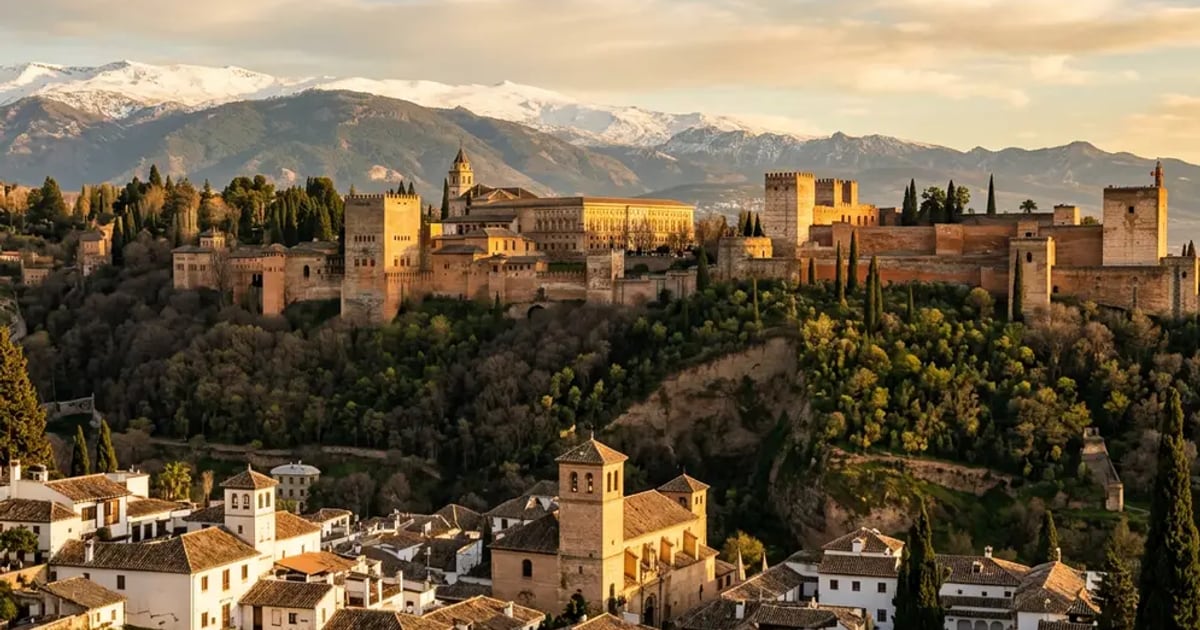
Enter the Alcazaba first — the 9th-century military fortress at the western end of the complex. Climb the Torre de la Vela for the first views of Granada below: the Albaicín to the north, the city centre to the south, the Sierra Nevada behind everything. The views give you the geography of the city before you walk it. Allow 40–45 minutes.
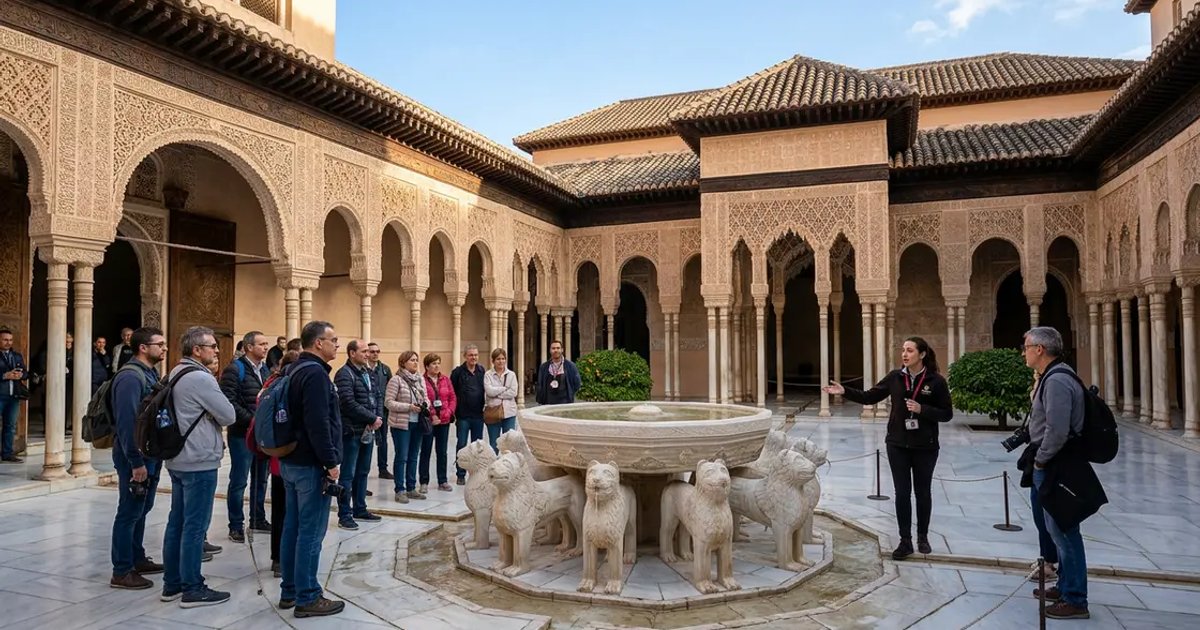
Be at the Nasrid Palaces entrance 5 minutes before your slot. The walk from the main entrance to the Nasrid Palaces entry point takes 15 minutes — factor that in. Inside: the Court of the Lions has 124 marble columns around a central fountain, built for Sultan Muhammad V around 1370. The Hall of the Ambassadors has a cedar ceiling made of 8,017 interlocking pieces. The stucco carvings throughout are what photographs miss — the depth of the relief work, the way it catches direct light differently every hour. Give yourself 90 minutes at minimum; 2 hours if you are not pressed.
11:30–12:30
Generalife (summer palace and gardens)
The Generalife is the last section of the visit and often the least crowded. The terraced gardens with their cypress alleys and water channels are best in spring when the roses are in flower. In summer, the shade here is a relief after the exposed Alcazaba. Walk at your own pace — this is where most people slow down after the intensity of the Nasrid Palaces. Allow 45 minutes.
Total Alhambra time: 3.5–4 hours. Walking within the complex: approximately 15,000 steps with stairs. Bring a water bottle — there are fountains inside but limited seating.
Afternoon (13:00–19:30): Recovery, Carrera del Darro, Realejo
Exit the Alhambra and walk down through the forested slope. If you have 10 minutes spare, the Carmen de los Mártires gardens are a free, quiet garden just outside the exit — almost nobody stops here, and after the Alhambra crowds it feels like a different city.
Lunch in Centro or near Plaza Nueva, around 13:00–14:00. Eat before the Spanish lunch peak (14:00–15:30) or you will wait for a table. A tapas bar lunch works here — order drinks, receive free plates, repeat.
After lunch, walk the Carrera del Darro: the cobbled riverside street that runs along the Darro River from Plaza Nueva eastward into the lower Albaicín. The Alhambra wall rises on your right. The walk is flat, which your legs will appreciate. Allow 20–30 minutes, with time for photographs. This is also the approach route to the Bañuelo Arab Baths — the 11th-century hammam ruins just off Carrera del Darro — if you want a brief stop (free entry; 20 minutes).
By 15:00 or 15:30, head for Realejo. This former Jewish quarter, between the Alhambra hill and the city centre, is where you want to spend a slow late afternoon: the galleries and small plazas, Campo del Príncipe if the tables are out. This neighbourhood gets better from 16:00 onwards when the student population fills the streets and the bars start their early trade.
Evening (20:00–23:00): Tapas crawl in Realejo and Centro
Granada's free-tapas tradition is not a tourist gimmick. Order a drink at any of the proper bars in Realejo or Centro and a plate of food arrives. No charge, no small-portion theatre. A proper evening — three or four bars, two drinks at each — costs €15–25 per person and produces more food than most restaurant starters.
Start at Bodegas Castañeda (near Plaza Nueva; jamón, montaditos, always busy). Move to Los Diamantes for fresh seafood tapas. Drift towards the Calle Navas area in Realejo — the tapas street — for the final bars. The tradition is to move when you finish your drink, not to linger.
Tinto de verano (red wine with lemon soda) is the local drink. Order it in any of these bars. It is cheaper than beer in most places and pairs well with whatever tapa arrives.
Day 1 in numbers
Alhambra ticket: ~€18–20 per person
Lunch (tapas bar): €8–15 per person
Evening tapas crawl (4 bars, 2 drinks each): €15–25 per person
Walking: ~5–6 km total, significant uphill in the morning
Total: ~€40–60 per person, not including accommodation
Day 2: Albaicín, Sacromonte, evening flamenco
Day 2 is slower in pace and steeper underfoot. The Albaicín hill is genuinely demanding — not dangerous, not especially long, but relentlessly uneven cobblestones on a gradient that punishes flat trainers. Wear your proper walking shoes.
Morning (08:30–13:00): Albaicín walking route and Mirador San Nicolás
Start with a slightly slower breakfast than Day 1 — a café near your accommodation, 30 minutes, no rush. The Albaicín is best walked before the midday heat and before the Mirador San Nicolás fills with tour groups. Aim to reach the mirador by 10:30–11:00.
09:00–09:30
Carrera del Darro to Albaicín entry
Walk up Carrera del Darro from Plaza Nueva (same riverside path as Day 1, this time further). Where the road ends, turn uphill into the lower Albaicín at Calle Zafra. The neighbourhood starts immediately: whitewashed walls, geraniums in pots, passages too narrow for anything wider than a bicycle.
09:30–10:30
The climb: Albaicín labyrinth
Follow signs towards Mirador de San Nicolás. You will get slightly lost. That is fine — the Albaicín street plan is essentially unchanged since the 12th century, and the narrow callejas do not have obvious logic. Download an offline map before you go (Maps.me or Google Maps offline). The climb from lower Albaicín to Mirador San Nicolás takes 45–60 minutes at a moderate pace with stops. The Moroccan tea houses on Calle Calderería Nueva are a legitimate stop — mint tea and pastries for €3–5, cushioned benches, no rush to leave.
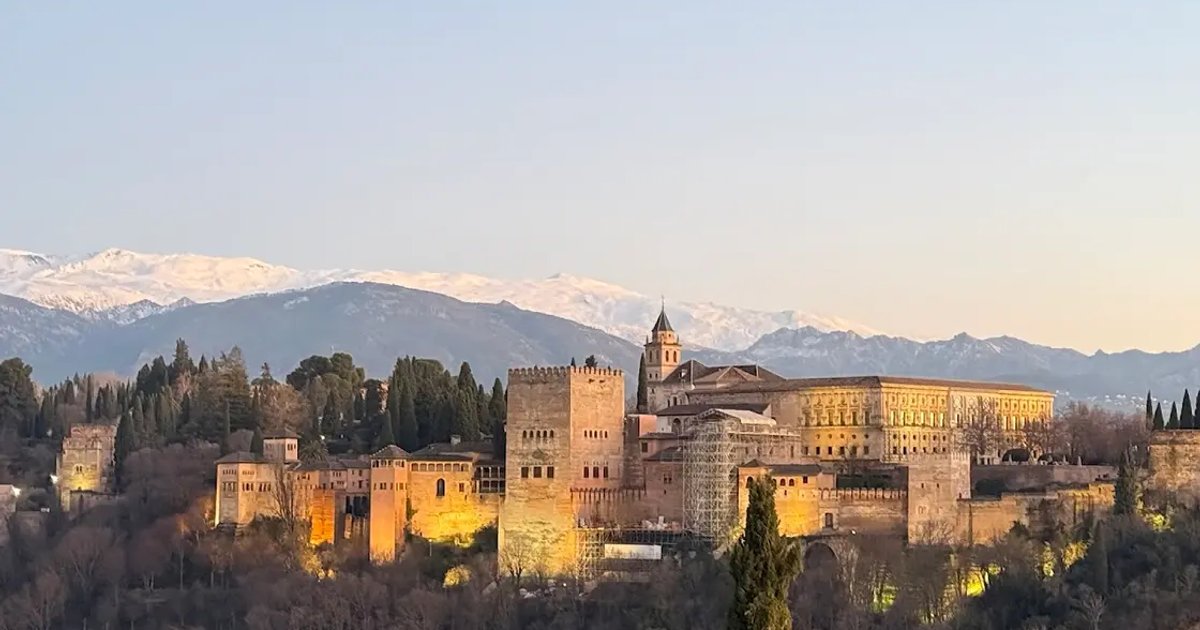
The Alhambra sits on the ridge opposite, the Sierra Nevada behind it. At 10:30 on a weekday morning, the mirador has tourists but not the full sunset crowd — you can find space and stand still. The light at this hour is clear rather than golden, which is different from the sunset photographs you have probably seen. Both versions are worth seeing; they are just different views. If you want the golden-hour version, come back at 19:30 on an evening when your schedule allows, or adjust Day 1 to end here rather than in a tapas bar.
After the mirador, walk north along the ridge to the Granada Mosque gardens for an alternative view with fewer people. Then begin descending towards Sacromonte — the path east from the upper Albaicín leads you naturally into the Sacromonte road.
Lunch somewhere in the lower Albaicín or back near Plaza Nueva — by 13:00 you will have been on your feet for four hours and the hill climbing will have worked up an appetite. A proper sit-down meal rather than a tapas bar makes sense here; you want to rest before the afternoon.
Sacromonte begins where the Albaicín ends. The cave dwellings climb up the Valparaíso ravine; some are residential, some are flamenco venues. Walking the Camino del Sacromonte in the mid-afternoon, when the whitewashed walls catch the low western light, is one of the less photographed but more atmospheric walks in Granada. The Abbey of Sacromonte at the top (founded 1600) has views across both the Albaicín and the Alhambra simultaneously. Allow 60–90 minutes for the Sacromonte walk.
If you booked the Hammam Al Ándalus Granada, this is where it fits: back down from Sacromonte, the hammam is at the foot of the Alhambra hill near Carrera del Darro. A 90-minute bath circuit is a reasonable way to spend 15:30–17:00 before resting ahead of the evening. Skip it if your legs are too tired — the walk back from Sacromonte is more than enough for Day 2.
Rest at your accommodation from 17:00 to 19:30. Dinner in Spain starts at 20:00 at the earliest; most Granada restaurants are genuinely quiet before 20:30. Use the rest time.
Evening (20:00–23:00): Dinner in Realejo, flamenco in Sacromonte
Dinner in Realejo — Campo del Príncipe or the streets around it. The working local square fills from 20:00 with Granada residents rather than tourists. One last tapas crawl before the flamenco show, or a sit-down meal if you prefer to arrive at the caves without a food-and-wine blur.
The Sacromonte flamenco shows typically start at 21:00. The cave venues hold 20–40 people in intimate semicircles around the dancers and musicians. The setting — carved into the hillside, stone walls close on all sides, the sound of guitar and palmas in a space with almost no reverb — produces something that a theatre performance does not. Budget €20–40 per ticket. A taxi or rideshare up to Sacromonte from Realejo is easier than the uphill walk at night after a long day; it costs €5–8.
Day 2 in numbers
Albaicín walk: Free (buy tea and pastries at a tetería, €3–5)
Sacromonte walk: Free
Hammam (optional): ~€30–40 per person
Dinner + evening tapas: €20–35 per person
Flamenco show: €20–40 per person
Walking: ~4–5 km, very steep in the morning
Getting around Granada
Granada is a compact city and the itinerary above is almost entirely walkable. A few practical notes:
Walking: the default
Plaza Nueva to Alhambra entrance: 10–15 minutes uphill. Plaza Nueva to Mirador San Nicolás (via Carrera del Darro): 60–90 minutes including the climb. Cathedral to Realejo: 10–15 minutes flat. Most of this itinerary is within 20 minutes of Plaza Nueva on foot.
C32 minibus
The C32 runs from Plaza Nueva to the Alhambra entrance every few minutes. Useful on hot mornings or tired afternoons. Single ticket is €1.40. Also handy for getting to the upper Albaicín — the C32 and C34 serve stops near the Mirador — if the uphill walk feels like too much.
Taxis and rideshare
Short hops around the historic centre cost €5–8. Useful for: getting up to Sacromonte at night, getting back from a flamenco show, reaching your accommodation with luggage. Granada taxis are metered and generally reliable. Uber and Cabify also operate here.
Rental car: leave it at home
The historic centre is largely pedestrianised. Parking near the Alhambra is limited and expensive. For this two-day itinerary, a car adds cost and removes flexibility. It only becomes useful for Sierra Nevada or Alpujarras excursions — which are three-day-or-more territory.
What to wear
Shoes: Proper walking shoes with grip. The Albaicín cobblestones are uneven and steep; fashion trainers with thin soles will cause real pain by afternoon. This is not a suggestion.
Clothing: Layers in spring and autumn — mornings are cool, midday is warm. In summer (June–September): light clothing and a hat for the Alhambra, which has exposed sun on the Alcazaba walkways with limited shade.
Bag: Day bag for water bottle, sunscreen, tickets. Keep bags close in crowded areas.
What to skip on two days
Two days means choosing. These are the things that look appealing on paper but will cost you more than they give within this time frame.
Day trips: Nerja, Alpujarras, Guadix
Each of these takes a full day including travel. Adding one on top of this itinerary means losing half of either Day 1 or Day 2. They are worth doing — just not on a two-day visit.
Both monasteries
Monasterio de San Jerónimo and Monasterio de la Cartuja are both worth visiting — but not at the expense of the Albaicín or Sacromonte. If you have 2 hours to spare on Day 2 afternoon and the hammam does not appeal, San Jerónimo (10 minutes from the Cathedral) is the one to choose. La Cartuja is a 20-minute bus ride and the Sacristy is genuinely extraordinary Baroque, but it is a half-day commitment that this itinerary does not have room for.
Exhaustive Cathedral exploration
The Granada Cathedral and Royal Chapel (where Ferdinand and Isabella are buried) are worth 90 minutes if you have a strong interest in Renaissance architecture or the Reconquista. But they are adjacent to the Albaicín start point — if Day 2 runs long, this is the easiest thing to drop. The monuments will be here on your next visit; the Nasrid Palaces will also be here but will need pre-booking again.
Late nights after flamenco
The university nightlife is real and goes until 4–5am. After two consecutive days of early starts, hill climbing, and Alhambra-scale walking, the sensible move is bed after flamenco. The nightclub scene here skews student; it is not why people remember Granada fondly.
“Two days in Granada is a good weekend. Three days is when the city reveals itself. The people who leave wishing they had stayed longer are usually right.”
— James Walker
If you can extend to three days
A third day changes the character of the visit. The first two days are about covering ground; day three is about staying still long enough to feel what the city actually is.
Granada Cathedral and Royal Chapel
90 minutes at the Cathedral and adjacent Capilla Real, where Ferdinand and Isabella are buried. Best done before 10:00 to avoid groups.
More neighbourhoods at a human pace
The Realejo explored slowly rather than passed through. The streets around the university. The lower Centro market area (Alcaicería silk market, Corral del Carbón).
Alhambra night visit
The Nasrid Palaces after 10pm, lit by spotlights that produce shadow patterns the daytime visit does not. ~€12.73 per person; book in advance. Completely different atmosphere from the morning crowds.
Sierra Nevada (if hiking season)
Spring and summer: trails above 2,000 metres are accessible from the ski resort car park (45 minutes by car). This requires a rental car or organized excursion. A full separate day.
The honest case: book three nights. The hotel rate in Granada is lower than Seville and Malaga, which partially offsets the extra night's cost. The return on a third day is disproportionate relative to what you have already spent getting here.
Book key Granada tours in advance
Tours are selected for quality, not commission. We earn a small fee if you book — at no extra cost to you.
Alhambra skip-the-line tickets and Albaicín evening walks — both sell out days ahead in peak season
Two days covers the non-negotiables: the Alhambra complex, the Albaicín, and a proper tapas crawl. What you miss: the quieter corners of Sacromonte, the Generalife gardens at a genuinely unhurried pace, and any sense of Granada's rhythm rather than its highlights. Many visitors leave after two days wishing they had booked a third night. That instinct is worth acting on before you go.
What should I cut if I am short on time?
If something has to go on Day 2, drop the monasteries (Monasterio de San Jerónimo and Monasterio de la Cartuja are worth visiting but not at the cost of the Albaicín). Do not cut the Albaicín morning walk or the evening tapas crawl — those are the parts of Granada that people remember. The Cathedral and Royal Chapel are also cuttable if your primary interest is Islamic heritage rather than Renaissance and Catholic architecture.
Is 3 days in Granada better than 2?
For most visitors, yes. Two days gets you the headline experiences: Alhambra, Albaicín, a tapas crawl. But you leave having ticked things off rather than having felt the city. A third day removes the rushing. You can explore the Cathedral quarter properly, do a Sacromonte walk at your own pace, fit in a hammam session, and have a second evening of tapas without it feeling like the last chance. The hotel rate in Granada runs lower than Seville or Málaga, so the extra night costs less than you might expect. If your schedule allows even one additional night, book it.
Where is the best area to stay for 2 days in Granada?
For a two-day itinerary focused on the Alhambra and Albaicín, stay in Realejo or the lower Centro near Plaza Nueva. Both put you within walking distance of the Alhambra entrance (10–15 minutes uphill) and the start of the Albaicín walk. Realejo has the best free-tapas bars and a quieter atmosphere than the tourist-heavy streets near the Cathedral. Avoid accommodation on the main student nightlife streets (Calle Pedro Antonio de Alarcón) unless you sleep late and sleep heavily.
Is the Alhambra night visit worth adding to a 2-day trip?
It depends on your priorities. The night visit covers the Nasrid Palaces only, after 10pm, lit by spotlights that produce shadow patterns the daytime visit does not. The atmosphere is genuinely different: quieter, less rushed, cooler in summer. At around €12.73 per person it is cheaper than the full daytime ticket (~€18–20). The practical question is energy: after two full days of walking, arriving at the Alhambra at 22:00 on your second night requires a genuine willingness to push. It works better as an addition to a three-day visit than squeezed into a two-day one. If you go, book it well in advance. Night slots sell out too.
Should I visit Granada before or after Seville on an Andalusia circuit?
Granada first, then Seville, is the itinerary that tends to work better. Granada's Alhambra is the most visited monument in Spain and requires advance booking; scheduling it first removes the risk of arriving in Seville and discovering the Alhambra slots you wanted are sold out. Seville is easier to visit spontaneously. The train journey from Granada to Seville takes around 3 hours; Seville to Granada in reverse is the same. If you are renting a car, the drive via Antequera is roughly 2.5 hours. The Cordoba detour (2 hours from Granada by car, or 2.5 hours by train) works on the way between the two cities.
Reporter notebook
Insider tips
Practical observations gathered the way a local journalist would keep them: short, specific, and more useful than brochure copy.
Booking tip
Book Alhambra tickets the same day you buy flights
The single most common reason visitors leave Granada disappointed is arriving without Alhambra tickets. The Nasrid Palaces have timed slots; showing up without one means waiting at the entrance while everyone else goes through. Book at tickets.alhambra-patronato.es the moment your travel dates are fixed. If slots are already sold out, check at midnight — cancellations get re-released then.
Crowd tip
Mirador San Nicolás is quieter at 10am than at sunset
This itinerary puts Mirador San Nicolás on Day 2 morning rather than at golden hour. The trade-off is real: you lose the amber light on the Alhambra towers that makes the sunset photographs so good. What you gain: fewer people and space to stand still. If you want the sunset version, walk up from the Albaicín on Day 1 evening after dinner (around 20:00 in summer) instead of going straight to the tapas bars.
Money tip
Order the house tinto de verano, not beer
Granada's free-tapas tradition means every drink order triggers a free plate. But the tapa quality varies by what you order. In many Realejo bars, ordering tinto de verano (red wine with lemon soda, roughly €2.50) reliably produces a better tapa than ordering the same bar's cheapest beer. Ask the bar staff which drink gets the best kitchen rotation that evening — they will tell you.
Ready to execute? See our Granada 48-hour itinerary with exact timings, Alhambra arrival windows, and booking tips for each stop.