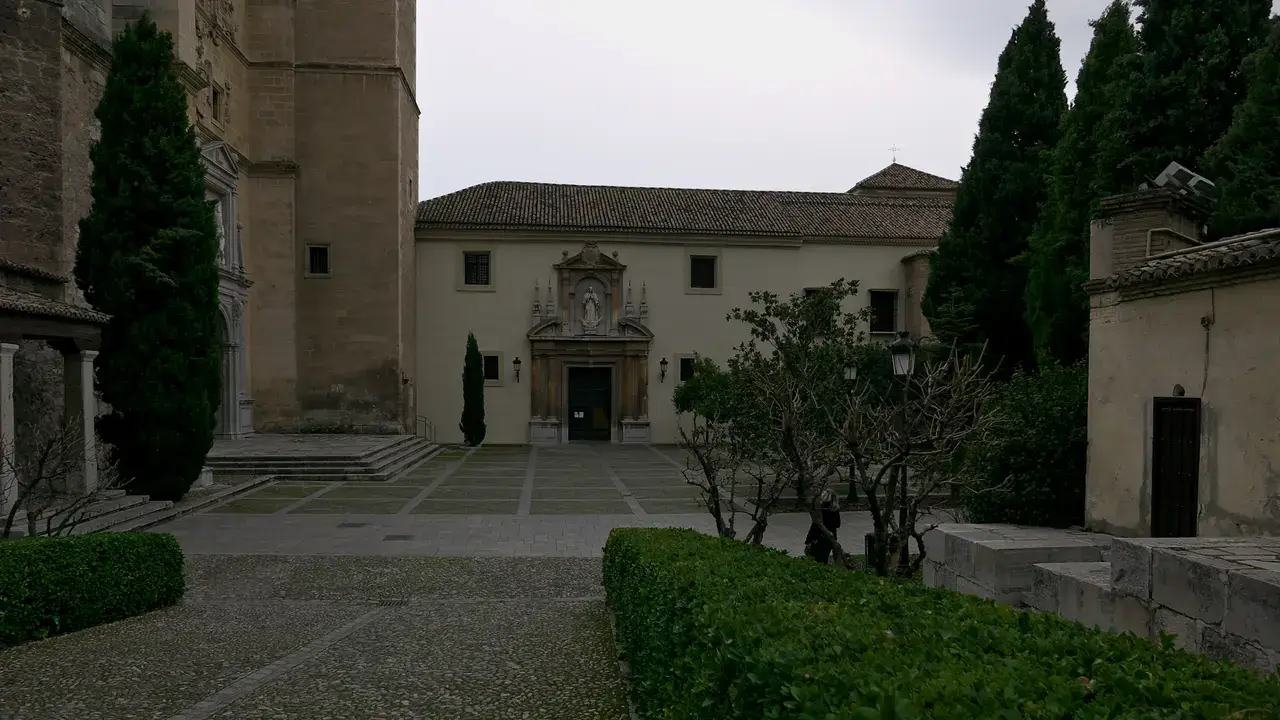

There are two reasons to visit the Monasterio de San Jerónimo. The first is the facade. Few buildings in Granada prepare you for the density of carved stonework here: columns covered in grotesque masks, heraldic shields, foliage, and figures crowd the entrance in the Plateresque style that Spanish architects developed in the early 16th century, treating the stone surface like embroidery. The second reason is the nave. Step inside and the contrast between the ornate exterior and the white, orderly Renaissance interior is genuinely startling.
History
Construction began in 1496, not long after Ferdinand and Isabella's forces took Granada in January 1492. This was the first church built in the newly Christian city, and its patrons understood the symbolic weight of that. The building was designed by Diego de Siloé, the same architect who shaped Granada Cathedral, and construction continued through the 1520s. It was the first church in the world dedicated to the Immaculate Conception, a theological argument that was still contested at the time and would not become Catholic doctrine for another three centuries.
Gonzalo Fernández de Córdoba, the general known as the Great Captain who won the Italian campaigns for Ferdinand and Isabella, chose the monastery as his burial place. His tomb is inside the church, and the heraldic decoration throughout the nave is partly a tribute to his military victories. The monastery functioned continuously as a religious community until the 19th-century disentailment, when religious houses across Spain were seized by the state. It returned to a religious community in 1916 and remains an active site today.
The cloister
The 16th-century cloister is two storeys of Renaissance arcades surrounding a garden. The lower arcade uses round arches on paired columns; the upper uses a lighter design with thinner columns and carved spandrels. It's a good deal quieter than the nave and rarely visited by tourists who come only to see the church. Sit on one of the stone benches in the garden and the place feels genuinely monastic: no traffic noise, just the sound of birds and the occasional creak of the monastery door.
Practical information
The monastery is on Calle Rector López Argueta, north of the university buildings, about 15 minutes on foot from the city centre. Admission is €7 (€5 for students under 25 and visitors with disabilities; children under 12 free with family). Opening hours split morning and afternoon with a midday closure; the afternoon session in summer runs until 19:30. Closed Sunday afternoons in winter. The monastery is still used for services, so occasional closures happen -- a quick call ahead prevents wasted trips.