The poet's house, now a dining room
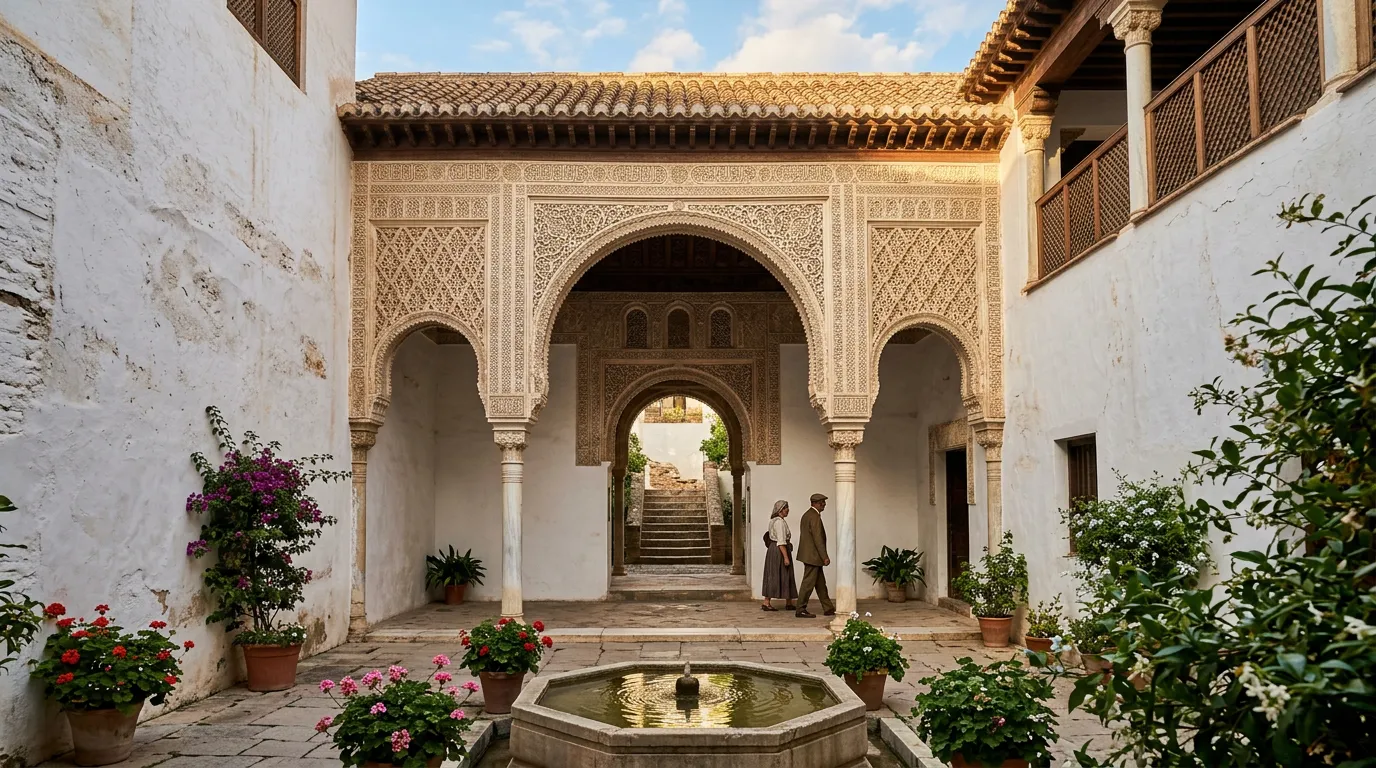
Pedro Soto de Rojas was born in Granada in 1584 and spent much of his adult life in this Albaicín house. He published his most celebrated poem, Paraíso cerrado para muchos, jardines abiertos para pocos, in 1652 — a baroque meditation on enclosed gardens that many scholars read as a description of this very property. The carmen still has the enclosed courtyard the title implies: stone walls, a central patio, the sense of a private world that the street outside can't touch.
Los Mascarones occupies that space now. The name comes from the carved stone mascarons — decorative faces — that appear on the facade. The cooking is old Granadan: the kind of food that doesn't need a story to justify itself, though this building gives it one anyway.
Migas con chorizo
Migas is one of those dishes that reads badly on paper. Breadcrumbs, fat, garlic. In practice, done right, the crumbs fry separately so each one has its own crust, then the chorizo fat coats everything and the whole mass comes together as something more coherent than the ingredients suggest. At Los Mascarones the migas arrive with a deep smokiness from the pimentón in the chorizo — not sweet paprika, the sharp variety from Extremadura — and a fried egg on top that collapses when you break it, coating the crumbs with yolk.
This is the dish to order. It does not photograph well. It tastes like Andalusian winter food served at any time of year.
Caracoles
Caracoles — snails — are served in Granada from late spring through summer, when the small grey snails have been fattened on wild herbs in the hills above the city. The broth they cook in carries cumin, bay, wild thyme, and a heat from guindilla chilli that builds slowly through the bowl. The correct approach is to use a toothpick to pull the snail from its shell, eat it, then drink the broth from the shell itself — a technique that locals execute without self-consciousness and that visitors usually abandon after the first two.
Granada is one of the cities in Andalusia where caracoles remain a serious seasonal tradition rather than a menu curiosity. The Albaicín bars do them well because the snail-supply chain from the surrounding hills is short.
The room and the carmen
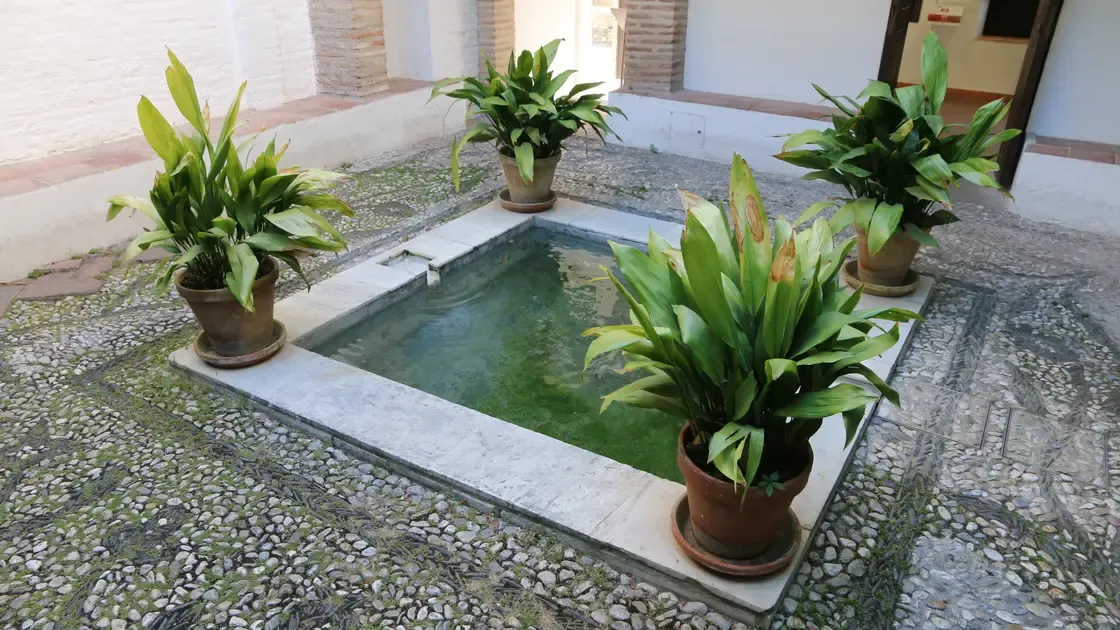
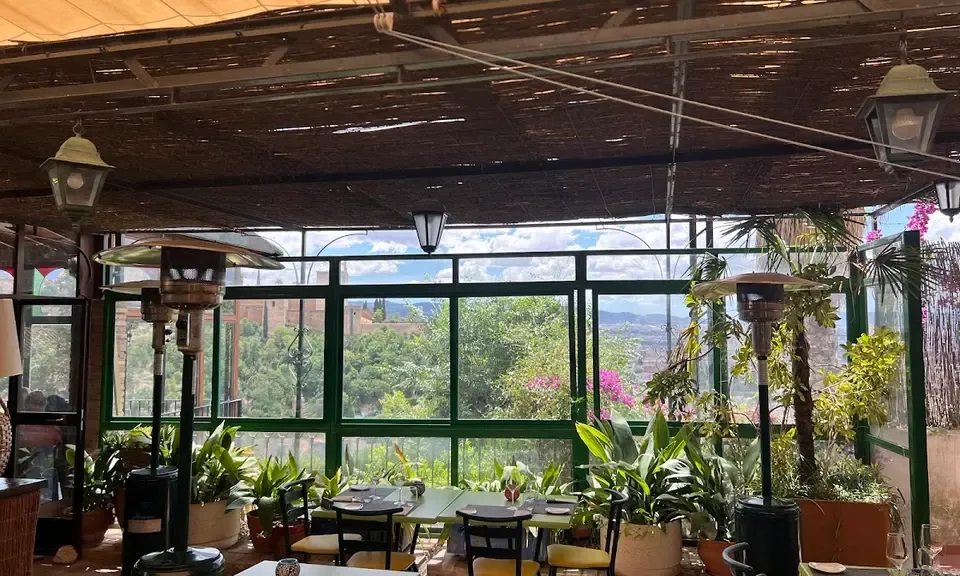
The dining room is inside the former carmen — a Granada-specific type of walled garden house that combines Arabic garden traditions with the Christian architecture that replaced them after 1492. The patio off the dining room has old stone flags, a central fountain, and orange and lemon trees that have been growing here for a long time. In spring the blossom scent reaches the tables indoors.
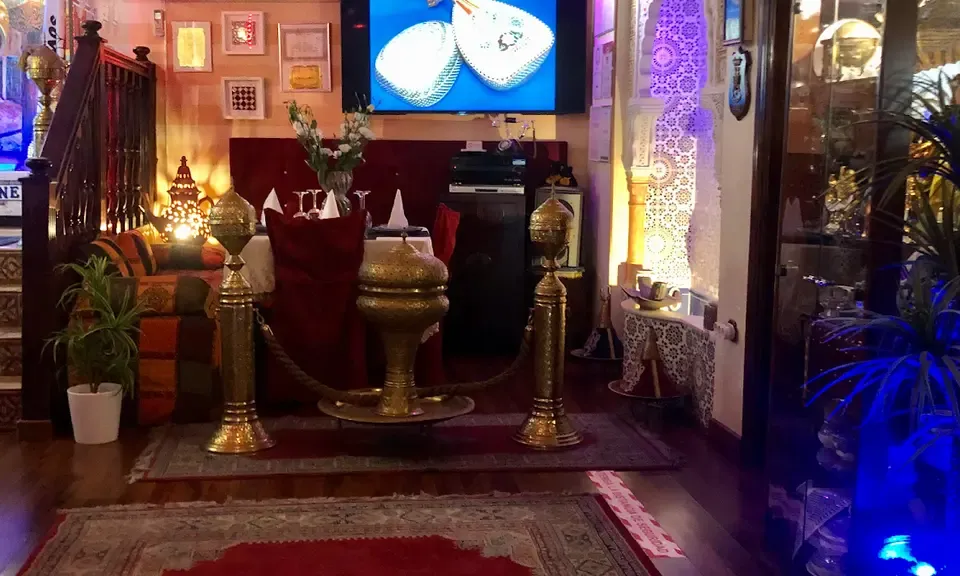
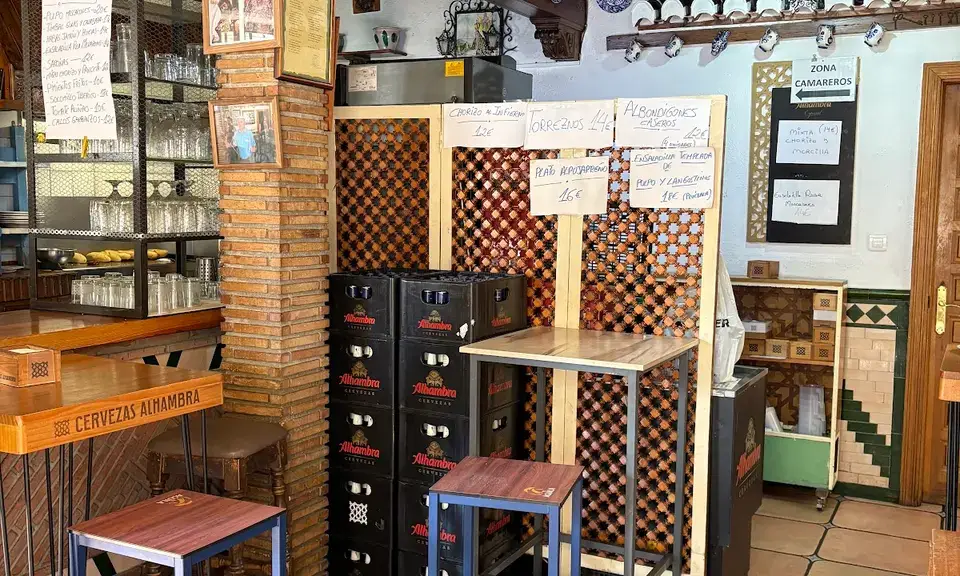
The ceiling in the main room is low and dark-beamed. Walls are whitewashed. The furniture is heavy, dark wood. None of this has been staged for atmosphere; it is simply what the house has always looked like. Sit near the patio door if you can.
Finding it and what to expect
Los Mascarones is in the upper Albaicín, where the streets narrow to the width of two people and the gradient increases. Allow twenty minutes on foot from Plaza Nueva — the walk involves several steep stepped lanes. Taxis can drop you at the nearest accessible point, which is a five-minute walk from the restaurant itself.
Prices are modest by Granada standards: a full meal with wine runs €20–30 per person. The menu is short and changes with the season. Migas con chorizo and caracoles are the constants; the rest depends on what is available. The wine list does not require study — ask for the house red, which is a local young wine from the Condado de Huelva DO or similar, and costs less than you'd expect.
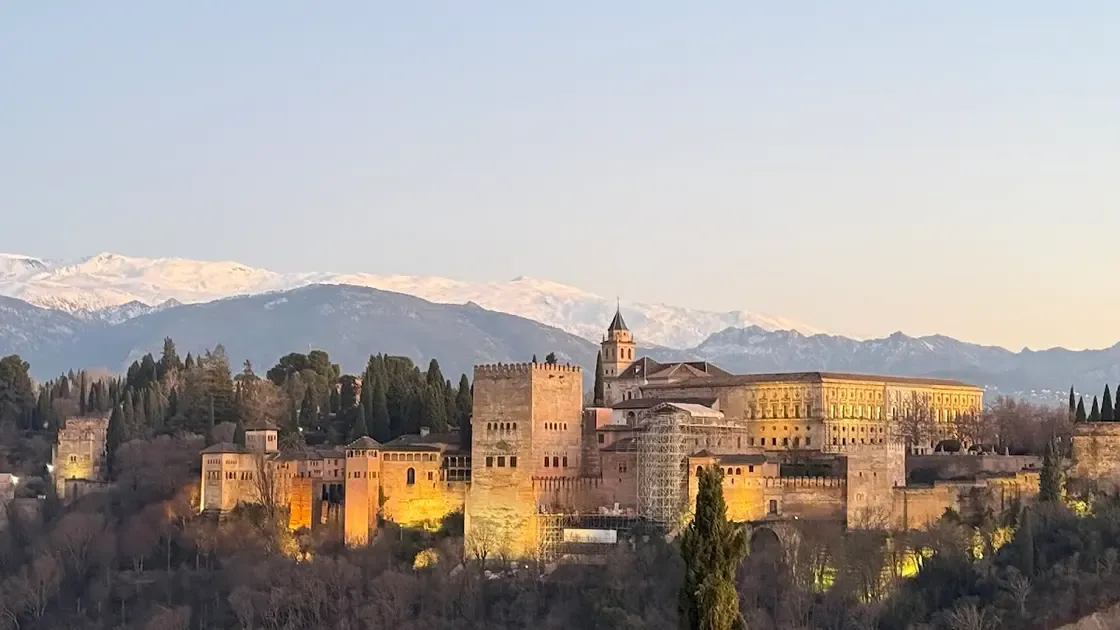
This is not a restaurant that needs booking on most weekdays. Summer weekends are the exception, when the Albaicín draws visitors who have done the Alhambra in the morning and want to eat somewhere with a story in the afternoon.