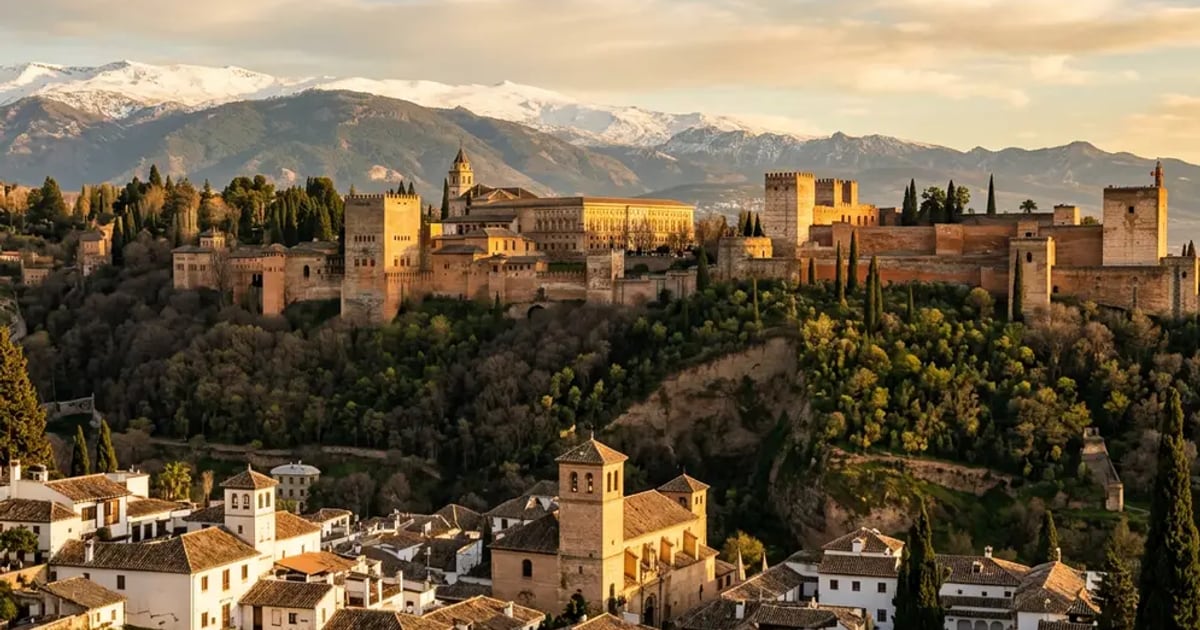
Jazz musicians performing at the Festival Internacional de Jazz de Granada, with the Alhambra visible in the background
Planning guide

Granada Jazz Festival guide

46 years of programming, 80-plus concerts, and a free programme that covers the whole city. Here is how to plan around it.

The Festival Internacional de Jazz de Granada has been running since 1980. That makes it one of Europe's oldest surviving jazz festivals, which is worth knowing because it explains the programming quality. Forty-six years of relationships with agents and labels means the festival can book artists that comparable events in larger Spanish cities cannot. Miles Davis, Oscar Peterson, and Herbie Hancock have all played here.

Current year dates, tickets, and programme

For confirmed 2026 dates, ticket prices, and the full lineup, see the Granada Jazz Festival event page. This guide covers how to plan your trip around the festival, which venues to prioritise, and what November in Granada is actually like.

What separates Granada's festival from most comparable European events is the free programme. Most major jazz festivals charge for everything worth seeing. Here, a substantial part of the serious music happens in bars, at metro stations, and on outdoor stages across the city centre. You can attend the festival for a week and pay for only one or two ticketed theatre shows; the rest fills itself.

November is an unusual time to visit Granada, which is exactly why it works. The Alhambra is quieter. The tapas bars are at their most local. Hotel prices are off-peak until the headliner lineup drops in September and reprices the main performance weekends.

Venues: where to go and why

The festival runs across more than 70 venues. That sounds unmanageable, but they cluster into two categories: one main ticketed theatre and a distributed free programme across bars, outdoor stages, and transit spaces. Navigate the two separately.

Teatro Isabel la Católica: the main stage

The city's primary concert theatre, on Calle Acera del Casino near Granada Cathedral. This is where the international headliners perform: the shows that justify the ticket price and need advance booking. Capacity is around 700 seats. The acoustic quality is good, the venue is comfortable, and the proximity to the tapas bars of Centro means a pre-show dinner is straightforward.

Tickets run €20 to €40 for most shows. The opening and closing nights price higher and sell faster. For anything involving an internationally recognised name, buy as soon as the programme publishes in September.

Best for: Anyone who wants the core festival experience with a major artist in a proper concert setting. Drawbacks: Sells out for the top-billed shows; no same-day walk-in for popular nights.

Bars in Realejo and Centro

The Realejo neighbourhood (around Plaza del Campillo and the streets running south towards Campo del Príncipe) and the central area around Calle Navas and Plaza de la Trinidad are the highest-density clusters for free bar sets. Sessions typically start at 19:00 and run to 23:00. Small rooms, standing audiences, musicians playing close enough to hear the conversation at the next table.

This is where the festival's character is most concentrated. Some of these sets are booked by musicians who play ticketed stages elsewhere on the same tour. The room holds 40 people; the music is the same. Show up early on Thursday and Friday evenings when the crowds have not yet peaked.

Metro stations and outdoor stages

Recogidas and Caleta metro stations host official festival acoustic sets in the afternoons, typically 15:00 to 18:00 on weekdays. These are not busking slots; they are programmed by the festival and listed in the official schedule. The audience is mostly commuters rather than tourists, which makes for a different atmosphere from the evening bar sessions.

Outdoor stages appear in pedestrianised streets near the Cathedral area and in some squares across Centro. These are the most casual entry point: walk past, stop, stay for 20 minutes, continue. No commitment required.

Free vs paid: building your programme

The practical strategy for most visitors: pick one or two theatre shows in advance and let the free programme fill the rest. The theatre experience and the bar experience are different enough that doing both is worth it. Attempting to attend every night at the theatre is expensive and unnecessary when the free programme is running simultaneously in the streets outside.

For a three-day trip

One theatre ticket (book the opening night or whatever feels like the strongest name on the lineup). Two evenings bar-hopping the free programme in Realejo and Centro. Use the afternoon of your free days for the Alhambra or a walk through the Albaicín. The jazz fills the evenings without dominating the whole visit.

For a full festival week

Two or three theatre tickets spread across the week (opening night, a mid-festival headliner, and the closing if you can get it). The free programme covers the remaining evenings without any planning required. The mid-festival Saturday is the densest single day: outdoor stages in the afternoon, bar sessions building from 20:00, main theatre show at night. If there is one day to anchor the week around, it is that Saturday.

The tapas bars and the jazz bars are the same bars

Granada's free tapas tradition and the festival's free bar programme overlap almost completely. The bars in Realejo and Centro that serve a free tapa with every drink are largely the same bars hosting evening festival sets. Bar-hop from 20:00 and you will eat well and hear good music while spending only on drinks.

Granada in November

November is one of the more underused months to visit Granada. Temperatures sit between 10°C and 18°C: cool enough to walk comfortably, warm enough to sit outside during the day. Rain is possible but Granada has a noticeably drier November than the Atlantic coast or northern Spain. The light in the late afternoon, with the Alhambra catching low sun from the Mirador de San Nicolás, is better in November than in the flat brightness of summer.

The Alhambra in November

Visitor numbers at the Alhambra drop significantly from mid-October. Timed-entry tickets, which sell out weeks in advance in July and August, are generally available within a few days in November. The morning slots for the Nasrid Palaces are quieter; the light in the courtyards is softer than summer.

Combining an Alhambra visit with the jazz festival makes practical sense: you use the daylight hours for the monument and the evenings for music. The best time to visit Granada guide covers the full seasonal picture.

Accommodation and pricing

Hotel rates in November are off-peak by Andalusian standards. The same hotels that charge €150 a night in July and August typically price at €70 to €100 in November. The exception is the festival's headliner weekends: once the programme drops in September and the top names are public, hotels near Centro and Realejo reprice quickly for those two or three weekends.

Book accommodation before the lineup announcement if your dates include the main performance weekends. If you can only book after the announcement, aim for hotels in the Realejo or Albaicín areas rather than the immediate city centre, where the repricing is most aggressive.

Food and daily life

The tapas bars operate at full pace in November. Granada's university is back in session and the city's eating and drinking culture is functioning at its most local, without the summer adjustment for tourist preferences. The free tapas tradition is strongest in the bars off the main tourist circuit, which is exactly where the festival's free programme concentrates. An evening of jazz bar-hopping in Realejo is also an evening of some of the best-value eating in Andalusia.

For a full guide to what Granada offers in the colder months, including the winter programme and what closes or changes in November, see the Granada in winter guide.

How it compares to other Spanish jazz festivals

Spain has three jazz festivals with consistent international standing: Granada (since 1980), San Sebastian (since 1966), and Vitoria-Gasteiz (since 1977). The Basque festivals are better known outside Spain. Granada is worth understanding on its own terms.

Granada vs Vitoria-Gasteiz

Vitoria-Gasteiz is widely considered one of Europe's best jazz festivals, with a strong focus on large outdoor concerts in the city's Plaza de la Virgen Blanca. It is also in July, in the Basque Country, where summer temperatures are comfortable. Granada's festival is smaller, less internationally famous, and in November. The trade-off: Granada's setting is incomparable. A bar set in the Realejo, at night, in a city that has the Alhambra on the hill behind it, is a different experience from any venue in Vitoria. The free programme in Granada is also more generous: Vitoria focuses its energy on the main stage; Granada spreads it across the city.

Granada vs San Sebastian

San Sebastian's festival (late July) sits in a genuinely beautiful city on the Atlantic coast, with La Concha bay as its backdrop. It attracts very high-profile names and prices accordingly. Granada is cheaper: theatre tickets at €20 to €40 are lower than San Sebastian's comparable shows. Granada also has the free programme advantage. If the choice is between San Sebastian in July and Granada in November for a first Spanish jazz festival experience, San Sebastian is more famous; Granada is more atmospheric and cheaper.

For context on Granada's summer festival season, the Granada Music and Dance Festival guide covers the June-July Alhambra concert programme, which runs to a completely different brief from the jazz festival.

Frequently asked questions

Frequently asked questions

How do I get tickets for the Granada Jazz Festival?

Tickets for Teatro Isabel la Católica headliner concerts go on sale when the programme is announced, typically in September. Buy through the festival's official website at jazzgranada.es. The opening and closing nights sell fastest; mid-week theatre shows have better availability. Free events need no ticket: bar sets, metro performances, and outdoor stages are walk-in.

Is the free programme at the festival actually worth attending?

Yes, substantially. The free programme is not a consolation offering. Artists play the smaller venues specifically because the festival's 45-year reputation gives those performances credibility. Bar sets in Realejo and Centro run from around 19:00 on Thursday through Sunday, with musicians who elsewhere headline ticketed stages. If your budget is tight, the free programme alone justifies the trip.

What is November like in Granada for a visit?

Daytime temperatures in November run between 10°C and 18°C. Rain is possible but rare: Granada has one of the drier winter climates in inland Andalusia. The city is at its most local in November: summer tourists are gone, the university is back in session, and the tapas bars operate at full pace. The Granada in winter guide covers the full picture.

How does the Granada Jazz Festival compare to other Spanish jazz festivals?

The two main competitors for attention are the San Sebastian Jazz Festival (July) and the Vitoria-Gasteiz Jazz Festival (July). Both are older and more internationally famous. Granada's festival is smaller but has a distinctive advantage: the city itself. A jazz club set in the Realejo neighbourhood, with the Alhambra on the hill above you, is a different experience from any Basque Country venue. The free programme is also more generous than either of those festivals. Vitoria-Gasteiz focuses more on its ticketed outdoor concerts; Granada gives you a whole city full of music.

What venues should I prioritise?

For ticketed shows: Teatro Isabel la Católica is the main stage and worth attending at least once for the international headliner. For free music: bars in Realejo (around Plaza del Campillo) and Centro (Calle Navas, Plaza de la Trinidad) are the most concentrated clusters. Metro stations at Recogidas and Caleta have acoustic sets during afternoon hours. The free outdoor stages set up in pedestrianised streets near the Cathedral area are worth walking through.

Is it worth combining the jazz festival with an Alhambra visit?

Yes, and November is a good month for it. Alhambra timed-entry tickets are easier to get in November than in summer. The tourist pressure drops significantly after mid-October. A morning at the Alhambra followed by an evening at the jazz festival is a full day well spent. Book the Alhambra tickets well ahead regardless: the ticketing system requires advance booking year-round.

Reporter notebook

Insider tips

Practical observations gathered the way a local journalist would keep them: short, specific, and more useful than brochure copy.

Booking tip

Book accommodation before the September programme drop

When the festival announces its headliner lineup in September, hotels in Centro and Realejo reprice for the main performance weekends. The same room costs 40-60% more once the top-billed names are public. Book your accommodation in August or early September to lock in off-season rates, then buy your theatre tickets when the programme drops. Realejo is the best base: you can walk between free venue clusters all evening.

Local custom

The metro stations are a genuine performance venue, not busking

The festival programmes acoustic sets at Granada metro stations as part of the official programme, not as background entertainment. Recogidas and Caleta stations host musicians with proper festival billing. The afternoon sets (15:00-18:00 on weekdays) attract a local commuter audience rather than tourists, which changes the atmosphere considerably. Worth factoring into a daytime agenda.

Best time

The mid-festival Saturday is the best single day

The first full Saturday in November concentrates the most activity: free outdoor stages in the city centre from the afternoon, bar sessions building through the evening, and the main theatre show at night. If you can only be in Granada for one day of the festival, that Saturday is the one to plan around. Arrive by 17:00 to catch the outdoor sets before they wind down.

Pairing tip

Use the tapas route as your free venue map

Granada's free tapas culture (a small plate with every drink at most bars) and the jazz festival free programme overlap almost completely in geography. The bars that participate in the free tapas tradition in Realejo and Centro are largely the same bars hosting festival sets. Bar-hop from 20:00 on festival evenings and you will eat well and hear good music simultaneously, spending only what you would on drinks.