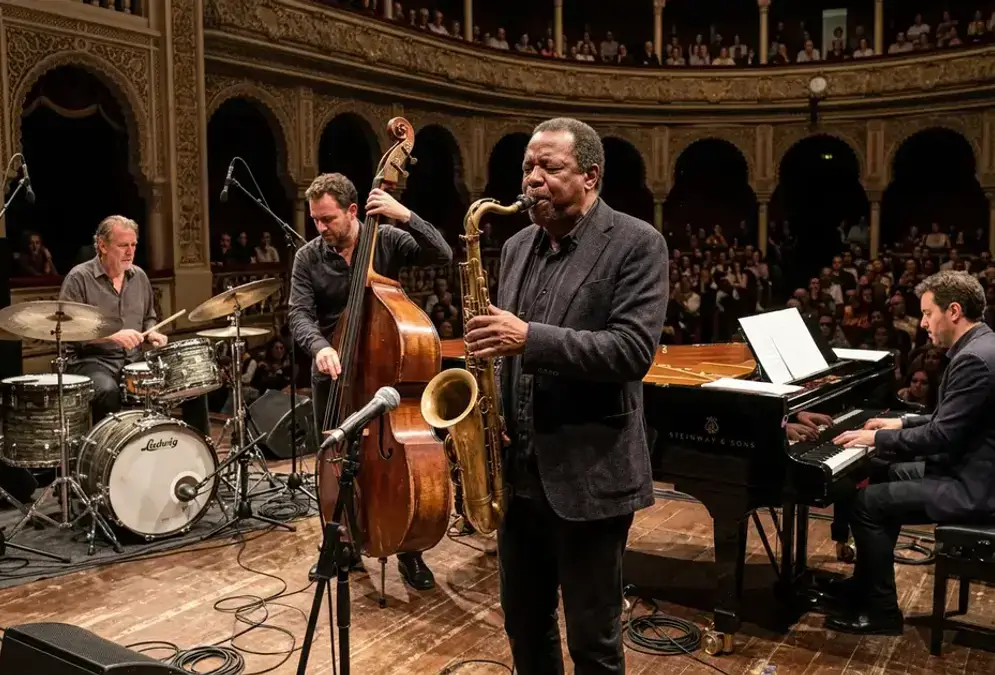
The Festival Internacional de Jazz de Granada has been running since 1980, making it one of the longest-established jazz festivals in Europe. The 2026 edition is the 46th. It runs across ten days in November, filling the city with music from Teatro Isabel la Católica down to neighbourhood bars, metro concourses, and outdoor stages in the centre.
The scale is unusual for a city of this size. 80-plus concerts at more than 70 venues over the full festival. Some of those are ticketed headline shows at the main theatre. Most are free — and that free programme is not a secondary offering. Artists use the festival's reputation to play the smaller rooms, so the bar sets and metro performances pull musicians with real credentials.
What to expect at Teatro Isabel la Católica
The main theatre, near Granada Cathedral on Calle Acera del Casino, hosts the international headliner concerts. These are ticketed, with prices running €20–40 for most shows. The theatre seats 700 and books out for the bigger names. Past editions have drawn artists with the stature of Miles Davis, Oscar Peterson, and Herbie Hancock; the current programmers have maintained that international tier.
For ticketed shows, book online as soon as the programme drops. The festival website publishes the lineup in September; the best seats go within days for the opening and closing performances.
The free programme
Bars in Centro and Realejo host sets throughout the ten days. Metro stations across the city carry acoustic performances. Outdoor stages in the pedestrianised streets add to the volume. This is the part that makes the festival genuinely different from comparable European events: you can spend the entire week in Granada attending serious jazz performances and pay nothing beyond your drinks.
The free programme concentrates around the evenings from Thursday through Sunday. Wander down Calle Navas or Plaza de la Trinidad around 21:00 and you will hear something worth stopping for.
November in Granada
The festival takes place in November, when daytime temperatures sit between 10°C and 18°C. The Alhambra queues are short. Accommodation runs at off-peak rates until the programme announces a headliner, at which point the two or three peak weekends sell out fast. Book before September if your dates overlap with the main theatre schedule.
The tapas bars are at their most local in November — summer tourists have gone, the university is back in session, and the city's nightly ritual of free tapas with every drink is operating at full pace. The jazz festival and Granada's food culture overlap well: bar-hop the free programme and you eat and drink cheaply the whole evening.
See the Festival de Música y Danza Granada for Granada's other major annual festival, which runs in summer at the Alhambra.