Seven years resident in Granada. Specialist in Nasrid architecture, Al-Andalus history, and Andalusian walking routes.
Published
Order a beer at a bar in Granada and something unexpected happens: a small plate of food arrives with it. Croquetas, perhaps. A slice of tortilla. A wedge of manchego. You didn't order it, you won't pay for it, and the bartender already moved on. That's the free tapas system — Granada's most practical gift to the solo traveller — and it changes everything about eating alone. You stand at the counter, eat, order another round, get another tapa. Two or three bars and you've had a full dinner, spent €12, and spoken to four strangers. No awkward table for one, no waiter checking if you're "still waiting for someone."
The rest of the city builds on this. The Universidad de Granada brings 60,000 students to a city of 230,000, which keeps prices low, social life easy, and the general atmosphere somewhere between relaxed and actively welcoming. Free walking tours leave Plaza Nueva every morning. Hostels in the Albaicín and city centre run social programmes. Flamenco shows in Sacromonte are designed for exactly one person to sit in a cave and watch something extraordinary.
This guide covers the mechanics: where to stay, how to navigate the tapas bars alone, which activities work solo, which are harder without a group, and what a week here actually costs. No pretence that it's all seamless — Las Alpujarras by bus alone requires planning — but the honest picture is that Granada is one of the better cities in Spain to arrive knowing nobody.
Safety, neighbourhoods, and where to stay
Granada has a lower petty-theft rate than Seville, Málaga, or Barcelona. The pick-pocketing networks that operate in those cities' tourist centres are less organised here. Keep your phone in your front pocket on the busiest stretches of Calle Reyes Católicos; everywhere else, the usual awareness is enough.
The Albaicín gets deserted after 11 PM in its upper lanes. Deserted is not dangerous — it just means you're navigating maze-like streets alone with your phone screen lighting the cobbles. It's fine. Women travelling alone consistently rate the Albaicín as comfortable at night. The areas to avoid after midnight are the same ones that feel rough in daylight: the far edges of the Genil riverbank and the bus station surroundings.
Albaicín — best for wanderers
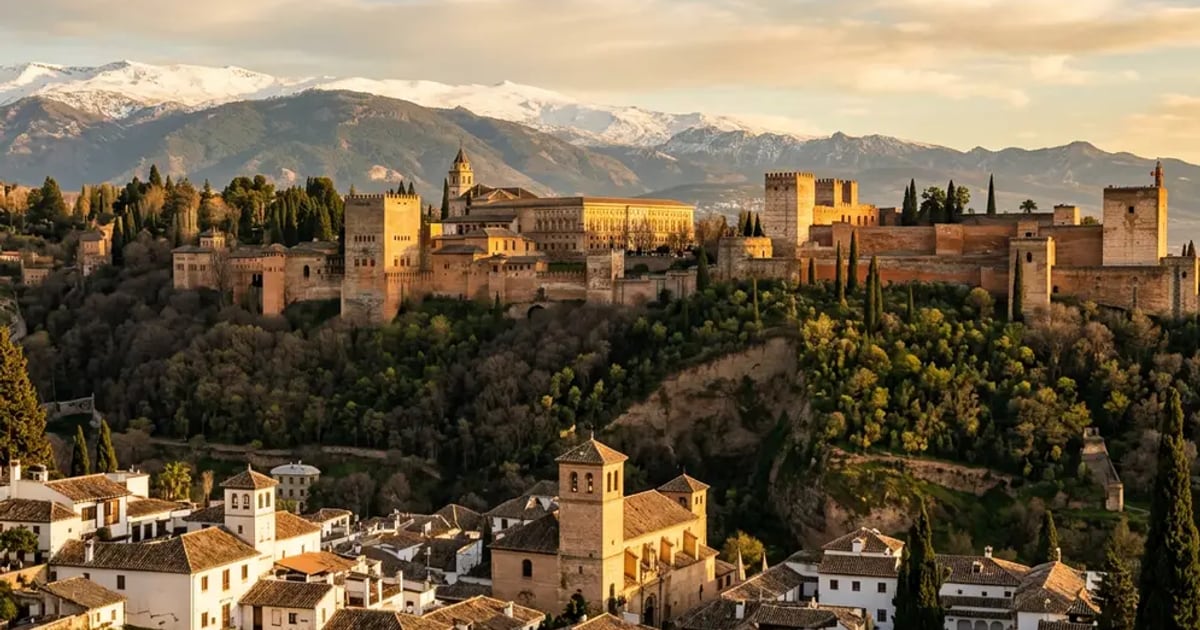
The Albaicín is the neighbourhood for solo travellers with no fixed agenda. Its maze of white-washed lanes rewards getting lost — there's no route to follow, just a general direction. Makuto Hostel sits inside it, with a rooftop terrace looking across at the Alhambra. If you stay here, you'll walk downhill to the city centre in 20 minutes and uphill to Mirador de San Nicolás in 15. Social atmosphere in the hostel common areas tends to be easy — people are staying here specifically because they want that.
Centro — best for convenience
The city centre puts you five minutes from the cathedral, the Bib-Rambla tapas bars, and the Alcaicería market lanes. White Nest Hostel is here, smaller and quieter than Makuto but well-positioned. Budget guesthouses in this area charge €40–55 for a private room. The downside: more tourist-facing shops and restaurants on the main streets. Navigate slightly off-grid — Calle Navas and the streets behind Gran Vía — for the better tapas bars.
Realejo — best for a quieter solo stay
The Realejo is the old Jewish quarter, uphill from the centre, with smaller guesthouses charging €40–60 for private rooms. Less social infrastructure than the hostel-heavy areas, but quieter at night and 10 minutes on foot from the Alhambra. If you want a private room at budget-hotel price with a residential feel, this is the neighbourhood.
Hostel vs budget hotel
Hostel dorms (€15–25) are the fastest way to meet people — common rooms, shared kitchens, and walking tours that organise themselves. Private rooms in hostels (€40–55) give you quiet without losing the social environment. Budget guesthouses and pensiones (€40–60) are for when you want more independence and don't mind making your own social plans. All three options work; the choice depends on how actively you want a social scaffold versus how much you value your own space.
The tapas system as solo travel superpower
The mechanics matter, so here they are precisely. In Granada — unlike the rest of Spain — every drink comes with a free tapa. Not a bowl of olives. An actual small dish: a portion of patatas bravas, a mini tortilla, a plate of jamón, a couple of albóndigas in sauce. The tapa changes with each drink. The bar chooses what you get; you don't order it.
The format is inherently bar-side. You order at the counter, standing or on a stool. The barman brings the drink and tapa together. When you want another, you catch his eye and order again. No one tables you, no waiter checks in, no social expectation beyond ordering and eating. This is how Granadinos eat — it's the dominant dinner format for locals in their 20s and 30s — so a solo visitor doing the same thing is not conspicuous. You're just another person at the bar.
Where to go
Calle Navas: the most consistent tapas street, busy and bar-lined, easy to hop between three or four bars in an evening
Calle Elvira: slightly more local feel, popular with students, generous tapas
Around Bib-Rambla: central, tourist-adjacent but with good bars mixed in
Calle Ángel Ganivet: less visited, local clientele, the tapas tend to be more ambitious
What to drink
A caña (small draught beer, about 200ml) costs €1.80–2.50 and comes with a tapa. Wine by the glass is similar. A tinto de verano (red wine and lemon soda) is the summer version. Soft drinks and juice also trigger the tapa — the free tapa mechanic is not alcohol-dependent. Two rounds at one bar, one round at another, and you have a full dinner.
The free tapas guide goes deeper on specific bars and the best streets by neighbourhood. The budget guide shows how the tapas system fits into daily cost calculations.
One trap to avoid
Some bars near the cathedral and on the main tourist drag charge for tapas or bring token-sized portions for tourists seated outside at terrace tables. The free tapa system works reliably at the bar counter, less reliably at outdoor tables in tourist-facing areas. If you sit down at a terrace on Gran Vía and nothing arrives, that's why. Move inside, move to the bar, move to a different street.
Tours, hostels, and flamenco alone
The social infrastructure for solo travellers in Granada is straightforward once you know what's there.
Free walking tours from Plaza Nueva
Multiple operators run tip-based walking tours departing Plaza Nueva at 10 AM and 11 AM daily. The guides hold up placards or coloured umbrellas; groups form organically in the square. Tours cover the Albaicín, cathedral quarter, and Moorish Granada over two to three hours. Tips of €10–15 are standard. Some operators run evening Sacromonte tours too, which pair naturally with a flamenco show at the end.
Free tours are the single most efficient way to meet other solo travellers. You're all there for the same reason, you walk for two hours together, and if you want to continue to lunch afterwards, the group organises itself. Not every tour group clicks, but the format works more reliably than hostel common rooms for making actual plans with people.
The hostel scene
Granada's hostel scene is smaller than Seville's or Barcelona's, which is mostly a good thing — the hostels that exist (Makuto primarily, White Nest for the centre) are genuinely well-run rather than processing-machine operations. Makuto's rooftop terrace is the best single common space in the city for sitting down next to someone and talking. The hostel also organises bar crawls and walking tour meet-ups. White Nest is quieter but well-located for the tapas belt.
If you're staying in a private guesthouse and want the social element, go to a free tour in the morning. That's all you need.
Flamenco solo in Sacromonte
A Sacromonte cueva show is a completely normal thing to do alone. The shows are intimate — 20 to 40 people in a cave, performers close enough that you can see the sweat on the guitarist's hands — and the performance absorbs attention entirely. There's no awkward-couple dynamic, no moment where you need to converse. You go in, you watch, the performance ends. The walk up through the cave district to reach the shows, through whitewashed lanes illuminated by lanterns, is itself part of the evening. See the flamenco guide for the cueva operators and what to expect inside.
Day trips and activities solo
Most activities in and around Granada work fine alone. A few require more planning.
Book your timed entry slot in advance — the Alhambra tickets guide explains the process — and walk it at your own pace. An audio guide means you're not dependent on a tour leader. The Nasrid Palaces take 90 minutes to two hours if you stop to read and look properly. Add the Generalife gardens and Alcazaba and you have a four-hour morning. The crowds move in tour-group blocks, so going at 8:30 AM and walking slowly means you're often ahead of the main flow by the Patio de los Leones.
The bus from Granada city centre to the mountain resort (Pradollano) runs in winter for skiing and in summer for hiking. Journey time is about an hour. The mountain is easy solo — you walk, you return — and the altitude drop in temperature (10°C cooler at 2,500 metres than in the city below) makes a summer day trip genuinely useful. The high-mountain trails above the resort are straightforward waymarked paths; you don't need a guide or a group to use them. Take a jacket regardless of season. The temperature at the Veleta ridge drops fast after 3 PM.
The Alpujarras villages are an hour south of Granada by bus, stepping into a landscape of terraced hillsides, Moorish-origin irrigation channels, and flat-roofed whitewashed architecture. Solo by bus is possible but requires checking the bus schedule carefully: services between villages are infrequent (sometimes two per day), which means missing a bus means waiting two hours in a village with limited facilities. Plan the route and bus times before you go. Car hire is easier — the mountain roads are straightforward — but driving alone is less relaxed than having a passenger to navigate. The Alpujarras day trip guide has the bus timetable links and village-by-village breakdown.
What a solo trip actually costs
Granada is the cheapest major city in Andalusia for a solo visitor. The combination of low accommodation prices and the free tapas system cuts food costs to a fraction of what you'd spend in Seville or Málaga.
Hostel dorm
€15–25
Per night. Social environment, shared facilities, walking-tour access.
Private hostel room
€40–55
Per night. Your own space, same social infrastructure as the dorm.
Budget guesthouse
€40–60
Per night. More independence, quieter, neighbourhood feel.
Realistic daily spend (solo traveller)
Breakfast: €2.50–3.50 (coffee and tostada at a bar)
Lunch via tapas: €6–9 (three drinks at one or two bars — tapas included)
Afternoon coffee or juice: €1.50–2.50
Dinner via tapas: €8–12 (three to four drinks across two bars)
Total food and drink: €18–27 per day
Alhambra ticket: €19 (one-off, book in advance)
Free walking tour tip: €10–15 (once per trip, more if you do multiple)
Flamenco cueva show: €20–30 per person
A solo traveller staying in a hostel dorm (€20/night) and eating on the tapas system (€22/day) comes in under €45 per day before paid attractions. A week, including the Alhambra and one flamenco show, costs around €350–400 total. The budget guide has the full breakdown including free sights, transport, and how to use the Granada Card if you're seeing multiple monuments.
Frequently asked questions
Frequently asked questions
Is Granada safe for solo travellers?
Granada is one of Spain's safest cities. Petty theft — the main concern in Seville and Barcelona — is low here. The Albaicín feels deserted at night in its quieter lanes, which unsettles some visitors, but deserted does not mean dangerous. The main risk anywhere in the city is the usual: keep your phone in your pocket on busy streets, don't leave bags on café chairs. Women travelling alone report Granada as comfortable; the university population (60,000+ students) keeps the city young, relaxed, and socially mixed rather than aggressively tourist-facing.
How does the free tapas system work for solo travellers?
Order a drink — beer, wine, a soft drink — at the bar counter, standing or on a bar stool. The bartender brings a small tapa with it, unsolicited. No tapa charge appears on the bill. Order a second drink, get a second tapa, often different from the first. The whole mechanic plays out at the bar, not at a table, which means eating alone is the default mode — everyone around you is doing the same thing. You can eat a full dinner this way across two or three bars for the price of four drinks. See the free tapas guide for the best streets and bars.
What are the best hostels in Granada for solo travellers?
Makuto Hostel in the Albaicín is the most-recommended for solo travellers: rooftop terrace, social common areas, and Alhambra views. White Nest Hostel in the city centre suits people who want walking access to the cathedral quarter and tapas bars on Calle Navas. Both run or organise free walking tours. Dorm beds run €15–25 a night; private rooms in the same hostels, €40–55. For a budget private room with more quiet, the Realejo neighbourhood has smaller guesthouses that cost €40–60 and place you five minutes from the tapas belt.
Can I visit the Alhambra alone?
The Alhambra is actually better solo. You book your timed slot — visit the tickets guide for the booking process — and walk it at your own pace without waiting for a group. The audio guide, included or available to hire at the entrance, gives you depth without needing a tour leader. The Nasrid Palaces circuit takes 90 minutes to two hours if you linger. The Generalife gardens need another 45 minutes. You're not rushing to keep up with anyone; you stop where you want.
What's harder to do solo in Granada?
Las Alpujarras as a multi-village walking trip is complex alone — the bus service between villages is infrequent enough that mistiming means a long wait in a small village with no café open. Car hire is straightforward but mountain driving alone is less fun than with a passenger. Some activities (cooking classes, group flamenco lessons) work better with others, though they'll pair you with other solo visitors if you book. The Alpujarras day trip guide covers the bus routes if you want to try it anyway.
Reporter notebook
Insider tips
Practical observations gathered the way a local journalist would keep them: short, specific, and more useful than brochure copy.
Local custom
Sit at the bar, not at a table
The free tapa mechanic only triggers when you order at the bar or counter. Tables — especially outside — are treated differently in some bars, with smaller tapas or a charge. Position yourself at the bar, make eye contact with the barman when you want to order, and the system works exactly as described. Bars on Calle Navas, Calle Elvira, and around Bib-Rambla are the most reliable for generous tapas. The bars on tourist-facing terraces near the cathedral sometimes skip the tapa entirely for outdoor tables.
Money tip
Budget €20–25 per day for food and drink
If you eat breakfast at a café (café con leche and tostada, about €2.50), do two or three tapas-bar rounds for lunch and dinner (three drinks each round, €2–3 each), you cover a full day of eating and drinking for under €20. Add a museum entry (€4–8), the occasional coffee mid-afternoon, and you are well inside €25 for everything. The Alhambra ticket (€19) is the single biggest daily expense. Granada is the cheapest major city in Andalusia for this reason.
Crowd tip
Free walking tours start from Plaza Nueva every morning
Multiple operators run tip-based walking tours departing Plaza Nueva at 10 AM and 11 AM daily. They cover the Albaicín, cathedral quarter, and Moorish Granada. The tours last two to three hours and are the easiest way to meet other solo travellers — the group dynamics do the work for you. Show up five minutes early and look for the guides with placards or umbrellas. Tips of €10–15 are standard. Some operators do evening tours of Sacromonte too, which pairs well with a flamenco show afterwards.
Best time
March to May and September to October for solo travel
Spring and early autumn give you comfortable temperatures (18–24°C), working hostels at moderate prices, and a city that is busy but not overwhelmed. July and August bring the full university-city social energy but also 36°C heat, which makes the Alhambra and Albaicín walks genuinely uncomfortable before you have established your rhythm. December to February is quietest — prices drop and the city is nearly all local — but some hostels reduce social programming. See the full timing guide for month-by-month breakdown.

Tours, hostels, and flamenco alone
The social infrastructure for solo travellers in Granada is straightforward once you know what's there.
Free walking tours from Plaza Nueva
Multiple operators run tip-based walking tours departing Plaza Nueva at 10 AM and 11 AM daily. The guides hold up placards or coloured umbrellas; groups form organically in the square. Tours cover the Albaicín, cathedral quarter, and Moorish Granada over two to three hours. Tips of €10–15 are standard. Some operators run evening Sacromonte tours too, which pair naturally with a flamenco show at the end.
Free tours are the single most efficient way to meet other solo travellers. You're all there for the same reason, you walk for two hours together, and if you want to continue to lunch afterwards, the group organises itself. Not every tour group clicks, but the format works more reliably than hostel common rooms for making actual plans with people.
The hostel scene
Granada's hostel scene is smaller than Seville's or Barcelona's, which is mostly a good thing — the hostels that exist (Makuto primarily, White Nest for the centre) are genuinely well-run rather than processing-machine operations. Makuto's rooftop terrace is the best single common space in the city for sitting down next to someone and talking. The hostel also organises bar crawls and walking tour meet-ups. White Nest is quieter but well-located for the tapas belt.
If you're staying in a private guesthouse and want the social element, go to a free tour in the morning. That's all you need.
Flamenco solo in Sacromonte
A Sacromonte cueva show is a completely normal thing to do alone. The shows are intimate — 20 to 40 people in a cave, performers close enough that you can see the sweat on the guitarist's hands — and the performance absorbs attention entirely. There's no awkward-couple dynamic, no moment where you need to converse. You go in, you watch, the performance ends. The walk up through the cave district to reach the shows, through whitewashed lanes illuminated by lanterns, is itself part of the evening. See the flamenco guide for the cueva operators and what to expect inside.