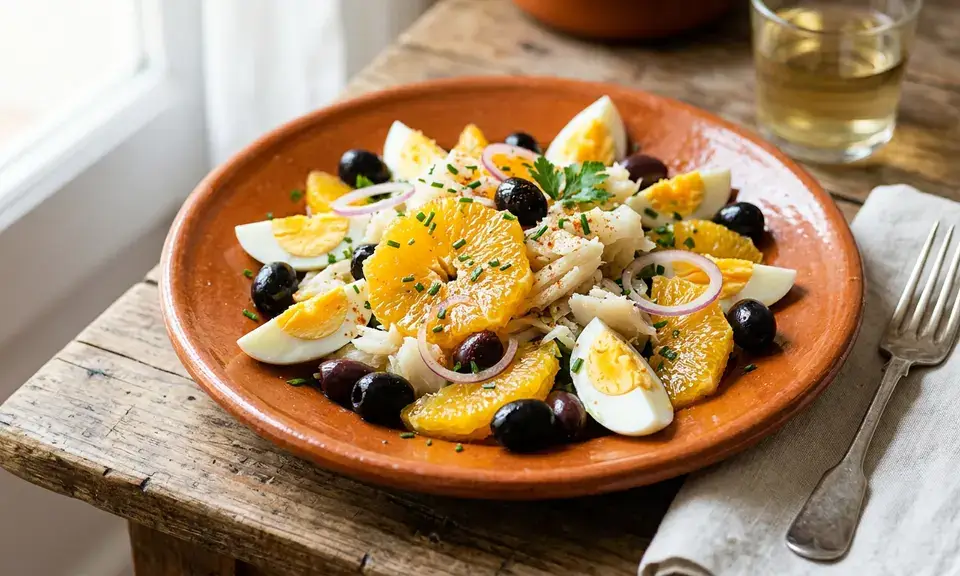
Remojón granadino is one of the few dishes in Andalusia that belongs specifically to Granada. The name comes from 'remojar', meaning to soak: salt cod must be submerged in cold water for 24 to 36 hours, changed several times, before it's fit to eat. Once desalted, the cod is crumbled into flakes and combined with segments of fresh orange, sliced scallions, roasted red pepper, garlic, and black olives. The dressing is simple: good extra virgin olive oil and a little sherry vinegar. Nothing else.
The result is bracingly fresh. The sweetness of the orange cuts through the salt still left in the cod; the olives add brine; the pepper adds body. It's a dish that feels improbable until you eat it, then feels completely obvious.
History and origins
Remojón has Moorish roots in the same way that much of Granada's food does: citrus cultivation in Andalusia was introduced by Arab farmers, and the combination of preserved fish with fresh fruit is a pattern that appears throughout North African and Levantine cooking. Salt cod itself came into the diet via trade routes, preserved for transport from northern waters. By the time of the Reconquista, both ingredients were embedded in Andalusian kitchens. Granada's version is distinguished from similar salads in Jaén and Almería by the specific emphasis on orange rather than lemon, and by the use of black olives rather than green.
The salad is sometimes described as a winter dish, when oranges and dried cod were both at hand. Today it appears year-round on menus, though it makes more sense in the warmer months when the acid and brightness feel restorative rather than chilling.
When and how to eat it
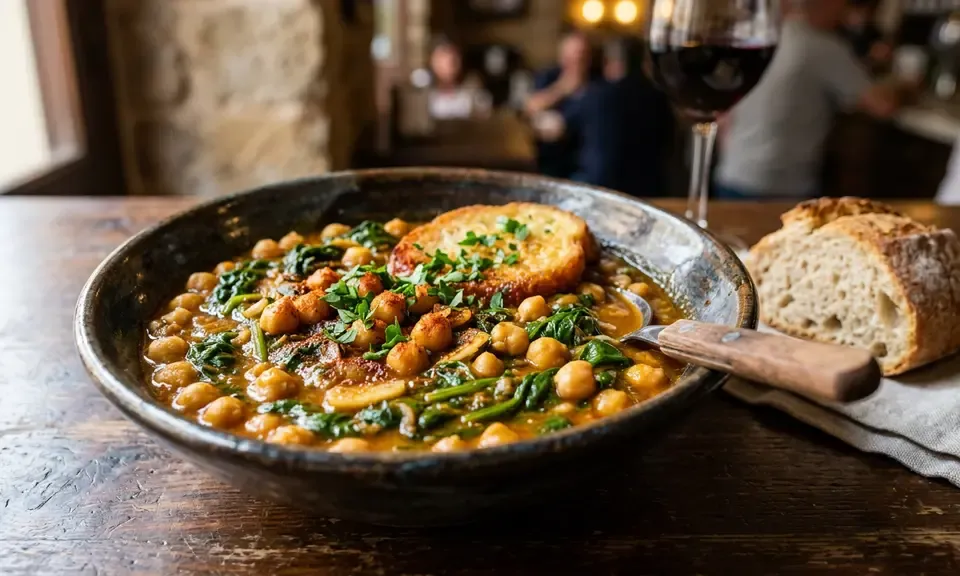
Remojón arrives cold, plated flat, with the ingredients layered or tossed together. It's a starter or a tapa, never a main. Eat it with bread to mop up the olive oil at the bottom of the plate. It works well before grilled fish or alongside espinacas con garbanzos as part of a spread.
Winter oranges from January through March give the brightest flavour; navel oranges from the Vega de Granada are the local standard. Avoid summer versions made with out-of-season oranges, which lack the acidity the dish needs.
Where to find it in Granada
Traditional tapas bars in the Albaicín serve remojón as a matter of course. It also appears in the bars around the Alcaicería, the old silk market near the cathedral in the city centre. Look for bars with handwritten chalk menus rather than laminated tourist cards; the presence of remojón on that menu is a reasonable indicator that the kitchen takes traditional Granada food seriously.
The Realejo neighbourhood has a cluster of old bar-restaurants where remojón shows up regularly, often served with thick slices of bread rubbed with tomato on the side.
Making it at home
Start 36 hours ahead by soaking the salt cod in cold water, changing the water every 8 hours. On the day, drain it, pat dry, and flake it with your fingers. Peel and segment two oranges, removing all pith. Toss with thinly sliced scallions, roasted or jarred red pepper in strips, halved black olives, and two crushed garlic cloves. Dress generously with olive oil and a small amount of sherry vinegar. Rest for 20 minutes in the fridge before serving.
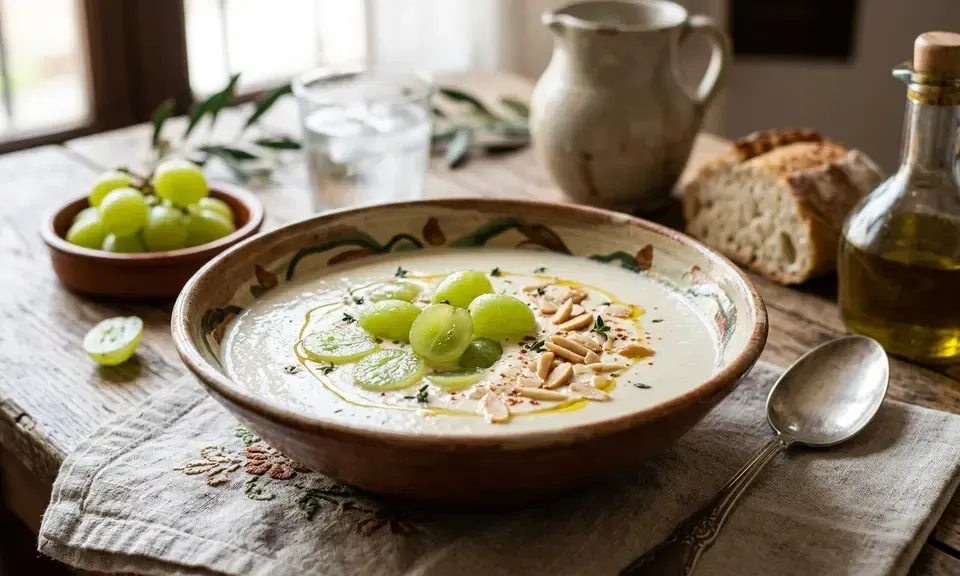
For comparison, the cold soup ajoblanco uses some of the same Mediterranean pantry, almonds and olive oil, but sits on the opposite end of the texture spectrum.