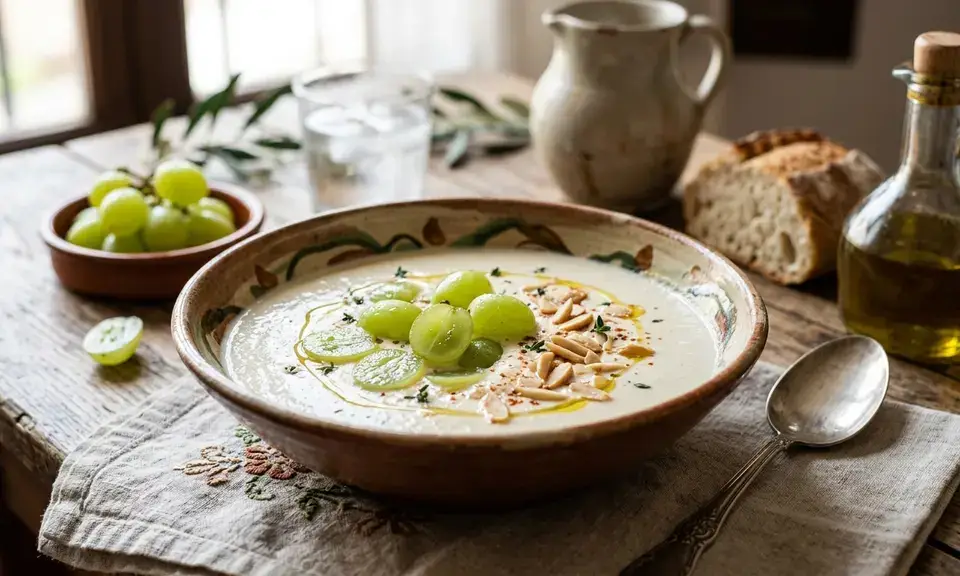
Ajoblanco is a cold white soup that arrives in summer looking like nothing you've encountered before: pale, slightly thick, with a clean almond smell and a sharp garlic finish. It tastes better than it looks. The base is blanched almonds, garlic, stale white bread, olive oil, white wine vinegar, and water, blended together until smooth and then chilled. The result is a savoury, nutty liquid with a faint sweetness from the almonds and an acid edge from the vinegar.
Granada's version has one feature that separates it from the Málaga ajoblanco most visitors know: it's traditionally served with a baked potato (papa asada) on the side rather than with grapes. The potato is baked whole, sometimes still in its skin, and you break it into the soup or eat it alongside. The soup itself is also served thinner in Granada, sometimes diluted enough to drink from a glass, which is how shepherds carried and consumed the original version in the mountains.
History and origins
Ajoblanco predates the tomato, which means it predates gazpacho. The soup came to Andalusia via the Romans, who brought almonds and garlic to the south of the peninsula. In the Moorish period, almond cultivation spread across Granada province and both almonds and garlic became storecupboard staples. The dense paste of almond, garlic, bread, and olive oil was practical field food: shepherds carried it in their bags and added cold water from mountain springs when they stopped for lunch.
The soup is most closely associated with Málaga and Granada. The distinction between the two cities' versions is subtle, mainly in garnish and dilution. Granada's use of baked potato rather than grapes reflects the mountain agriculture of the Sierra Nevada, where potatoes were a winter staple.
When and how to eat it
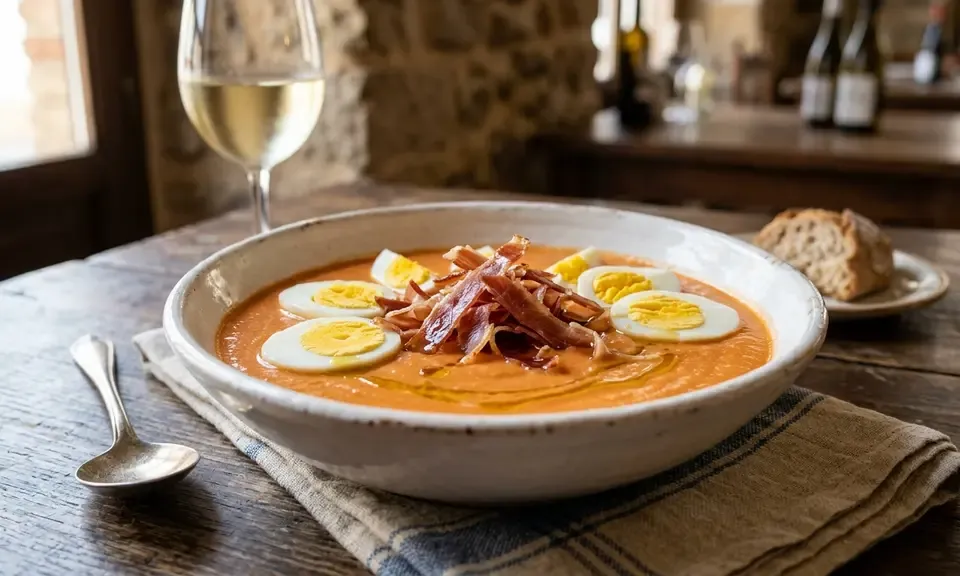
Ajoblanco is summer food: May through September. Its chilled, slightly sharp flavour works specifically in heat. On a 38-degree afternoon in August, a glass of ajoblanco is genuinely refreshing in a way that salmorejo isn't quite.
The soup is usually served in a wide, shallow bowl or drunk from a glass. Add the papa asada if it comes separately. The soup should be properly chilled, not cool-ish: if it arrives lukewarm, send it back.
Where to find it in Granada
Ajoblanco appears on summer menus across Granada. The bars and restaurants in the Albaicín, particularly those with shaded courtyards on Calle Calderería Nueva and around Plaza Nueva, tend to serve it well. In the city centre, traditional restaurants near the cathedral include it as a seasonal starter.
Look for handwritten specials boards in bars that change their menus daily with whatever is in season. A bar that updates its board weekly is more likely to serve a good ajoblanco than one with a laminated year-round menu.
Making it at home
Soak 200g of blanched almonds in cold water for two hours, then drain. Soak 100g of stale white bread in water until soft. Blend almonds, bread, two peeled garlic cloves, 100ml of olive oil, a splash of white wine vinegar, and cold water, adding water gradually until the soup reaches a thin, drinkable consistency. Season with salt, then refrigerate for at least two hours before serving.
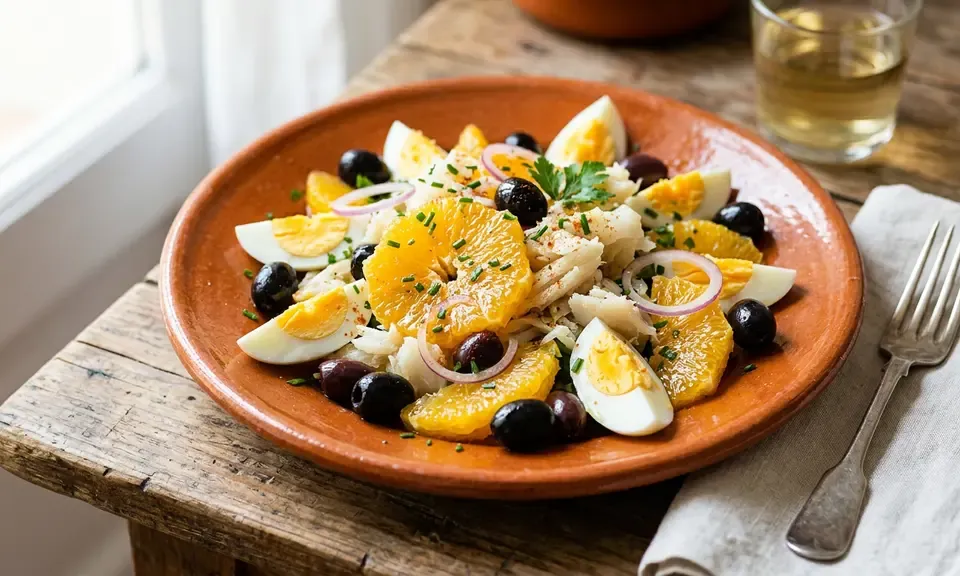
For contrast, try remojón granadino in the same sitting: one dish cold and white and almond-based, the other bright orange and citrus-forward, both from the same ancient Andalusian pantry.