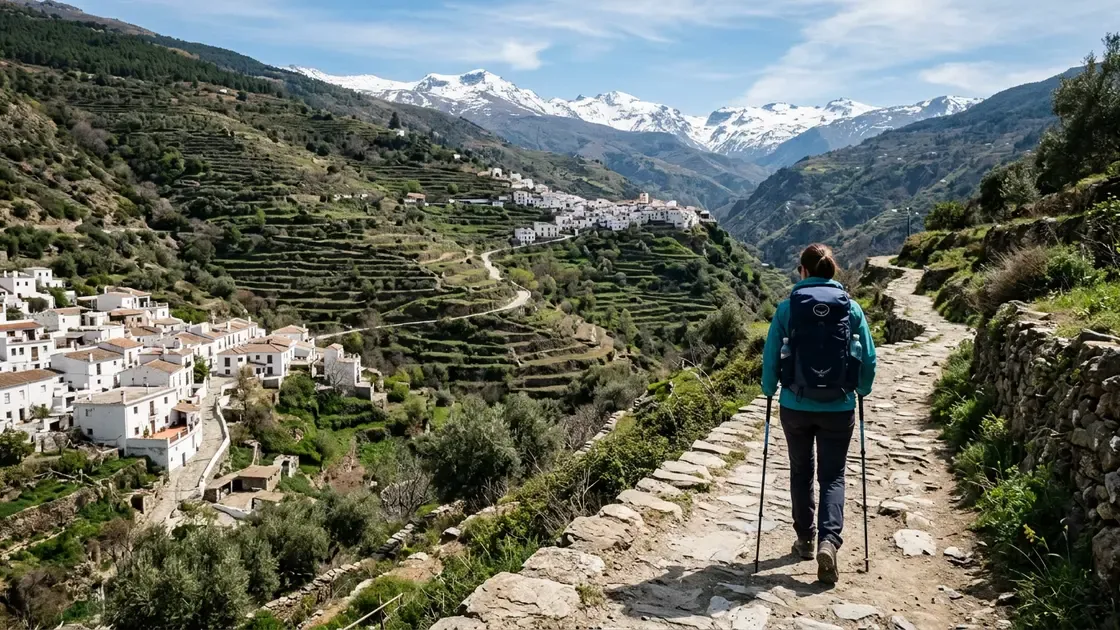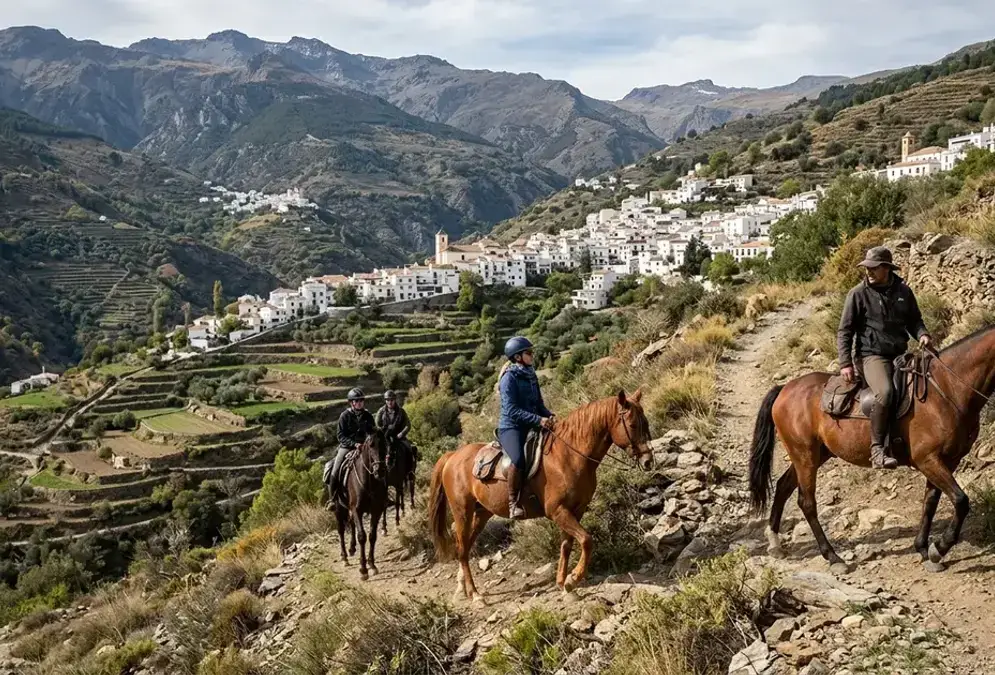
An hour south of Granada, the land folds up into terraced valleys so steep that the only practical way to farm them for a thousand years was to build level platforms into the hillside, one above the other, all the way up. Those terraces are still there. The irrigation channels the Moors cut in the 8th century still run. The white villages at the top of the valleys — Capileira, Bubión, Trevélez — are connected by bridle paths that have been in use since before anyone thought to write them down. On foot, these paths take days. On horseback, they make sense.
Several operators run guided rides out of the Lanjarón area at around 1,200 metres above sea level. Rancho Esperanza is the most established, with routes graded by duration: two hours (€80) for a first look at the terrain, four hours (€150) for a proper loop through the lower valley, six hours (€180) for a full day crossing to one of the upper villages. A weekend package at €280 covers accommodation in a local casa rural and two full days of riding. Caballo Blanco Trekking & Horse Riding Centre, also based near Lanjarón, handles multi-day mountain rides of three to five days for riders who want to cover real distance. Caballo Park runs a beginner package at €25 — one hour of instruction plus a short ride — which is the right entry point if you haven't ridden before.
The terrain and what you'll actually see
The lower trails from Lanjarón cross olive groves and chestnut forest before the altitude increases and the vegetation changes — cistus, lavender, and scrub oak. At 1,500 metres you're above the tree line on open grass slopes. The Sierra Nevada sits behind you on clear days, the ridge still white with snow well into May. Ahead, the valley floor far below is a patchwork of green terraces. The paths are wide enough for the horses to move steadily; the guides know where the ground goes soft after rain and how to read the weather coming in from the west.
The villages look different from the saddle than they do from the road. You enter Capileira from the back, through the upper lanes where the houses are connected by covered walkways called tinaos. The streets are designed for pack animals, not cars, so arriving on horseback makes a particular kind of sense. Stop for coffee before the return leg.
Route options by duration and experience level
The two-hour introductory ride is flat enough for complete beginners and covers a section of the ancient bridle path between Lanjarón and the lower valley hamlets. Guides provide instruction at the start; the horses are patient with nervous riders. The four-hour and six-hour routes require basic confidence in the saddle but no advanced skills — the operators work with each group's actual ability rather than advertised experience levels. Multi-day routes through the high Alpujarras are for riders who can manage a full day in the saddle; Caballo Blanco handles the logistics, booking accommodation in the villages along the route.
Horses are matched to rider weight and experience. Minimum age is typically eight years old, though some operators take younger children on lead lines for the shorter rides. Maximum weight is generally 95kg; check directly with the operator if you are close to this limit.
When to go and how to get there
April through October is the reliable window. Spring brings wildflowers on the lower slopes and the snow on the Sierra Nevada peaks is still visible without the summer haze. September and October are the best months for clear air and cooler temperatures — August riding is fine at altitude but warm by midday. Winter rides are possible but snow can close the higher paths from December to March; lower routes usually stay open.
From Granada, take the A-44 south toward Motril, then the A-348 east into the Alpujarras. Lanjarón is 1 hour by car. There is no direct public transport to the stable bases; operators can sometimes arrange a transfer from Granada for multi-day tours, or you can take the ALSA bus to Lanjarón and a taxi for the final stretch. Parking is available at most stable bases.